From a ploughed field to 田
一块方田,写成「田」
A square field seen from above: two paths cross it, cutting it into four plots with green shoots in each. A brush runs the boundary and then the two paths, the tracing tightens into the oracle-bone glyph, and the whole thing squares up — the outer edge into a frame, the paths into one upright and one crossbar. The character is still a map of a field.
September 7, 2026
Downloads are part of the student subscription.
Write it yourself
Watch the strokes go down in order, then take over and write it. The panel says when a stroke lands in the wrong place.
Stroke data: hanzi-writer-data (Arphic Public Licence)
Try it while it's fresh
A few quick questions while the shape is still fresh — mostly pictures, no reading required.
记忆卡
Memory card
One page: the character, the look-alikes it gets confused with, and the words it builds. Print it, or keep it on your phone.
This preview is watermarked and low-resolution — fine to read, too soft to print. The download is the clean, printable sheet.
How the character evolved 字的演变
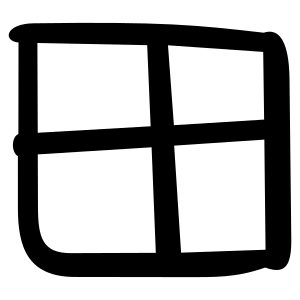
甲骨文
Oracle bone · Shang
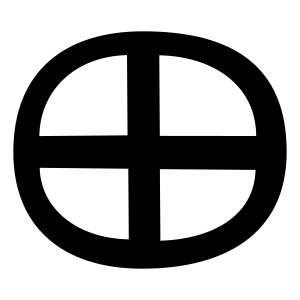
金文
Bronze · Zhou
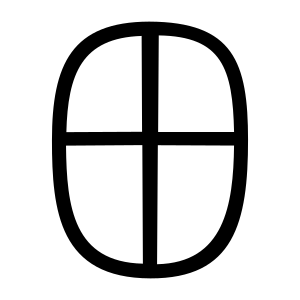
小篆
Small seal · Shuowen
楷书
Regular script
田:「陳也。樹穀曰田。象四囗。十,阡陌之制也。」
Laid out in rows. Ground where grain is grown. A picture of four plots; the cross is the pattern of the paths between them.
Ancient forms: Wikimedia Commons Ancient Chinese Characters project (CC0)
More character stories 汉字
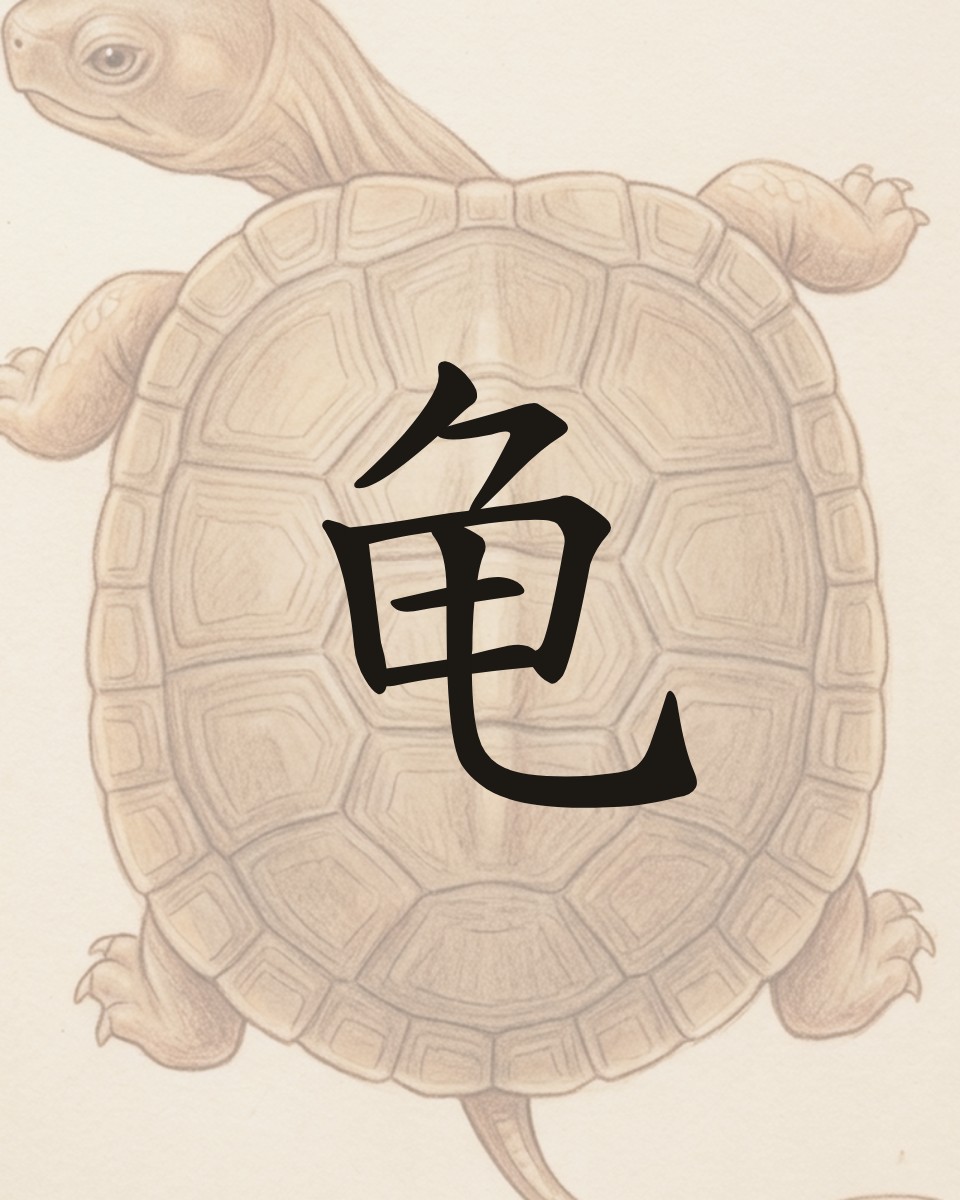
From a turtle to 龟
一只乌龟,写成「龟」
A turtle seen from above: alive and breathing on the paper. A line traces head, shell and tail and becomes the old bronze form — a turtle with a faint cross on its shell. The real turtle fades into a shadow, and the drawing is squared off step by step: the shell becomes a box with a cross in it, the head becomes two short strokes on top, and the tail stretches into the last stroke that hooks up. Every line you see is pulled straight into 龟 — nothing is erased and drawn again.
From a fishing net to 网
一张网,写成「网」
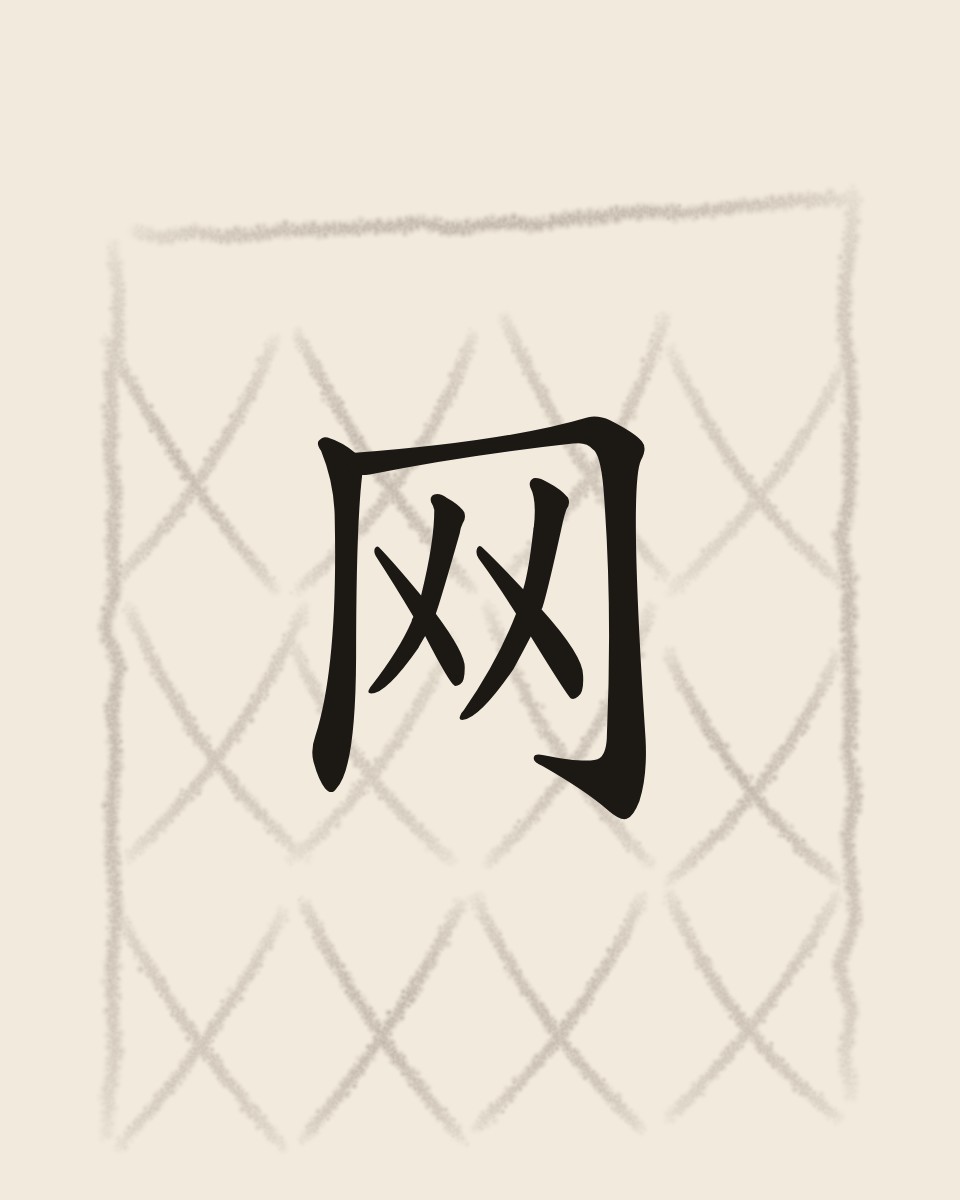
A net hangs between two poles, its mesh drawn as rows of crosses, breathing in the wind. A line traces it from the top down; then the outer crosses fade away, row by row, the farthest first, until only two are left — and those two stretch out to fill the frame. From there the poles round their shoulders into the seal script of the Qin, and the whole thing is pulled straight into 网: the frame is the two poles, and the two ㄨ inside are all that is left of the mesh.
From a fruit on a tree to 果
树上一个果,写成「果」
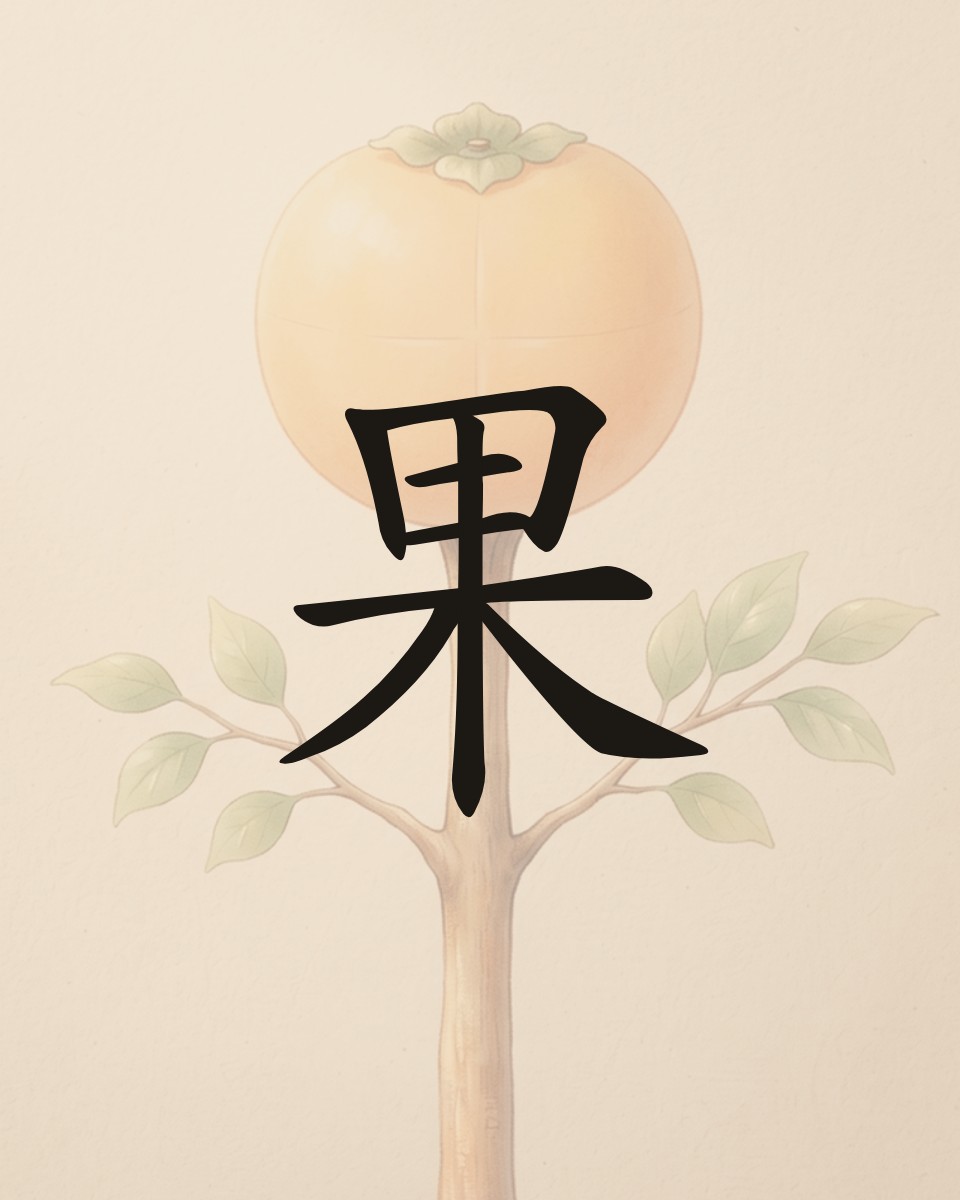
A young tree stands in the light with one big round fruit resting on its crown. The wall and the sand fade away; a line runs round the fruit, along the seam across it, down the trunk, out to each branch and down each root. Then the fruit tightens into the box on top — 田 — and the tree straightens into 木: the trunk the upright, the branches the long line across, the roots the two legs. 果 is a picture of a fruit tree with its fruit still on it.
From two sprigs of leaves to 竹
两簇竹叶,写成「竹」
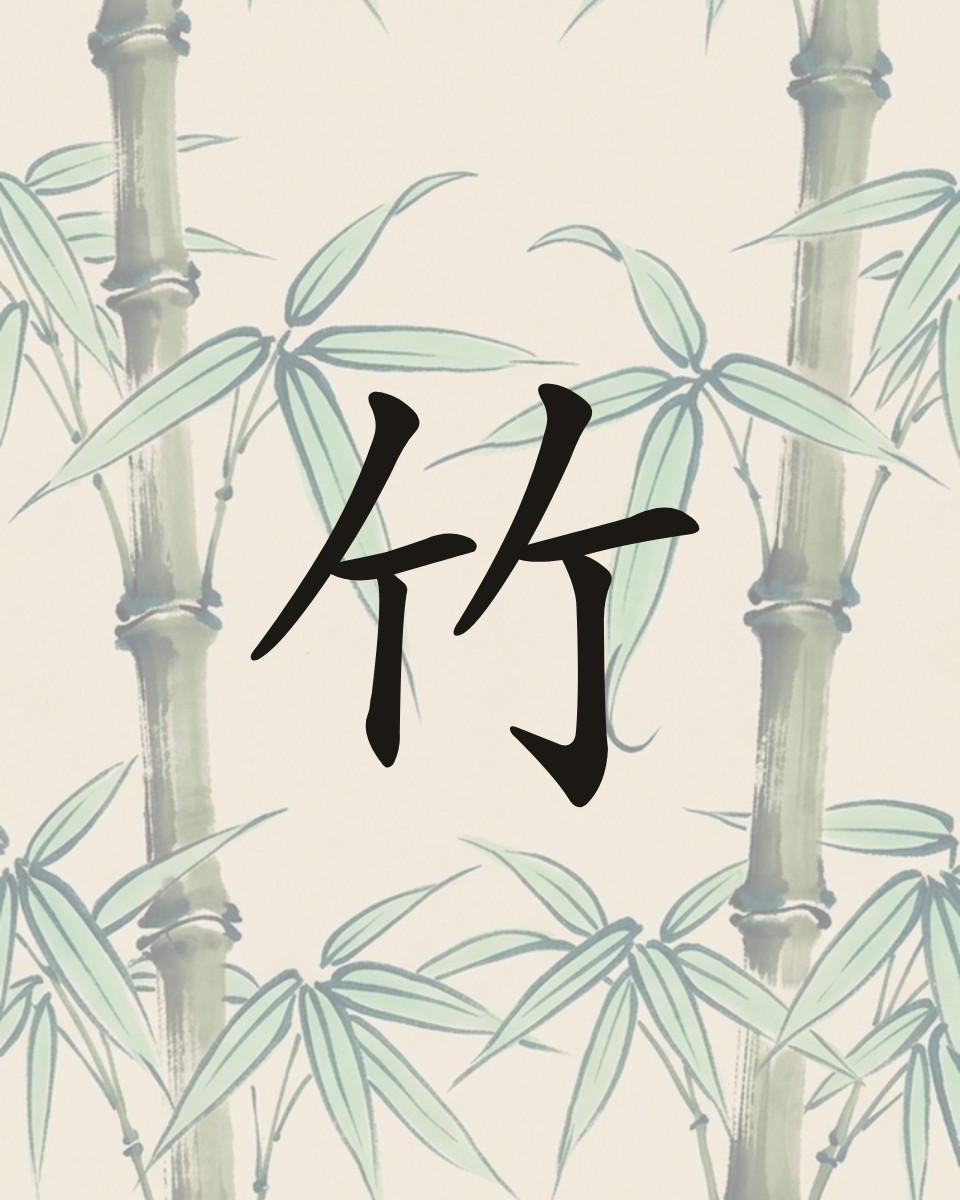
Two bamboo stalks stand in the wind. Then everything fades but two sprigs of leaves, one on each stalk; they turn a little to face you, a line runs along each leaf, and the four lines of each sprig are pulled up into the oracle-bone character — two drooping sprigs of bamboo leaves. Those straighten into 竹: the long leaf into the falling stroke, the side leaf into the short bar, the hanging leaf into the upright. The character was never the stalk; it was always the leaves.
From a cloud and a bolt to 电
一团云,一道闪电,写成「电」
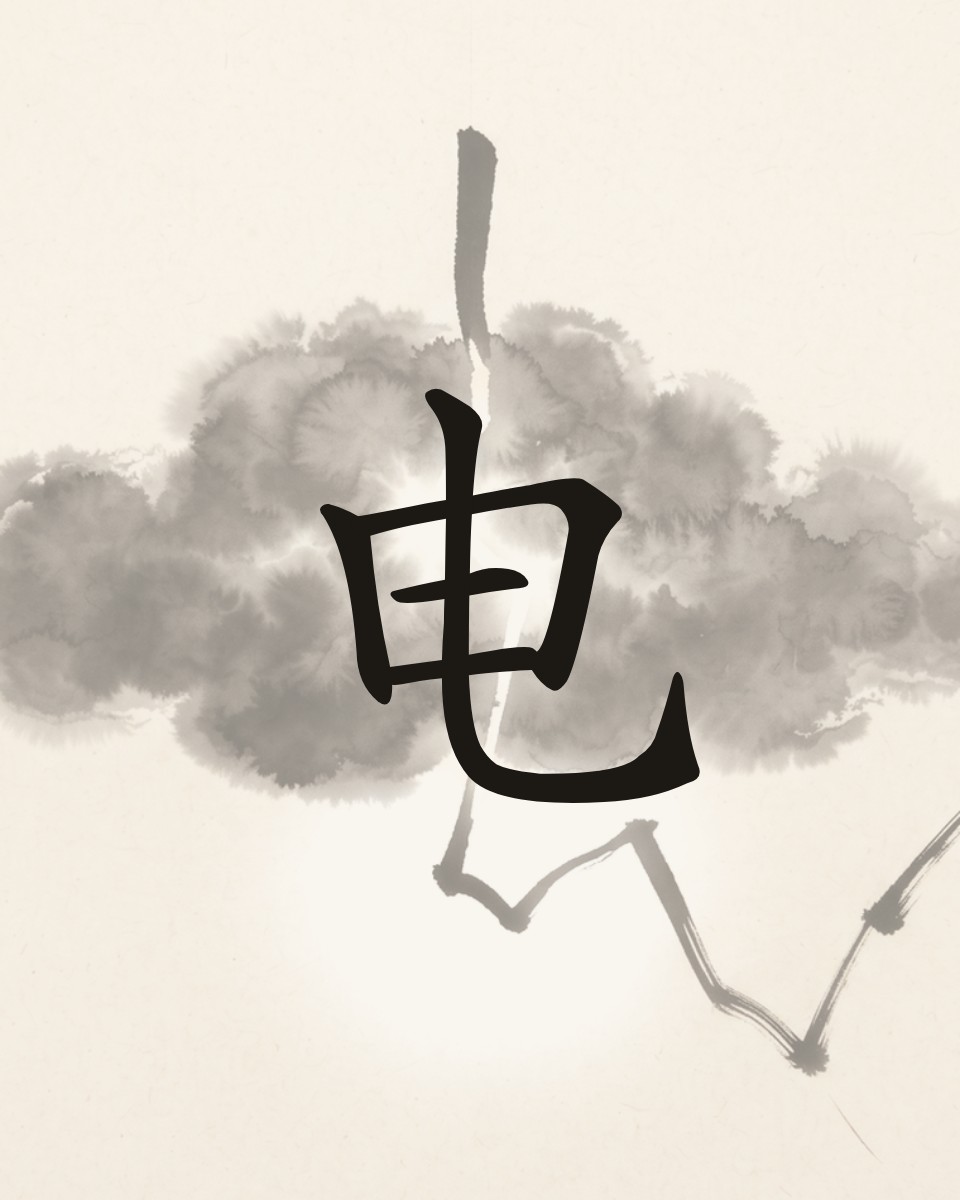
An ink cloud gathers in the middle of the paper; a single bolt strikes down through it and flashes. Then the cloud is traced along its own edge, and that line tightens into the box on top; the bolt below straightens into the stroke that pokes out and hooks to the right. A cloud and a bolt — that is the whole character, and the box on top is the cloud only so that you remember it: historically the character is 申, a picture of the bolt, with 雨 rain added above in 電.
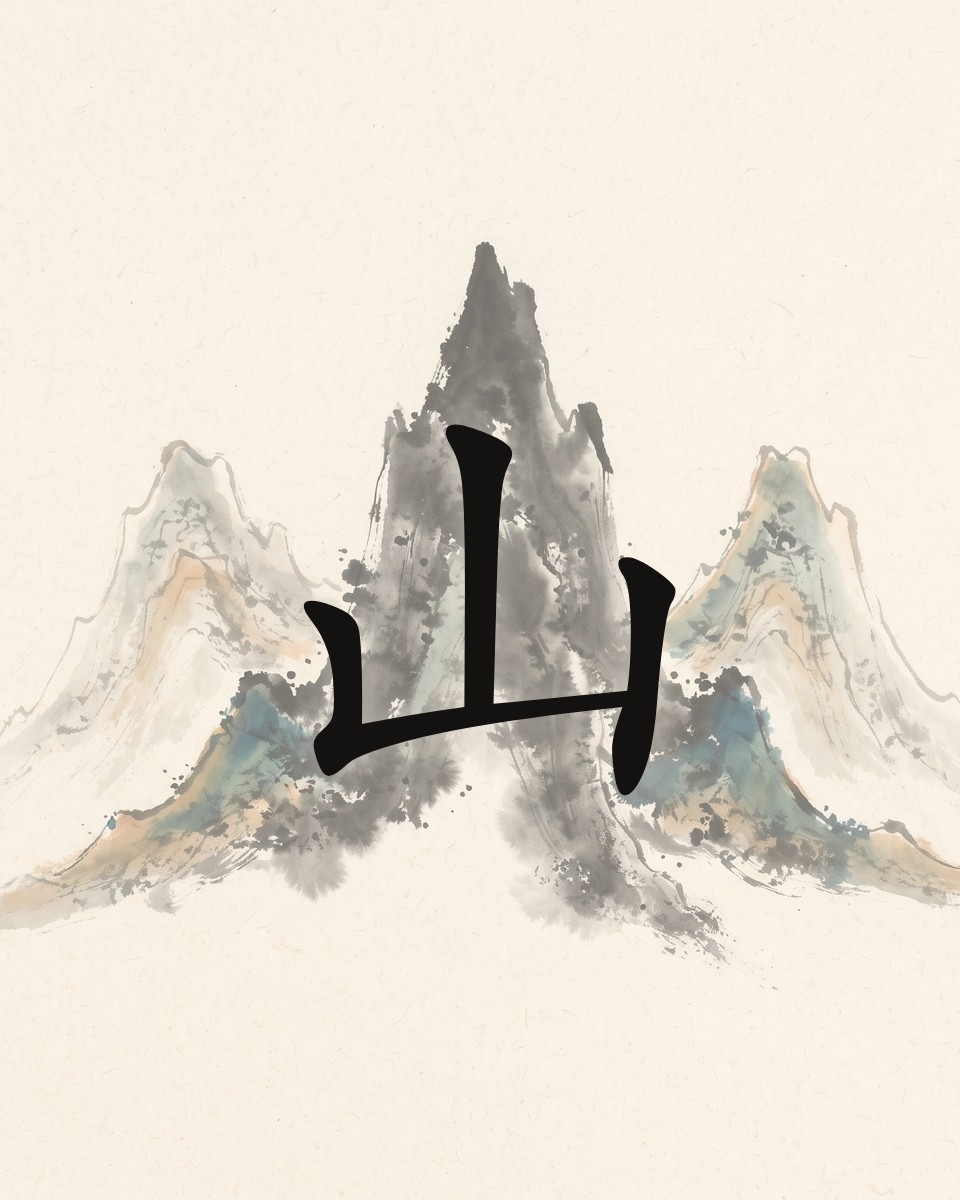
From three peaks to 山
三座山峰,写成「山」
Ink mountains rise out of the paper — one tall peak in the middle, a lower one either side. A brush follows the ridgelines, the tracing tightens into the oracle-bone glyph, and then the slopes straighten: the middle peak becomes the tall stroke, the left peak folds down into the base line, the right peak stands up beside them. Three peaks, three strokes, three thousand years apart.
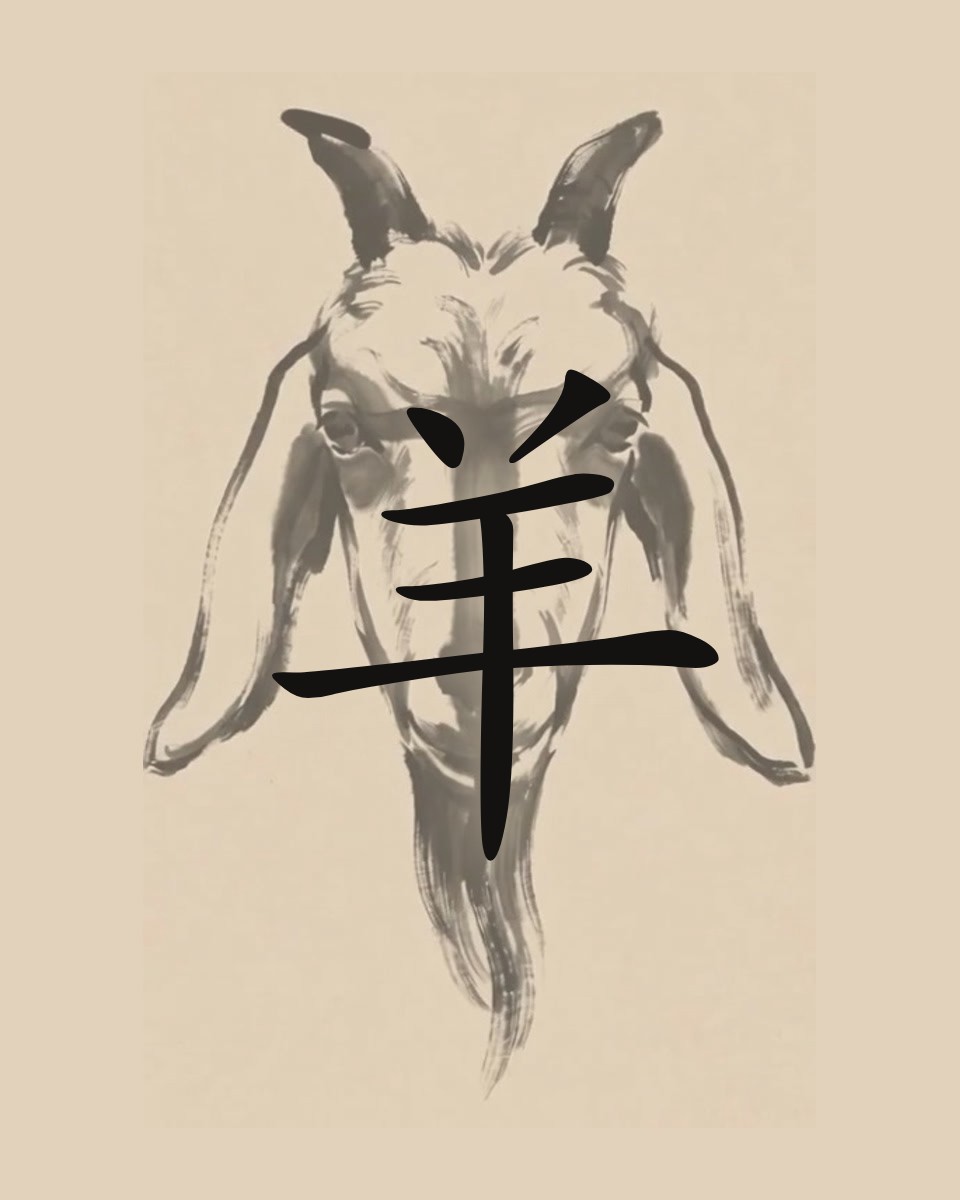
From a goat's head to 羊
一只山羊,写成「羊」
An ink goat looks straight at you — two short horns, a dark line running from its forehead down through its beard, long ears spread wide at the sides. A brush follows those edges, the tracing tightens into the oracle-bone glyph, and then the horns lean in, the ear line drops to become the longest stroke, and 羊 is standing there. Put 大 on top of it and you get 美: a big sheep was what beautiful meant.
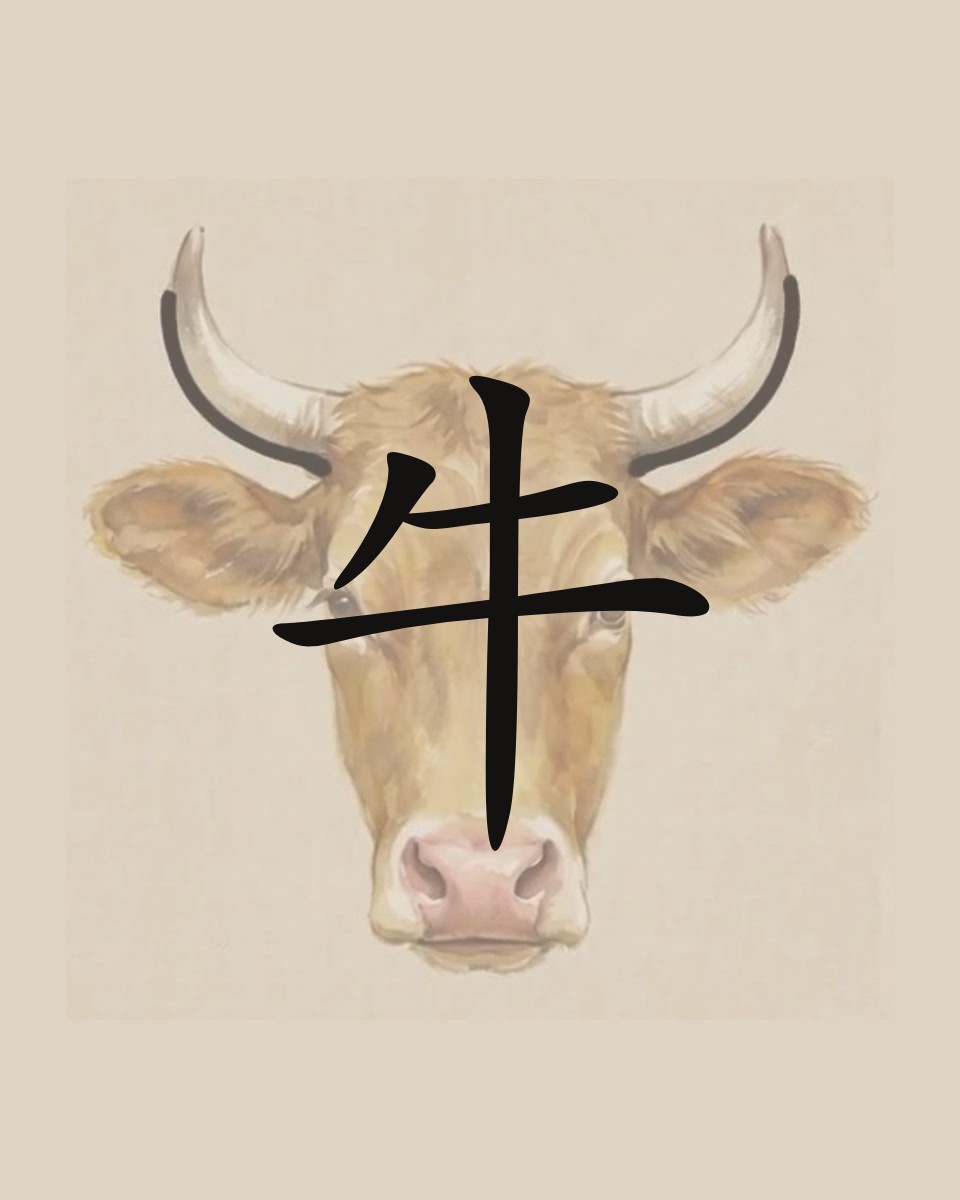
From an ox's head to 牛
一头黄牛,写成「牛」
A warm ochre ox, painted in colour for once, looking straight out at you: two horns swept up, the ears spread wider than anything else on its head, a line running from between the horns down to the muzzle. The line traces its own edges, tightens into the oracle-bone glyph, and settles as 牛. Put it beside 羊 and the pair separates at a glance — the ox's horns point up, the goat's curl down. Confucius already said so.
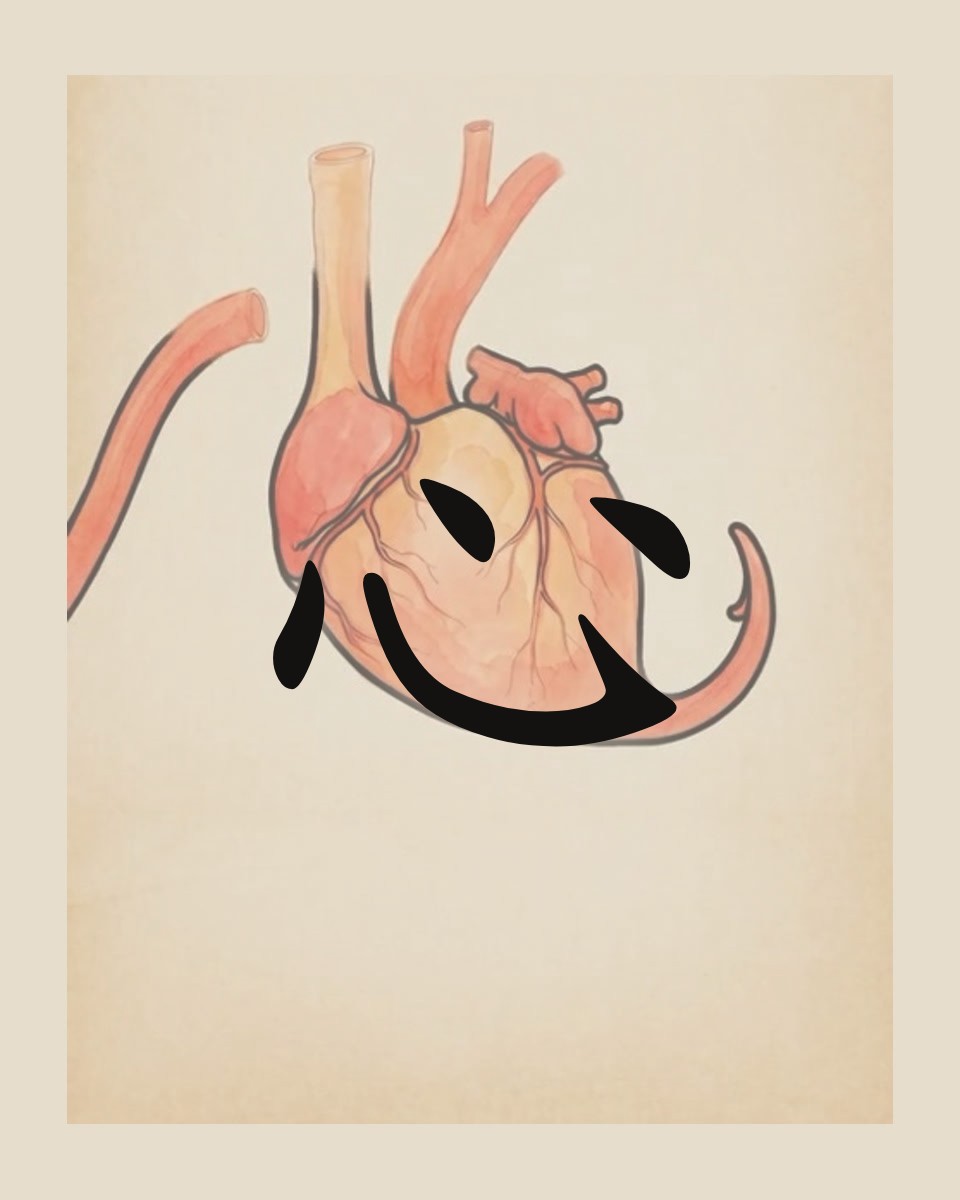
From a beating heart to 心
一颗心脏,写成「心」
A real heart, in red — not the valentine shape. Its lower edge sweeps left to right and lifts at the end; one vessel reaches out to the left and hangs down; two more rise from the top. Those four things are the four strokes of 心, in that order. Learn it once and you have the piece inside 想, 感, 爱, 忙, 快 — every character about what a person feels.
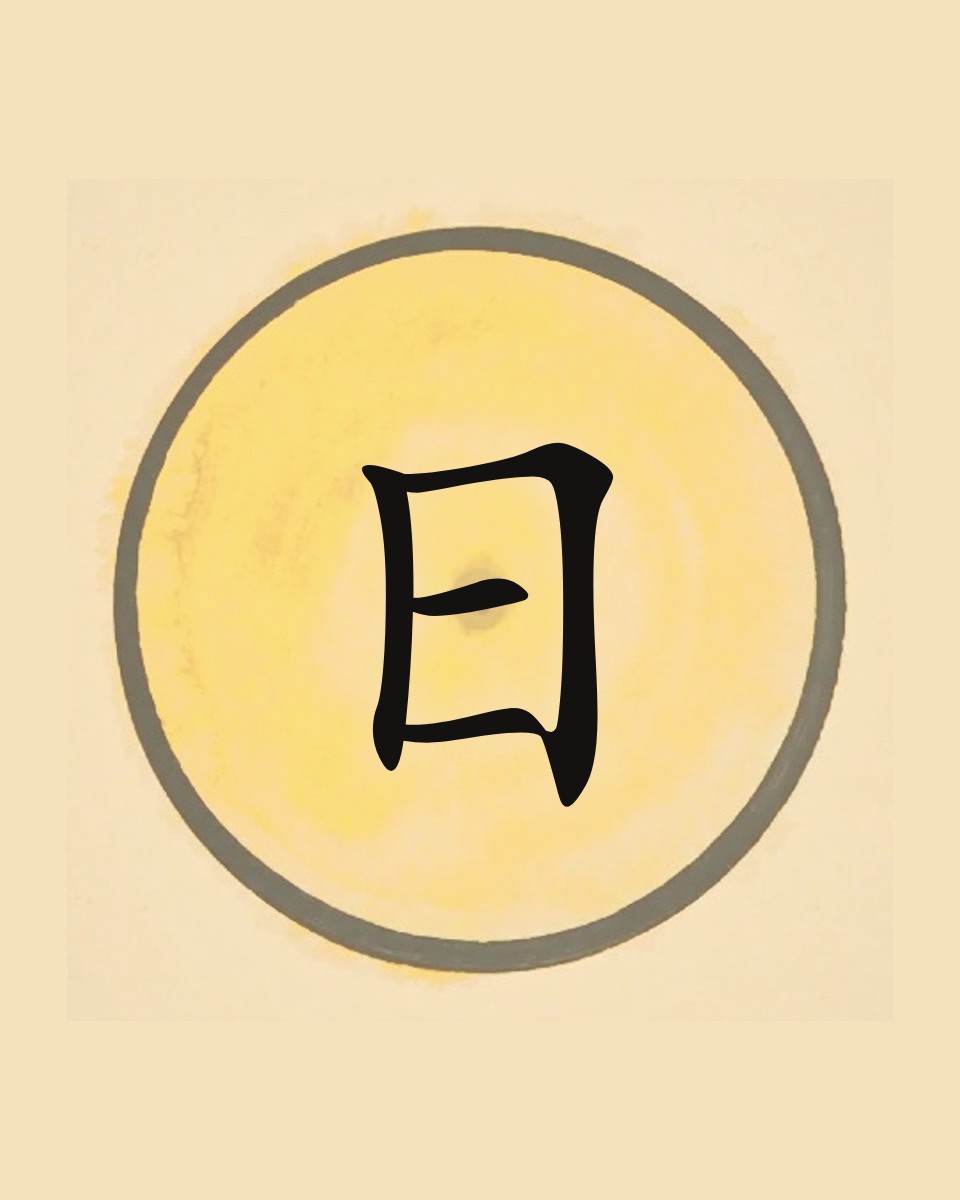
From the sun to 日
一轮太阳,写成「日」
A golden ink sun, and a brush line that follows its own rim and the dot at its centre. The tracing tightens into the bronze glyph — a circle with a dot — and then the circle squares up: the rim becomes the frame, the dot becomes the line inside. 日, the sun, drawn full.
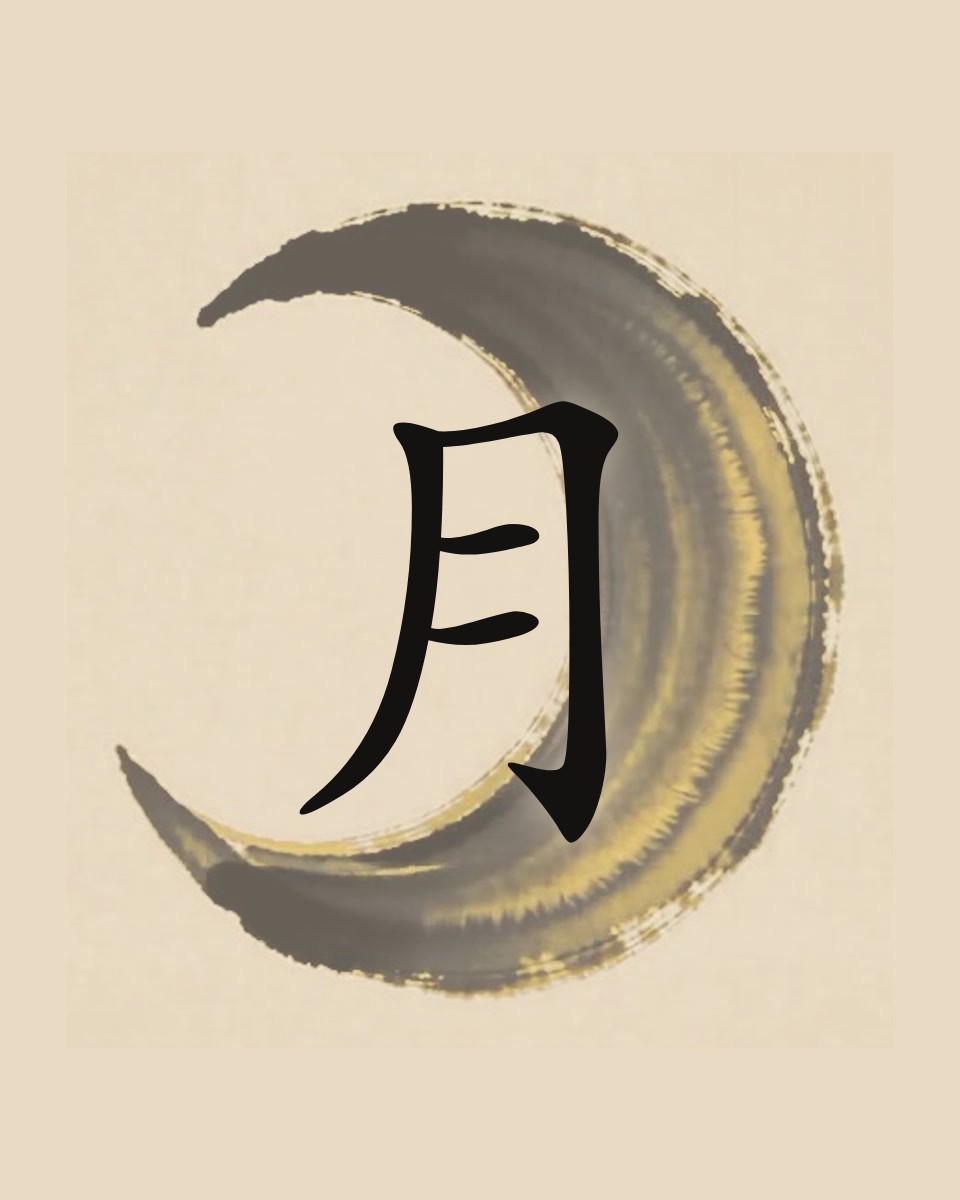
From a crescent moon to 月
一弯月牙,写成「月」
A crescent moon in ink, and a brush line that follows its own edges — the bright outer rim, the dark inner curve, the two faint marks across its face. The tracing tightens, then the curve straightens: a round moon turns into a square word. 月, the moon, drawn lacking.
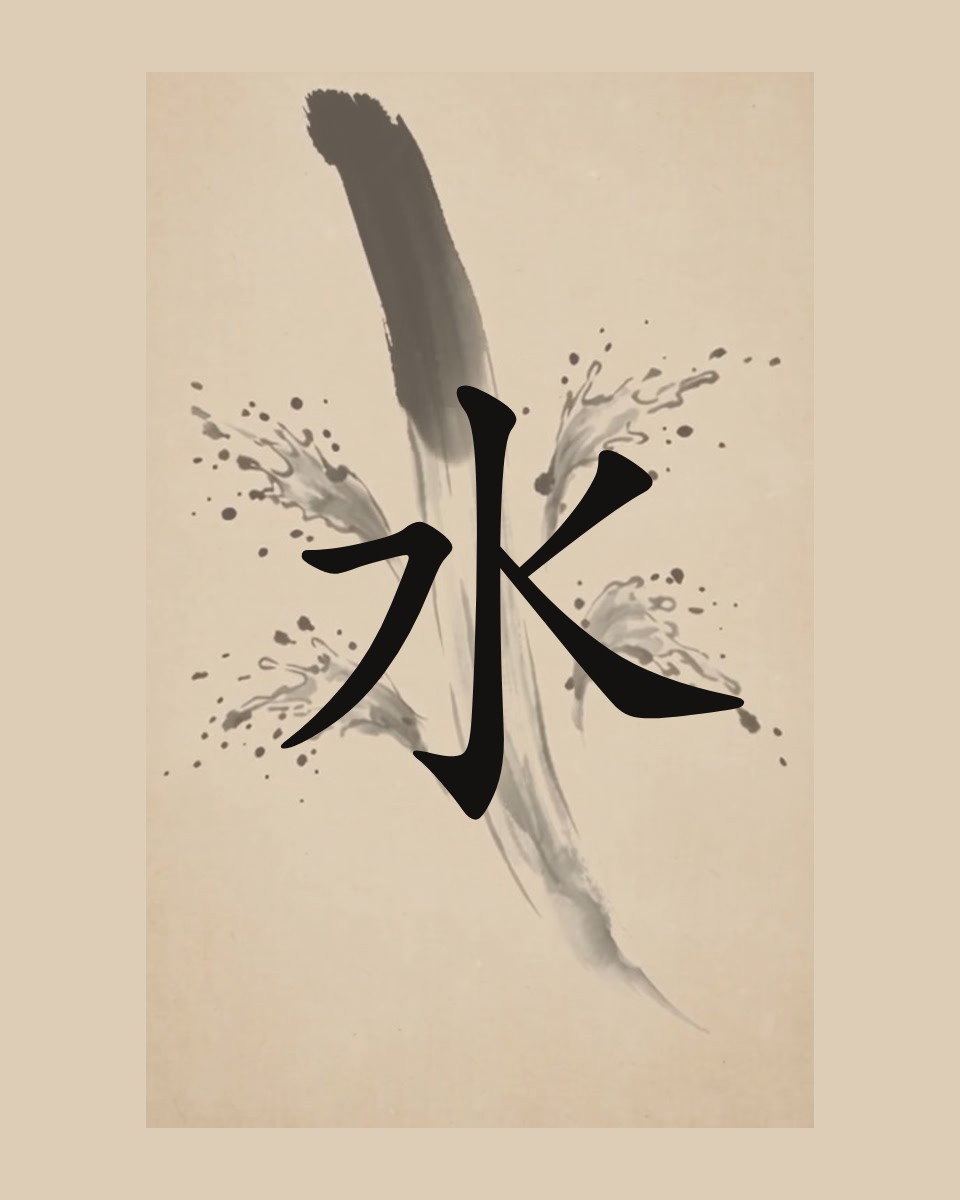
From running water to 水
一股流水,写成「水」
Ink water pours down the frame — one current in the middle, spray thrown out either side. A brush follows what the water is already doing, the tracing tightens into the bronze glyph, and then the spray straightens into strokes while the current stands up and hooks. Squeeze the whole thing thin and you get 氵, the three drops in 河, 海, 酒, 洗.
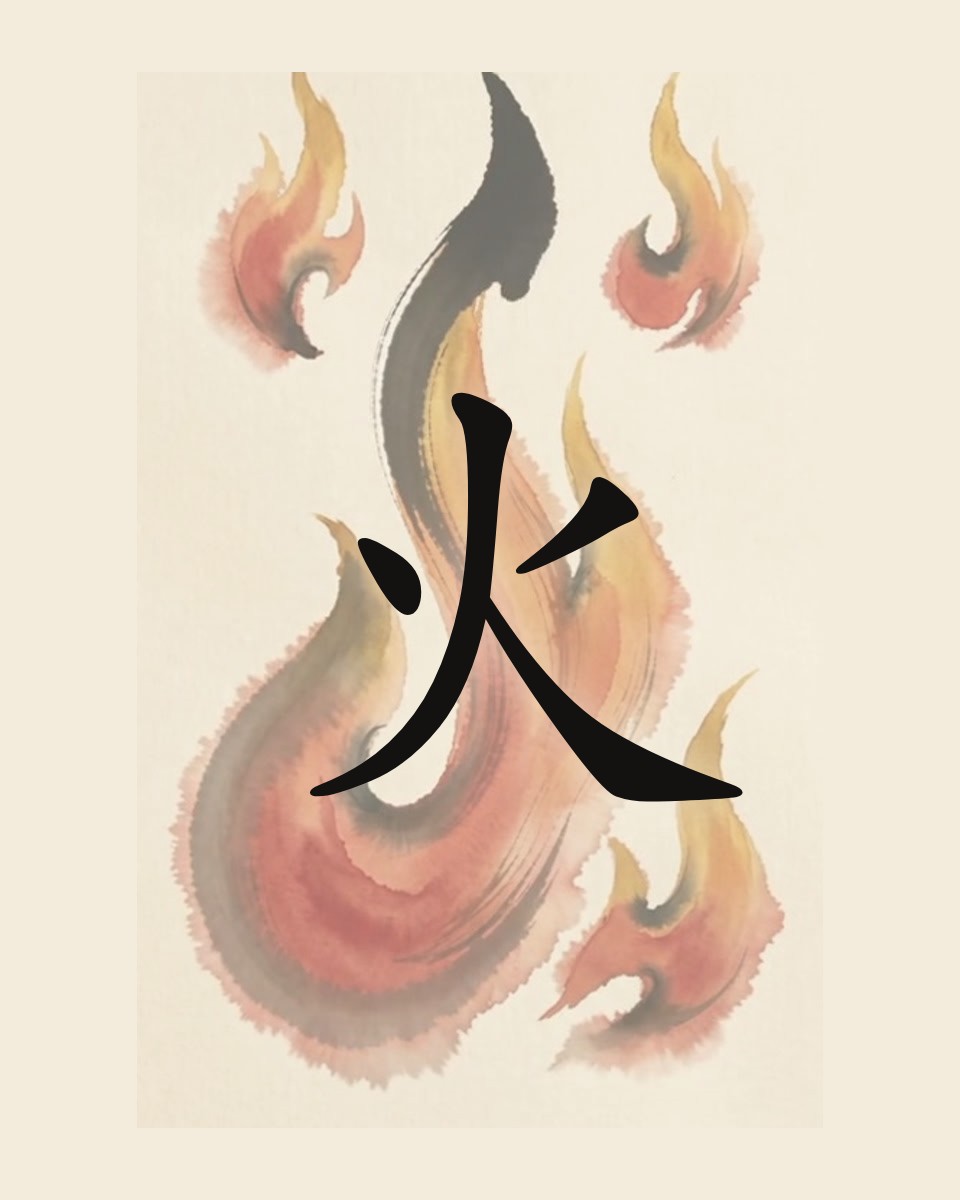
From a flame to 火
一团火,烧成「火」
An ink flame burns, a brush line traces its own shape, the colour drains away and the ink hardens into the character 火 — two side flames become two dots, the main flame becomes the two long strokes.
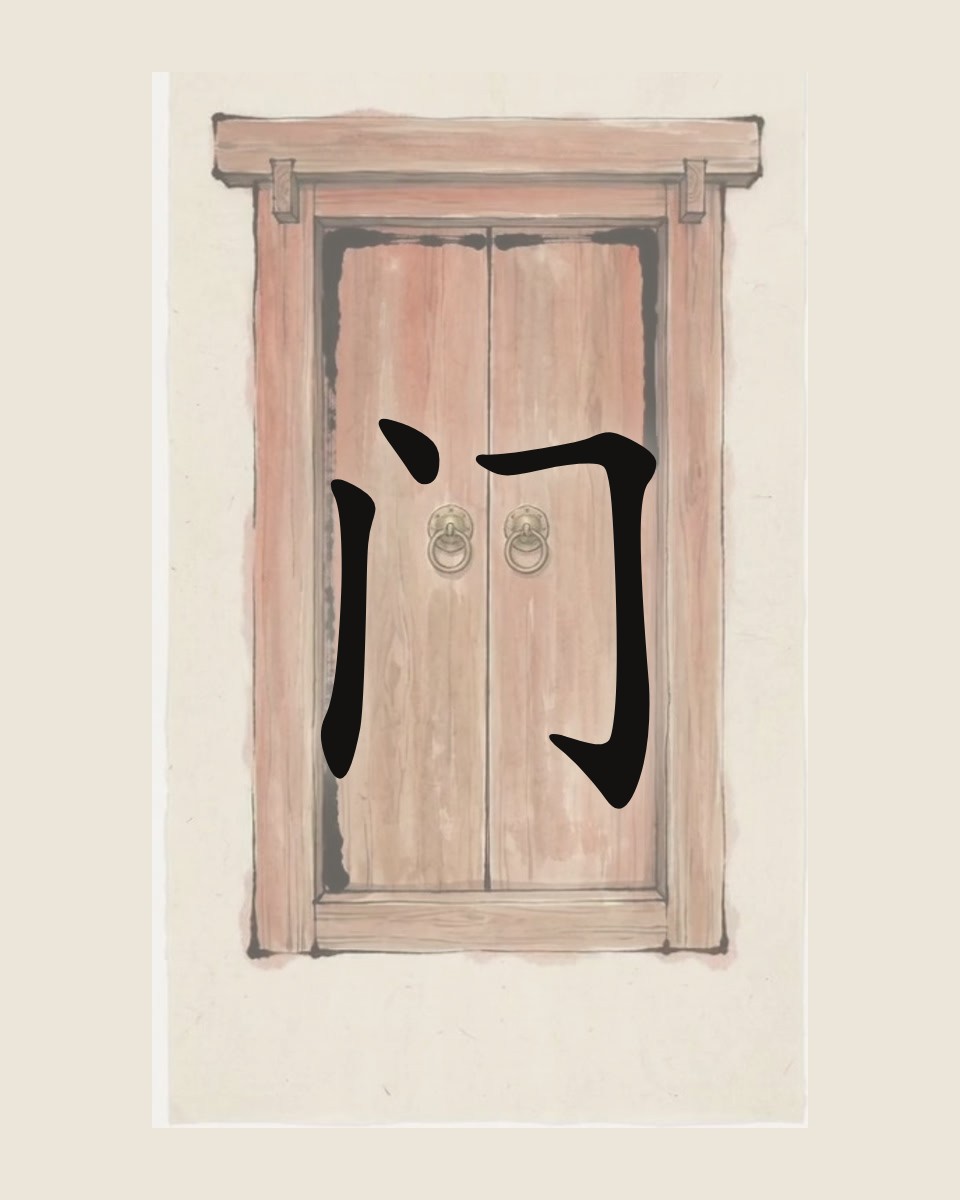
From a wooden gate to 门
一扇木门,写成「门」
A brush line traces a Chinese courtyard gate — two leaves, a lintel, a threshold — and the tracing hardens into the oracle-bone glyph, then straightens into 門, then folds into the three strokes of the simplified 门.
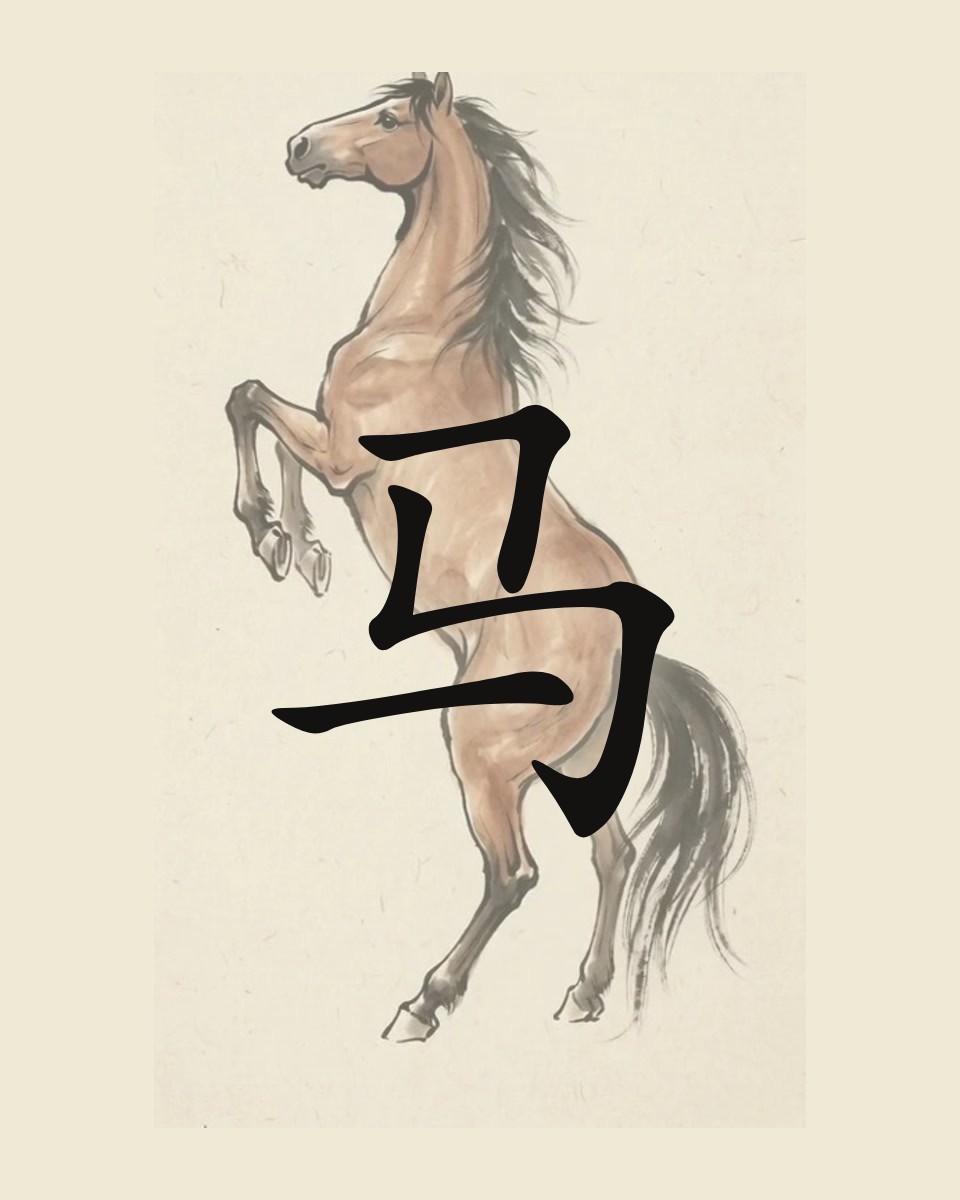
From a rearing horse to 马
一匹马,写成「马」
A brush line traces a rearing ink horse — head, flying mane, back, legs, tail — and the tracing hardens into the oracle-bone glyph, straightens into 馬, then folds from ten strokes into the three of 马.
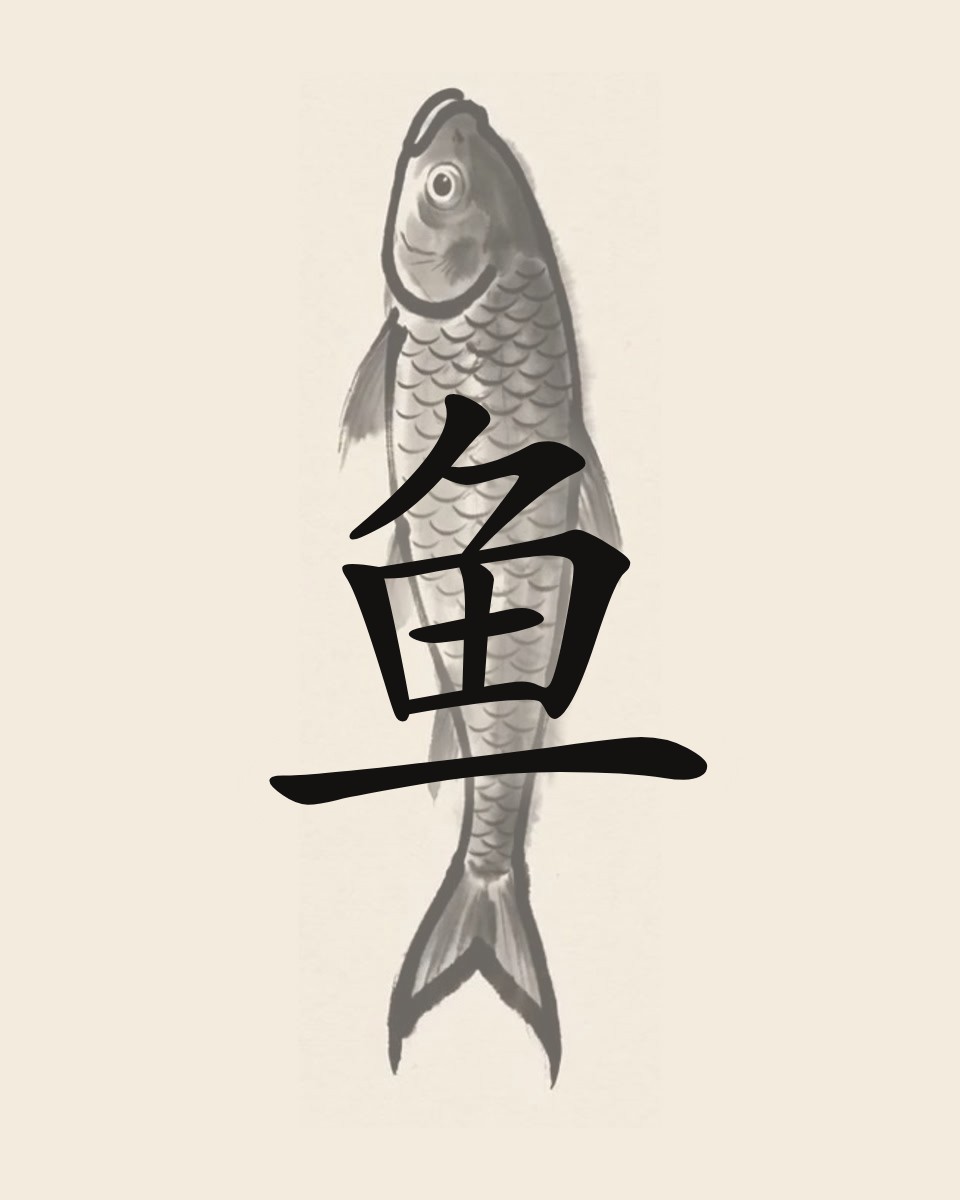
From a swimming fish to 鱼
一条鱼,游成「鱼」
A brush line traces an ink fish — the round eye, the rows of scales, the forked tail — into the bronze-script glyph, which squares up into 魚 with its tail spread as four dots, and then those four dots close into the single line under 鱼.
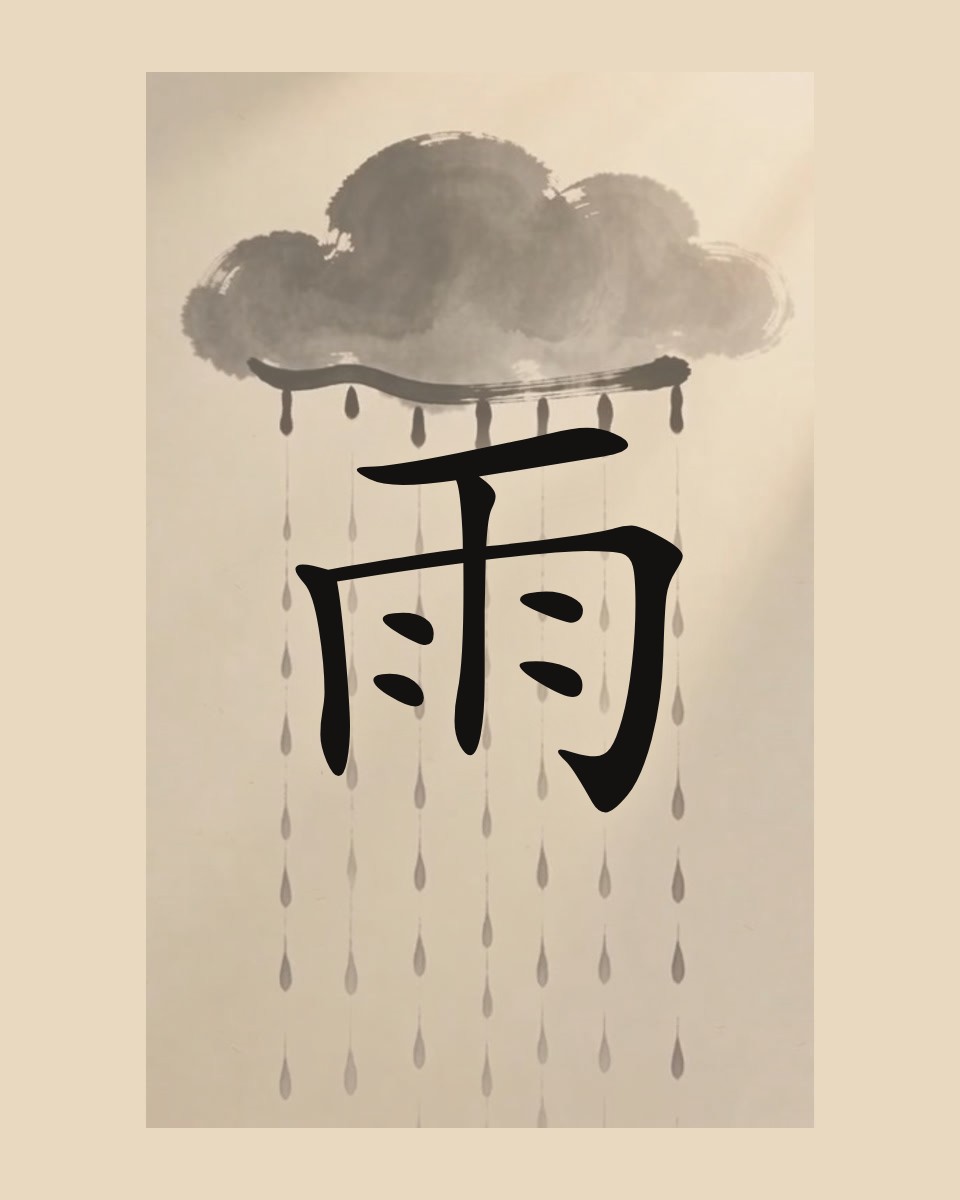
From falling rain to 雨
一场雨,落成「雨」
An ink cloud lets its rain fall, the drops line up into the oracle-bone glyph, and the glyph condenses into the character 雨 — the rain never stops falling inside it.
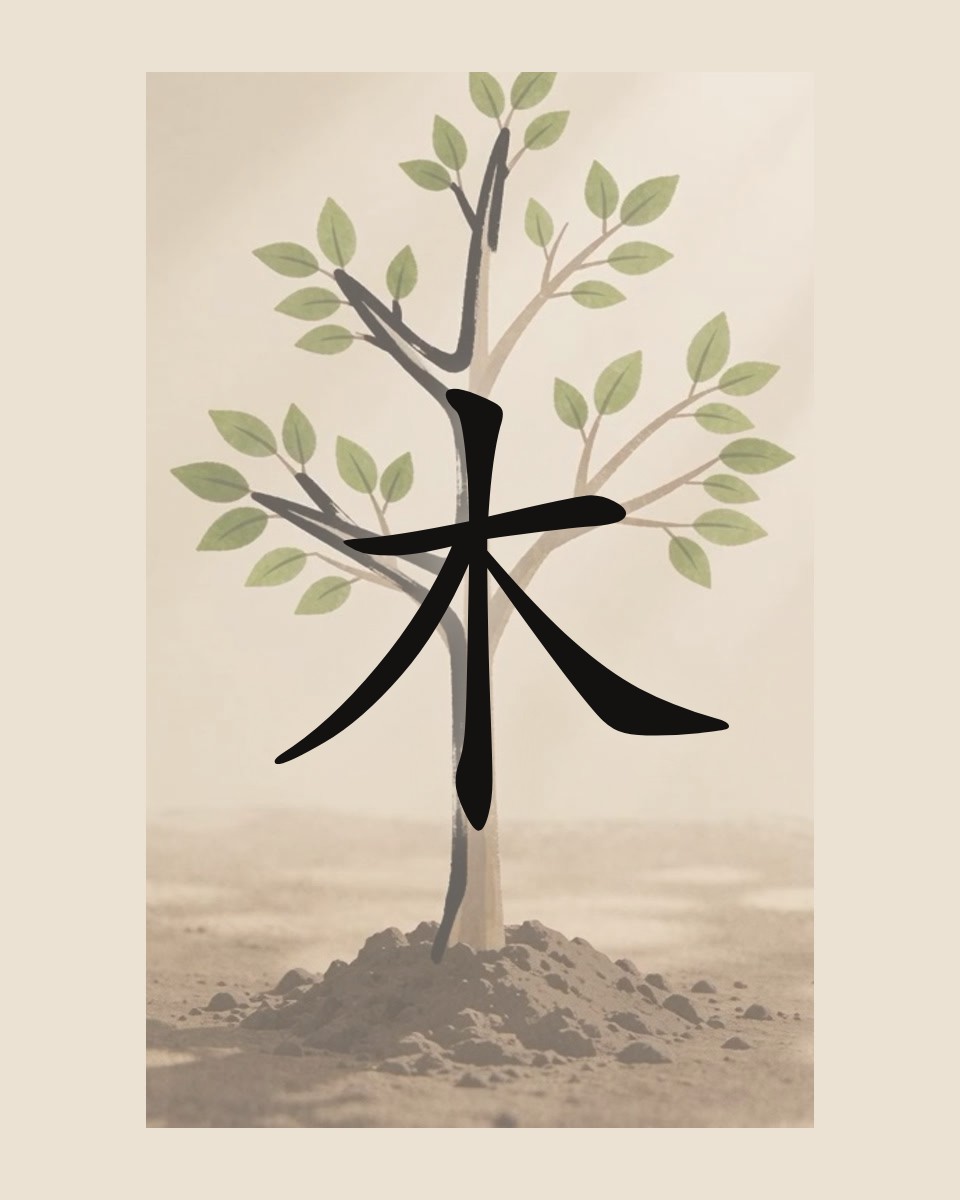
From a tree to 木
一棵树,变成「木」
A little tree is traced into an ancient pictograph, then settles stroke by stroke into the modern character 木 — every stroke pointing back at the branch, trunk or root it came from.

The four tones, one body movement each
四声 · 一个声调一个动作
The whole tone system in one lesson, taught the way Teacher Jane teaches it in class: tone one is the dentist's 「啊」, tone two is an English "What?", tone three is that scrape at the back of your throat, and tone four is a punch. Four body movements, twelve words to repeat after her, and a listening test at the end.
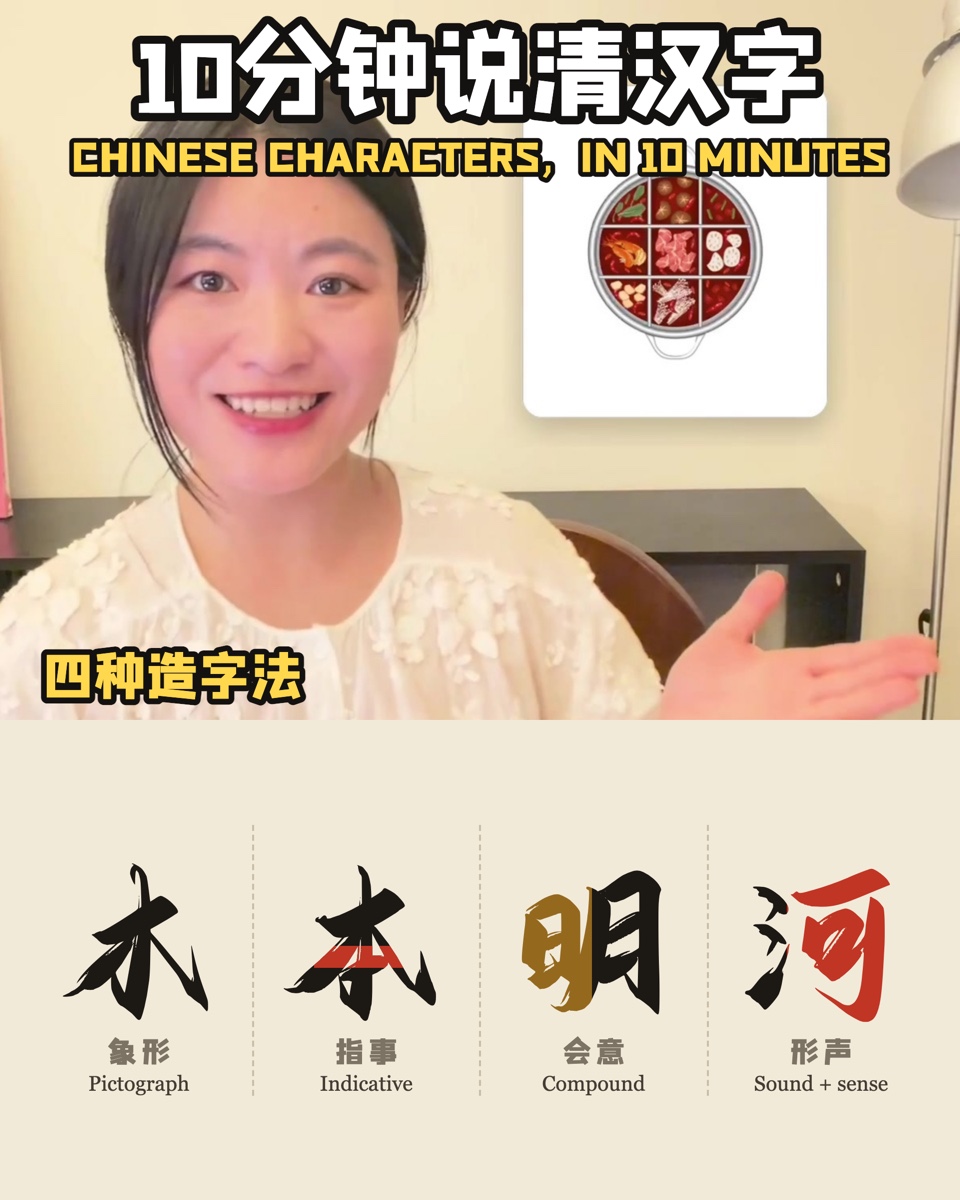
The four ways Chinese characters are built
汉字的四种造字法
The full eight-minute lesson on the four ways every Chinese character was built — pictures (象形), pointers (指事), meaning-sums (会意) and sound-halves (形声) — ending back on the street signs you can suddenly read.
汉字
New characters, week by week
The first stories are free to watch. Subscribe to keep watching every new character — and to download the videos for offline review.