
A ribbon on the treetop: 末
树梢上系红丝带,就是“末”
Look at the very top of a tree, and tie a red ribbon on its tip. The ribbon, the branches, the trunk and the ground become 末 (mò, tip, end). 周末 (zhōumò) is the weekend, the end of the week. This trick is almost true: the oldest 末 put a mark on the top of a tree, and 本 put it on the root. With English narration and subtitles.
November 11, 2026
Downloads come with the student subscription and with the Chinese Characters deck.
For your own study and your class only. Please do not post it online or sell it.
Write it yourself
Watch the strokes go down in order, then take over and write it. The panel says when a stroke lands in the wrong place.
Stroke data: hanzi-writer-data (Arphic Public Licence)
Try it while it's fresh
A few quick questions while the shape is still fresh — mostly pictures, no reading required.
记忆卡
Memory card
One page: the character, the look-alikes it gets confused with, and the words it builds. Print it, or keep it on your phone.
This preview is watermarked and low-resolution — fine to read, too soft to print. The download is the clean, printable sheet.
How the character evolved 字的演变
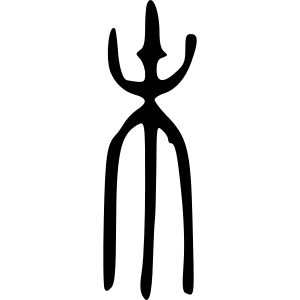
金文
Bronze · Zhou
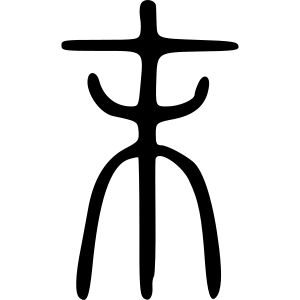
小篆
Small seal · Shuowen
楷书
Regular script
末:「木上曰末。从木,一在其上。」
The top of a tree is called 末. From 木, with a line on top.
Ancient forms: Wikimedia Commons Ancient Chinese Characters project (CC0)
More character stories 汉字
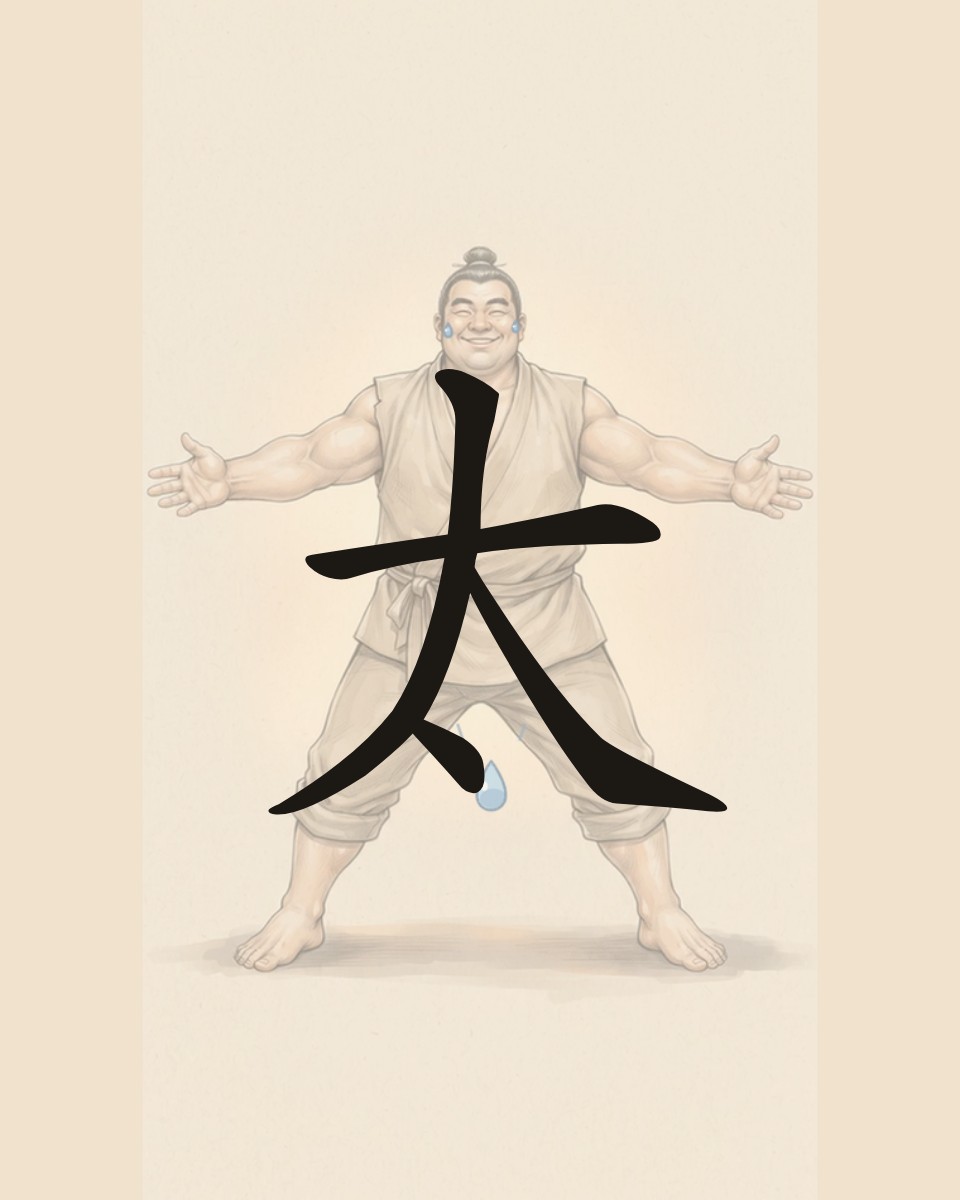
Too hot! 太
热得掉下一滴汗,就是“太”
A big man stands in the hot sun. It's so hot! Drip! A big drop of sweat falls. His arms, his legs and the drop of sweat become 太 (tài, too, very). 太热了!Too hot! 太好了!Great! This trick is almost true: 太 comes from 大 (dà, big), with one more dot. With English narration and subtitles.
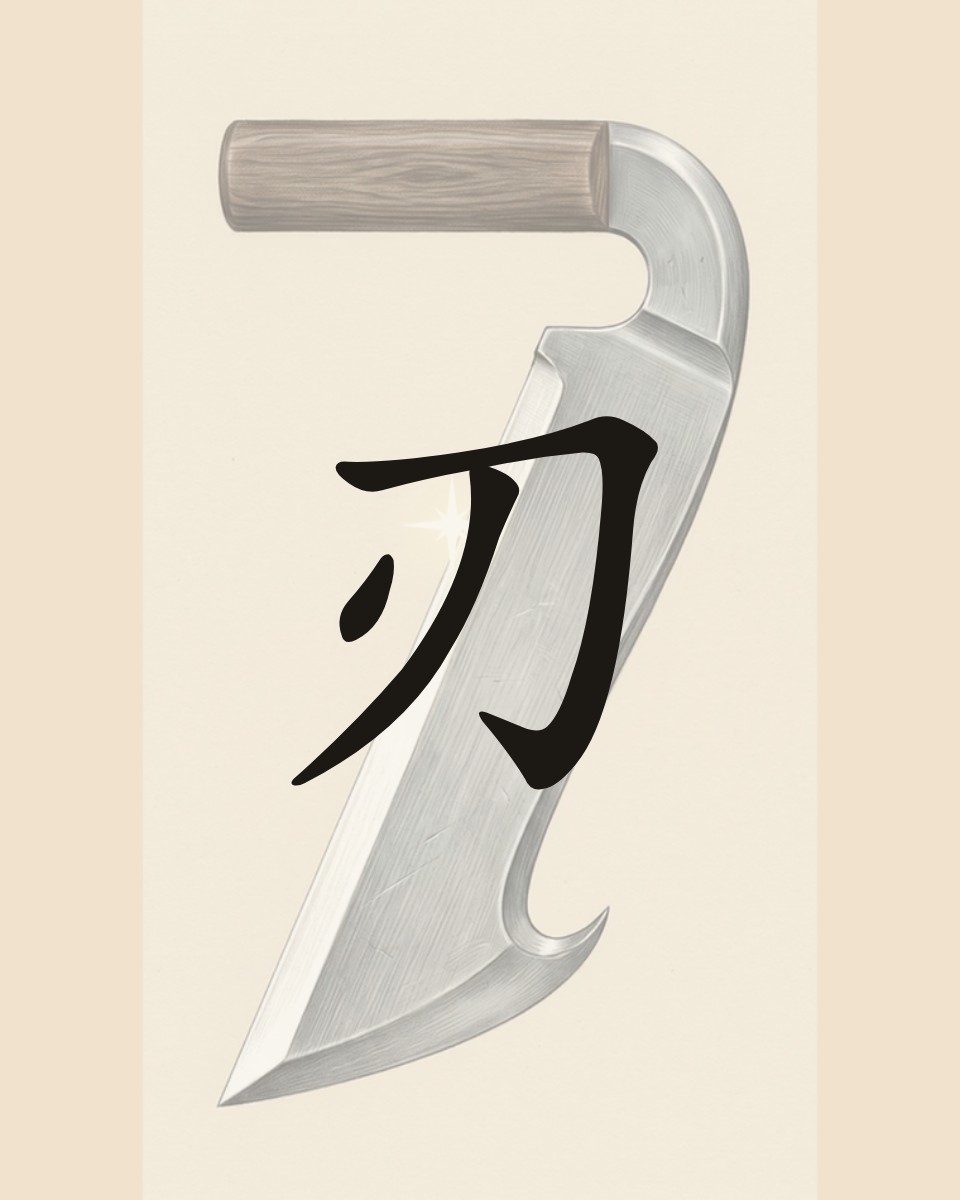
A flash on the blade: 刃
刀口上一闪,就是“刃”
Here is a knife. Look! Its edge flashes: be careful, it's sharp! The handle, the back, the edge and the flash of light become 刃 (rèn, blade, the cutting edge). 刀 is a knife, and 刃 is its sharp edge. This trick is almost true: the oldest 刃 was a knife with a mark on its edge. With English narration and subtitles.
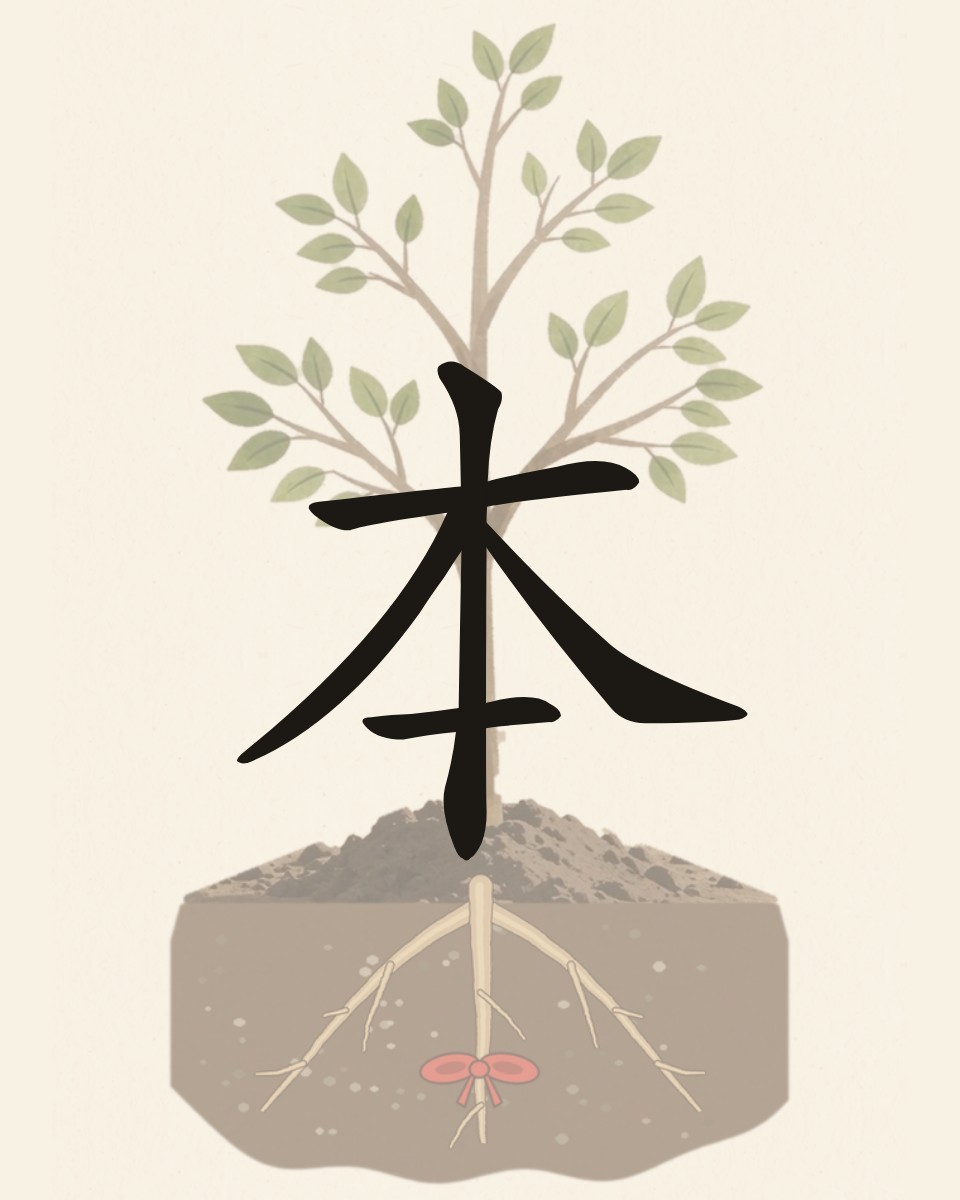
A ribbon on the root: 本
树根上系个红蝴蝶结,就是“本”
A little tree has roots under the ground. Tie a red ribbon on the root, and the tree becomes 本 (běn, root, origin). 一本书 (yì běn shū) means one book. This trick is almost true: the oldest 本 put a mark on the root of a tree. With English narration and subtitles.
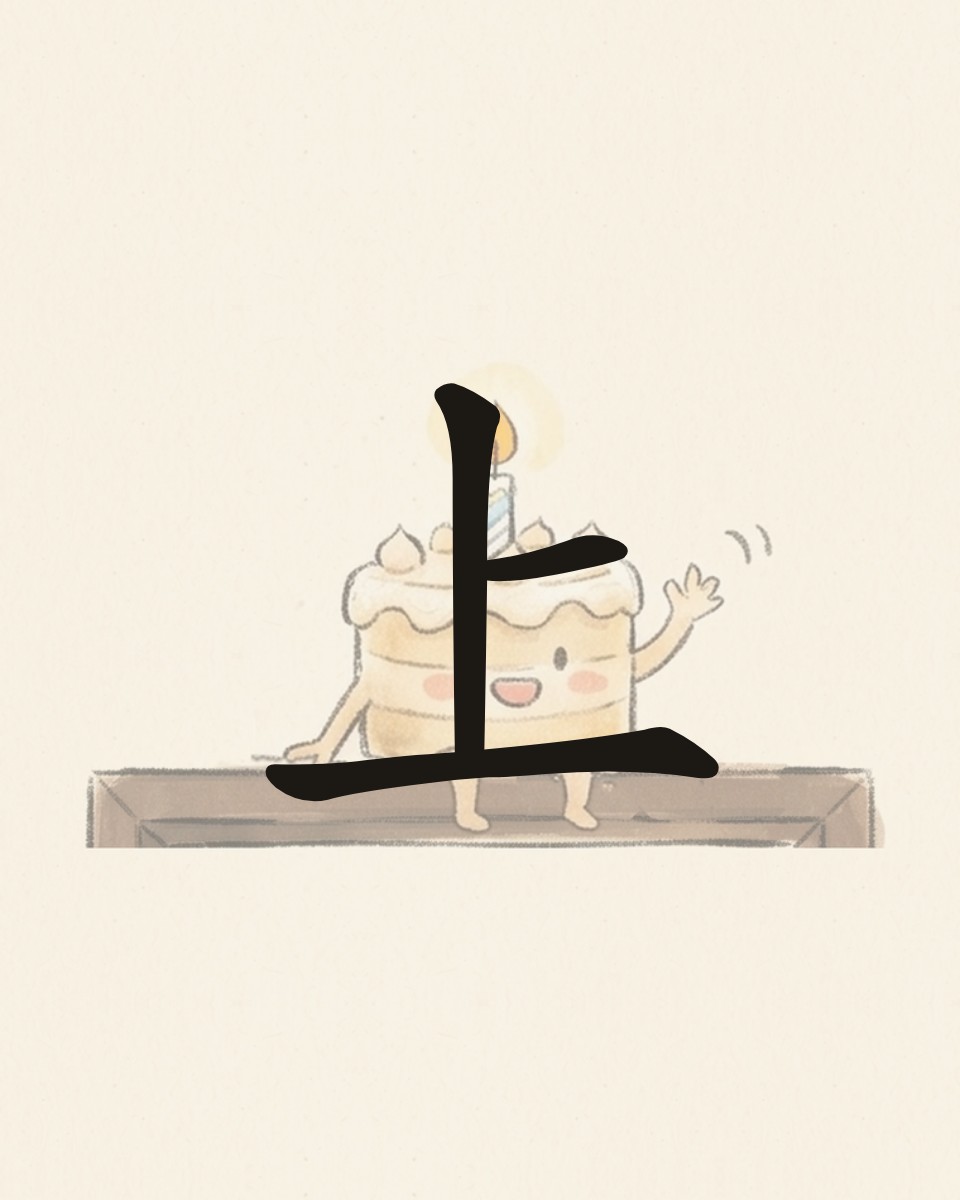
A little cake on the table: 上
小蛋糕坐在桌面上,就是“上”
A little cake jumps up and sits on the table. The candle, its arm and the table become 上 (shàng, on, up). Long ago, 上 was just a short line above a long line. With English narration and subtitles.
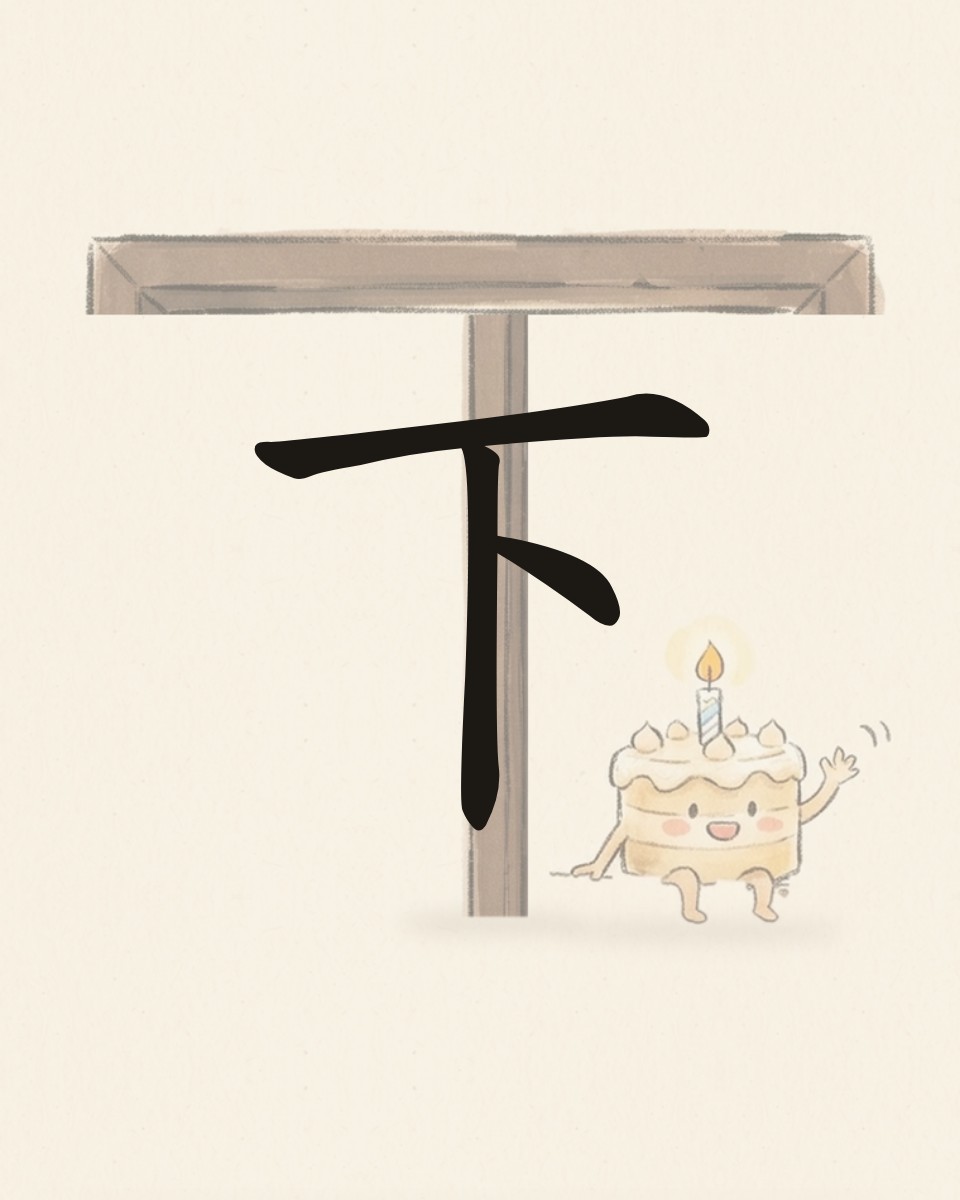
A little cake under the table: 下
小蛋糕跳到桌子下面,就是“下”
A little cake jumps down and sits under the table. The table, the pole and the little cake become 下 (xià, under, down). Long ago, 下 was just a short line below a long line. With English narration and subtitles.
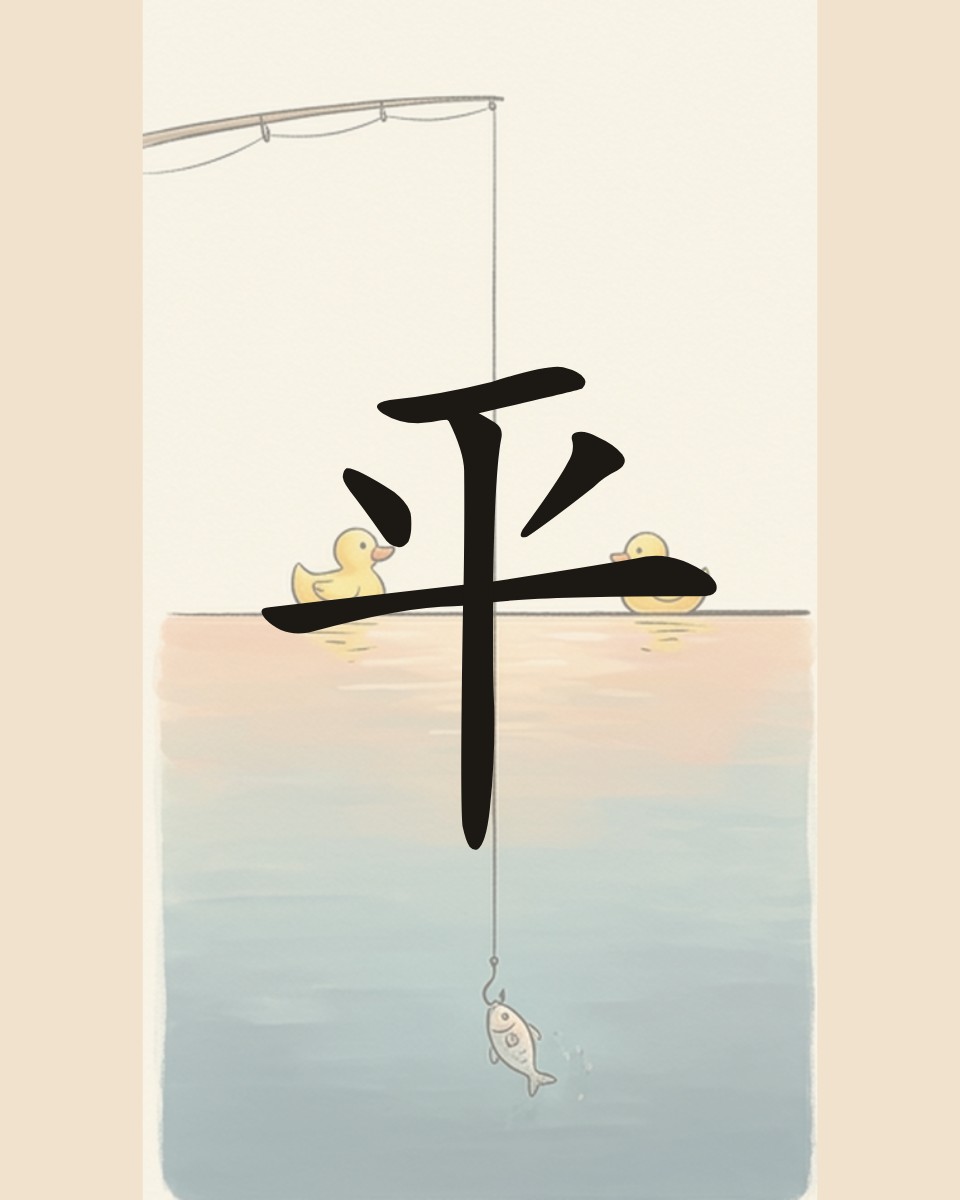
A calm, flat lake: 平
钓鱼竿下平平的湖面,就是“平”
A calm lake with a fishing rod and two little ducks. The water is so flat, not one ripple! The rod, the ducks, the water and the fishing line become 平 (píng, flat, calm). 平安 (píng'ān) means safe and well. This is just a memory trick. With English narration and subtitles.
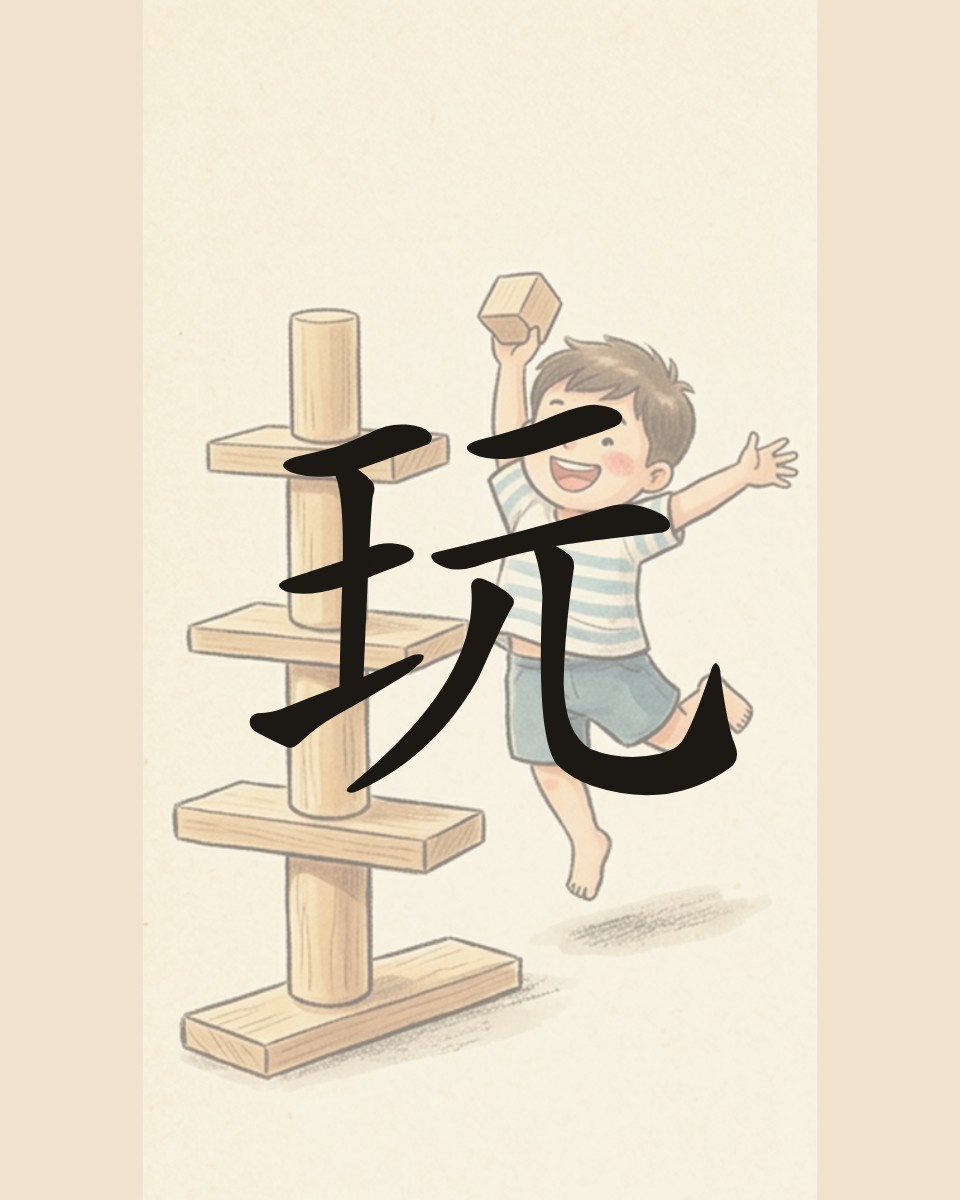
Playing with blocks: 玩
举着积木蹦起来,就是“玩”
A little boy builds a tall tower with blocks, then jumps up with one more block. Playing is fun! The tower, the block, his arms and his legs become 玩 (wán, to play). 好玩 (hǎowán) means fun. This is just a memory trick: really, 王 (jade) is for the meaning, and 元 (yuán) gives the sound. With English narration and subtitles.
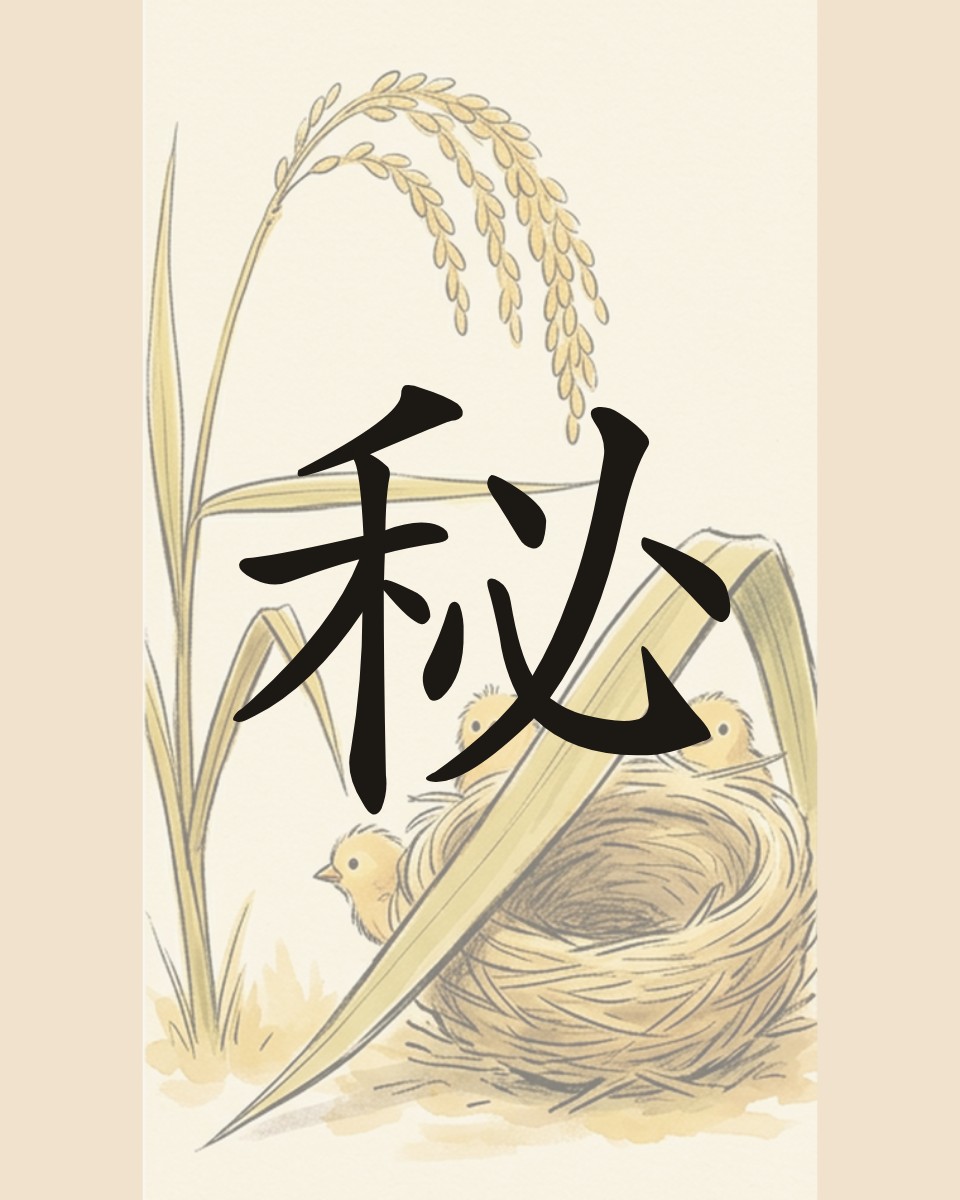
A secret nest: 秘
稻田里藏着的鸟窝,就是“秘”
A golden rice field. Look behind the rice: a little nest, hidden under a big leaf. Shh, it's a secret! The rice, the three little birds, the nest and the big leaf become 秘 (mì, secret). 秘密 (mìmì) means a secret. This is just a memory trick: really, 必 (bì) gives the sound. With English narration and subtitles.
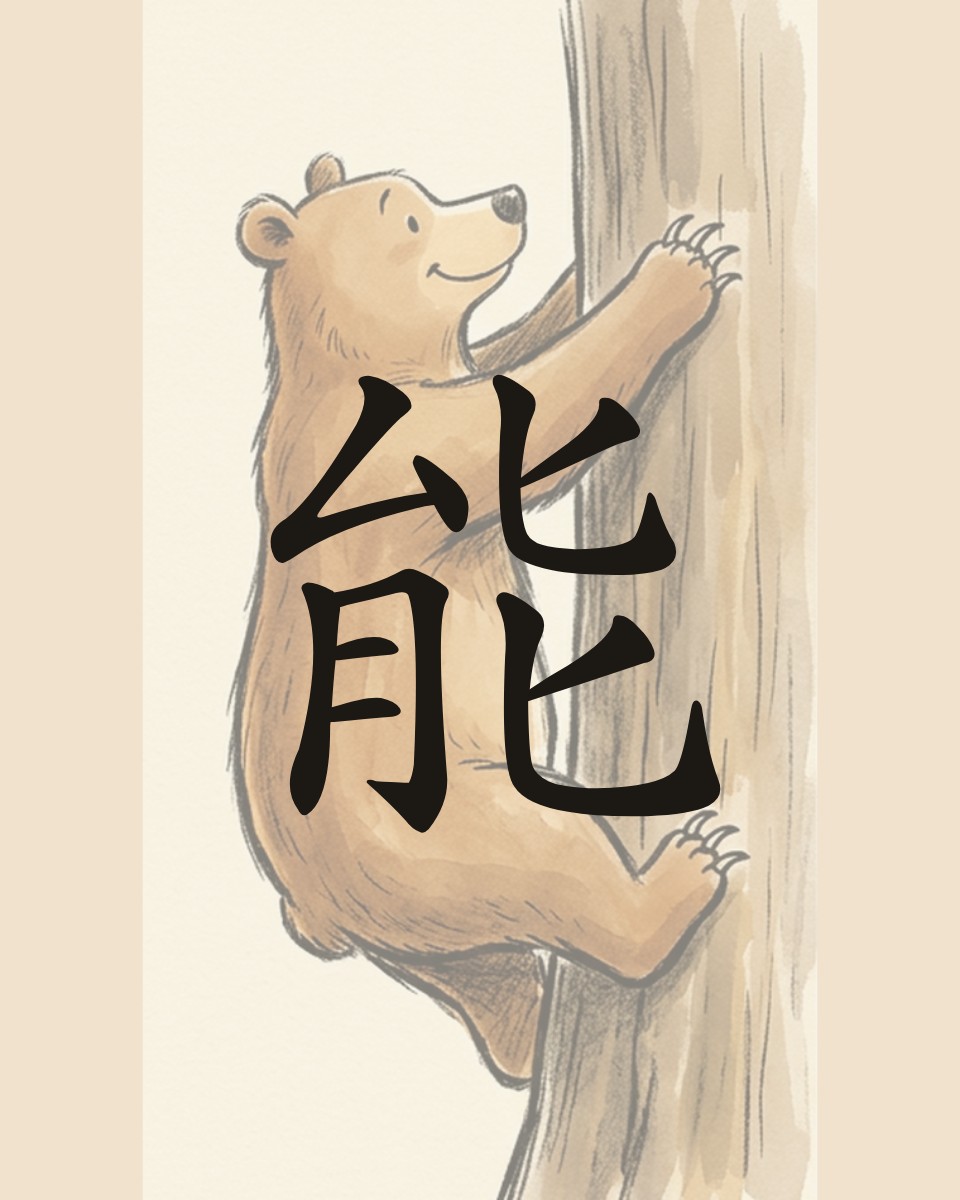
The bear can climb: 能
大熊能爬树,就是“能”
A big brown bear climbs a tall tree. Up, up, up! The bear can do it! Its head, its body and its strong paws become 能 (néng, can, be able to). 你能来吗?(nǐ néng lái ma?) Can you come? This time the story is true: the oldest 能 was a picture of a bear. With English narration and subtitles.
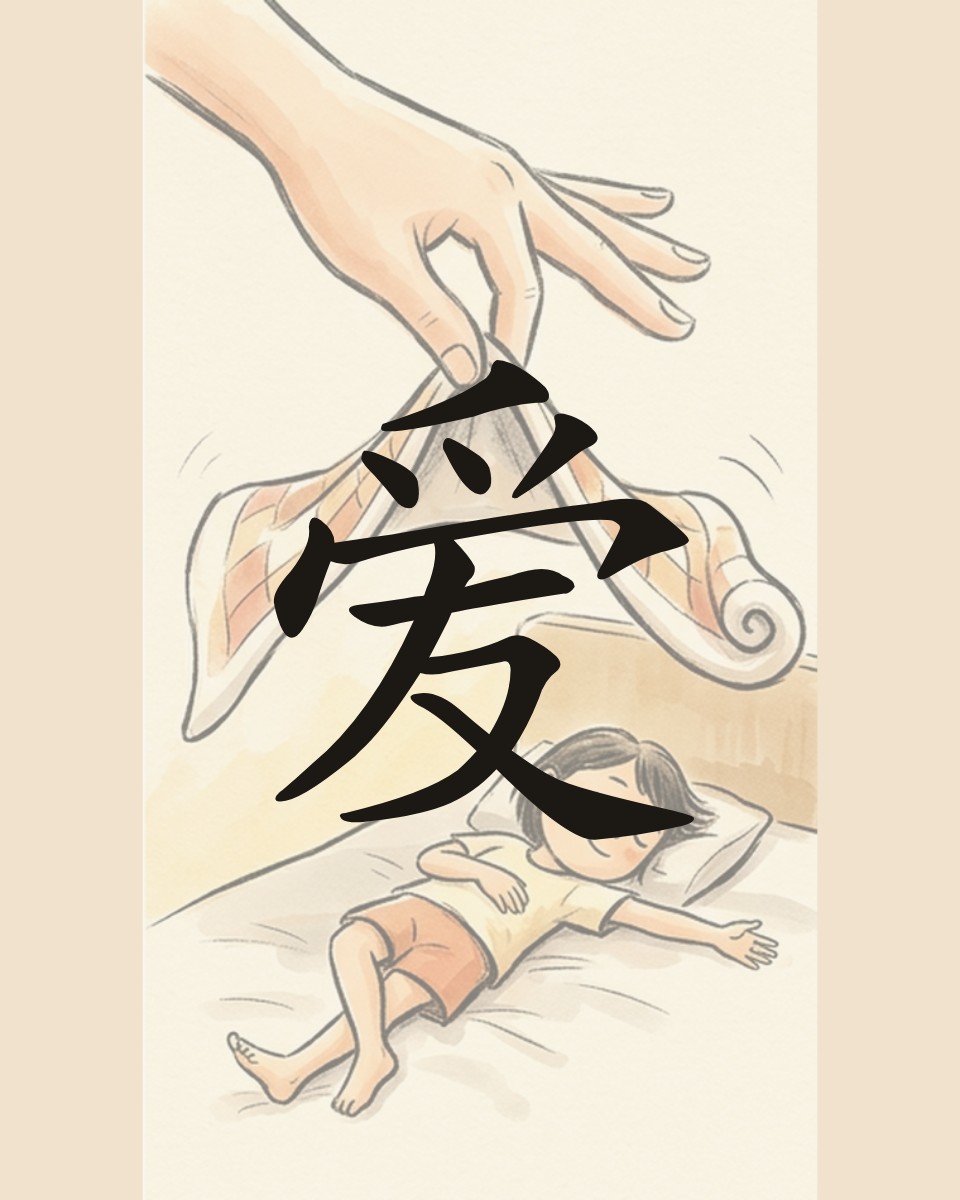
A blanket of love: 爱
给睡着的小姑娘盖被子,就是“爱”
A little girl is fast asleep. A gentle hand puts a soft blanket over her. That is love. The hand, the blanket and the sleeping girl become 爱 (ài, love). 我爱你 (wǒ ài nǐ) means I love you. This is just a memory trick: the old form 愛 had a heart, 心, in the middle. With English narration and subtitles.
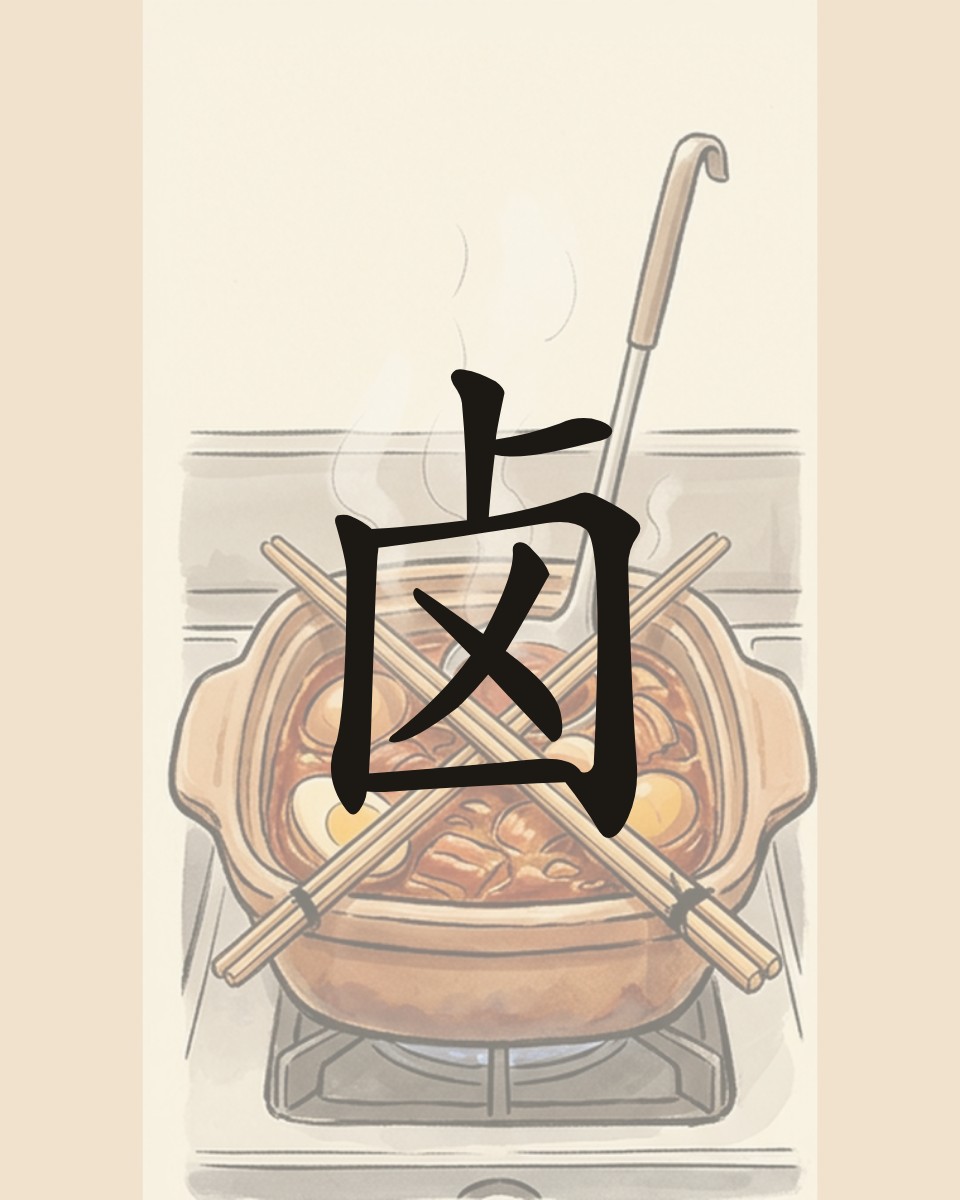
A pot of braised eggs: 卤
插着勺子的卤锅,就是“卤”
A clay pot sits on the stove. Eggs and meat cook slowly in a dark, tasty sauce. The ladle, the pot and the chopsticks become 卤 (lǔ, braised in sauce). 卤蛋 (lǔdàn) is a braised egg. Yum! This is almost true: the oldest 卤 showed salt in a bag. With English narration and subtitles.
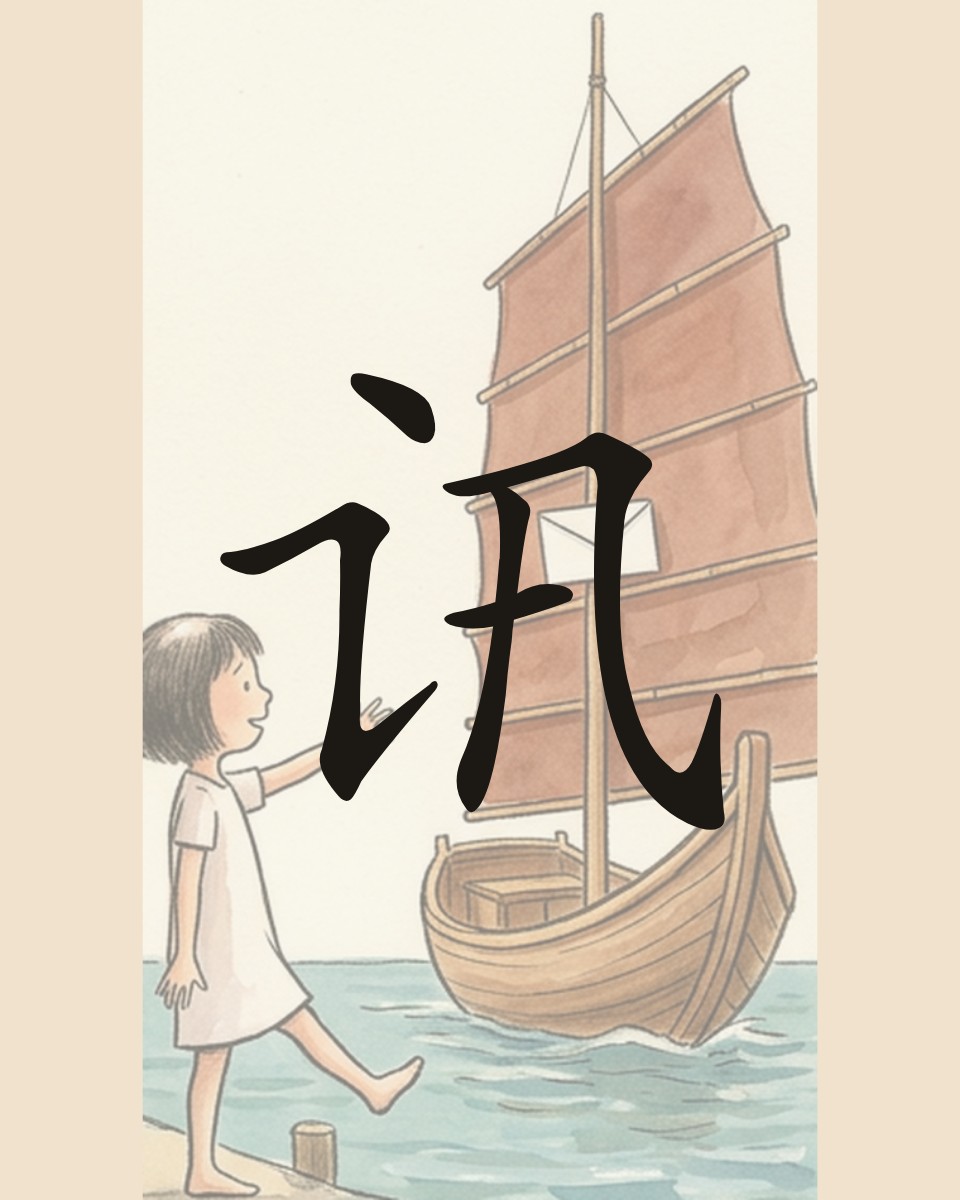
A boat with a letter: 讯
带着信靠岸的小帆船,就是“讯”
A little boat comes to the shore. It brings a letter! The girl waves hello. The girl, the mast and the boat, and the sail with the letter become 讯 (xùn, message, news). 喜讯 (xǐxùn) means good news. This is just a memory trick: really, 讠 means words, and 卂 (xùn) gives the sound. With English narration and subtitles.
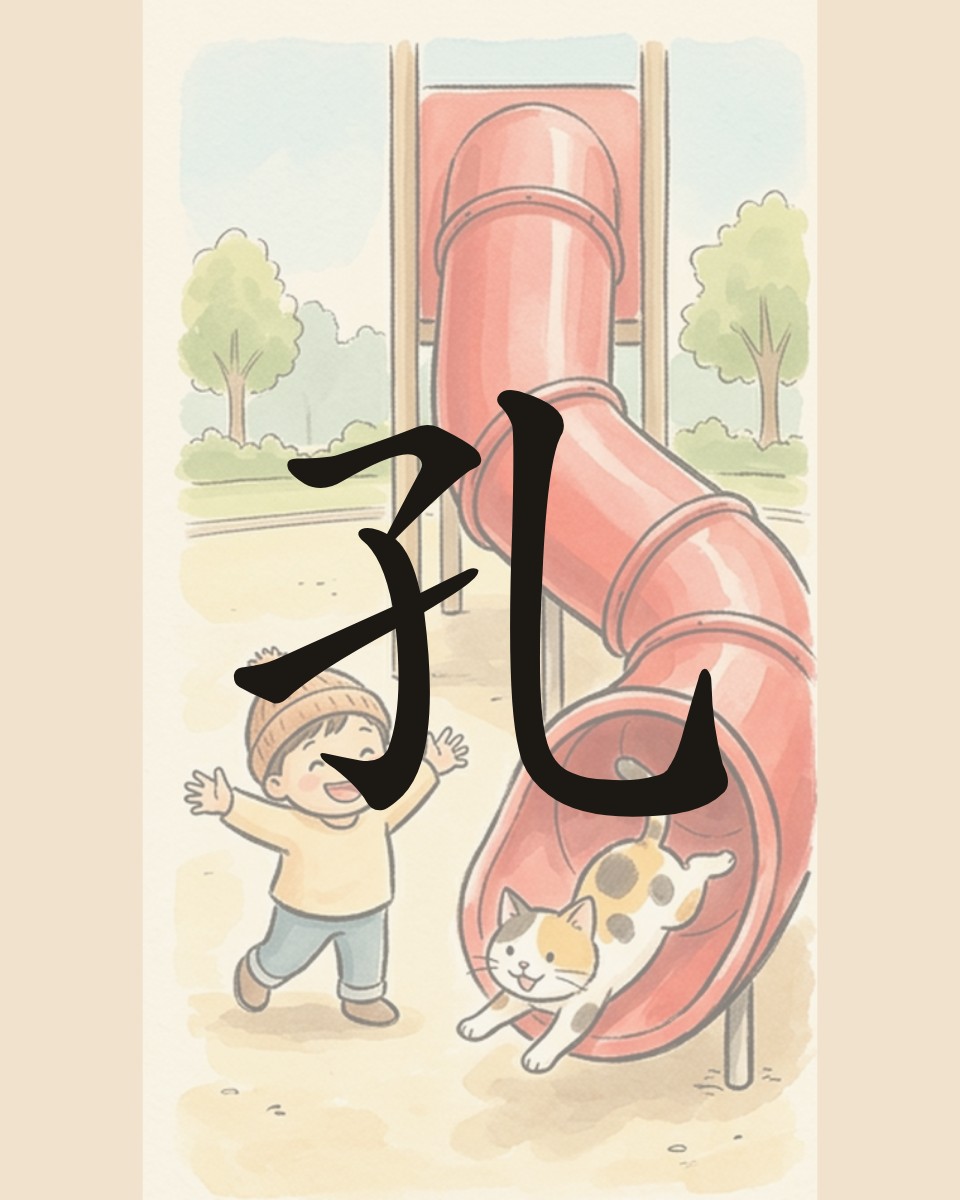
Out of the hole: 孔
滑梯洞口钻出小猫,就是“孔”
A playground with a big red slide. Whoosh! A little cat comes out of the hole! The boy, and the long slide with a hole at the end, become 孔 (kǒng, hole). 孔子 (Kǒngzǐ) is Confucius. This is just a memory trick. With English narration and subtitles.
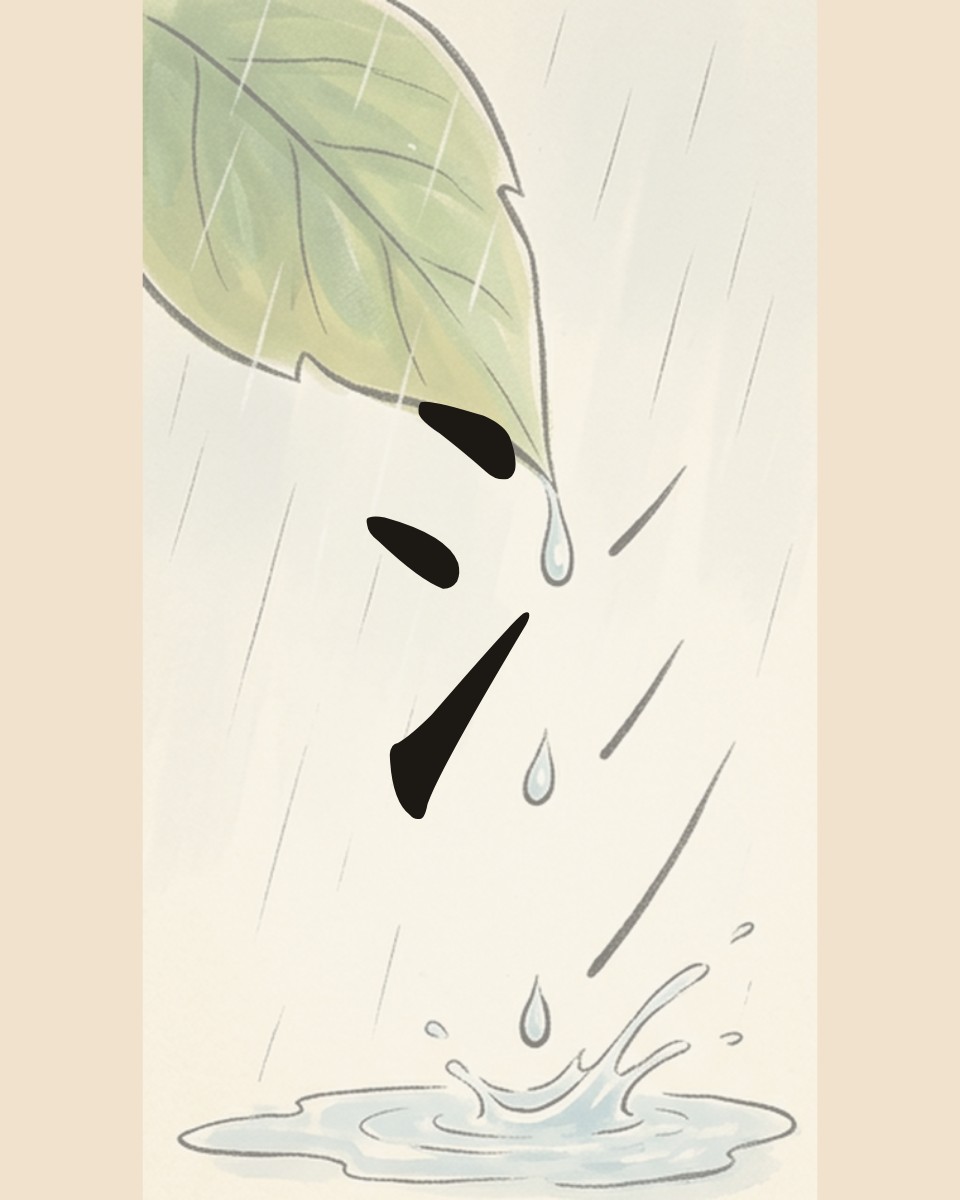
Rain drops from a leaf: 氵
叶尖掉下的雨滴,变成“氵”
It's raining. Drops fall from the tip of a leaf: drip, drip, and splash into the puddle! Two drops and the splash become 氵 (sāndiǎnshuǐ), the water radical. Characters with 氵 are often about water. This one is true: 氵 comes from 水 (shuǐ), water. At the end, read six 氵 characters together: 河 海 洗 游 汤 汗. With English narration and subtitles.
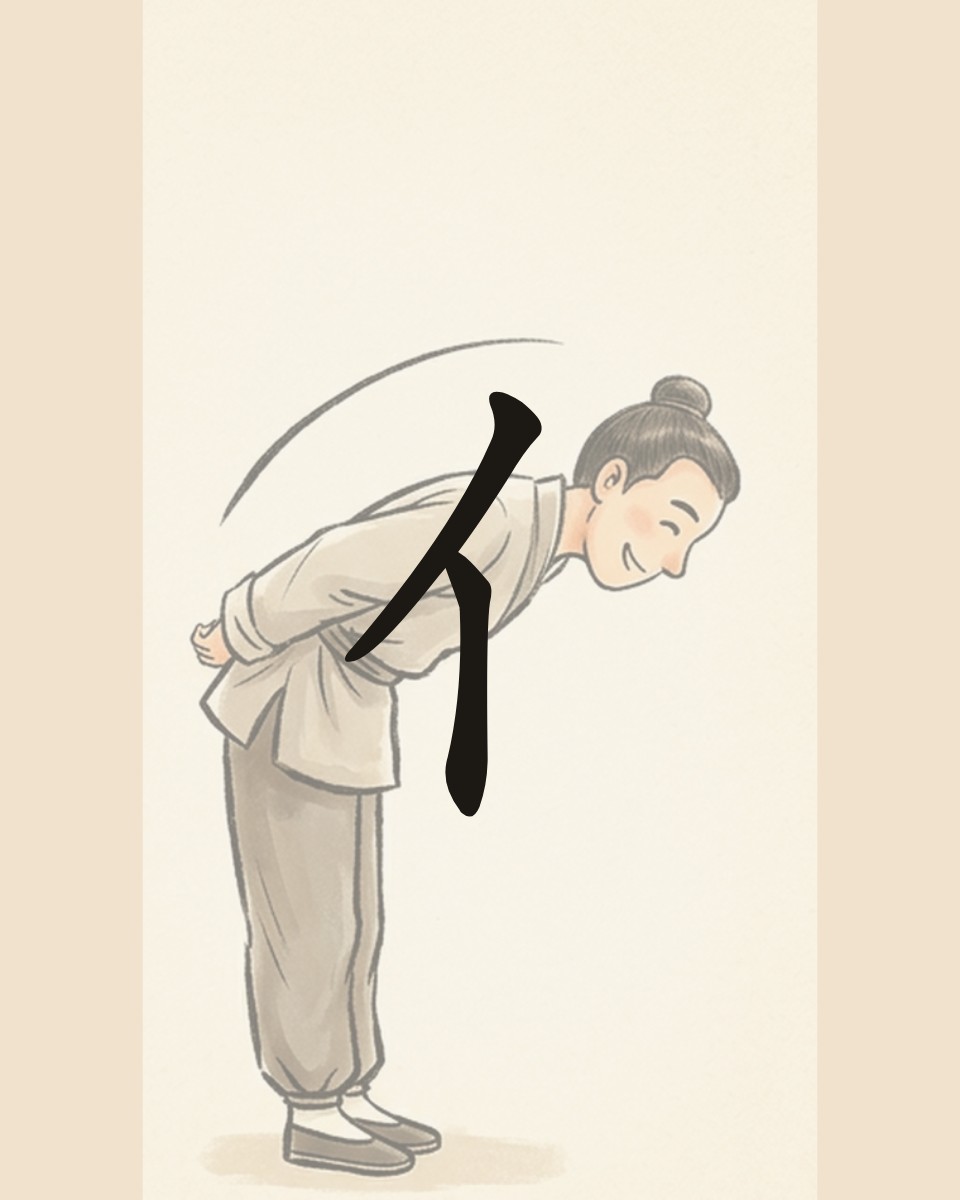
A polite bow: 亻
鞠躬的小伙子,变成“亻”
A young man bows politely: hello, nice to meet you! His back and his straight legs become 亻 (dānrénpáng), the person radical. Characters with 亻 are often about people. This one is true: 亻 comes from 人 (rén), a person. At the end, read six 亻 characters together: 你 他 休 住 做 信. With English narration and subtitles.
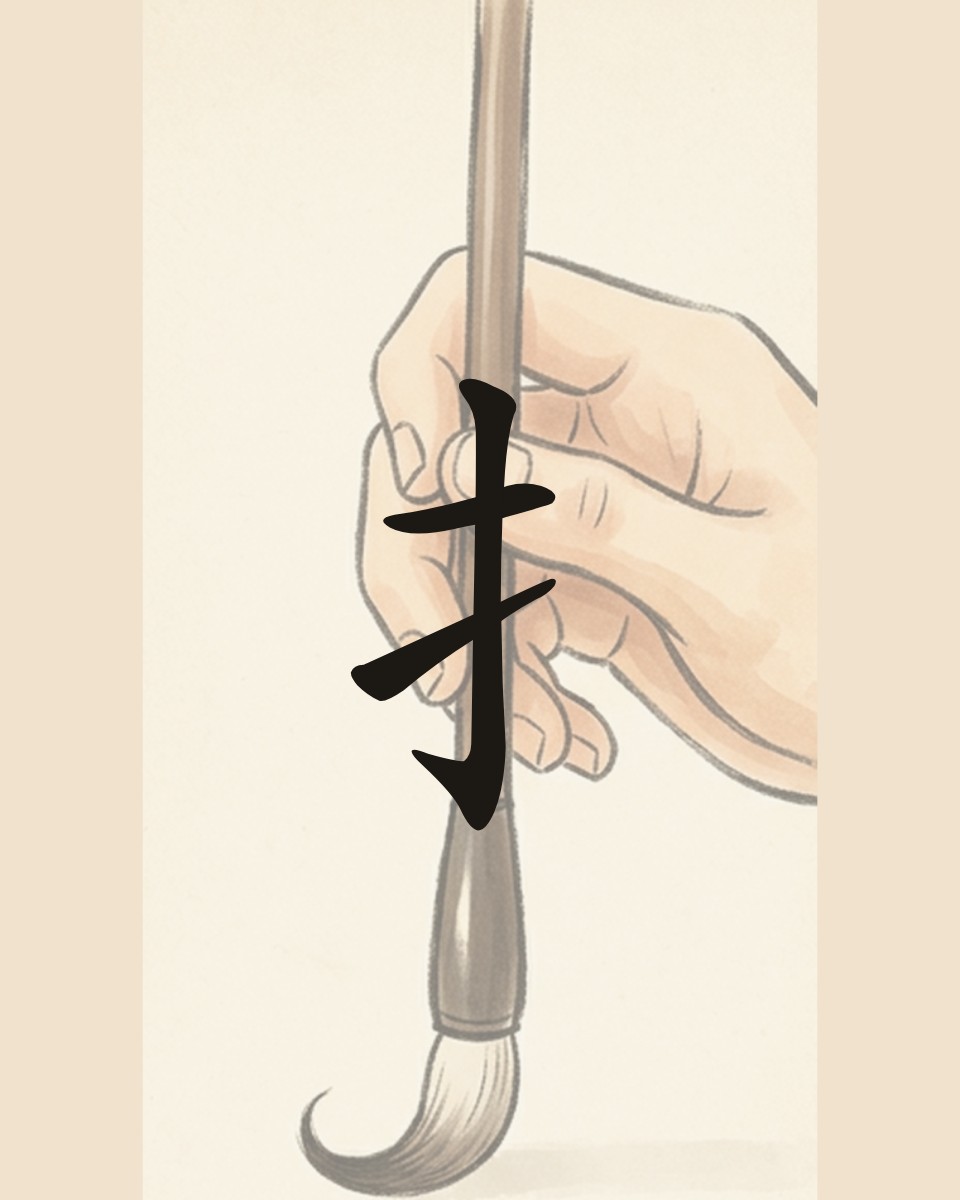
A hand holding a brush: 扌
握着毛笔的手,变成“扌”
A hand holds a writing brush and writes on the paper. The brush tip bends. The fingers and the brush become 扌 (tíshǒupáng), the hand radical. Characters with 扌 are often things we do with our hands. This one is true: 扌 comes from 手 (shǒu), a hand. At the end, read six 扌 characters together: 打 推 拉 找 抱 拍. With English narration and subtitles.
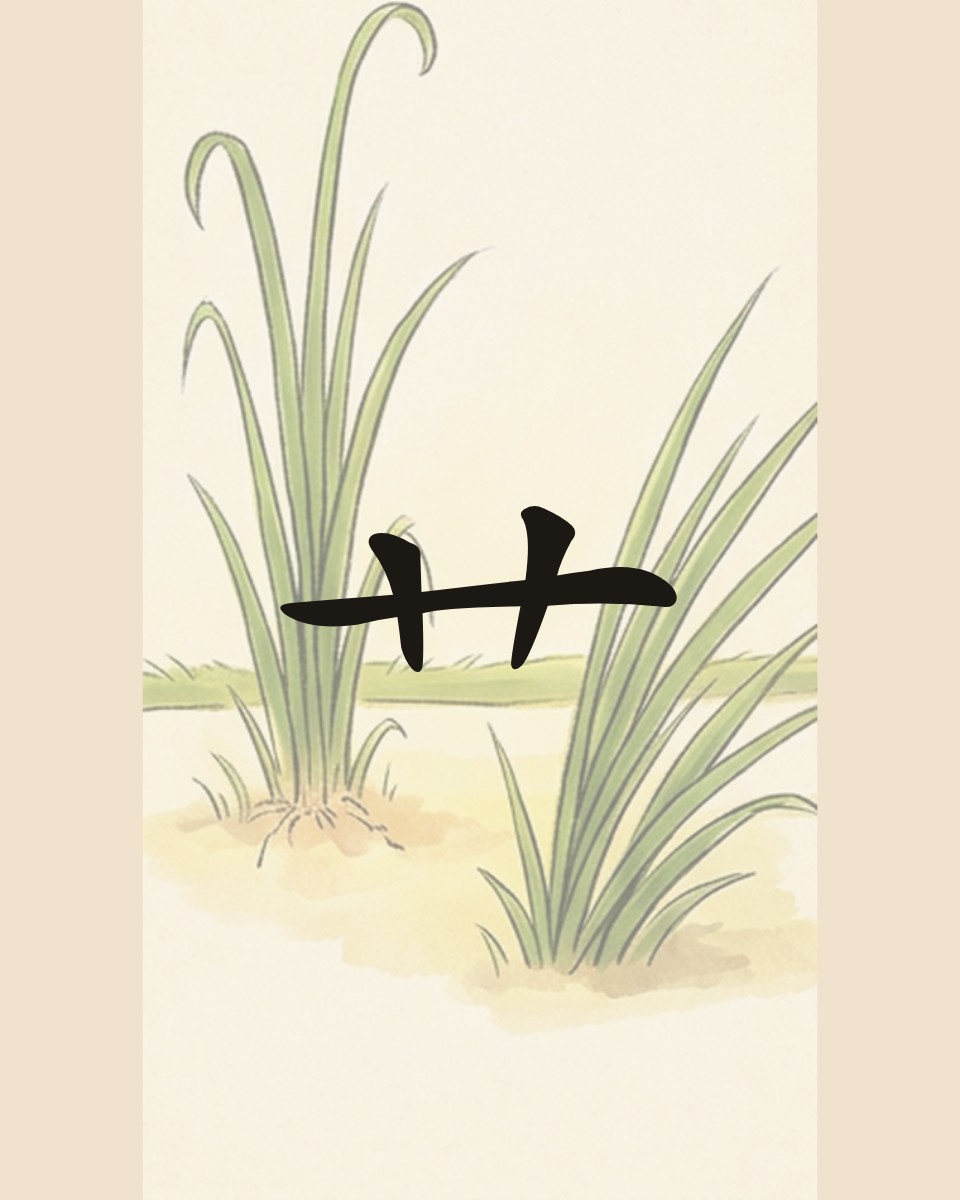
Two clumps of grass: 艹
地上两丛青草,变成“艹”
Spring is here. Two little bunches of green grass grow side by side. The ground and the two bunches of grass become 艹 (cǎozìtóu), the grass radical. Characters with 艹 are often about plants. This one is true: long ago it was 艸, two little plants side by side. At the end, read six 艹 characters together: 花 草 茶 菜 苹 药. With English narration and subtitles.
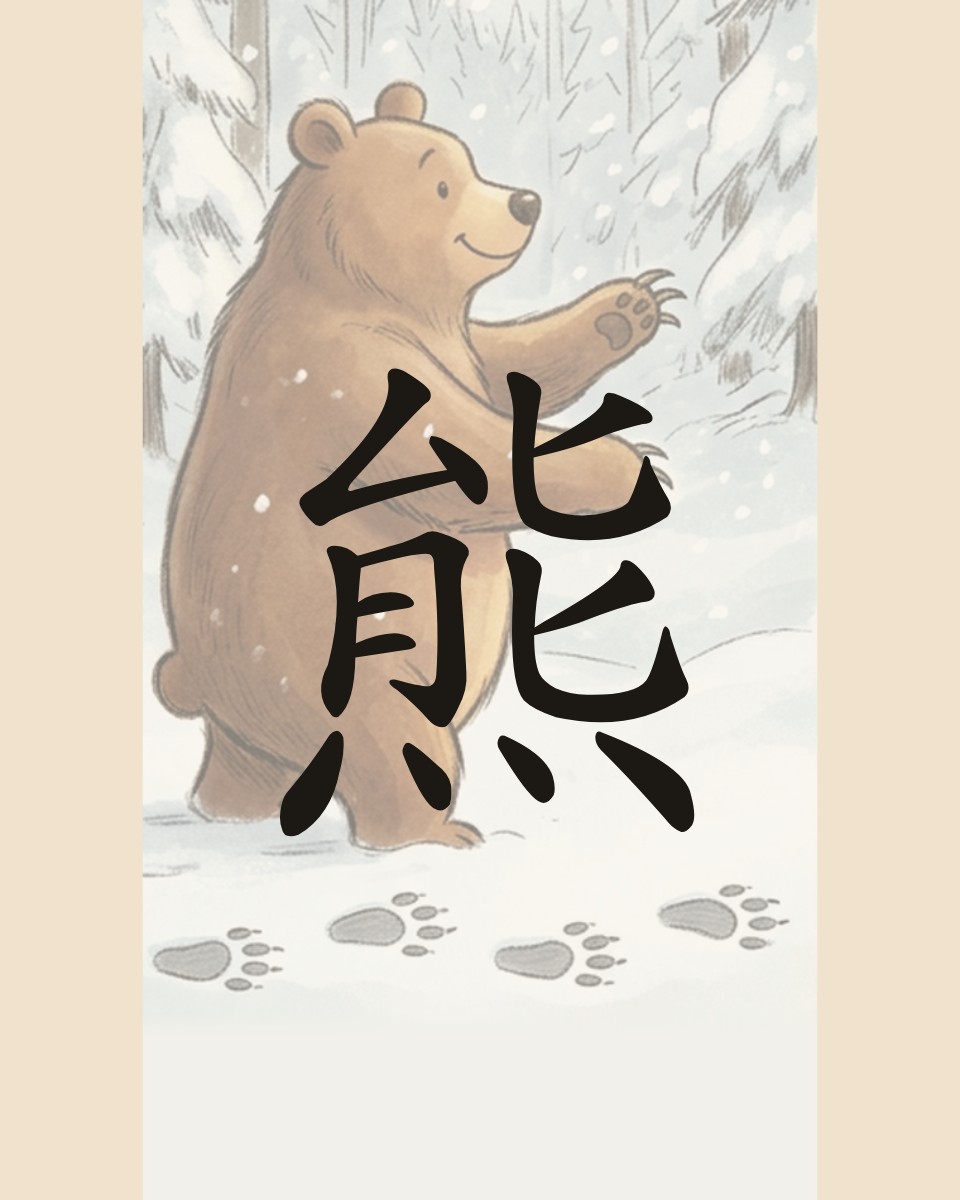
Four paw prints in the snow: 熊
雪地上的四个熊掌印,就是“熊”
The bear jumps down from the tree. Thump! It leaves four paw prints in the snow. Its head, its body, its paws and the four paw prints become 熊 (xióng, bear). 熊猫 (xióngmāo) is the panda. This is just a memory trick: really, the four dots are fire. 能 was the bear long ago; when 能 came to mean 'can', people added fire below and made 熊. With English narration and subtitles.
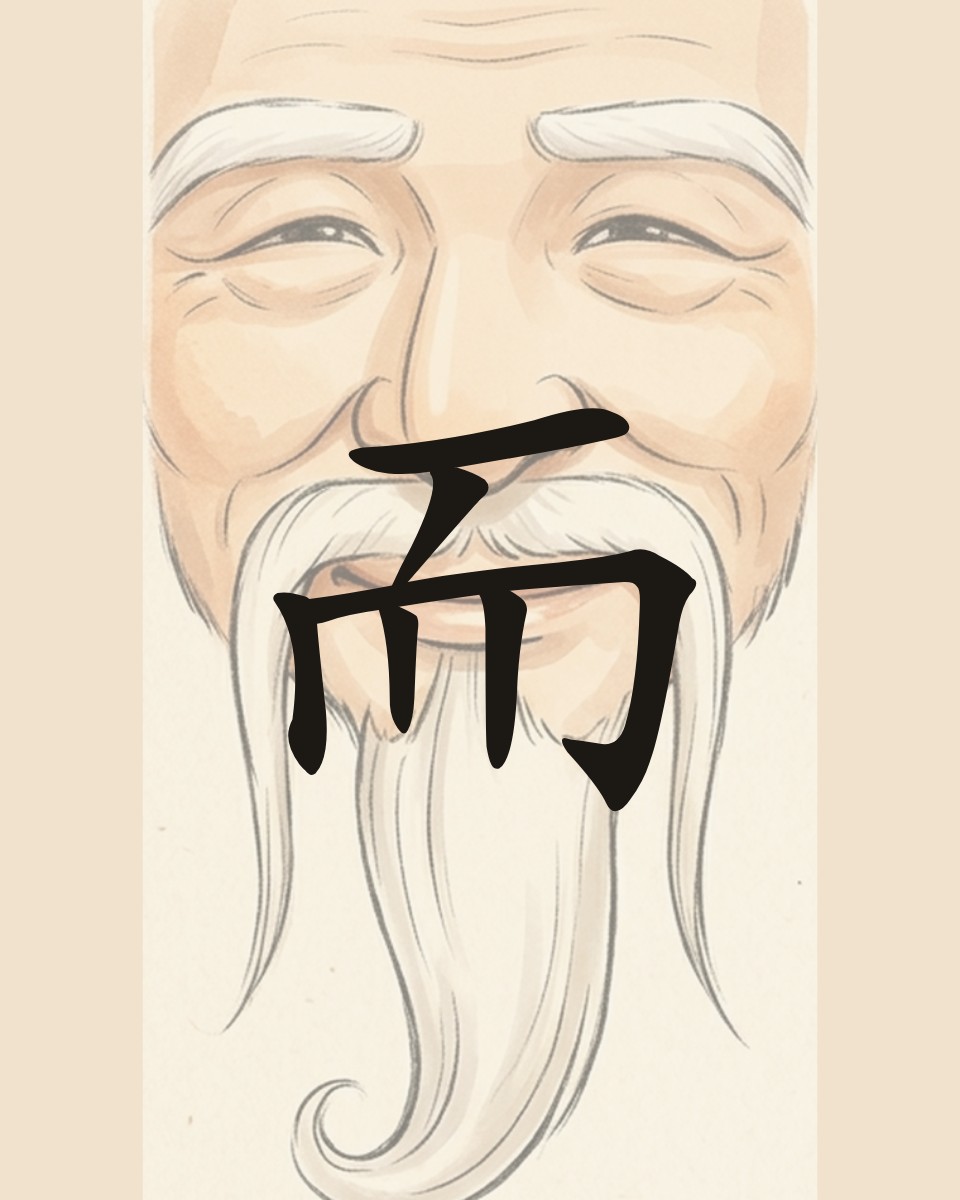
Grandpa's long beard: 而
老爷爷的长胡子,就是“而”
Here is a kind old grandpa with a long, long white beard. His eyebrows, his nose and his beard become 而 (ér, and, but). 而且 (érqiě) means and also: 他很老,而且胡子很长. He is old, and his beard is long. This trick is almost true: the oldest 而 was a picture of a beard. With English narration and subtitles.
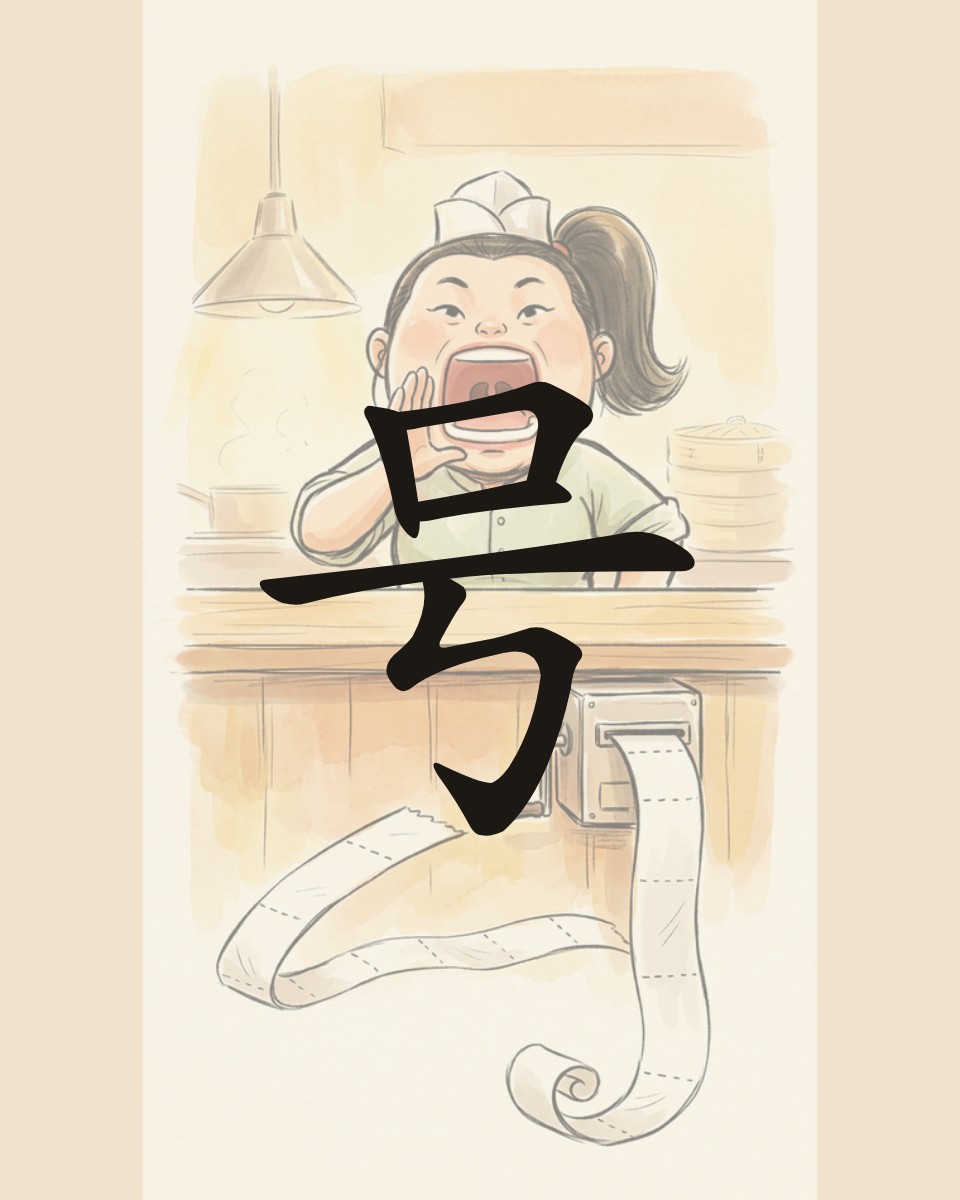
Calling the next number: 号
服务员张大嘴叫号,就是“号”
A busy little restaurant. The waiter opens her mouth wide and calls the next number! Her mouth, the counter and the long number ticket become 号 (hào, number). 今天几号?(jīntiān jǐ hào?) What's the date today? This trick is almost true: at first, 号 meant to shout. The old form 號 had a shouting mouth and a roaring tiger. With English narration and subtitles.
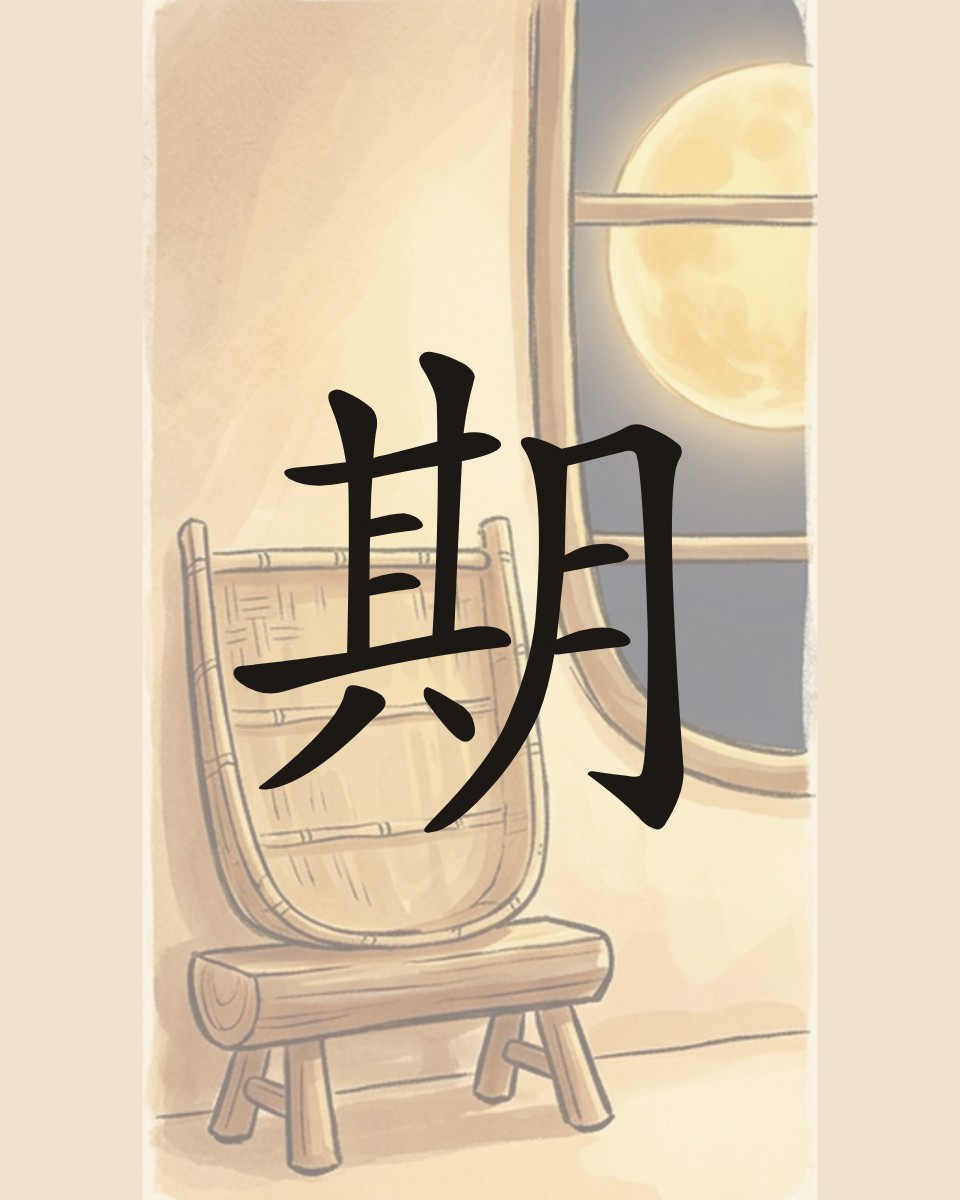
The moon is round again: 期
窗外的月亮又圆了,就是“期”
It is night. A bamboo basket rests on a bench, and outside the window the moon is round again. The basket, the bench and the window with the moon become 期 (qī, a period of time). 星期 (xīngqī) means week. This is just a memory trick: really, 月 (the moon) is for the meaning, and 其 (qí) gives the sound. With English narration and subtitles.
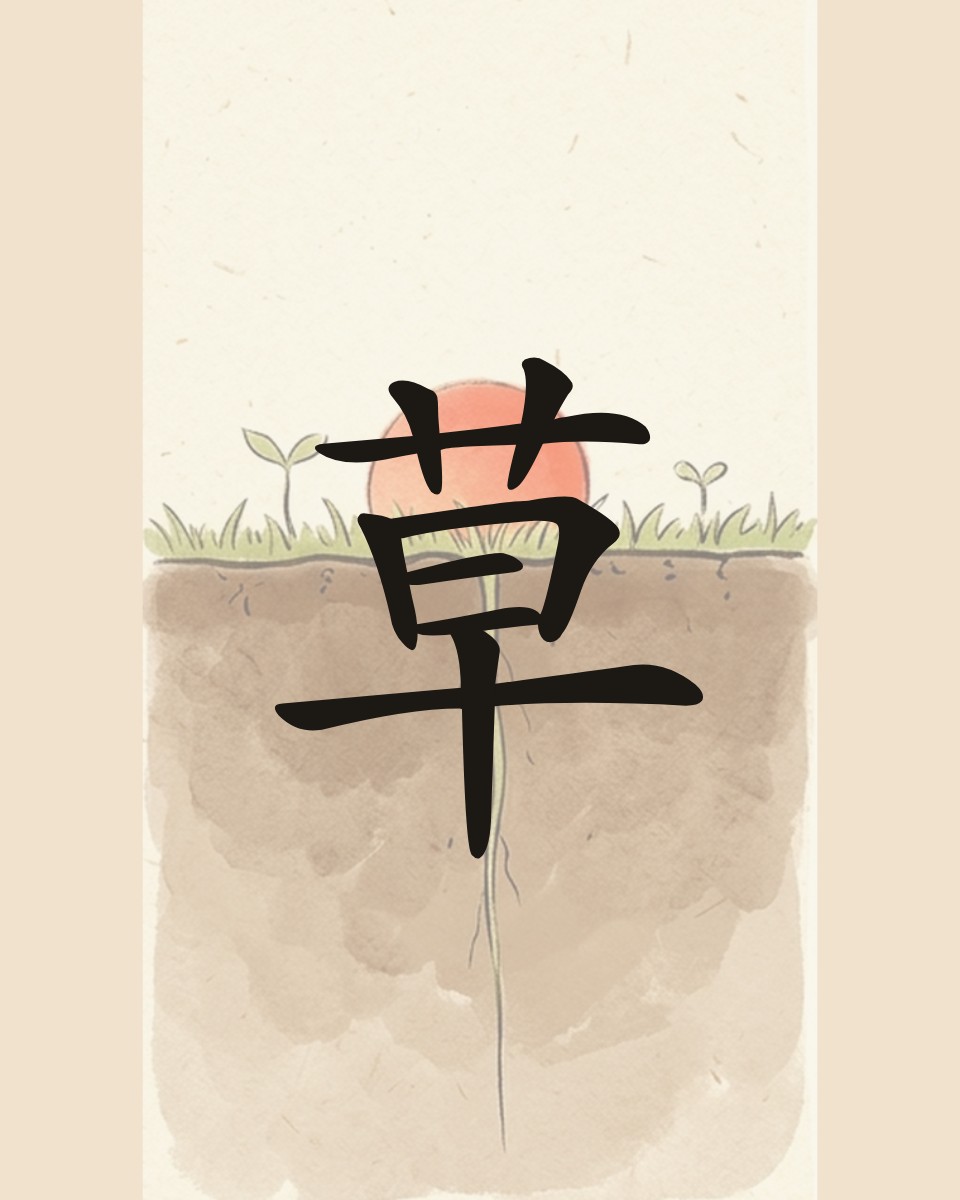
Sprouts in the morning sun: 草
早上长出两棵小芽,就是“草”
It is early morning and the sun comes up. Two little green sprouts grow out of the grass. The sprouts, the sun, the ground and a long root become 草 (cǎo, grass). 草莓 (cǎoméi) means strawberry! This is just a memory trick: really, 艹 on top means grass, and 早 (zǎo) gives the sound. With English narration and subtitles.
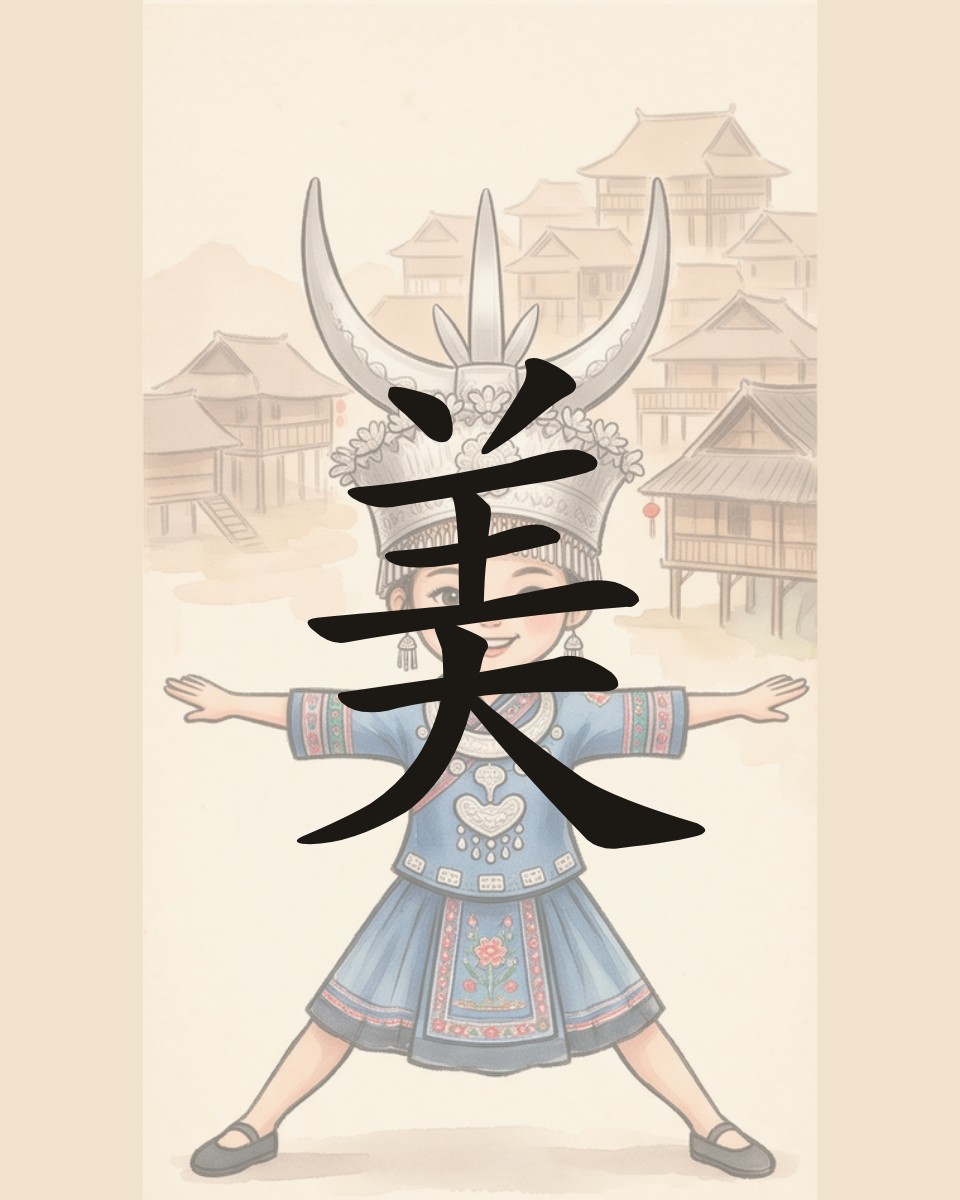
A Miao girl in silver horns: 美
戴银角跳舞的苗族姑娘,就是“美”
A Miao girl dances at a festival, with big silver horns and a silver crown on her head. The horns, the crown, her arms and her legs become 美 (měi, beautiful). 美国 (Měiguó), the USA, is the beautiful country. This trick is almost true: the oldest 美 was a person with a big headdress. With English narration and subtitles.
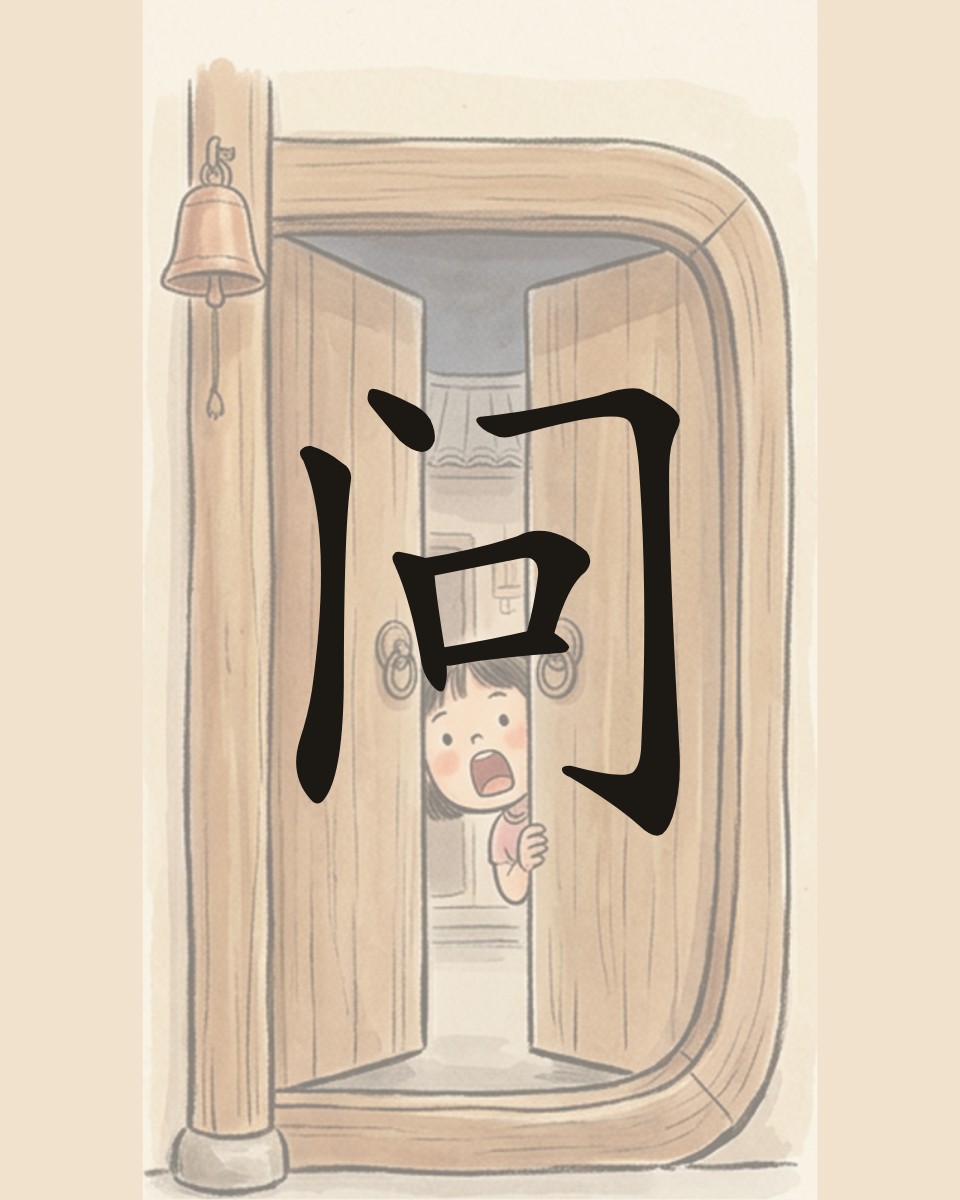
Asking at the door: 问
门里张嘴问话,就是“问”
A little girl peeks out from behind a door and asks: 有人吗? Is anyone home? The bell, the door and her open mouth become 问 (wèn, to ask). 请问 (qǐngwèn) means excuse me, may I ask. This is just a memory trick: really, 口 is for the meaning, and 门 (mén) gives the sound. With English narration and subtitles.
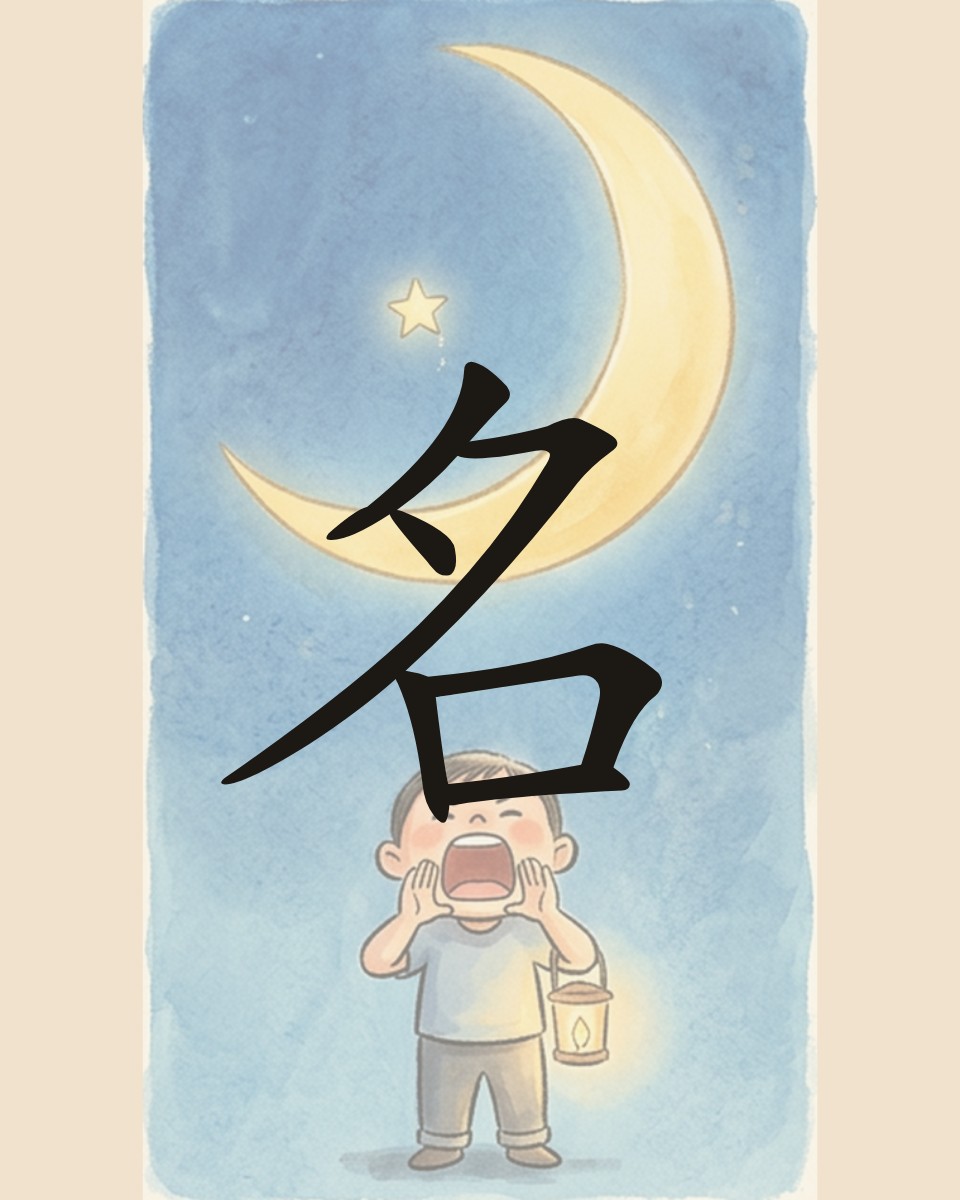
Calling out your name at night: 名
天黑了,张嘴报名字,就是“名”
It is night under a big moon. It is too dark to see, so a boy shouts out his name. The moon, a star and his open mouth become 名 (míng, name). 名字 (míngzi) means name: 你叫什么名字? What's your name? This time the story is true: an old dictionary says that at night you can't see, so you say your name. With English narration and subtitles.
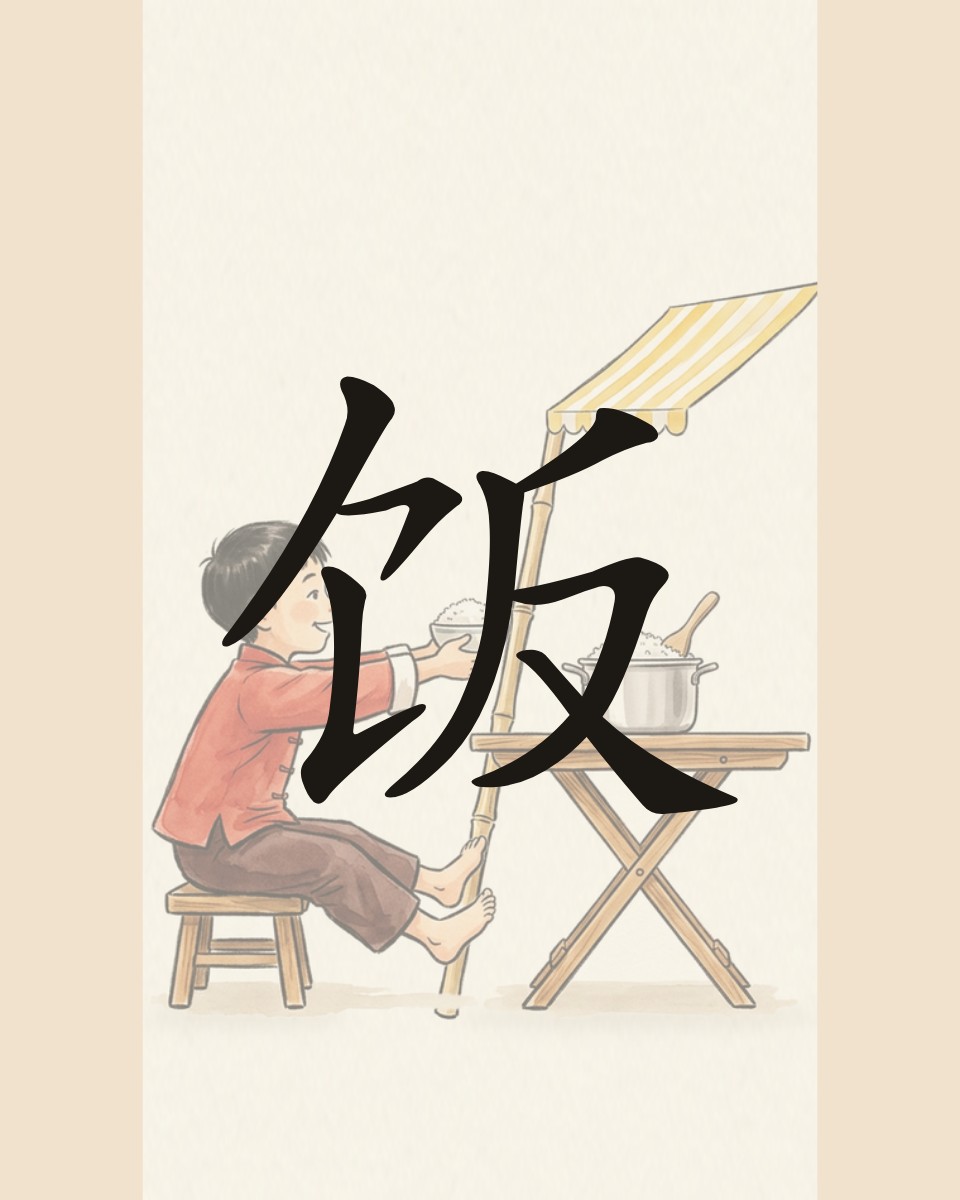
A bowl at the food stall: 饭
饭摊前捧碗的小男孩,就是“饭”
A boy sits at a little food stall on the street and holds out his bowl: more rice, please! The boy, the roof, the bamboo pole and the folding table become 饭 (fàn, cooked rice, a meal). 吃饭 (chīfàn) means to eat. This is just a memory trick: really, 饣 means food, and 反 (fǎn) gives the sound. With English narration and subtitles.
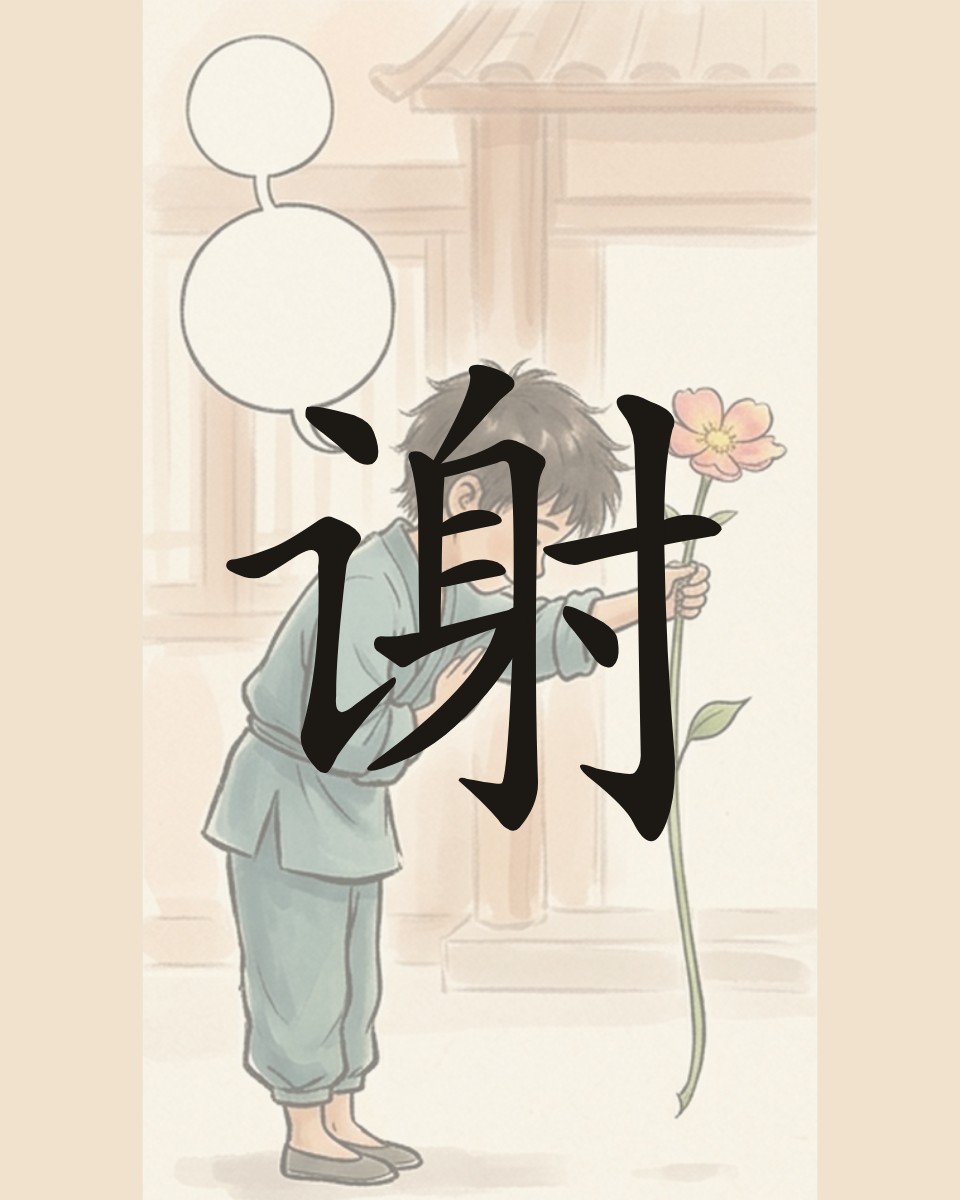
Say thanks with a bow: 谢
鞠个躬、送朵花,就是“谢”
A boy wants to say thank you. He bows and gives a flower. The speech bubbles, his bowing body and his hand become 谢 (xiè, to thank). 谢谢 (xièxie) means thank you, and the answer is 不客气 (bú kèqi), you're welcome. This is just a memory trick: really, 讠 means words, and 射 (shè) gives the sound. With English narration and subtitles.
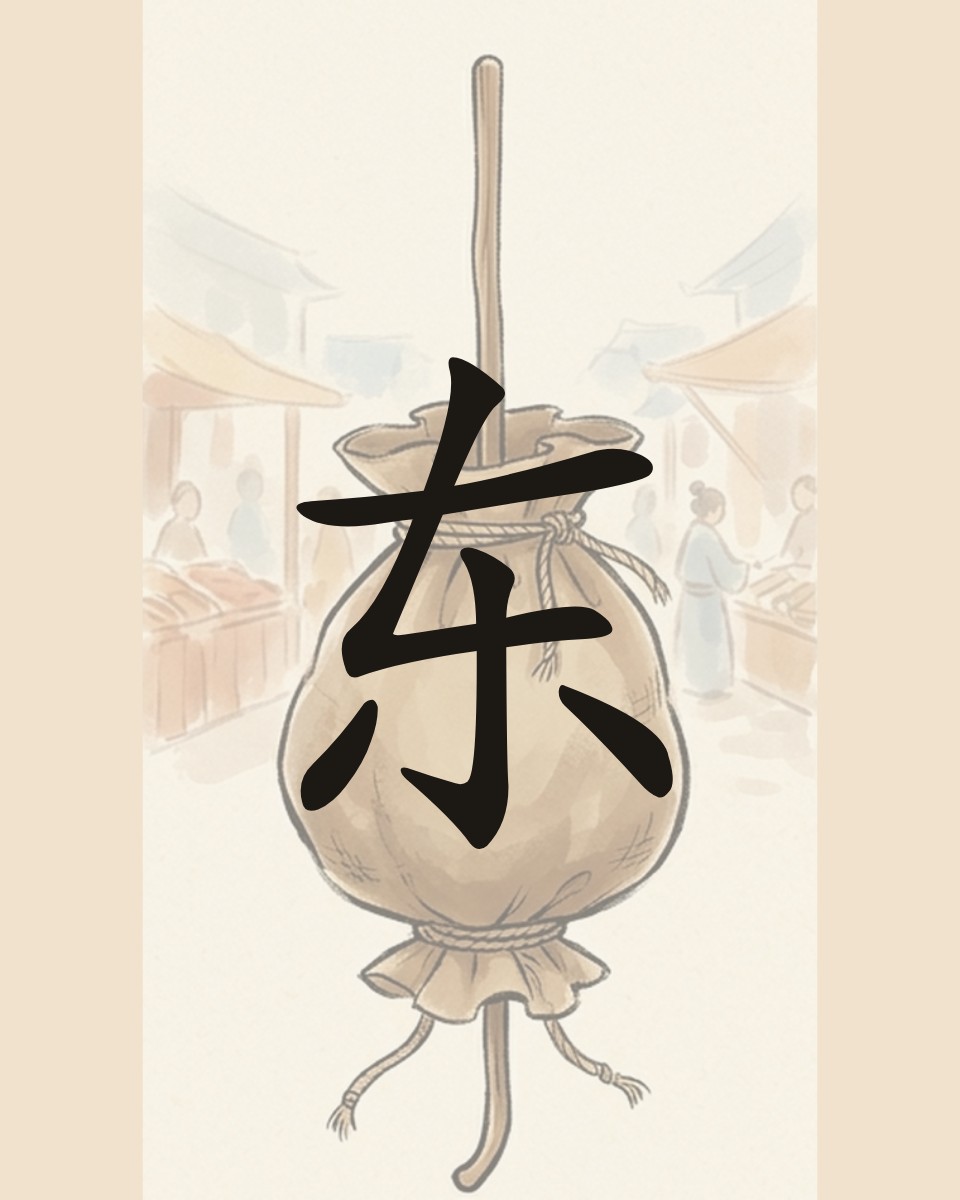
A bag of things: 东
两头扎紧的一袋东西,就是“东”
A big bag full of things, tied at the top and the bottom, with a stick going through it. The rope, the bag, the stick and the two rope ends become 东 (dōng, east). 东西 (dōngxi) means things: a bag of things! This trick is almost true: the oldest 东 was a bag tied at both ends. With English narration and subtitles.
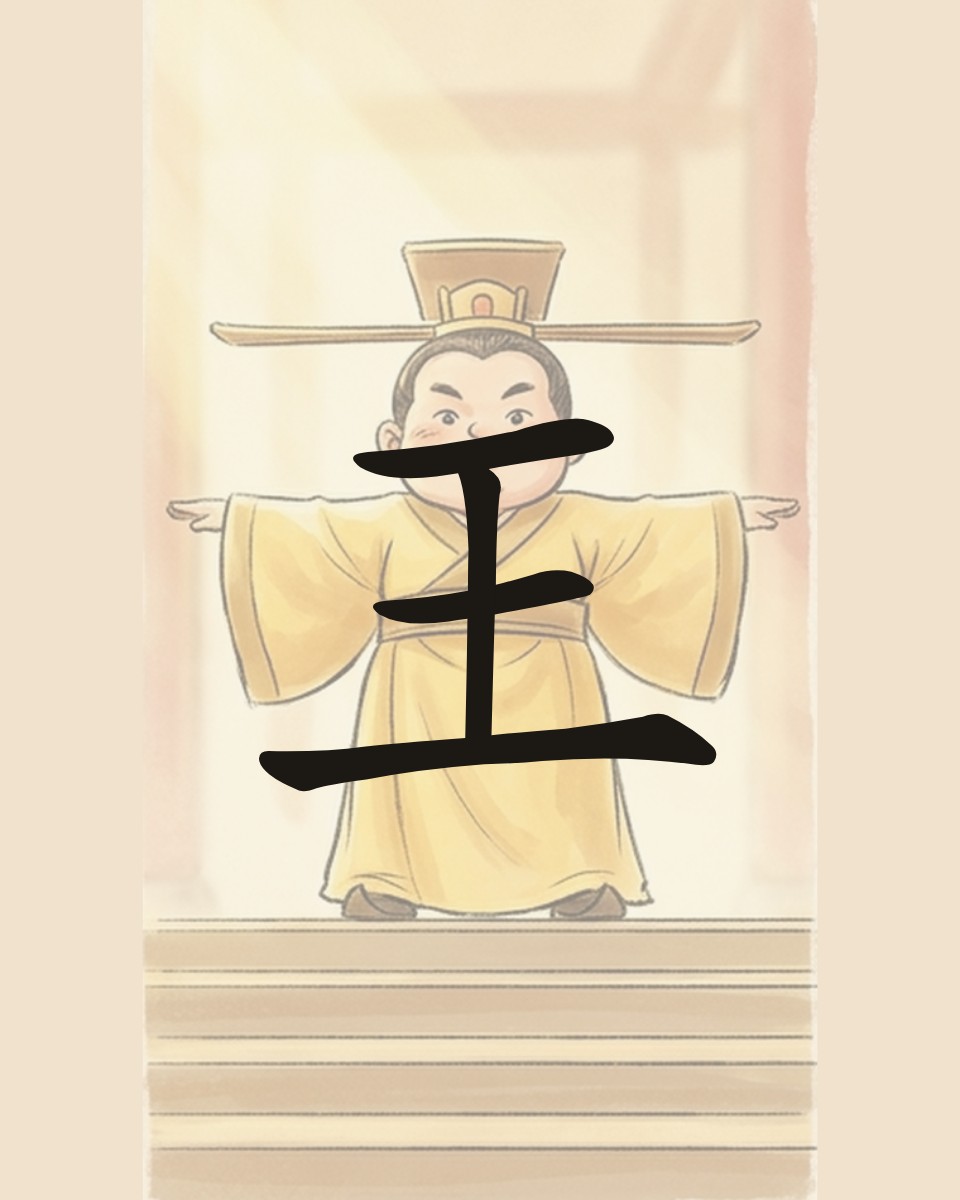
A proud little king: 王
神气的小国王,就是“王”
A little king in a flat-topped hat stands up tall on the palace steps, arms out. His hat, his arms, his body and the steps become 王 (wáng, king). 王 (Wáng) is also a very common family name. This is just a memory trick: really, the oldest 王 was a big axe, a sign of power. With English narration and subtitles.
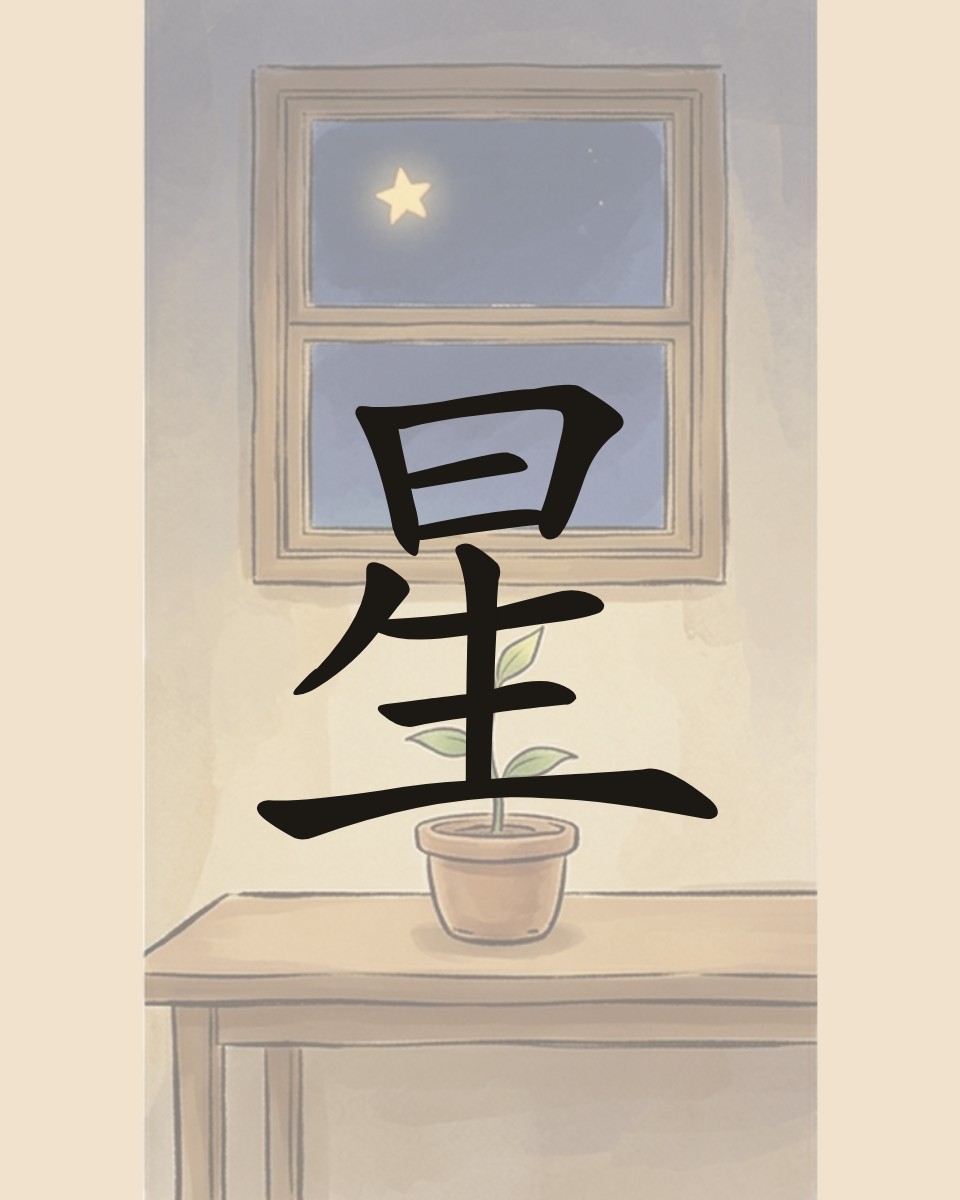
A star in the window: 星
窗里的星星、窗下的小苗,就是“星”
It is night. A star shines in the window, and below it a little plant grows on the table. The window, the leaves, the stem and the table become 星 (xīng, star). 星期 (xīngqī) means week. This is just a memory trick: really, the top was stars, and 生 (shēng) gives the sound. With English narration and subtitles.
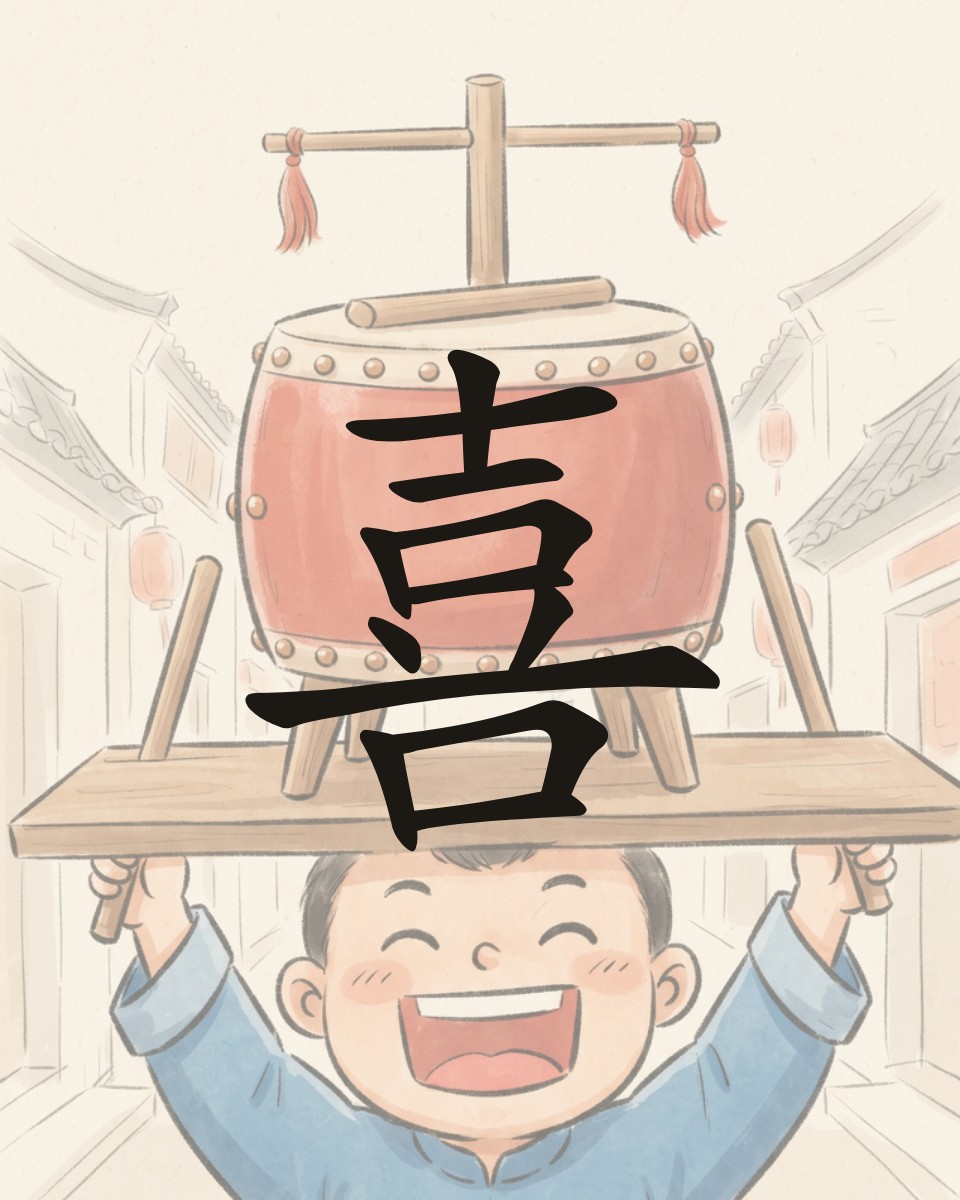
A drum and a happy mouth: 喜
鼓加笑开的嘴,就是“喜”
A boy carries a big drum on his head. He hits it and laughs. The drum and his happy mouth become 喜 (xǐ, happy). 喜欢 (xǐhuan) means to like. This trick is almost true: the oldest 喜 was a drum and a mouth. With English narration and subtitles.
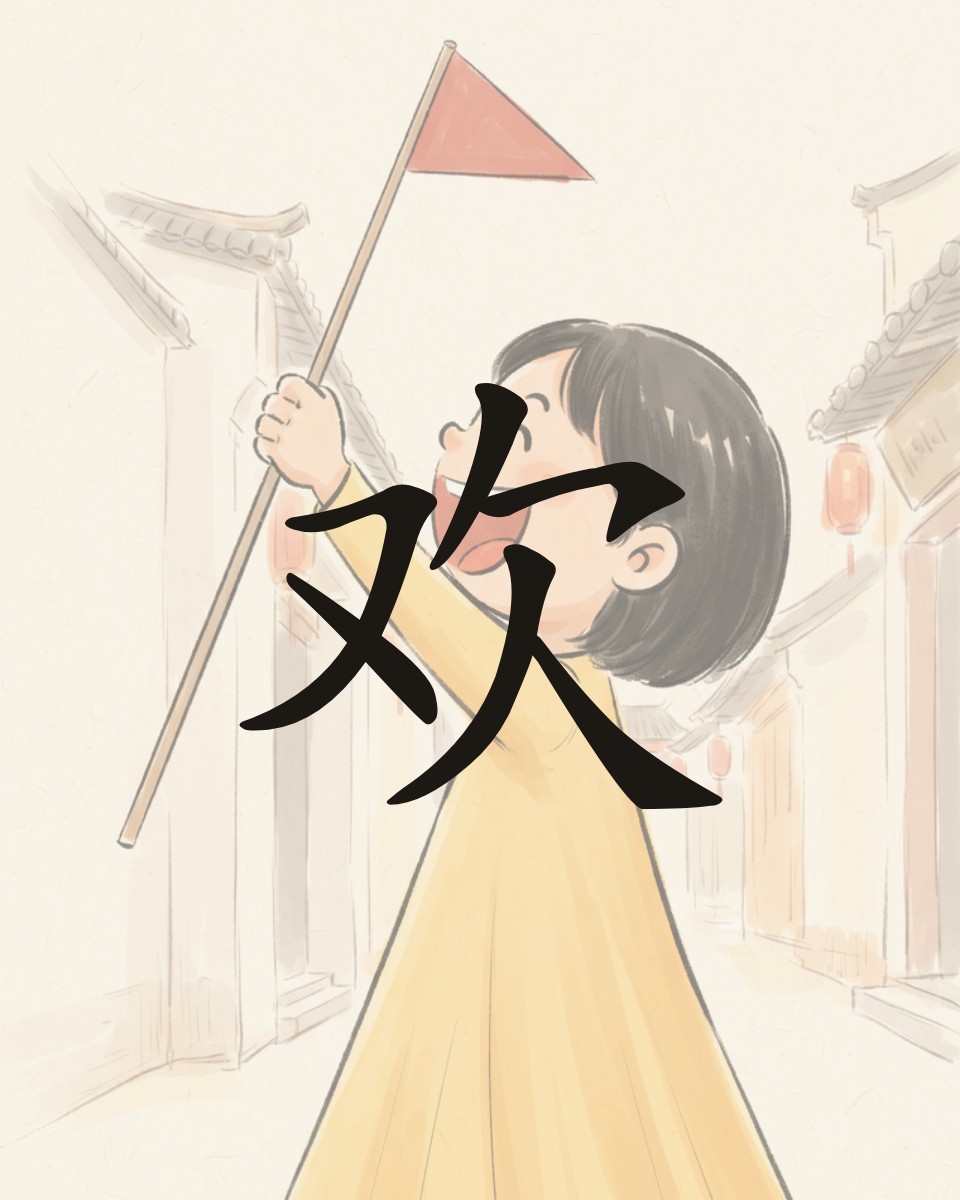
Waving a flag and shouting: 欢
举着小旗大声欢呼,就是“欢”
A girl waves a little flag and shouts “Hooray!” Her hand and flag become 又, and her open mouth and body become 欠. Together they make 欢 (huān, joyful). 喜欢 (xǐhuan) means to like. The hand and flag are a memory trick, but 欠 really was a person with an open mouth. With English narration and subtitles.
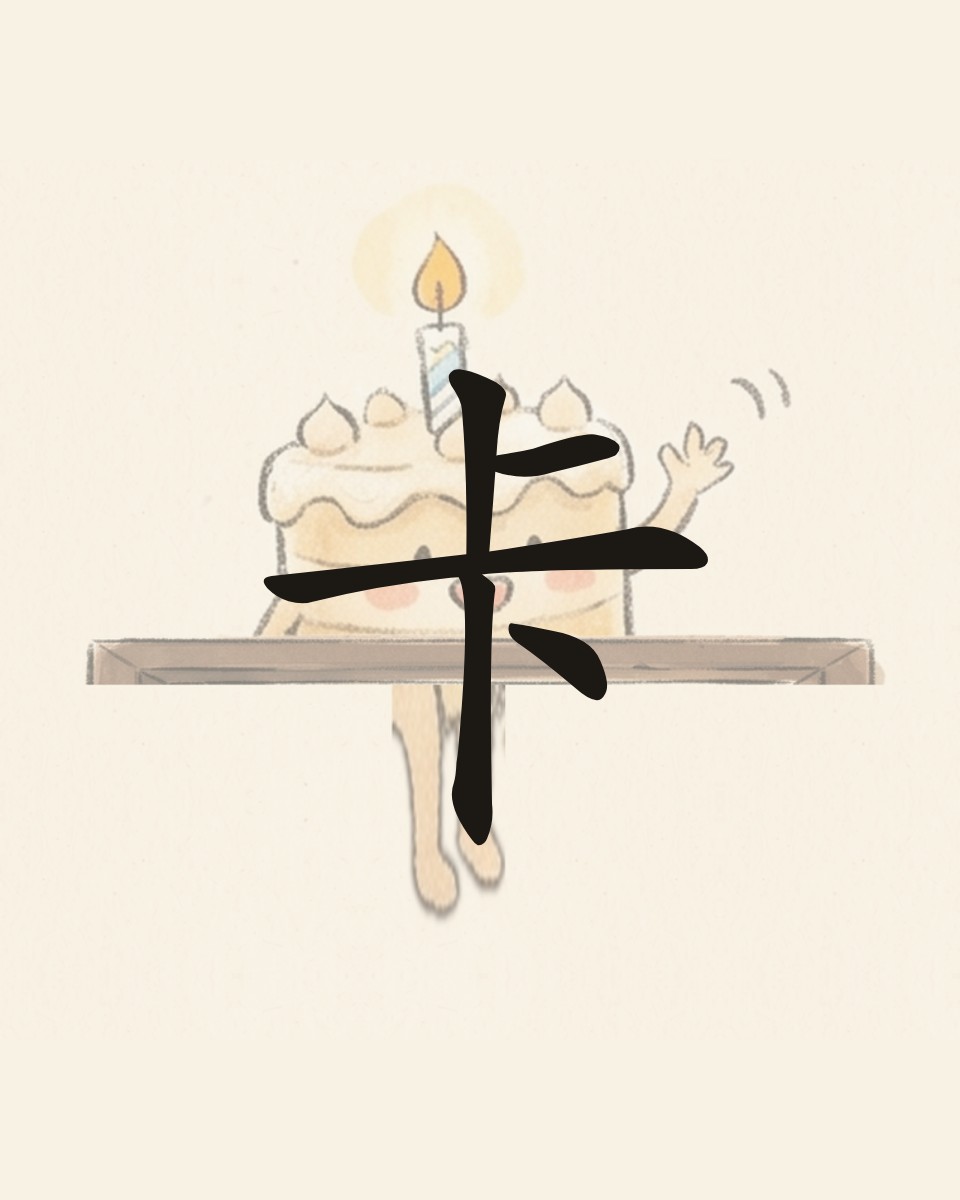
A cake stuck in the table: 卡
小蛋糕卡在桌子里,就是“卡”
A little cake jumps onto a table and gets stuck: it can't go up, and it can't go down. Its candle, arm, the table and its legs become 卡 (qiǎ, stuck). Read as kǎ, it means a card: 银行卡 (yínhángkǎ), a bank card. This is just a memory trick. With English narration and subtitles.
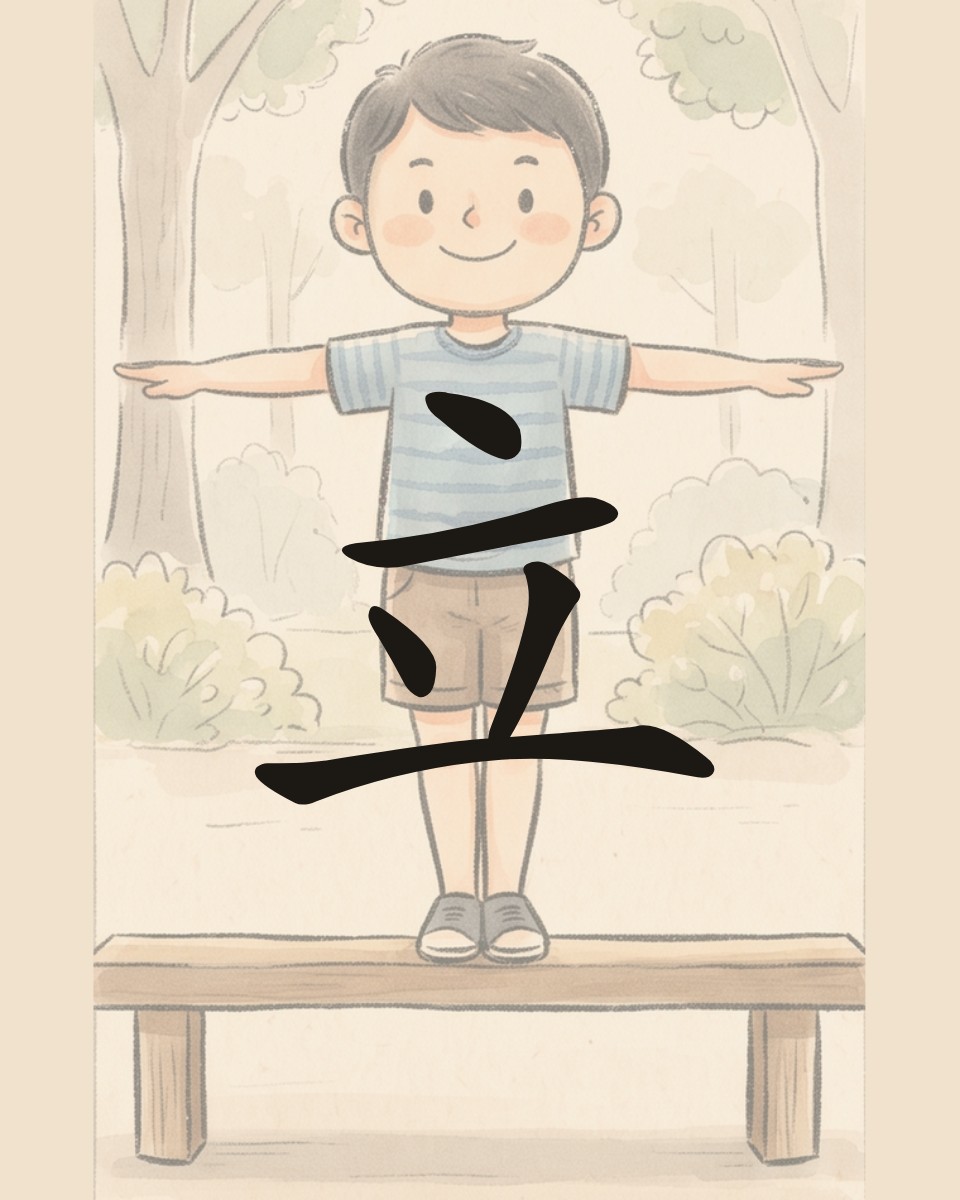
Standing on a balance beam: 立
站在平衡木上,就是“立”
A boy stands on a balance beam, arms out, feet together. His head, arms, legs and the beam become 立 (lì, to stand). 立刻 (lìkè) means right away. This trick is almost true: the oldest 立 was a person standing on the ground. With English narration and subtitles.
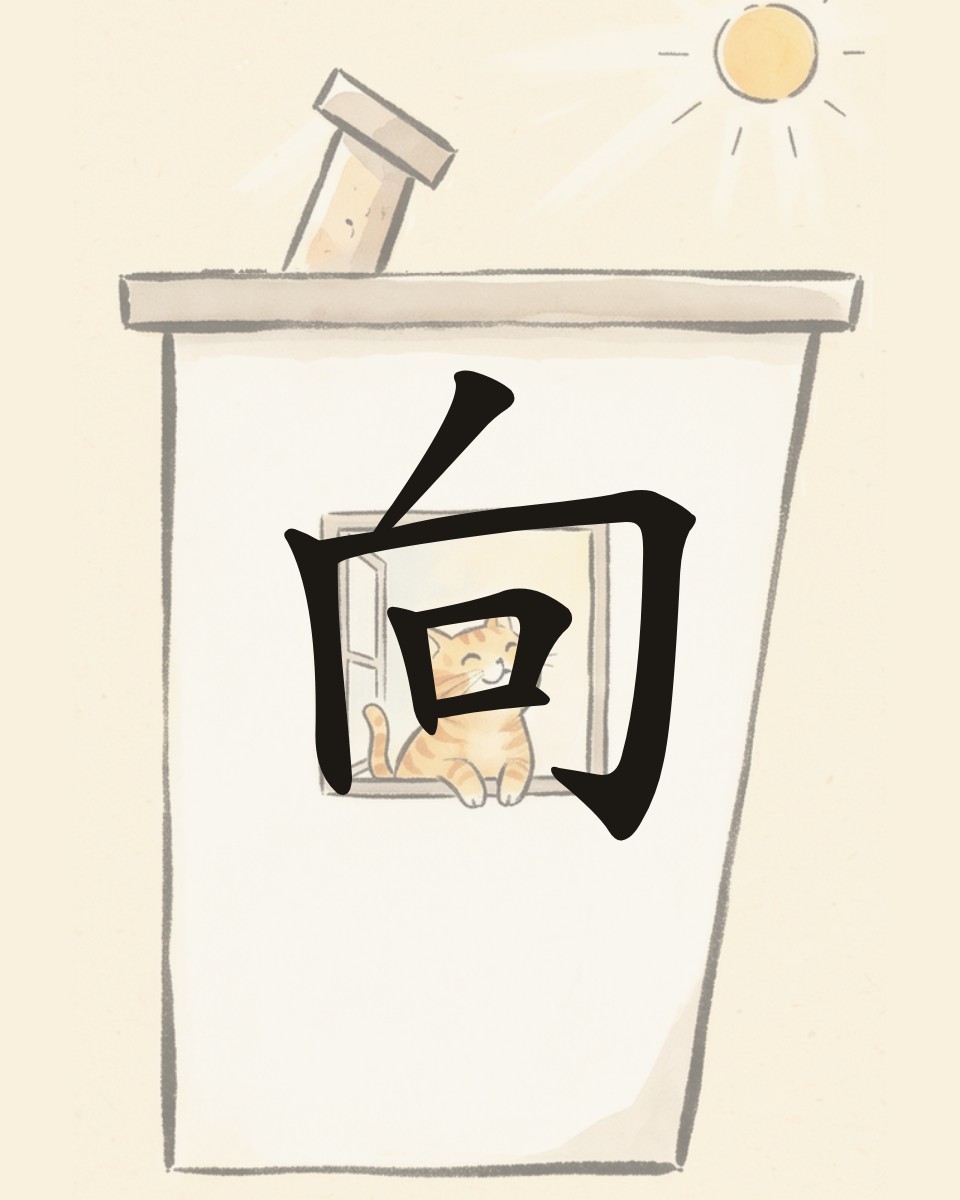
A window towards the sun: 向
窗户朝着太阳,就是“向”
A cat looks out of a little house's window, towards the sun. The chimney, walls, roof and window become 向 (xiàng, towards, to face). 向左走 (xiàng zuǒ zǒu) means go left. A very old dictionary says 向 was a window facing north. With English narration and subtitles.
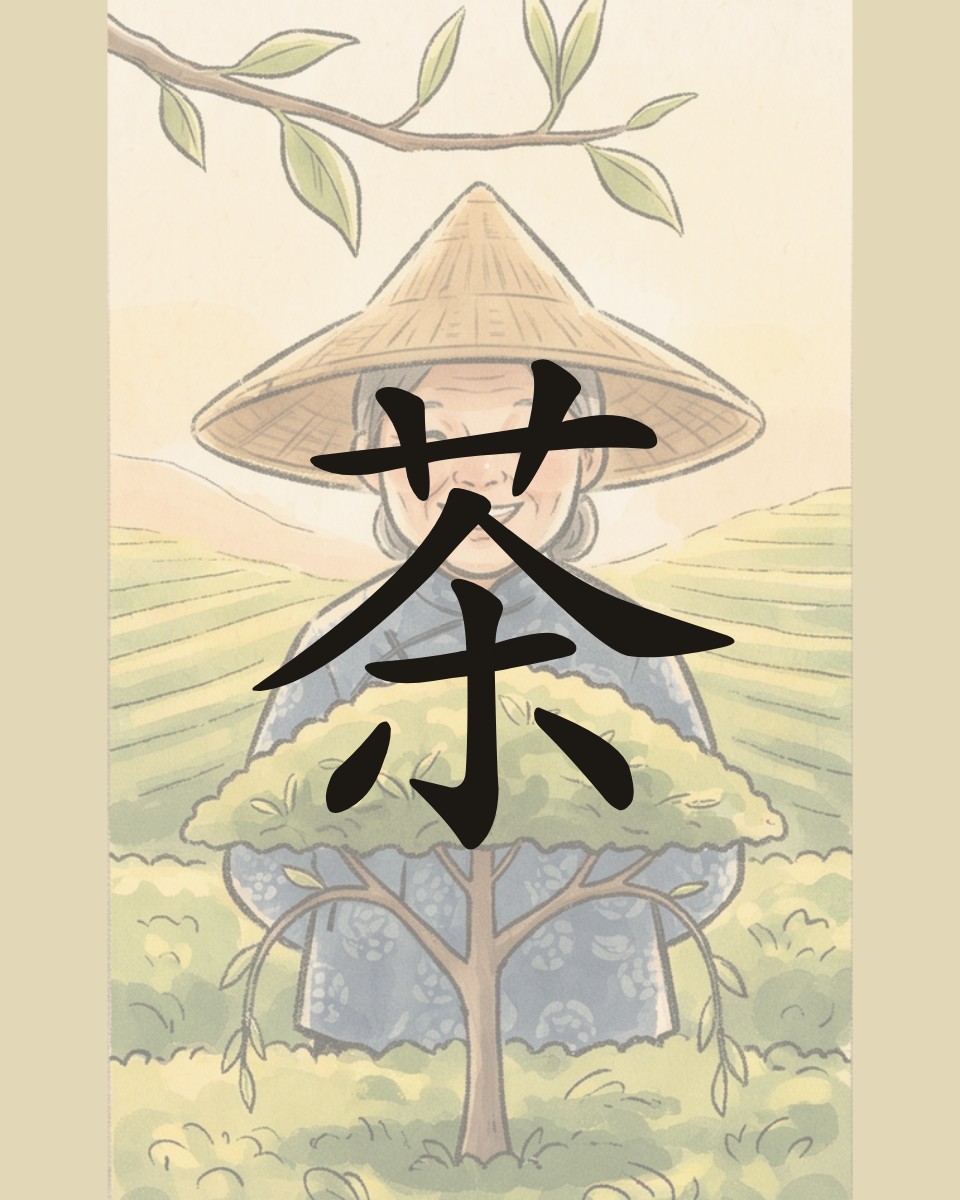
A tea picker under the leaves: 茶
人在草木间,就是“茶”
A tea picker in a big hat stands behind a little tea tree, with fresh tea leaves above her. The leaves, the hat and the tree become 茶 (chá, tea). 喝茶 (hē chá) means to drink tea. This is just a memory trick: long ago, tea was written 荼, with one more stroke. With English narration and subtitles.
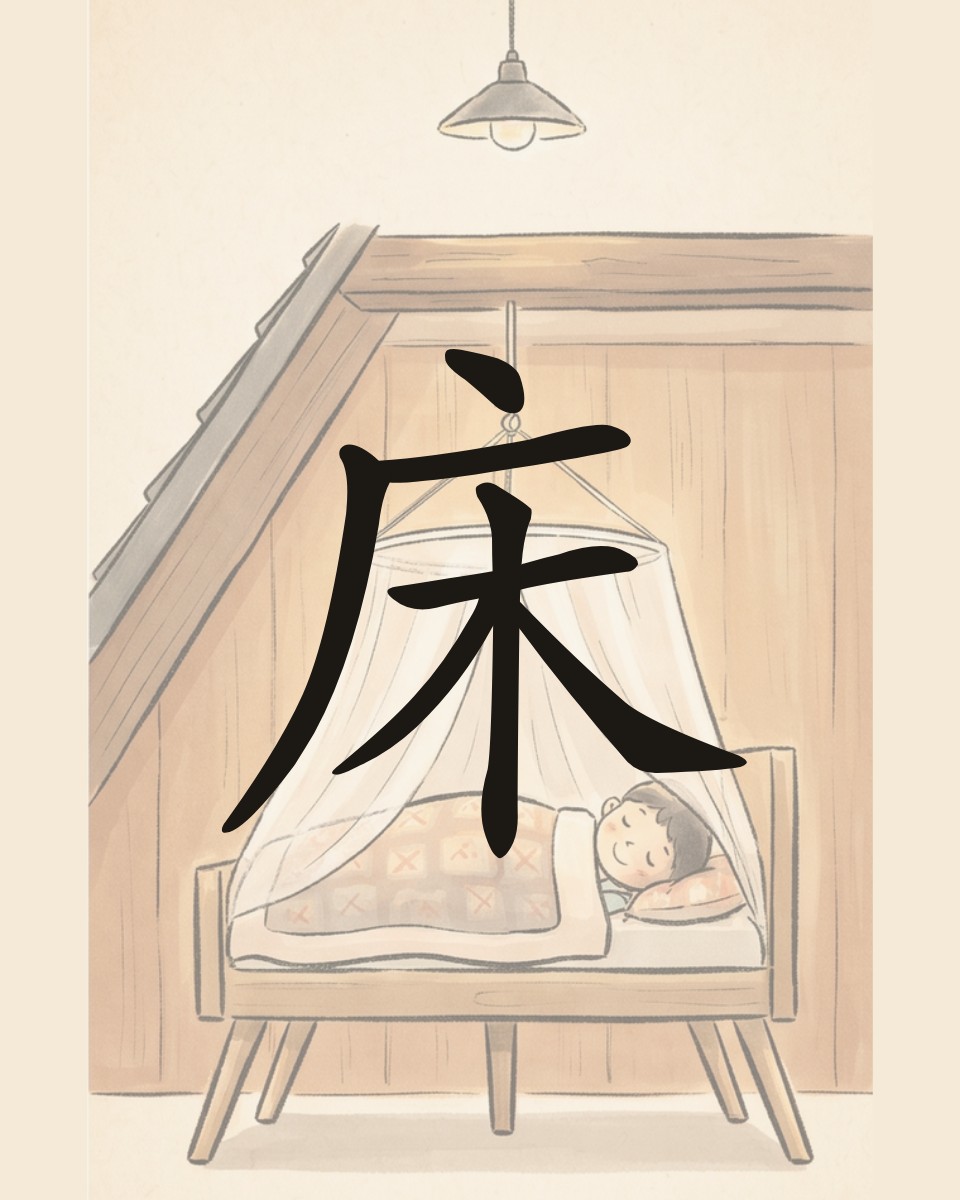
A bed under the roof: 床
阁楼里的小床,就是“床”
A little boy sleeps in a small room under the roof, with a net over his bed. The lamp, the beam, the roof and the bed become 床 (chuáng, bed). 起床 (qǐchuáng) means to get up. This is just a memory trick: in the old form 牀, the left part was a bed standing on its side. With English narration and subtitles.
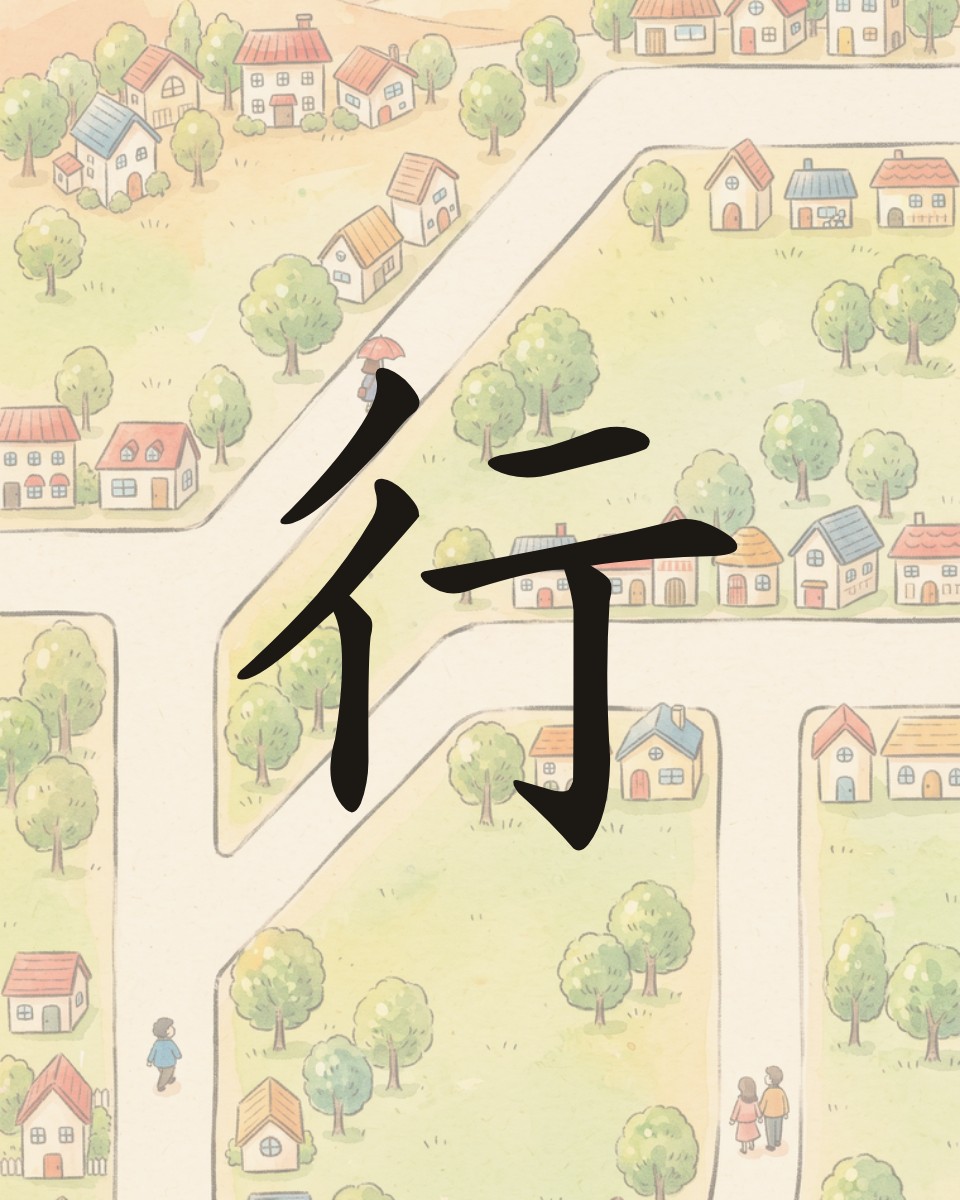
Roads in a little town: 行
小镇的路,就是“行”
People walk on the roads of a little town. The roads become 行 (xíng, to walk, to go). In 银行 (yínháng, bank) it reads háng. The trick is almost true: the oldest 行 was a picture of a crossroads. With English narration and subtitles.
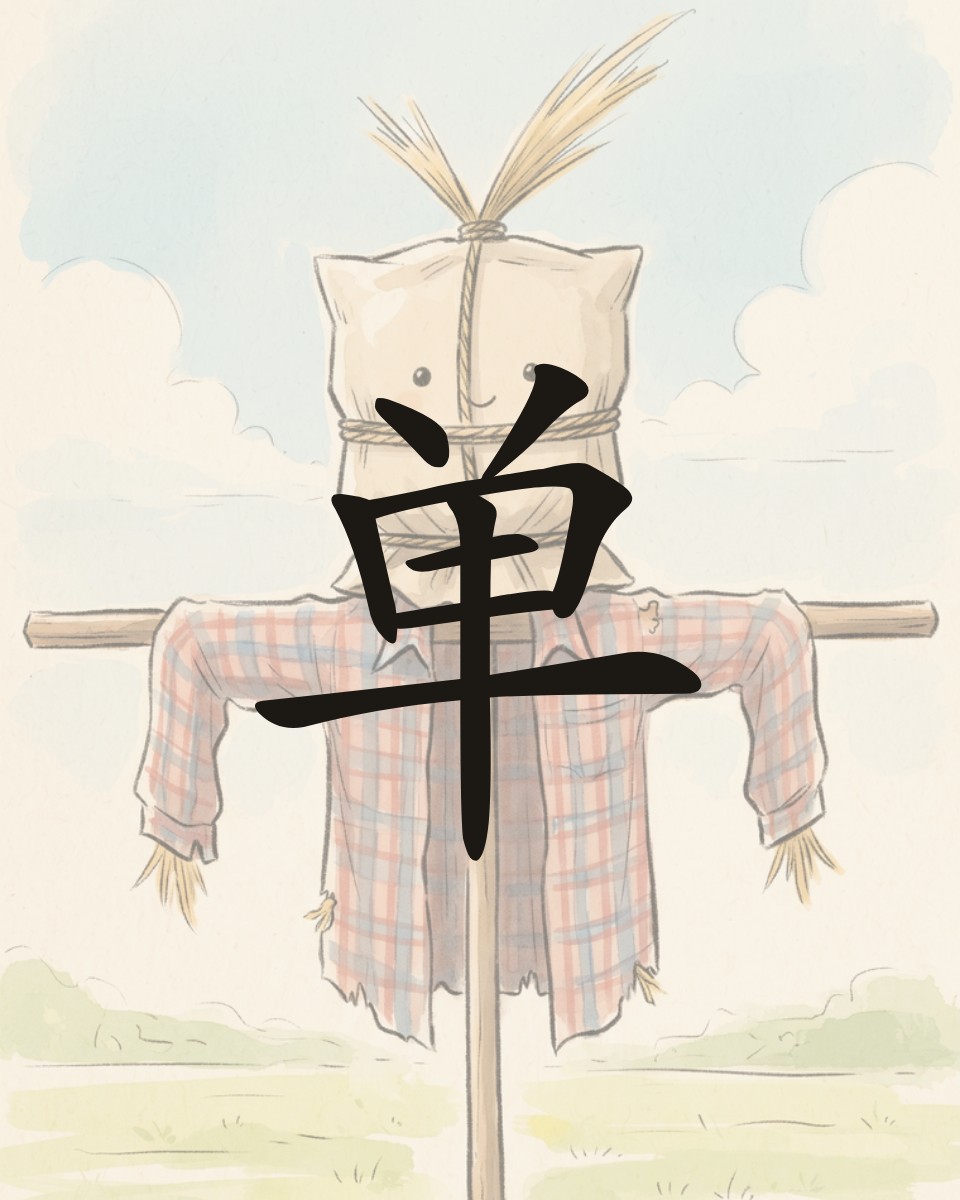
A scarecrow on one leg: 单
一条腿的稻草人,就是“单”
A scarecrow stands in a field, on one leg, all alone. Its straw, head, stick and leg become 单 (dān, single, alone). 单身 (dānshēn) means single. That's a memory trick: the oldest 单 was a hunting tool. With English narration and subtitles.
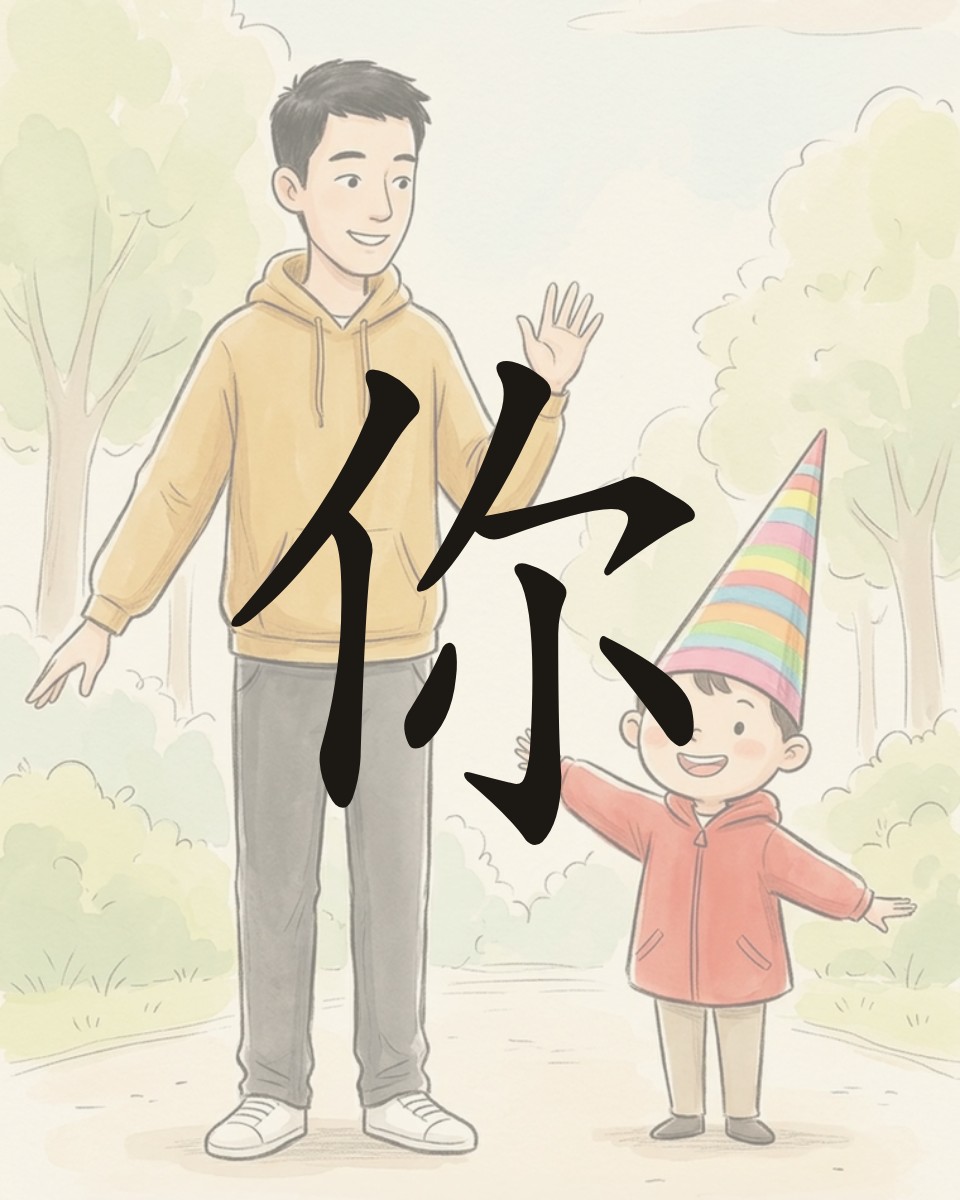
Hi, you: 你
跟小朋友打招呼,就是“你”
Xiao Le says hi to a little kid in a big hat. A person and a little one in a hat become 你 (nǐ, you). That's a memory trick: really, 亻 means a person, and 尔 (ěr) gives the sound and is an old word for you. With English narration and subtitles.
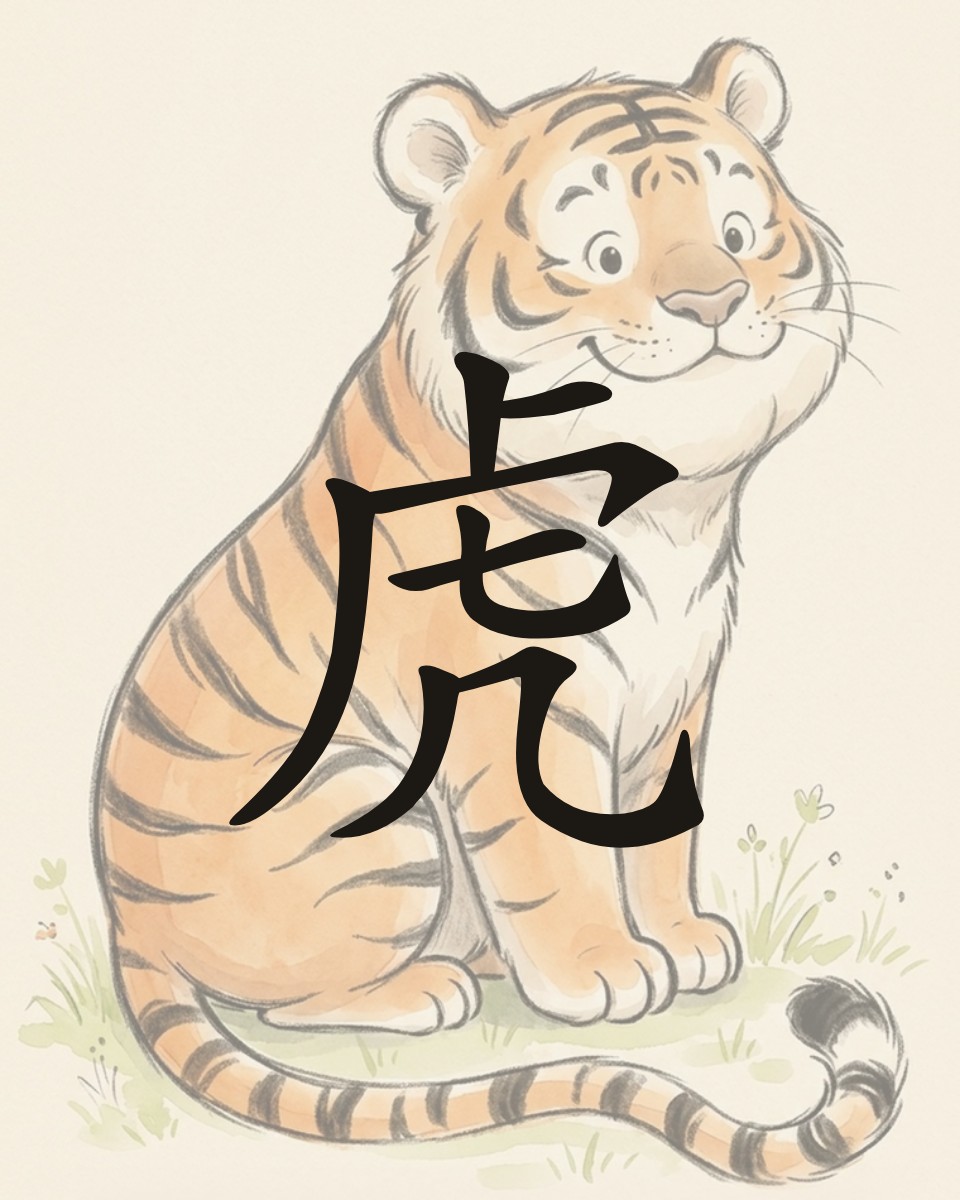
A little tiger: 虎
胖胖的小老虎,就是“虎”
A chubby little tiger sits on the grass. Its ears, face, back, legs and tail become 虎 (hǔ, tiger). That's a memory trick: the oldest 虎 was a drawing of a whole tiger. With English narration and subtitles.
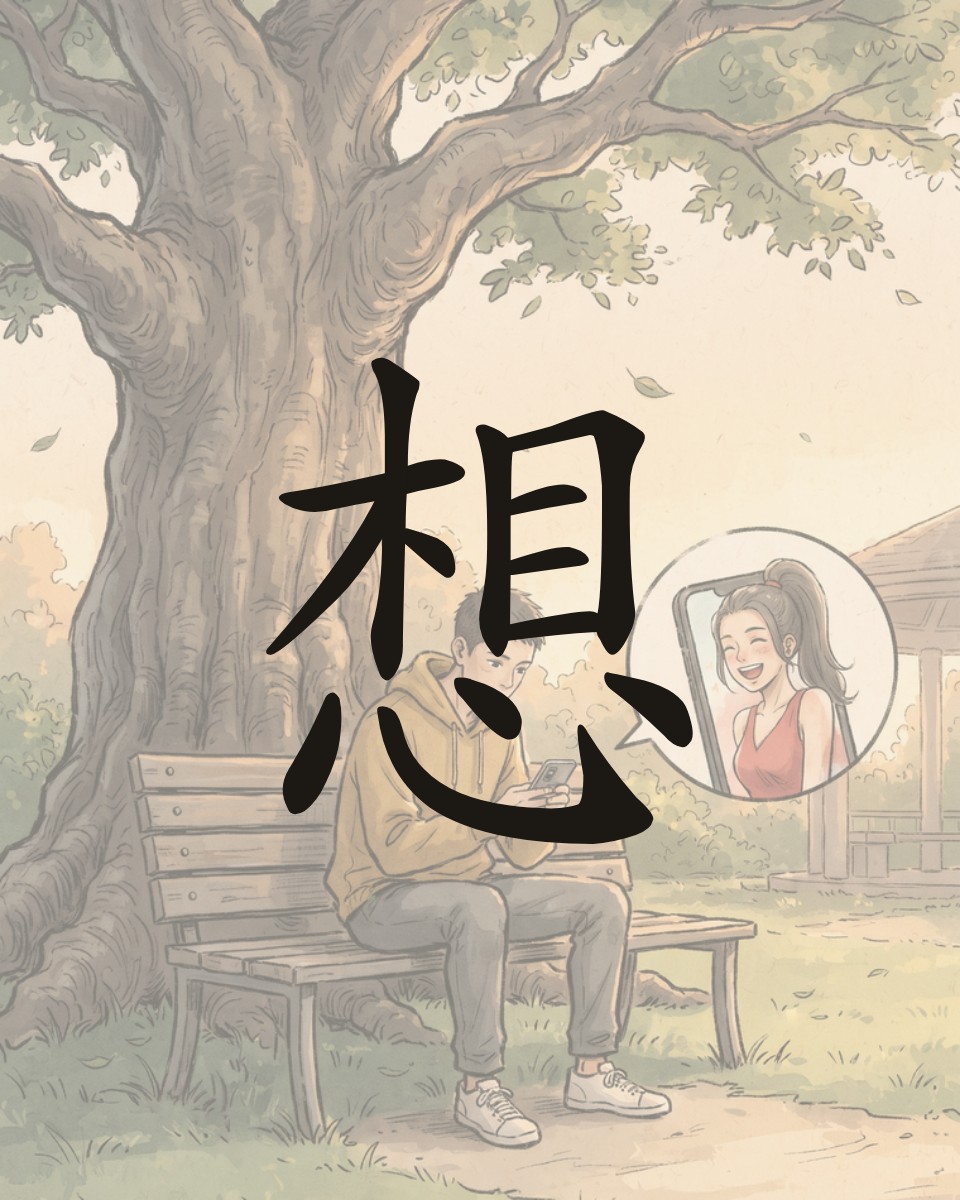
Xiao Le's Week, Day 1: a tree, an eye and a heart — 想
小乐的一周(一):树、眼睛和心,就是“想”
Xiao Le sits under the tree where he first met Mei Mei. A tree (木), an eye (目) and a heart (心) make 想 (xiǎng, to miss). That's a memory trick: really, 想 is a sound + meaning character — 心 for the meaning, 相 (xiāng) for the sound. With English narration and subtitles.
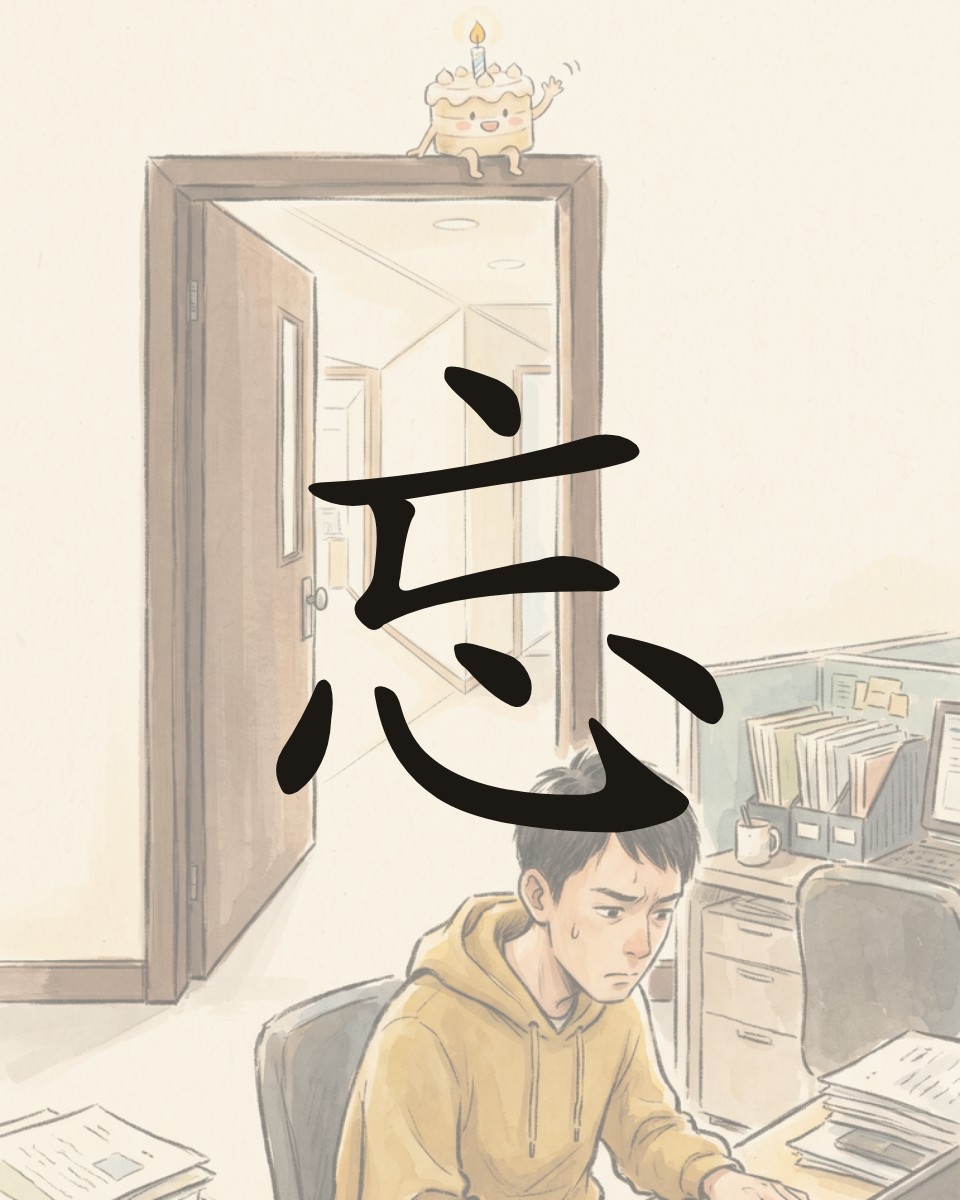
Xiao Le's Week, Day 2: it slipped out of his heart — 忘
小乐的一周(二):生日从心里溜走了,就是“忘”
Xiao Le is too busy at work. Her birthday slips out of his heart, runs out the door and waves bye-bye. 亡 (gone) over 心 (heart) makes 忘 (wàng, to forget), and 亡 (wáng) also gives the sound. With English narration and subtitles.
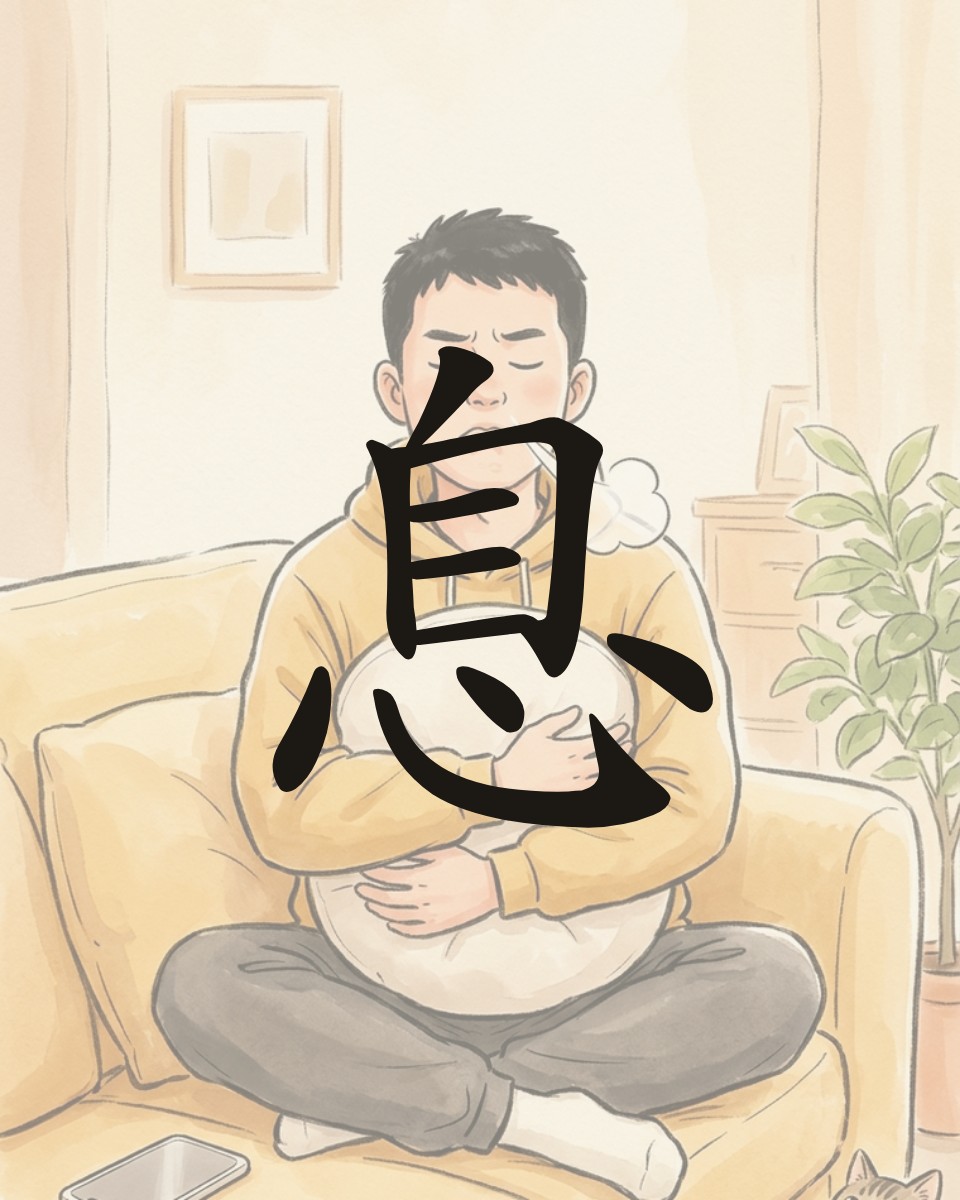
Xiao Le's Week, Day 3: a nose and a calm heart — 息
小乐的一周(三):鼻子和心,就是“息”
Xiao Le hugs a pillow and breathes in through his nose. Slowly, his heart calms down. 自 (once a nose) over 心 makes 息 (xī, breath, to rest). The oldest 息 showed breath going into a nose; the lines of breath later became 心. With English narration and subtitles.
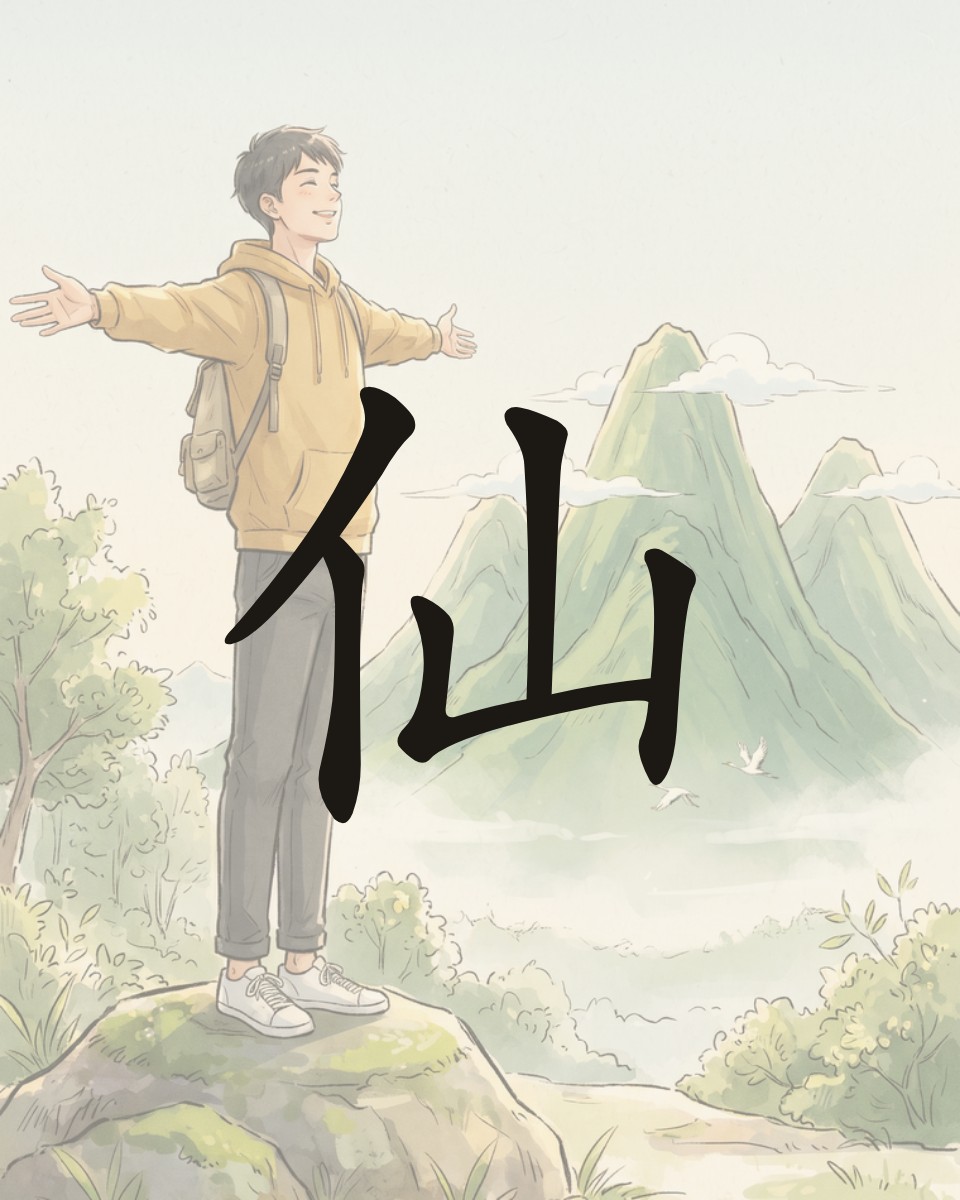
Xiao Le's Week, Day 4: a person by a mountain — 仙
小乐的一周(四):人站在山边,就是“仙”
Xiao Le runs all the way to the mountains and opens his arms. A person (亻) next to a mountain (山) makes 仙 (xiān, an immortal). The old Shuowen dictionary has 仚: a person on a mountain. With English narration and subtitles.
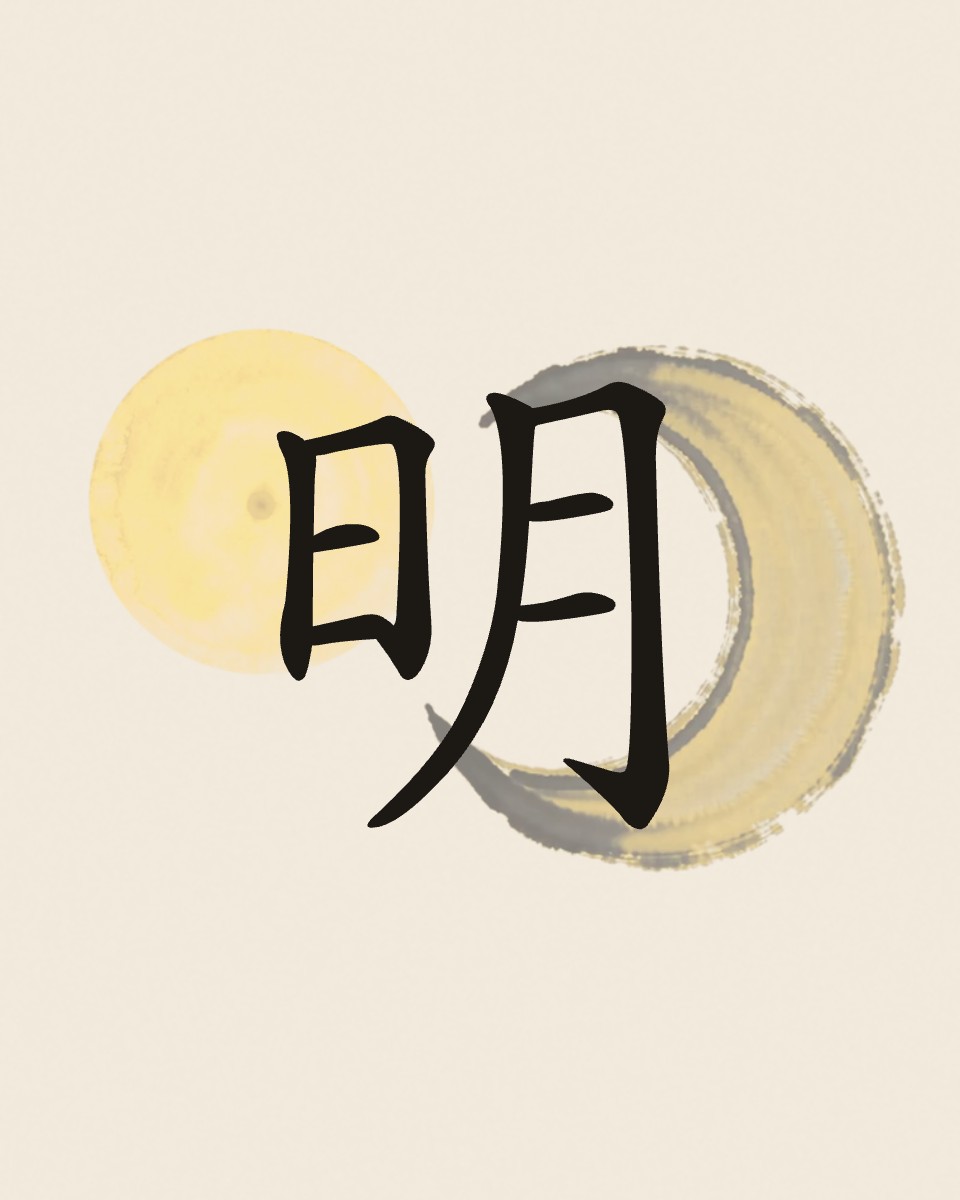
The sun and the moon: 明
太阳加月亮,就是“明”
The sun comes out, then the moon. The sun becomes 日, the moon becomes 月, and together they make 明 (míng, bright). 明天 (míngtiān) means tomorrow. With English narration and subtitles.
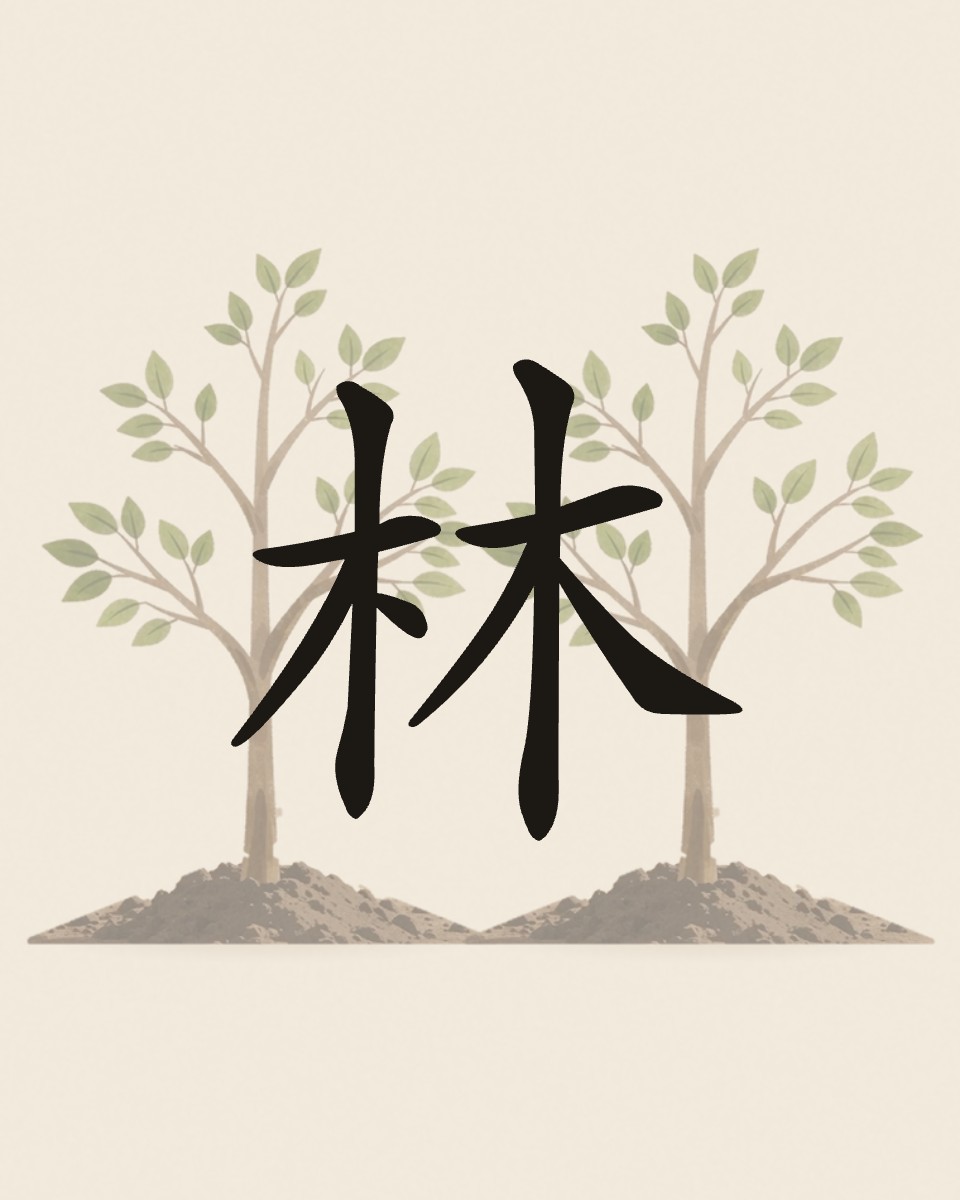
Two trees: 林
两棵树,就是“林”
One tree grows, then another. One tree is 木; two trees make 林 (lín, woods). The left tree pulls in its foot to make room. With English narration and subtitles.
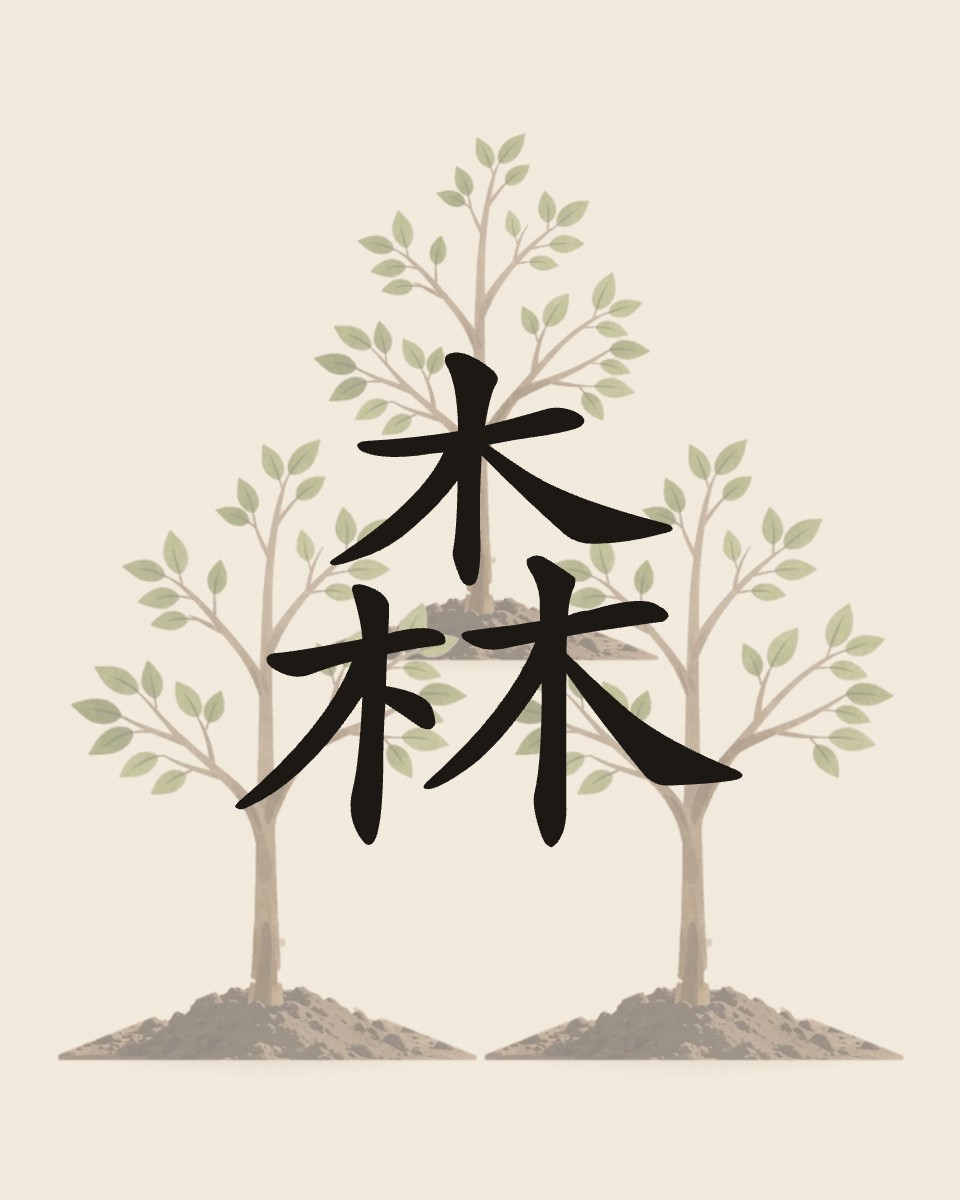
Three trees: 森
三棵树,就是“森”
One tree, two trees, three trees. One is 木, two make 林, three make 森 (sēn). Together, 森林 (sēnlín) means forest. With English narration and subtitles.
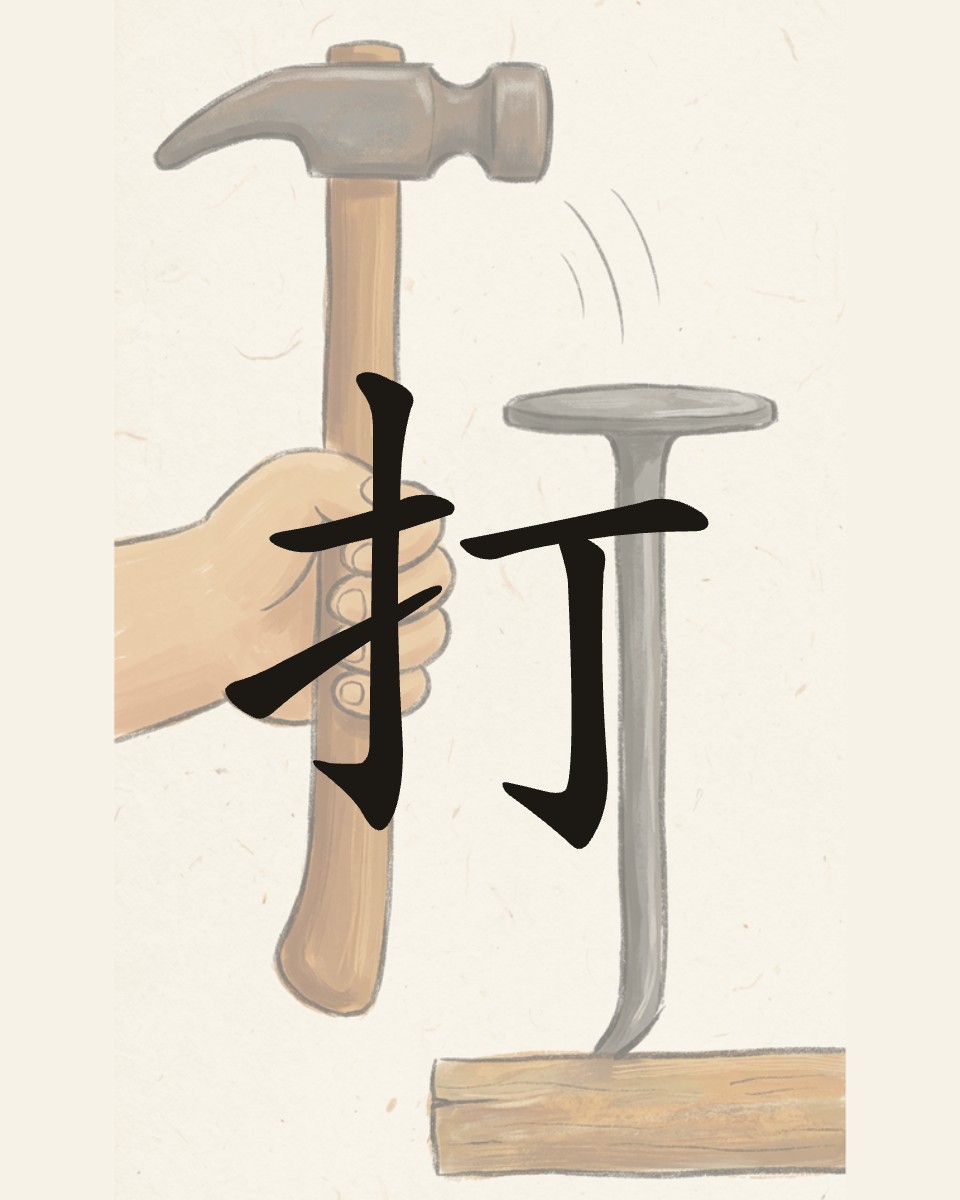
A hand and a nail: 打
手拿锤子敲钉子,就是「打」
A hand holds a hammer and hits a nail. The hammer, the hand and the nail become 打 (dǎ, to hit): 扌 is the hand, and 丁 was a nail long ago. With English narration and subtitles.
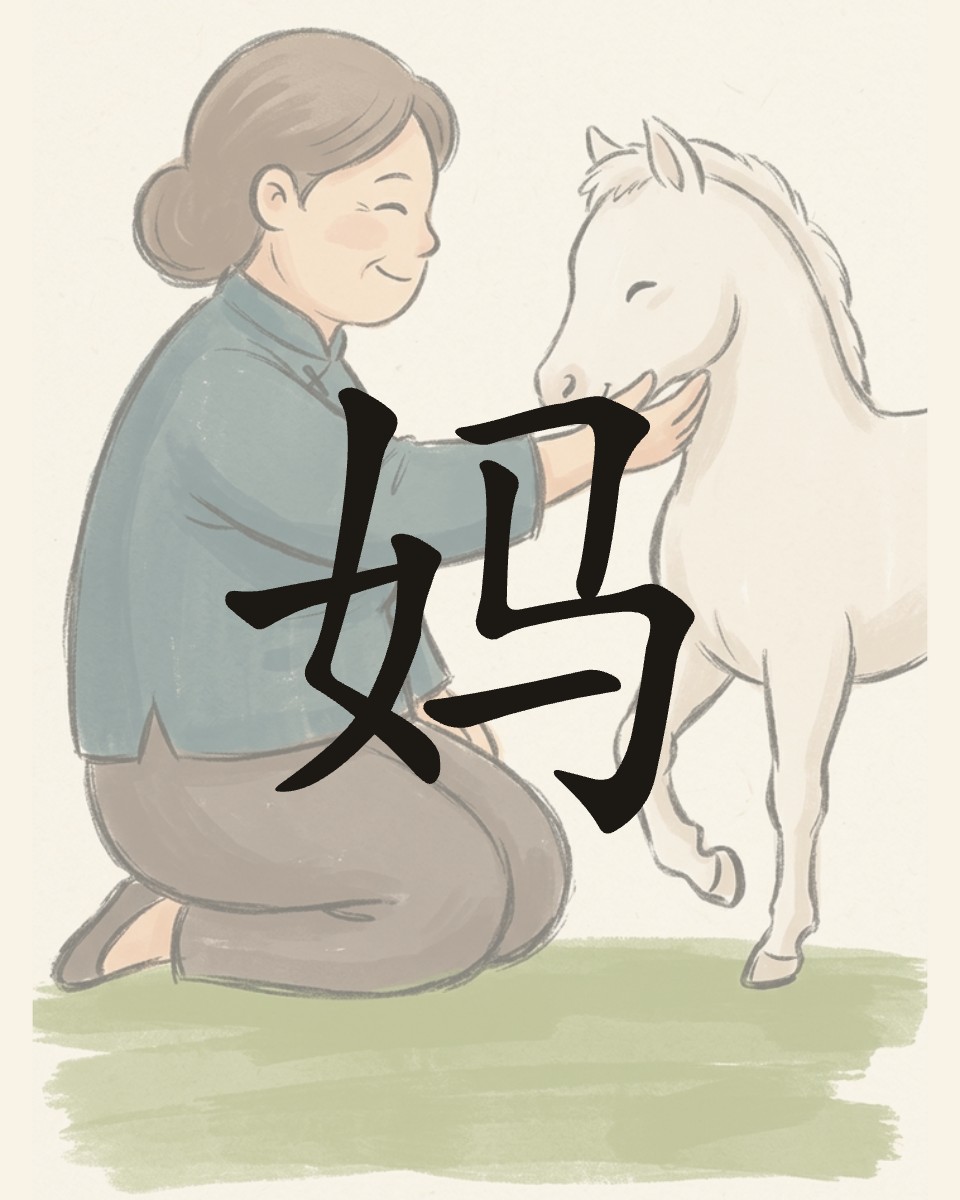
A mother and a little horse: 妈
妈妈和小马,就是「妈」
A mother strokes a little horse. She becomes 女, the meaning: a woman. The horse becomes 马 (mǎ), the sound. Together: 妈 (mā), mom. With English narration and subtitles.
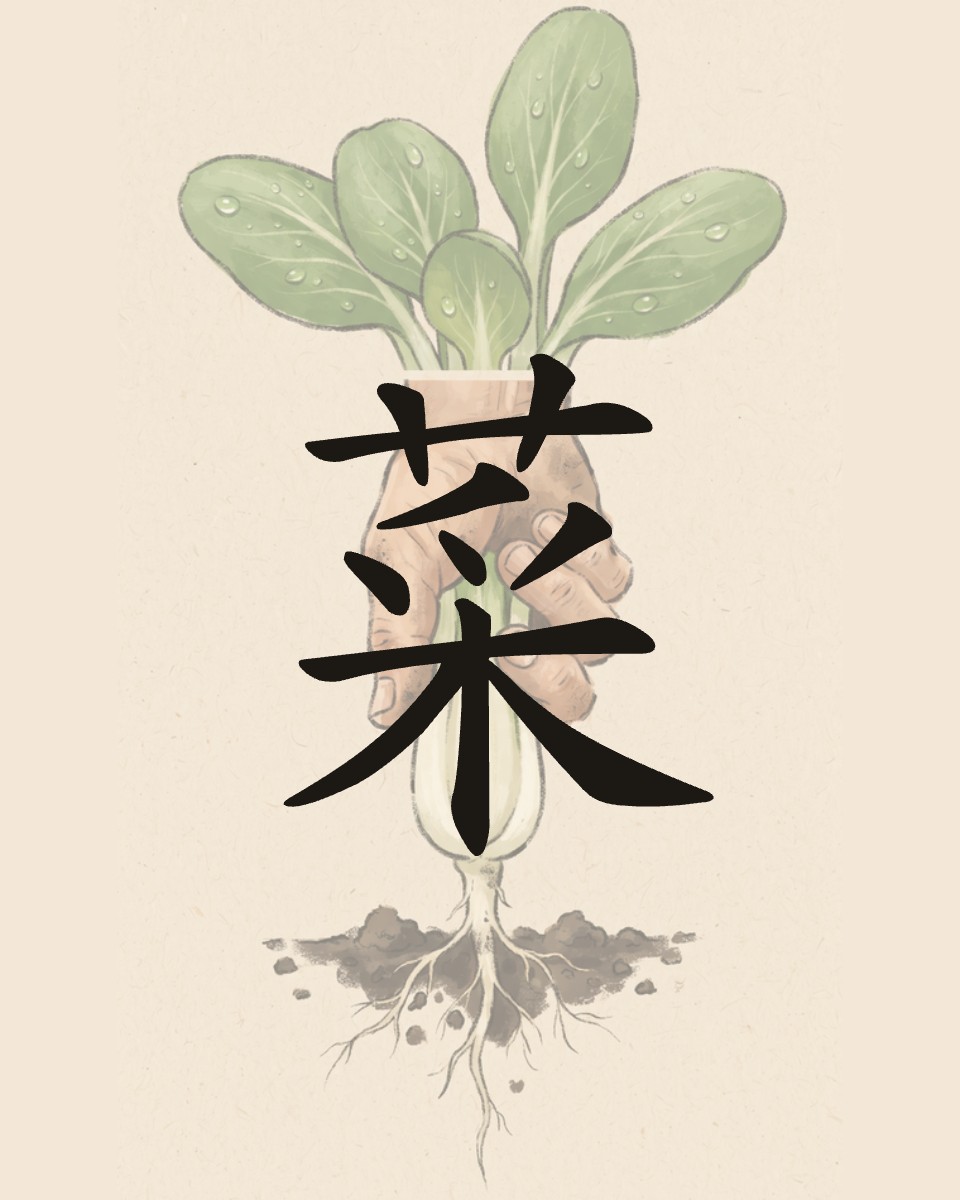
A hand pulls up a vegetable: 菜
一只手拔起一棵青菜,就是「菜」
A hand pulls a little green vegetable out of the ground. Eleven lines — leaves, fingers, stem and roots — become 菜 (cài, vegetables): grass on top, a hand in the middle, the plant below. An old dictionary says 菜 is grass you can eat. With English narration and subtitles.
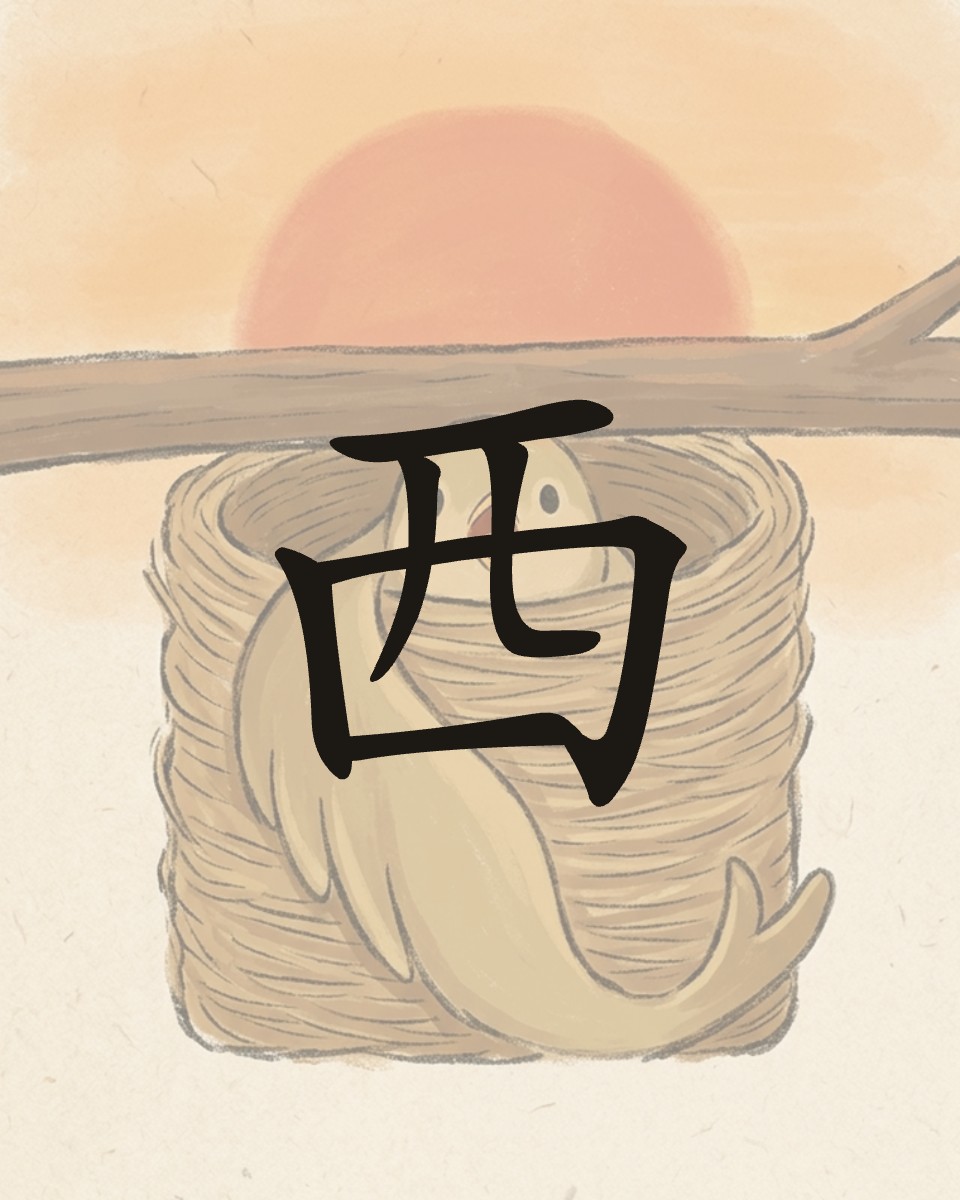
A nest at sunset: 西
太阳落山,小鸟回窝,就是「西」
The sun goes down and a little bird comes home to its nest under a branch. The branch, the nest and the bird become 西 (xī, west). Long ago, 西 was a picture of a nest: birds go home when the sun sets in the west. Then the forms one by one: oracle bone, bronze, small seal, and 西 today. With English narration and subtitles.
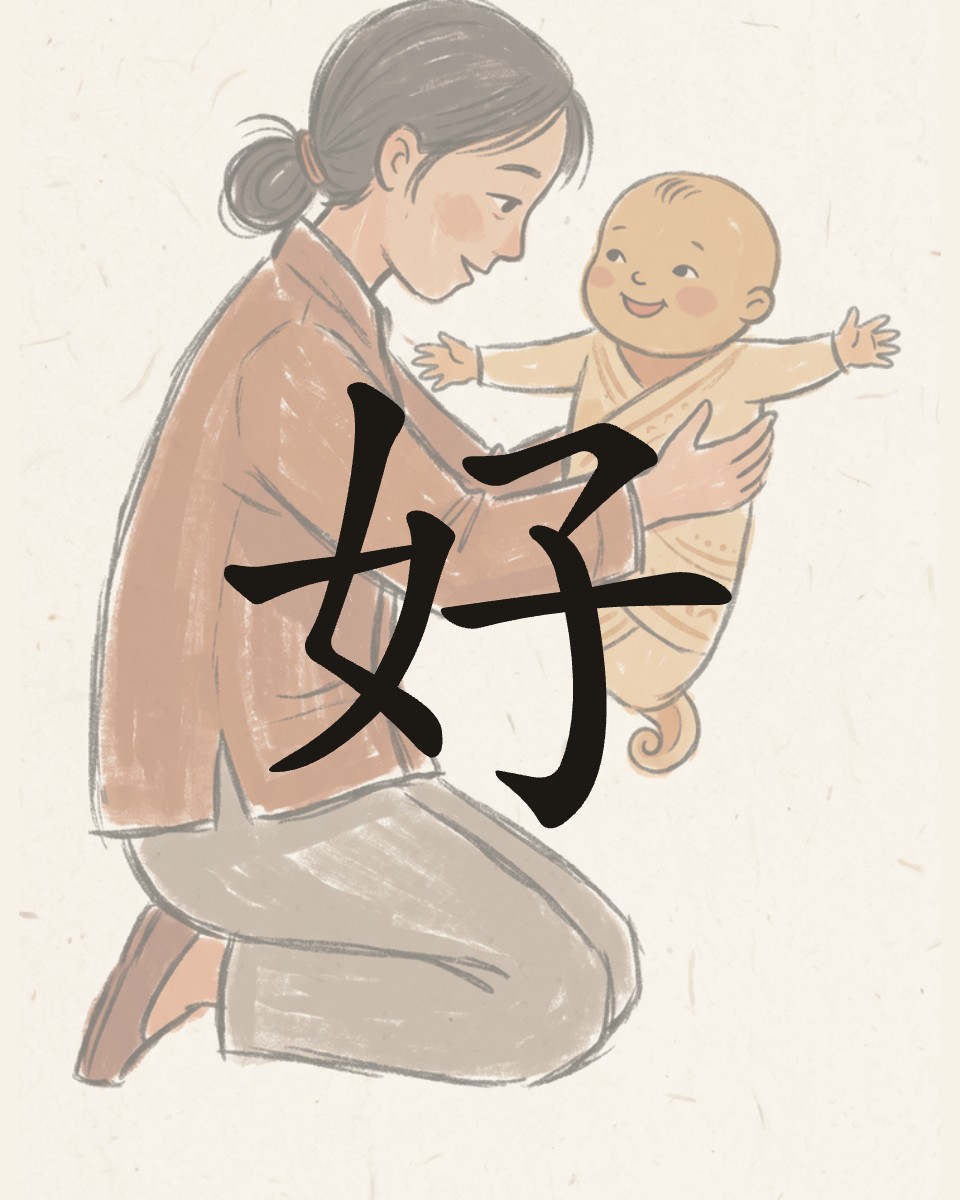
A mother and her child: 好
妈妈托着宝宝,就是「好」
A mother kneels and holds her baby. Six lines on the picture — three on the mother, three on the baby — stretch into 好 (hǎo, good): the mother becomes 女, the baby becomes 子. Then the forms one by one: oracle bone, bronze, small seal, and 好 today. What is better than a mother with her child by her side? With English narration and subtitles.
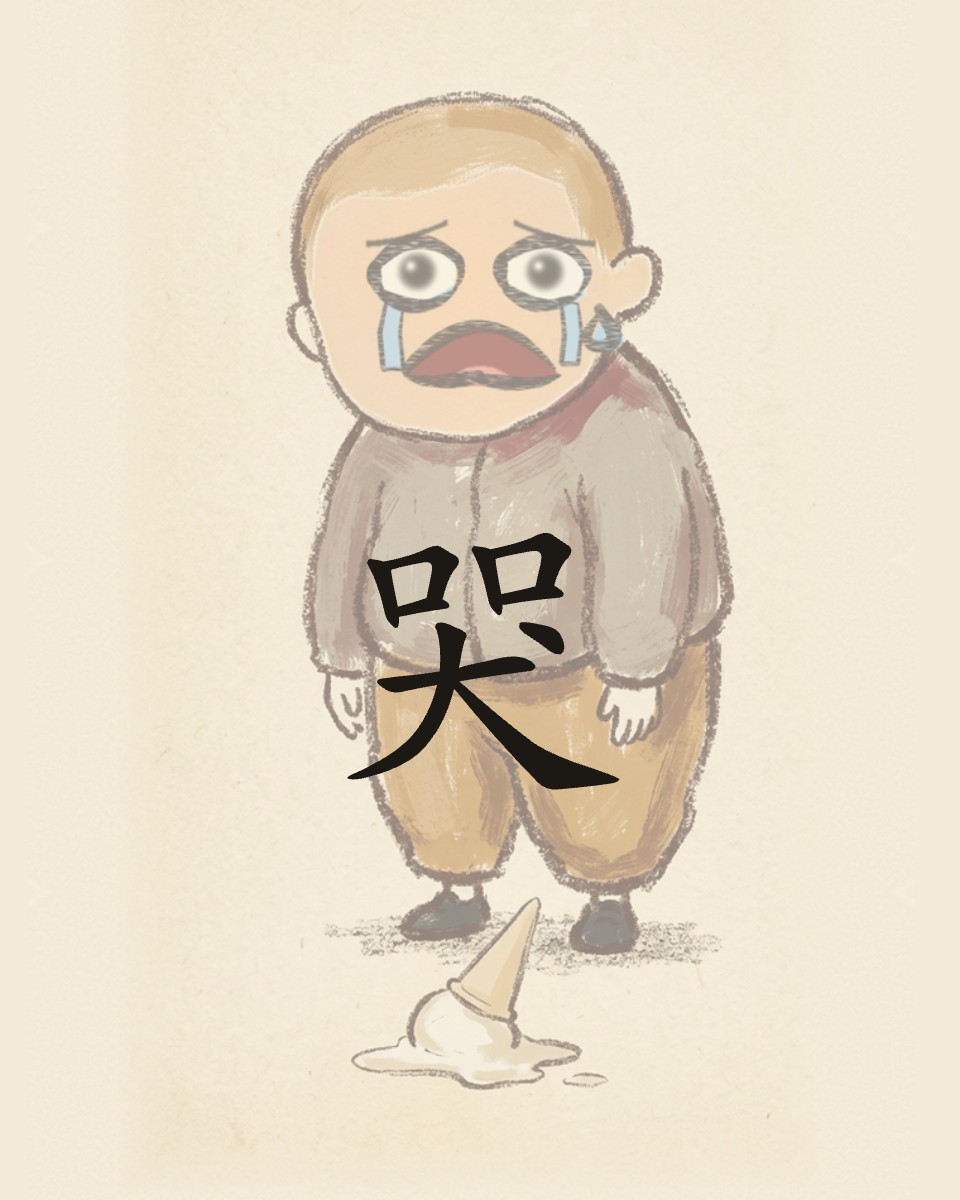
The crying boy: 哭
掉了冰淇淋的小孩,哭成了「哭」
A little boy's ice cream falls on the ground and he cries. Look at his face: two teary eyes, a big crying mouth and a blue tear. Slowly they turn into the strokes of 哭 (kū, to cry). This face is a fun way to remember the character, not its history. Also: 别哭 (bié kū), don't cry. With English narration and subtitles.
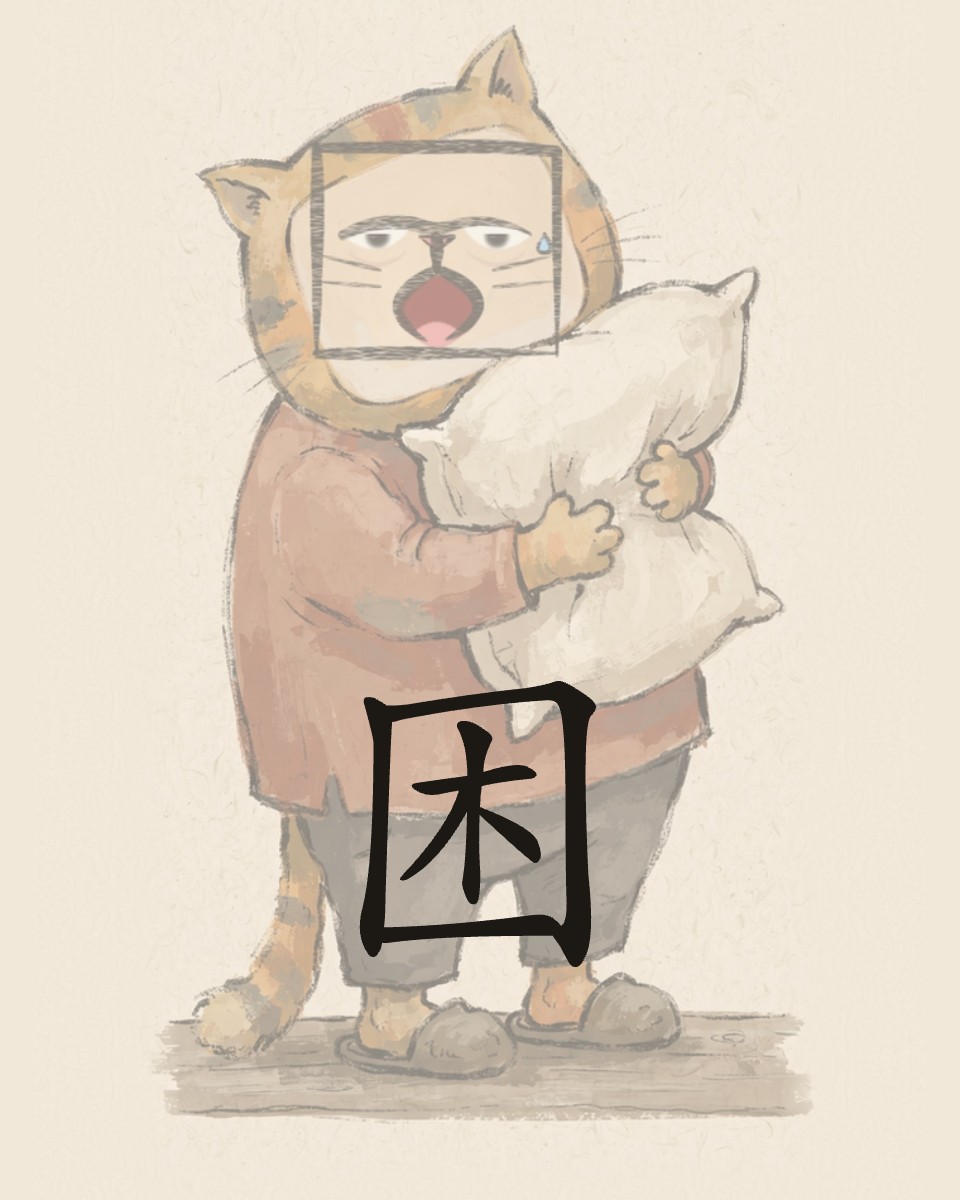
The sleepy cat: 困
打哈欠的大橘猫,困成了「困」
A big orange cat hugs a pillow and yawns. Look at its square face: heavy eyelids, a huge yawn and a little tear. Slowly they turn into the strokes of 困 (kùn, sleepy). This face is a fun way to remember the character, not its history. Also: 我很困 (wǒ hěn kùn), I'm very sleepy. With English narration and subtitles.
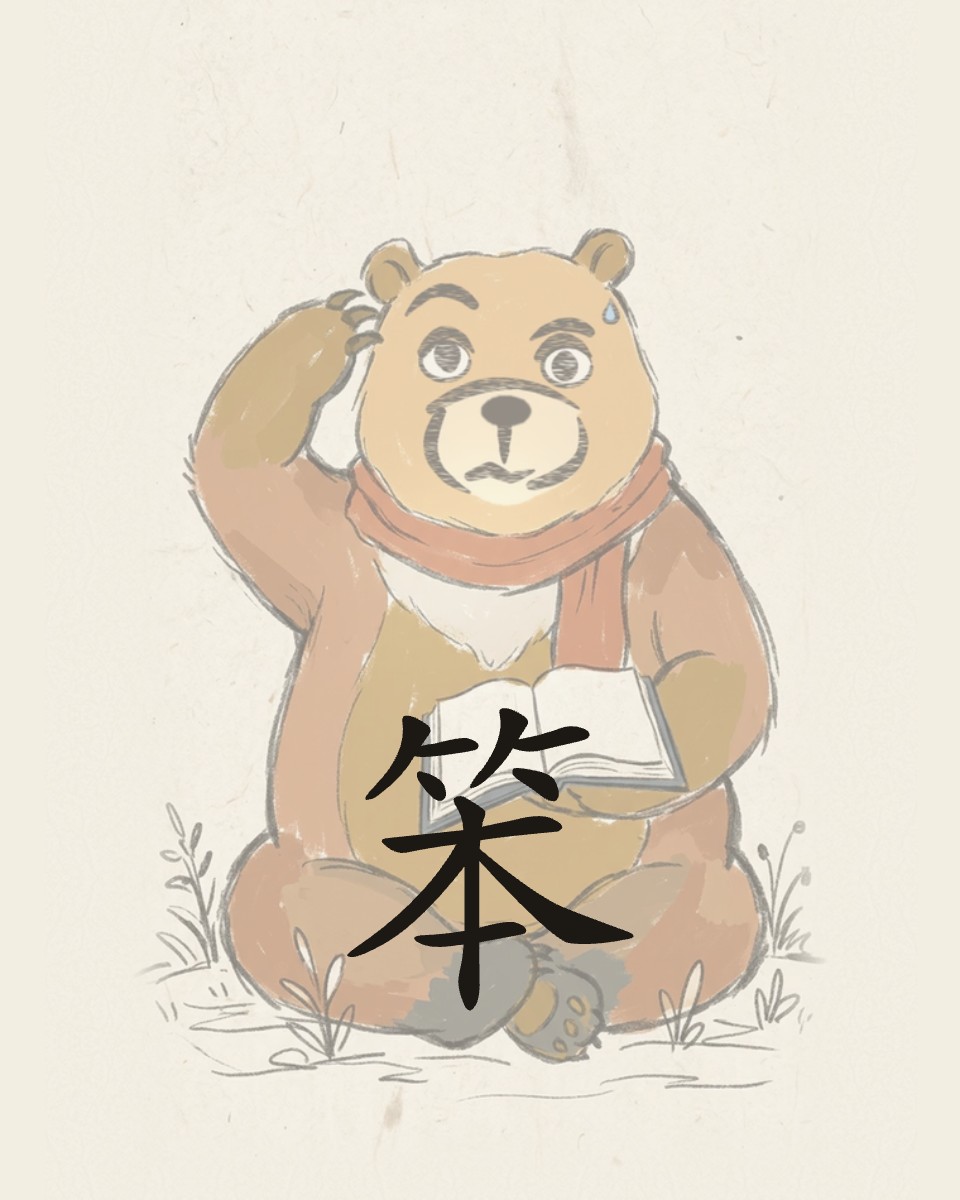
The puzzled bear: 笨
挠头的狗熊,一脸「笨」
A bear scratches its head over a book. Look at its face: one eyebrow up, one down, a crooked mouth and a drop of sweat. Slowly they turn into the strokes of 笨 (bèn, silly, not clever). This face is a fun way to remember the character, not its history. Also: 我真笨 (wǒ zhēn bèn), I'm so silly! With English narration and subtitles.
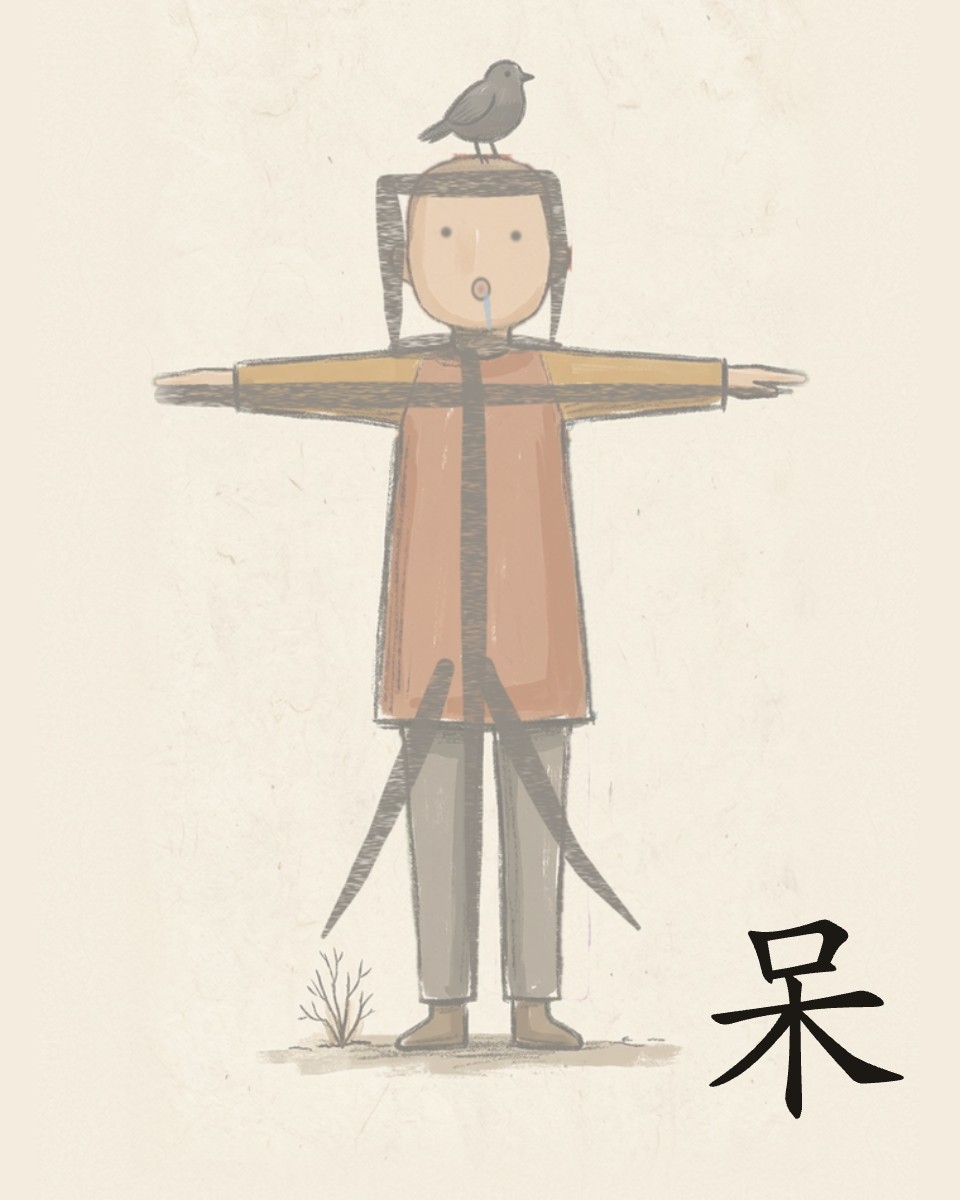
The wooden boy: 呆
像木头桩子一样的人,就是「呆」
A boy stands stiff like a wooden post. A bird lands on his head and he doesn't even notice. His square head, his arms, his body and his legs turn into 呆 (dāi, blank, dazed). This picture is a fun way to remember the character, not its history. Also: 发呆 (fādāi), to stare into space. With English narration and subtitles.
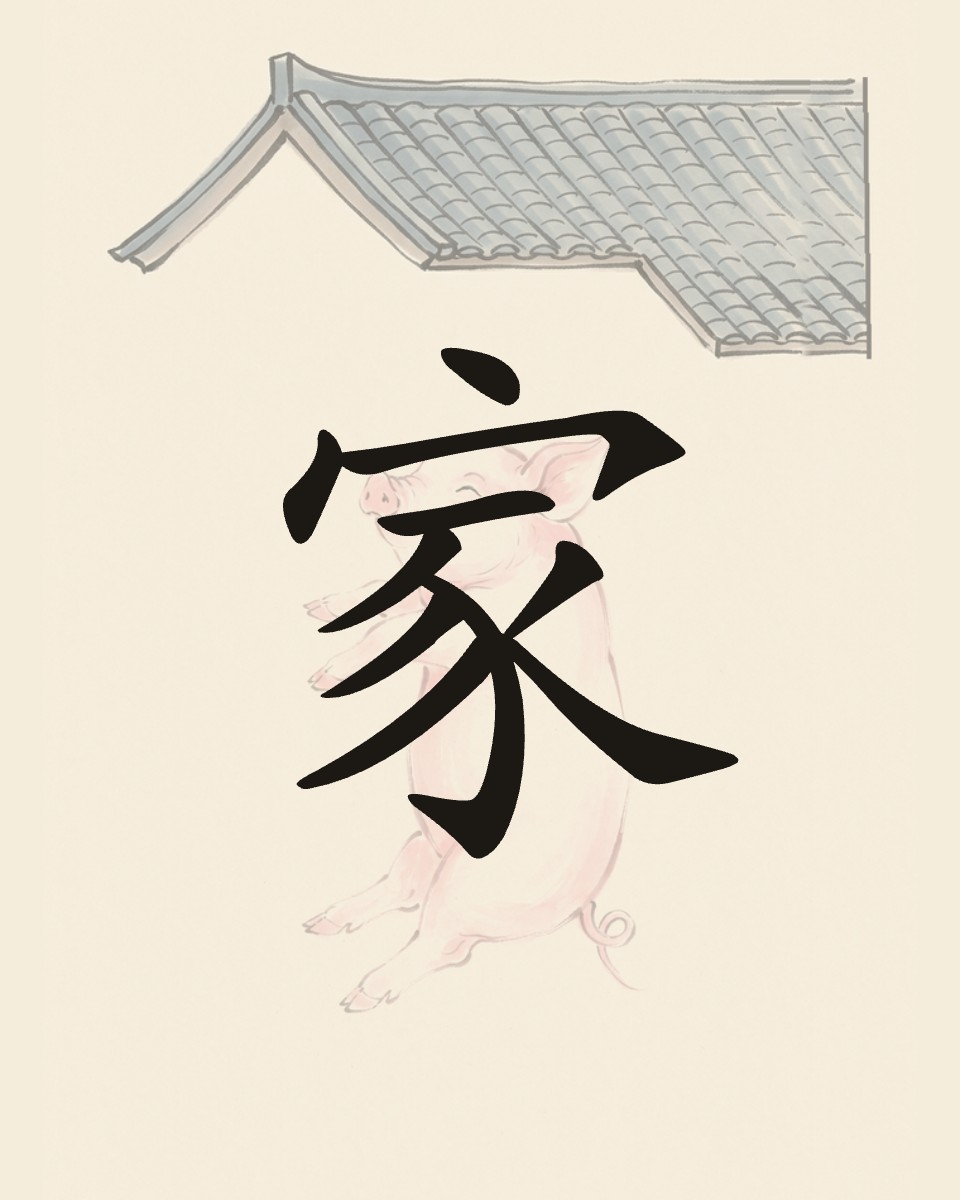
A pig under a roof: 家
屋顶下面一头猪,就是「家」
A roof, and a little pig lying under it. Ten lines on the picture — three on the roof, seven on the pig (head, ear, legs, back and tail) — first become the oracle bone 家, then today's 家 (jiā, home, family). Then the forms one by one: oracle bone, bronze, small seal, and 家 today: still a roof on top and a pig under it. 回家 (huí jiā) means go home. With English narration and subtitles.
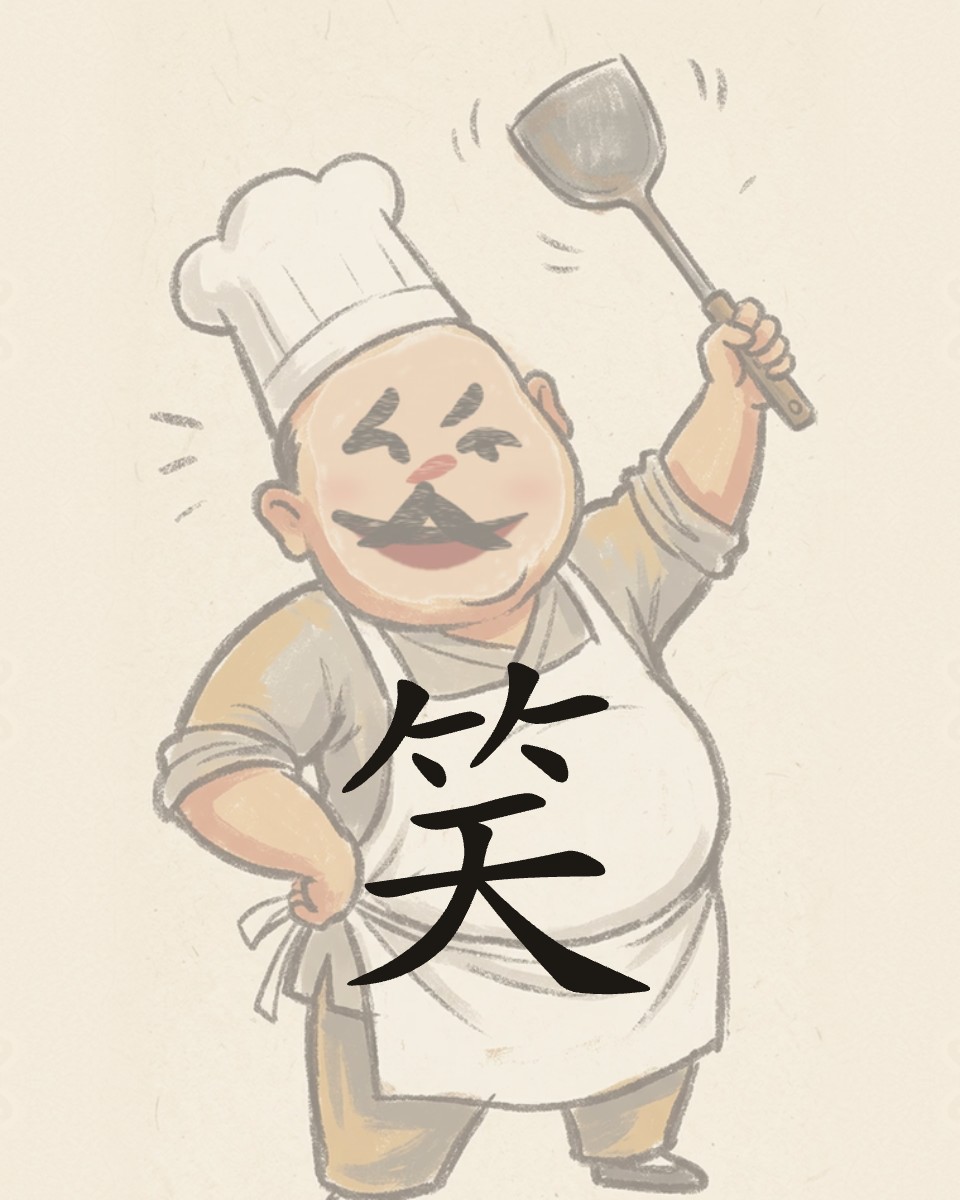
The laughing chef: 笑
大胡子厨师的笑脸,就是「笑」
A fat chef laughs out loud — ha ha ha! Look at his face: two smiling eyes, a red nose and a big moustache. Slowly they turn into the strokes of 笑 (xiào, to laugh, to smile). This face is a fun way to remember the character, not its history. Also: 微笑 (wēixiào), to smile. With English narration and subtitles.
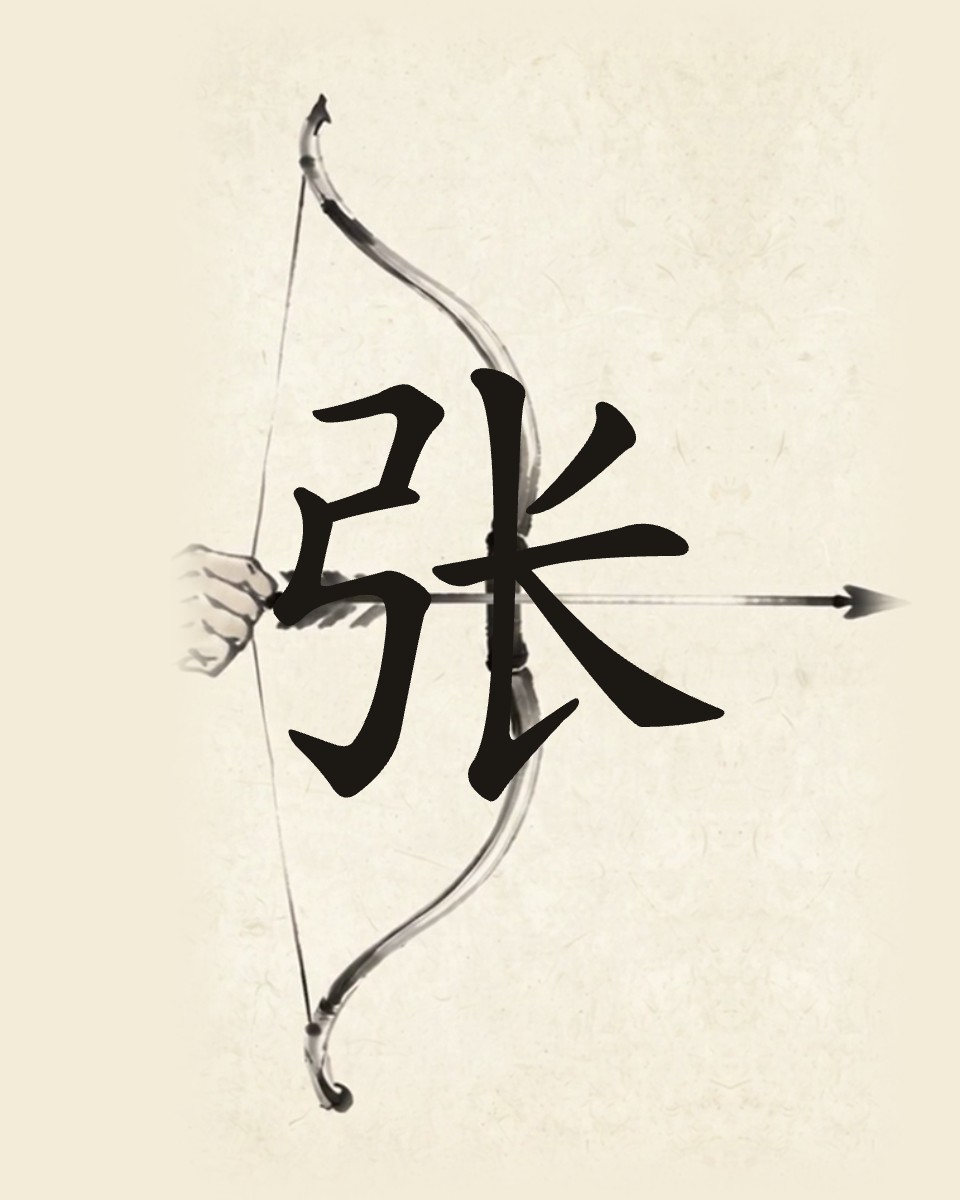
Pulling a bow open: 张
拉开弓,就是「张」
A hand pulls a bow string tight and lets it go — that is what 张 first meant. The line along the bow becomes 弓 (gōng), the meaning; 长 (zhǎng) is written beside it for the sound; together they make 张 (zhāng). Today we say 一张纸, a sheet of paper. Then 张, 涨 and 账: the same 长, the same sound. With English narration and subtitles.
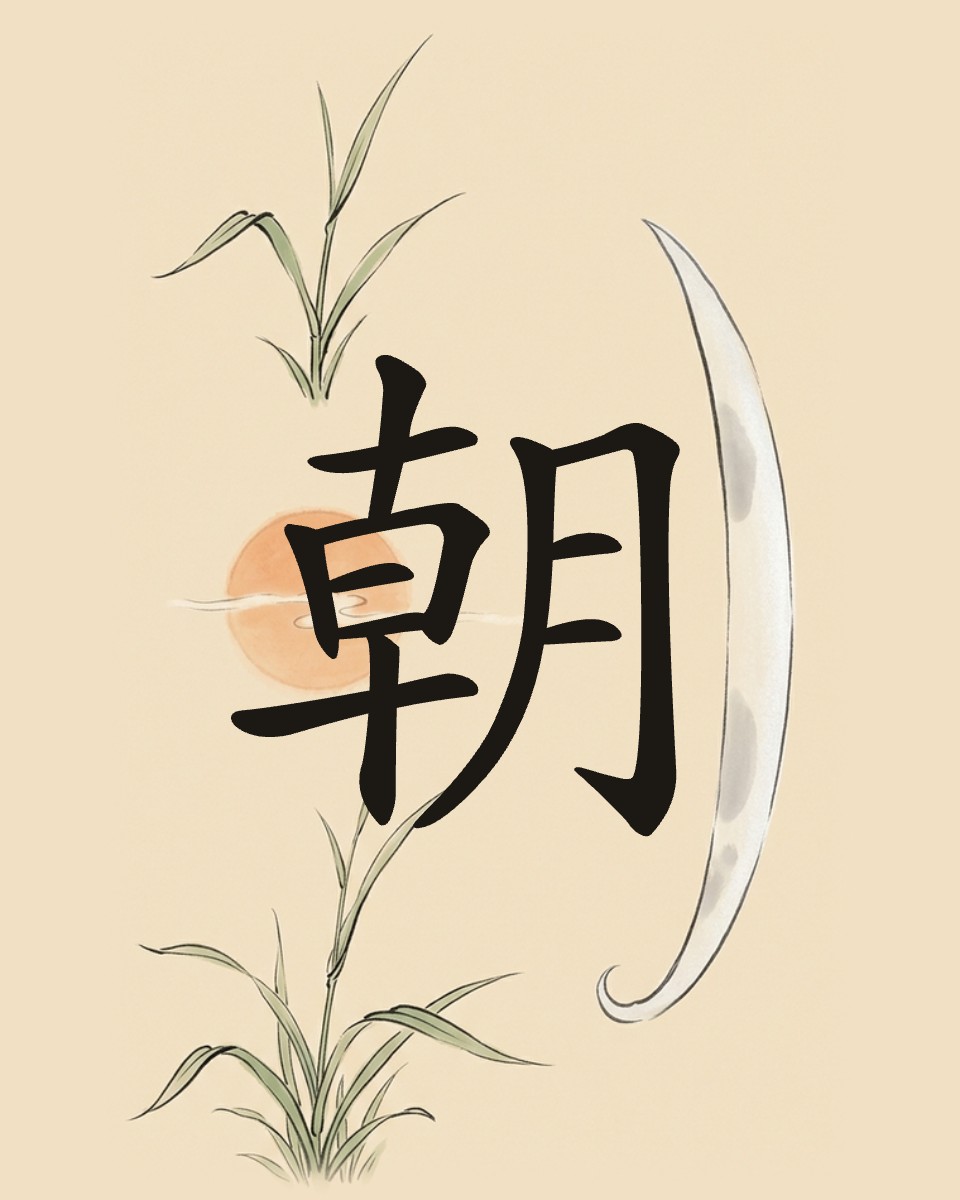
The sun in the grass, the moon still up: 朝
太阳从草里升起,月亮还没落,就是「朝」
Early morning: the sun rises between two clumps of grass, and a thin moon is still in the sky. Twelve lines on the picture — the grass, the sun, a morning cloud and the moon — become the twelve strokes of 朝 (zhāo, early morning). Then: oracle bone and bronze forms, and today's 朝 — still grass and sun on the left, the moon on the right. Read cháo, it means towards: 朝南, facing south. With English narration and subtitles.
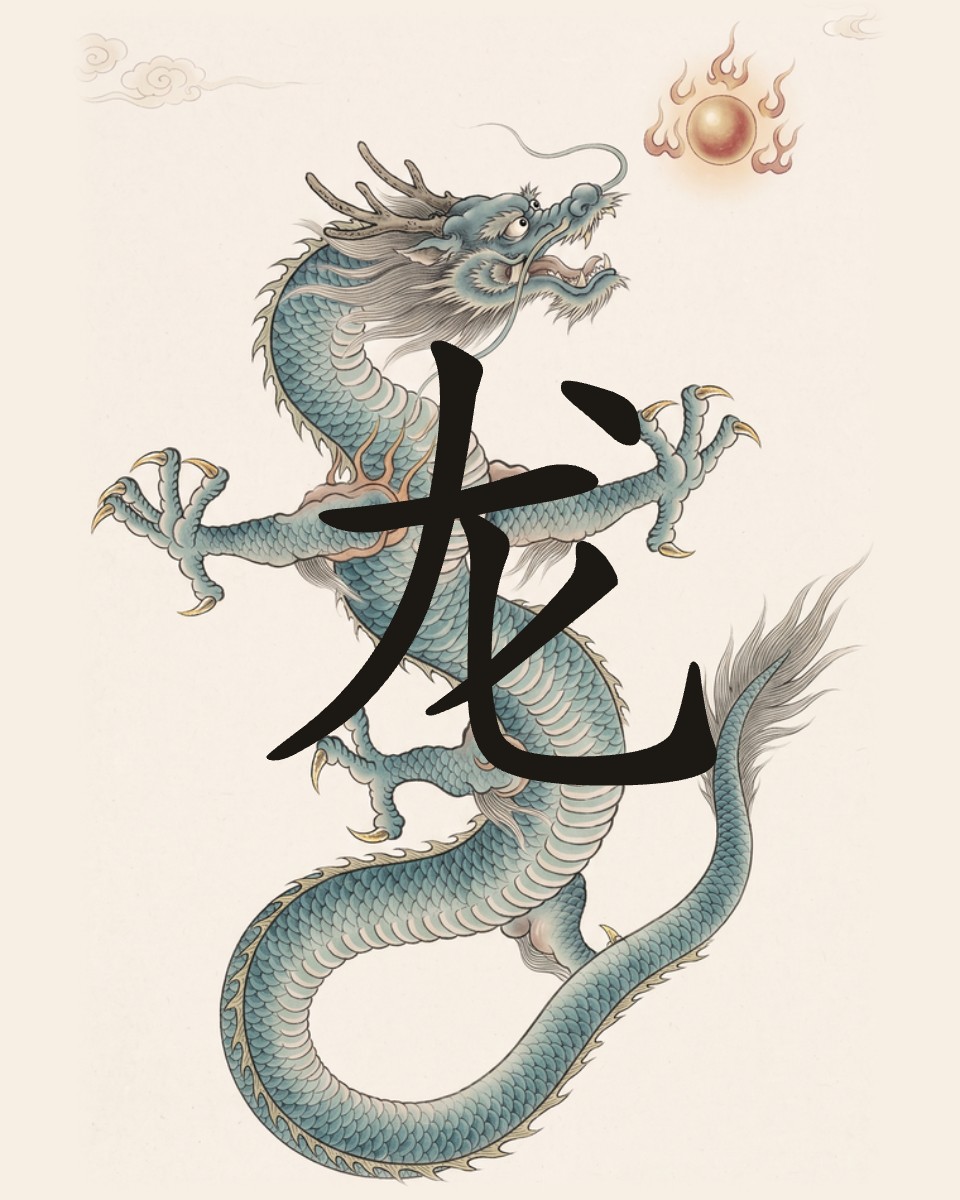
A dragon chases its pearl: 龙
追龙珠的龙,变成「龙」
A blue-green Chinese dragon stretches in the sky and chases a glowing pearl. Five lines on its body — the claws, the back, the body and tail, a hind leg and the pearl — become the five strokes of 龙. Then: oracle bone, bronze, small seal, traditional 龍 with sixteen strokes, and today's 龙 with just five. With English narration and subtitles.
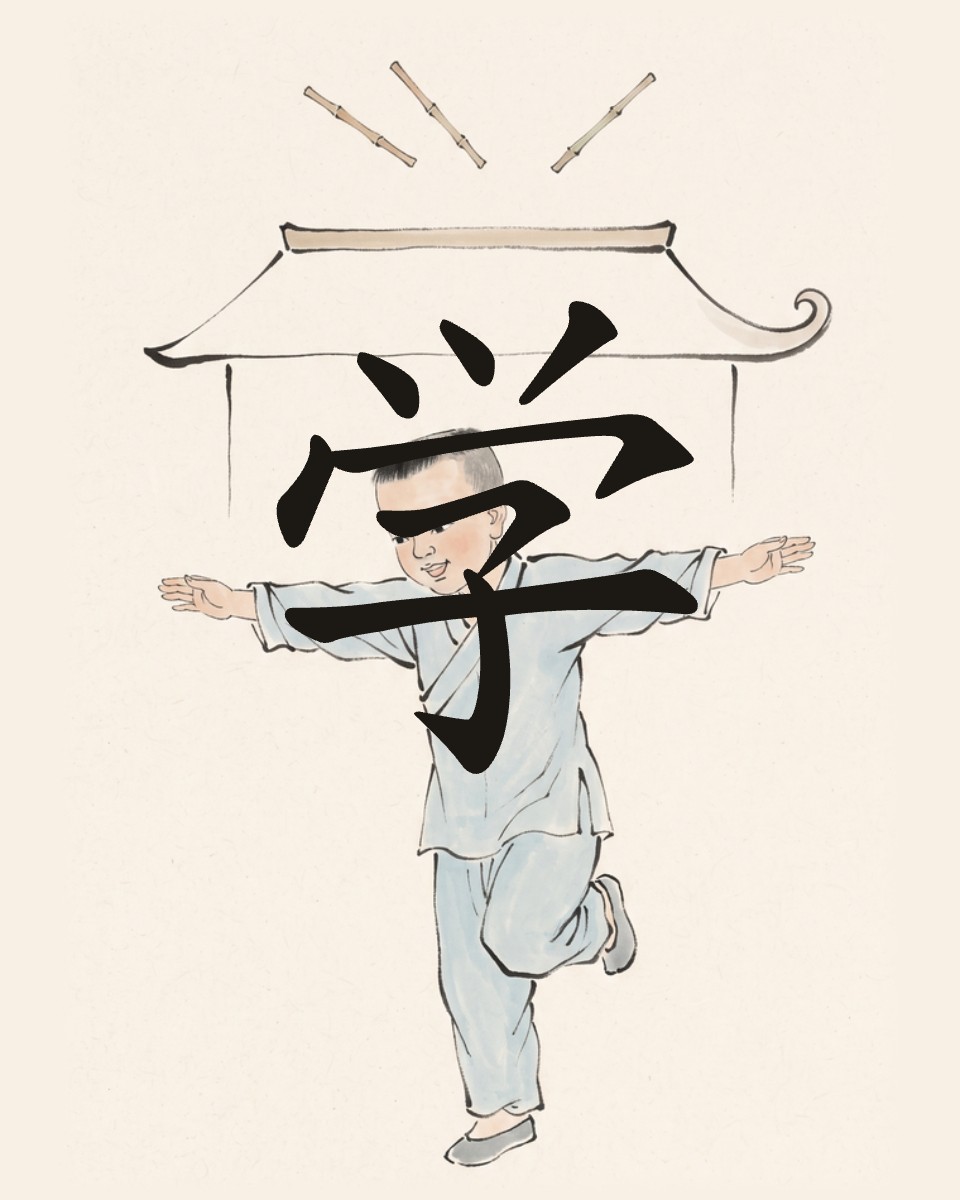
A child under a roof: 学
屋檐下的孩子,就是「学」
A little child stands under a schoolhouse roof with arms wide open, three little sticks floating above. Eight lines on the picture — the sticks, the roof, the head, the body and the arms — become the eight strokes of 学. Then: oracle bone, bronze, small seal, traditional 學 (two hands holding crossed sticks, a roof, a child) and today's 学, where the hands and sticks became three dots. With English narration and subtitles.
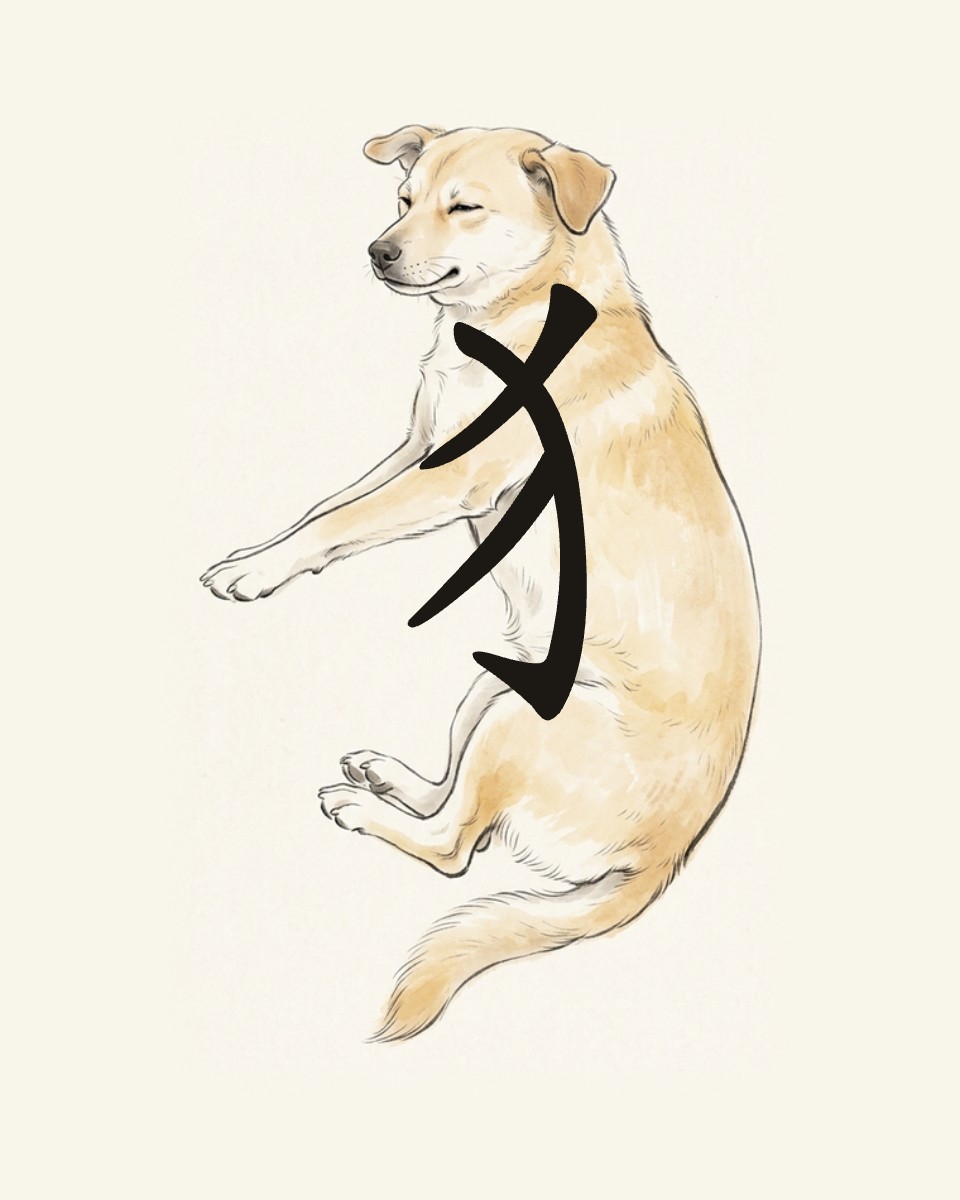
A dog lying on its side: 犭
一只侧躺的小狗,变成「犭」
A little dog lies on its side, turned up on end — just like the oldest way to write 犬, a dog standing on its tail. Its head, its back and tail, and its front legs stretch into 犭, the dog radical. Then: oracle bone, bronze, small seal, 犬, and 犭 on the left side of 狗 (dog), 猫 (cat) and 猪 (pig). With English narration and subtitles.
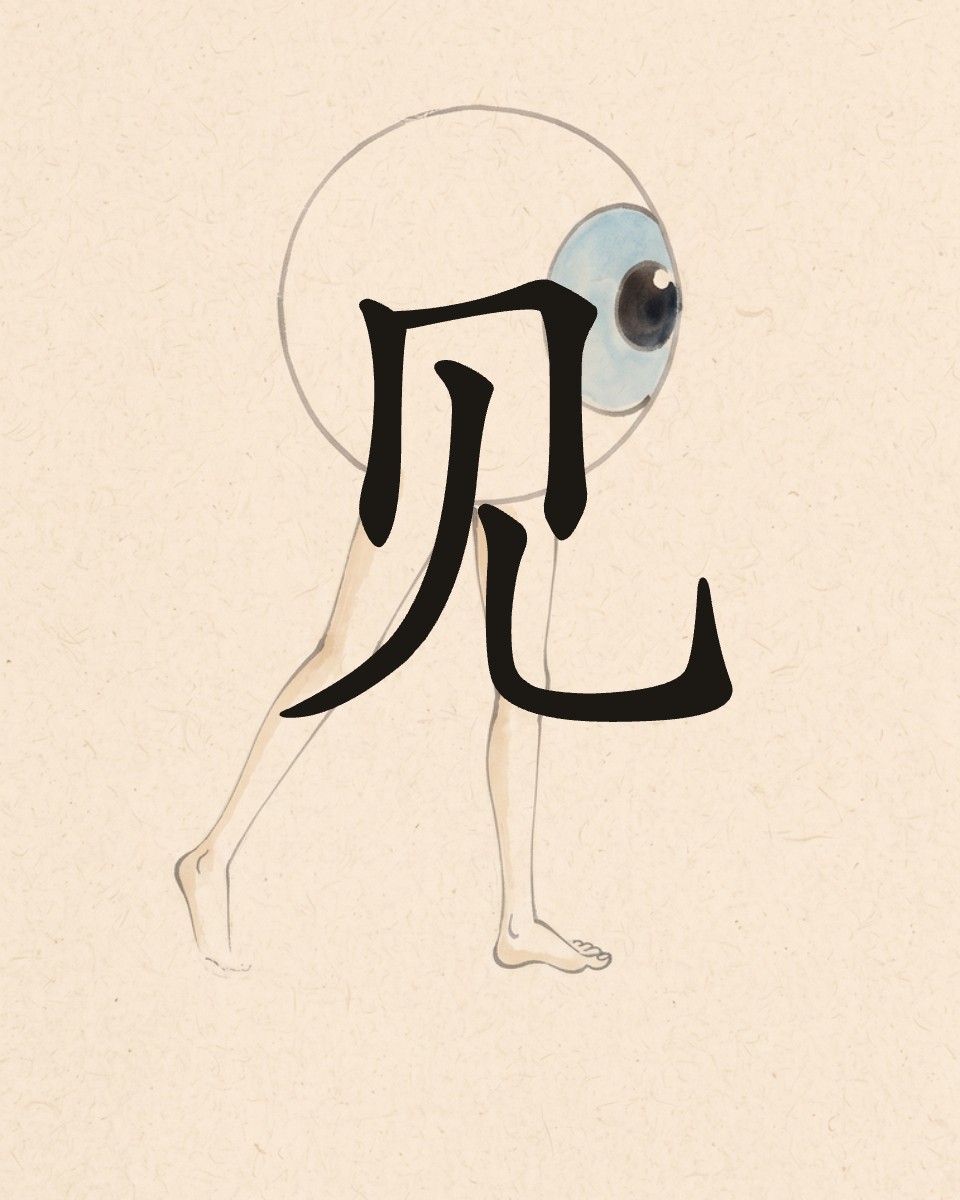
A big eye on two legs: 见
一只长了腿的大眼睛,就是「见」
A big eye walking on two legs — a person who sees. Its lines stretch into 见. Then, station by station: oracle bone, bronze, small seal, traditional 見 (目, an eye, on top of 儿, a person) and simplified 见, where the eye became a simple box. The meaning stayed: to see. With English narration and subtitles.
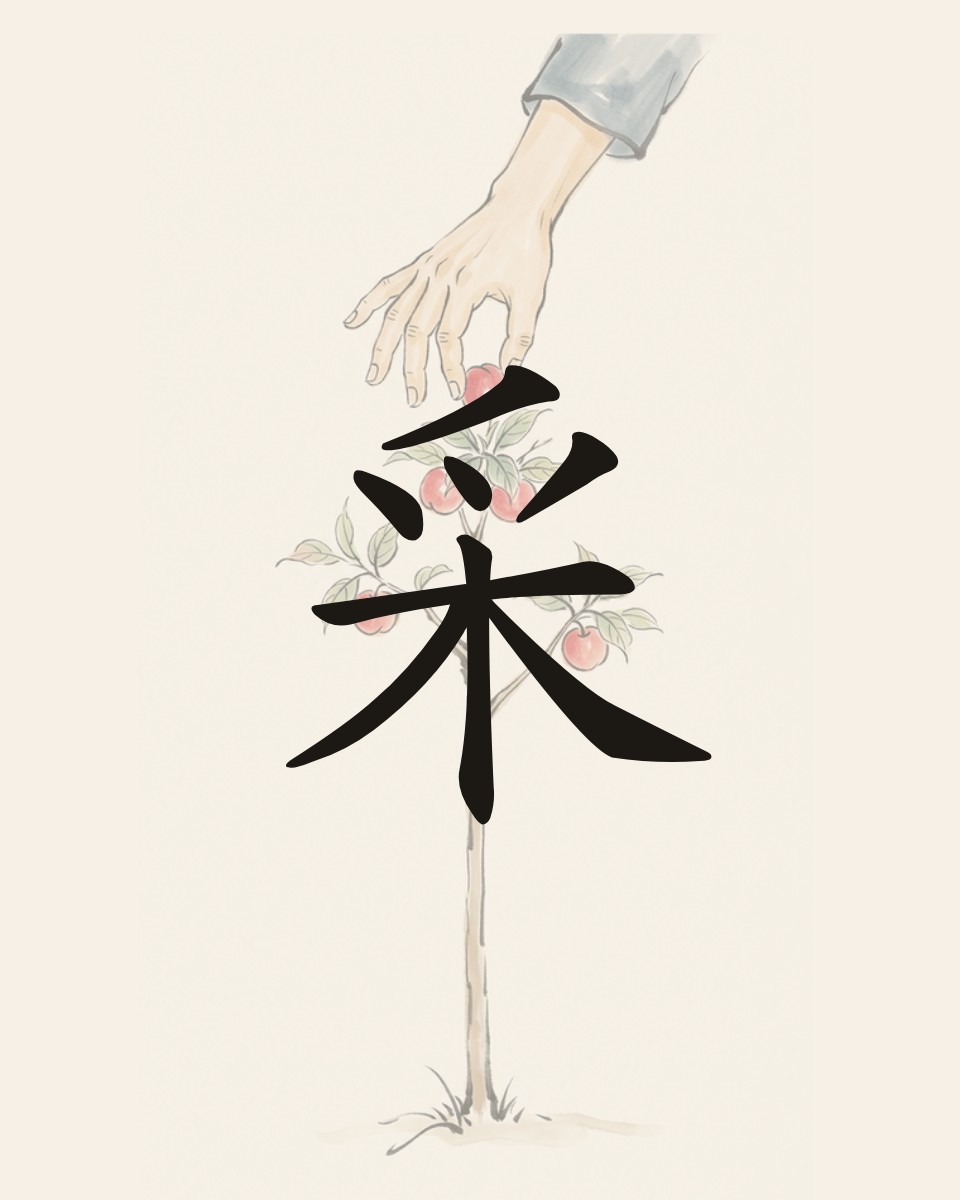
A hand over a tree: 采
手在树上摘,就是「采」
爪 (a hand) + 木 (a tree). A hand reaches down and picks fruit from a small tree. Lines drawn on the hand and the tree stretch into today's 采: the hand on top, the tree below. With English subtitles.
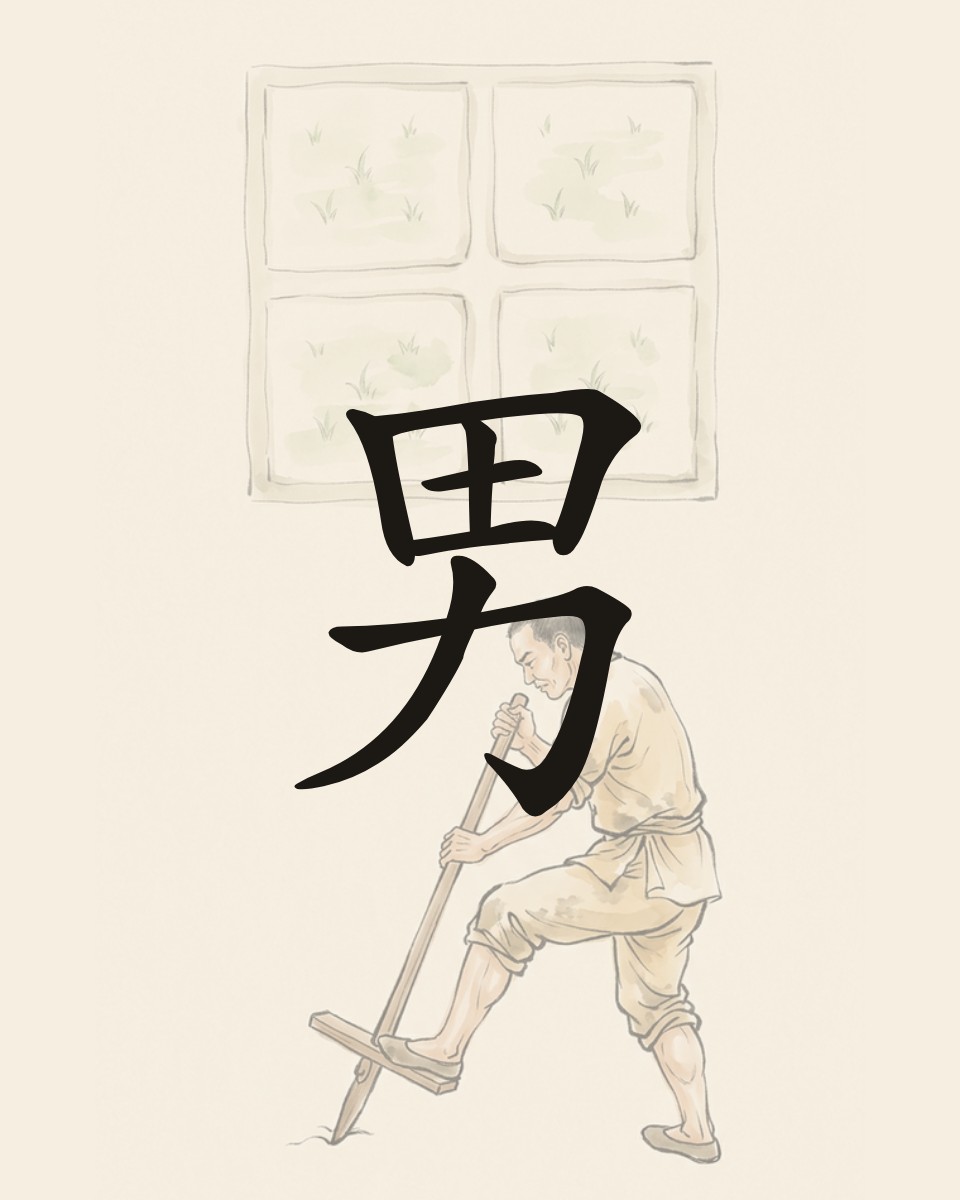
Strength in the field: 男
在田里出力,就是「男」
田 (field) + 力 (strength). A farmer digs hard at the edge of his field. The field and the man stretch into today's 男: 田 on top, 力 below. With English subtitles.
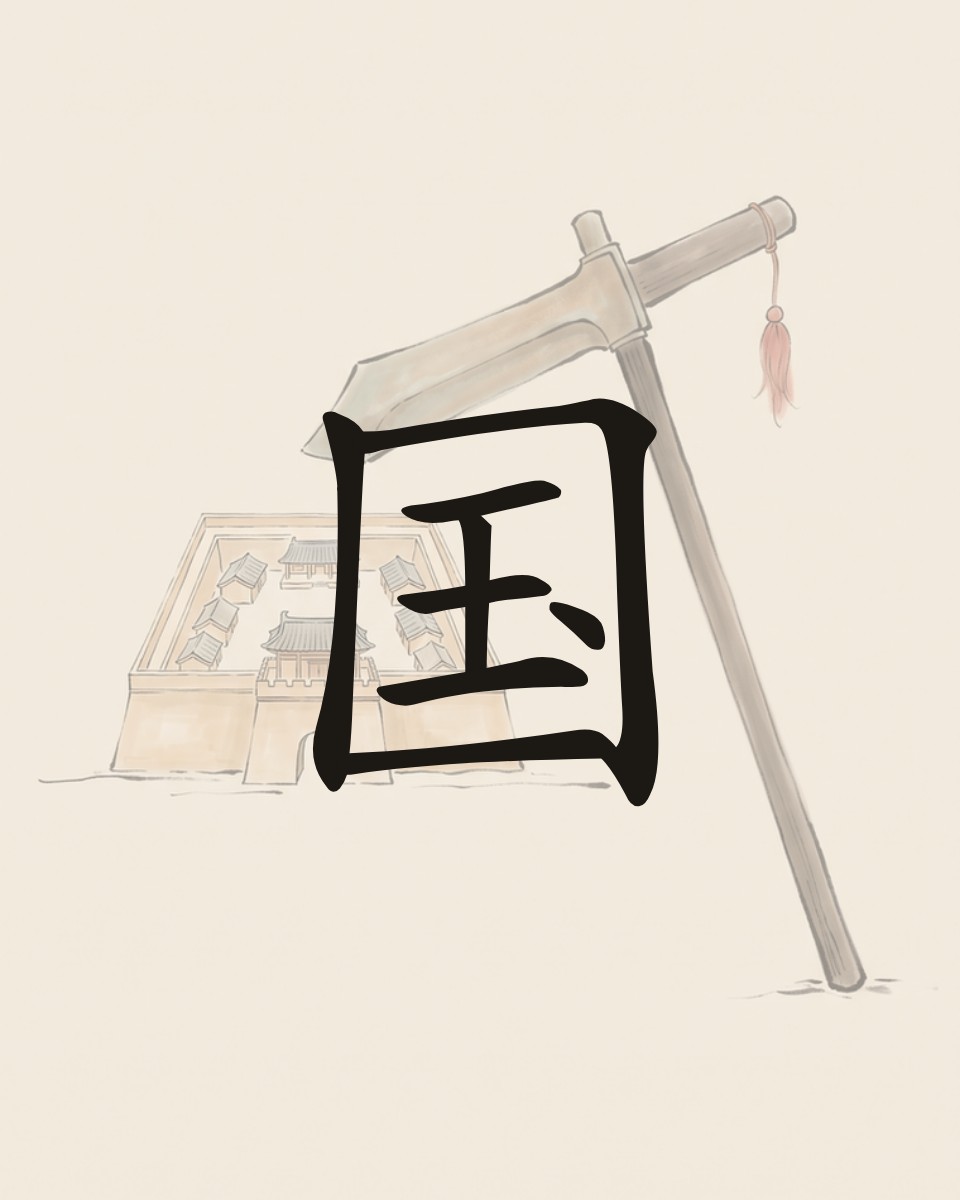
Land, a weapon, a border: 国
守住一块地,就是「国」
戈 (a dagger-axe) + 口 (a town) = 或, the oldest way to write "country": land guarded with a weapon. Later a border was drawn around it: 國. In 1956, simplified Chinese put 玉 (jade) inside: 国 — and the dot keeps 玉 apart from 王. Narrated by Jane, with English subtitles.
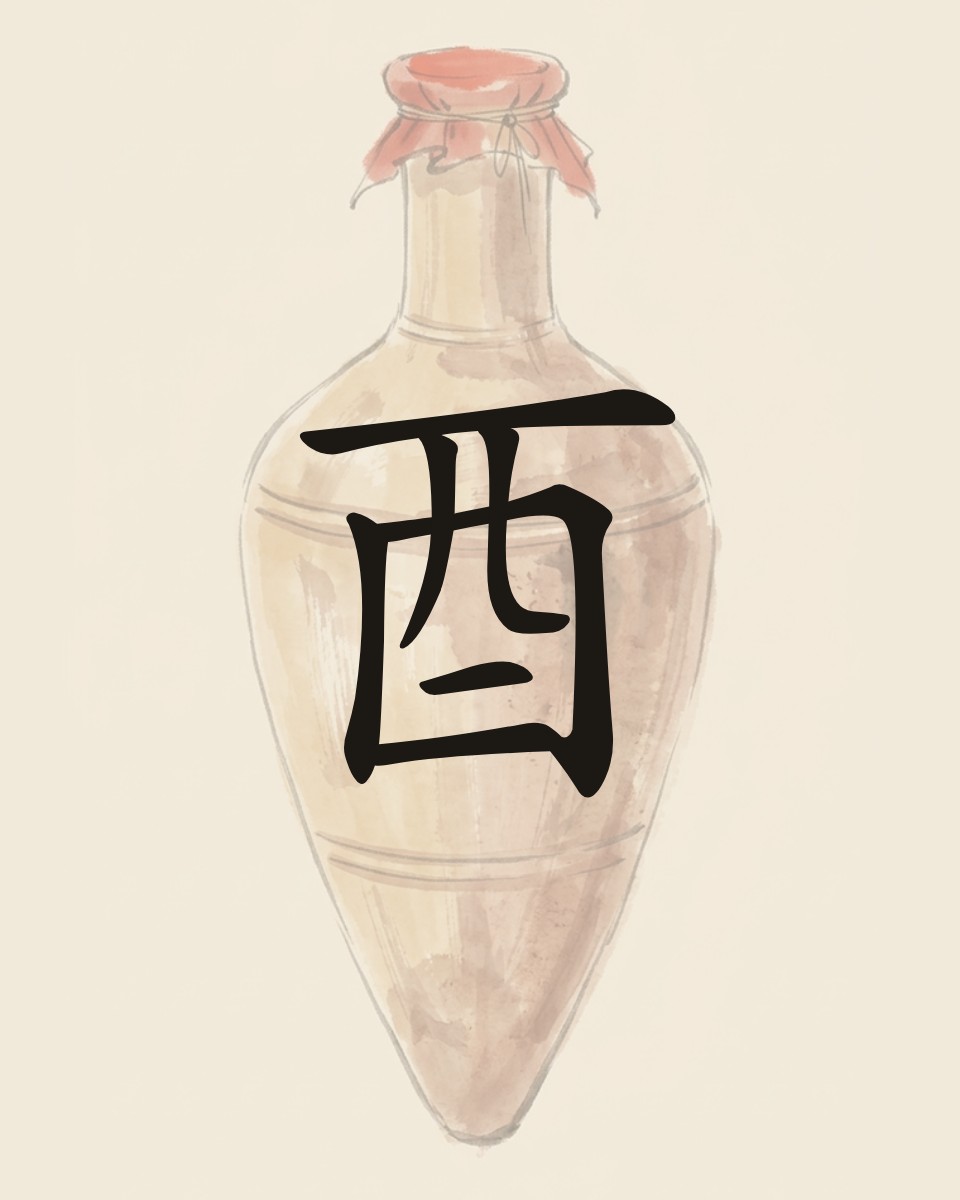
From an old wine jar to 酉
一个尖底酒坛,写成「酉」
An old pottery wine jar with a red cloth on top, a thin neck and a pointed bottom. It turns into the oracle-bone form — a jar with a pointed bottom — and then into today's 酉. Add water and you get 酒, wine: 酉 is yǒu, 酒 is jiǔ. With English subtitles.
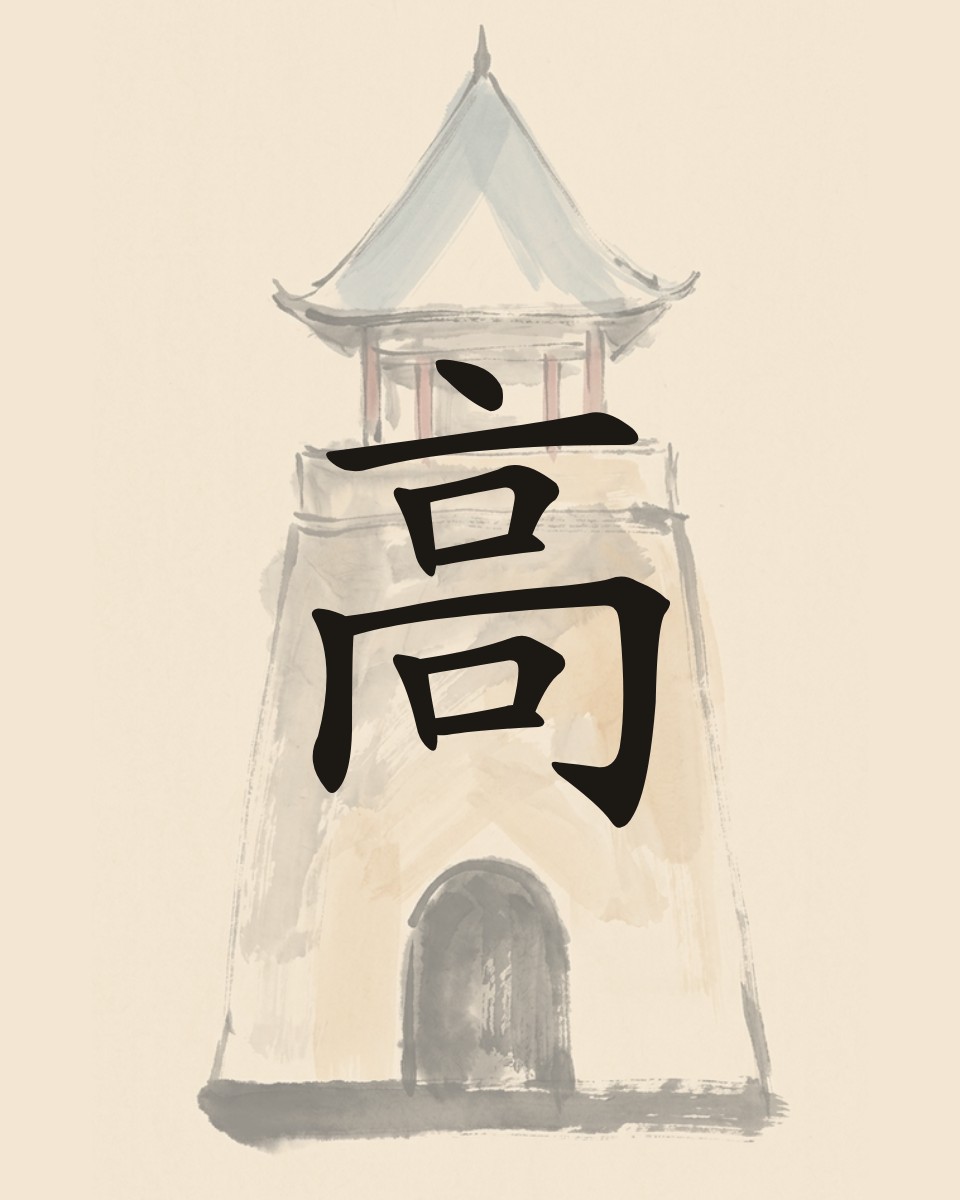
From a tall tower to 高
高台上的城楼,变成「高」
A tower on a high platform: a pointed roof, a little house on top, a tall wall and a door below. It turns into the oracle-bone form — a tower drawn layer by layer — and then into today's 高, still layer by layer. With English subtitles.
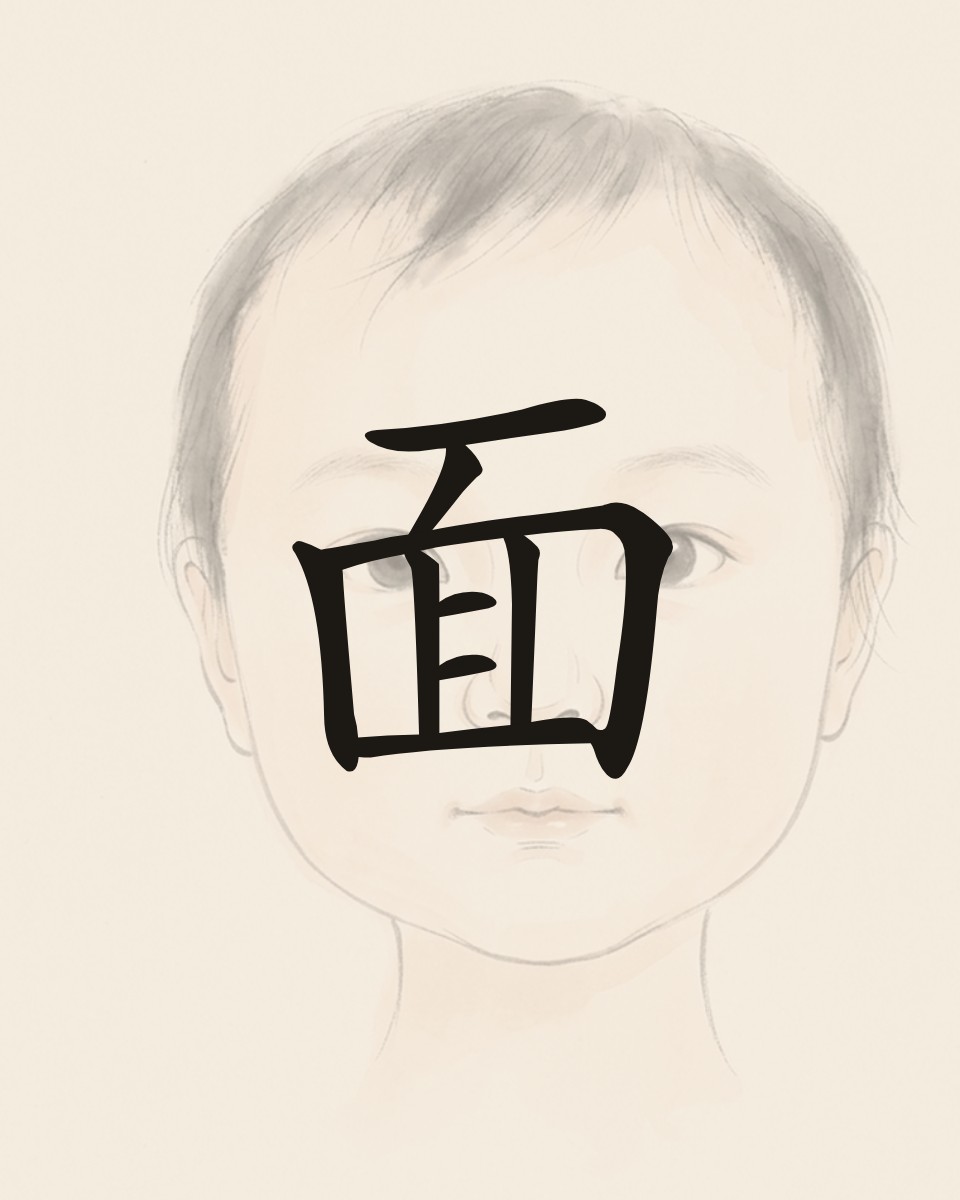
From a face to 面
一张脸,变成「面」
A child's face, round, with two big eyes. It turns into the oracle-bone form: long ago, people drew one big eye with a line around it — that was the face. Then it becomes today's 面: a frame outside, something like an eye inside. With English subtitles.
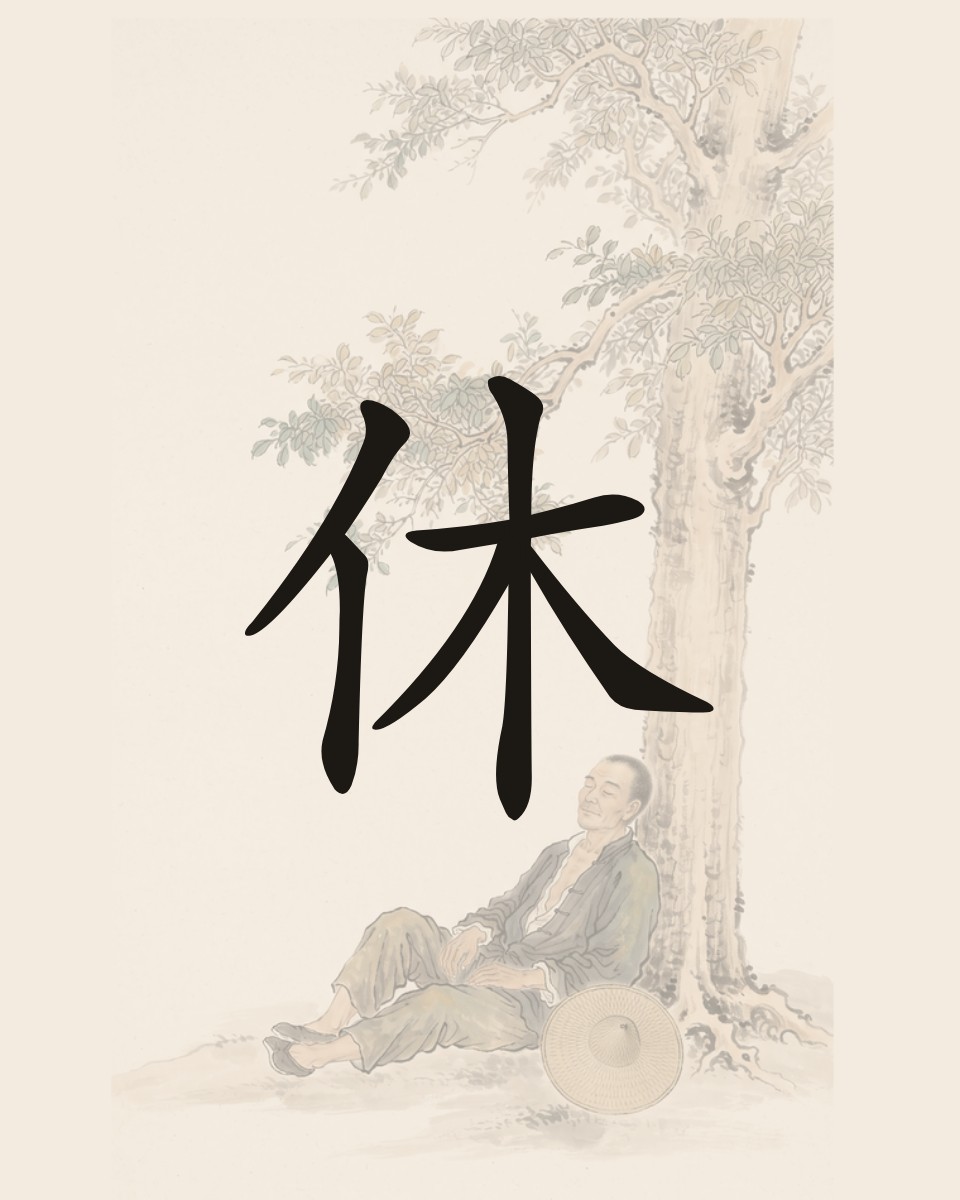
A person by a tree: 休
人靠着树,就是「休」
人 (person) + 木 (tree). A farmer rests against a big tree. The picture turns into the oracle-bone form — a person next to a tree — and then into today's 休: 亻 on the left, 木 on the right. With English subtitles.
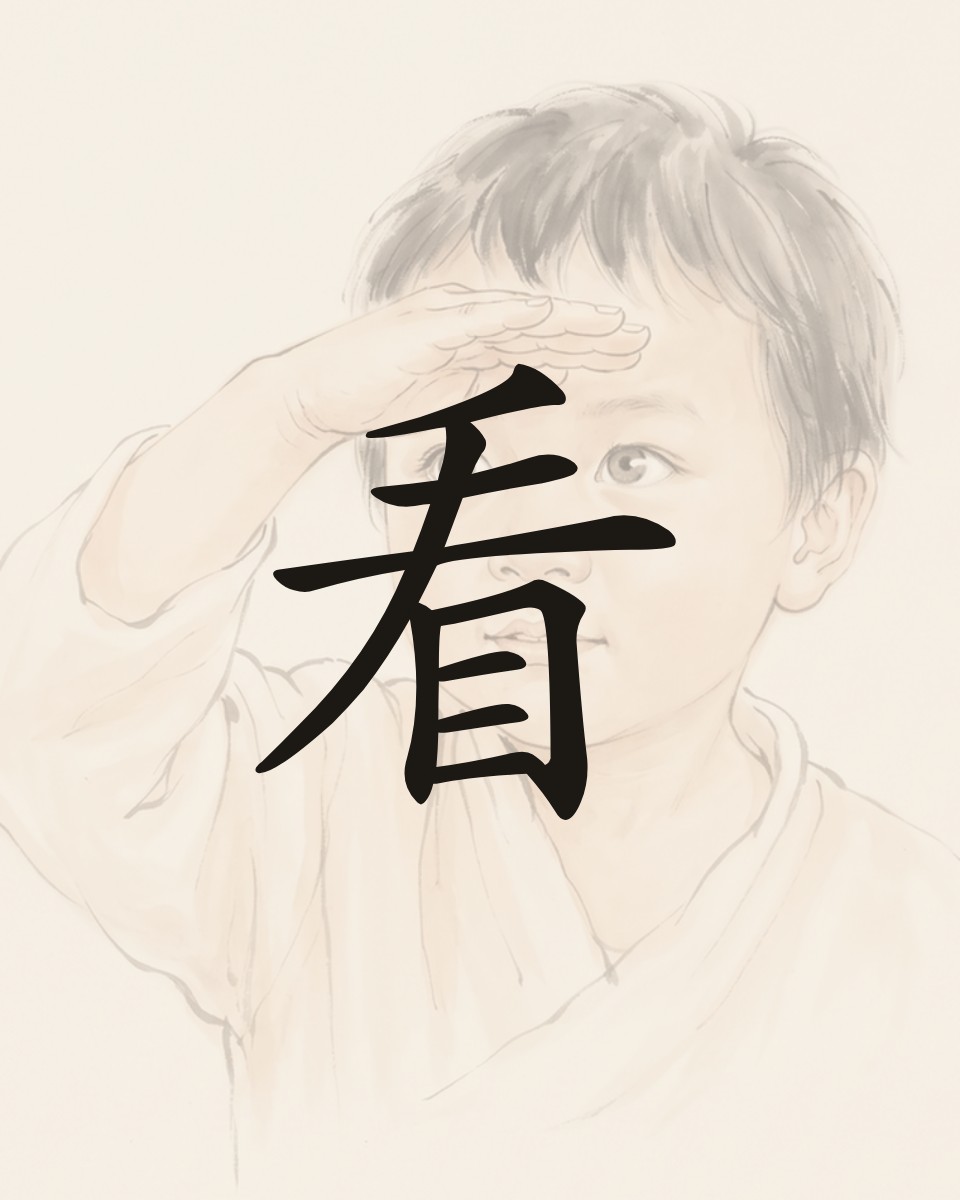
A hand over the eyes: 看
手搭在眼睛上,就是「看」
手 (hand) + 目 (eye). A child puts a hand over the eyes and looks far away. The picture turns into the small-seal form, then into today's 看: the hand on top, the eye 目 below. With English subtitles.
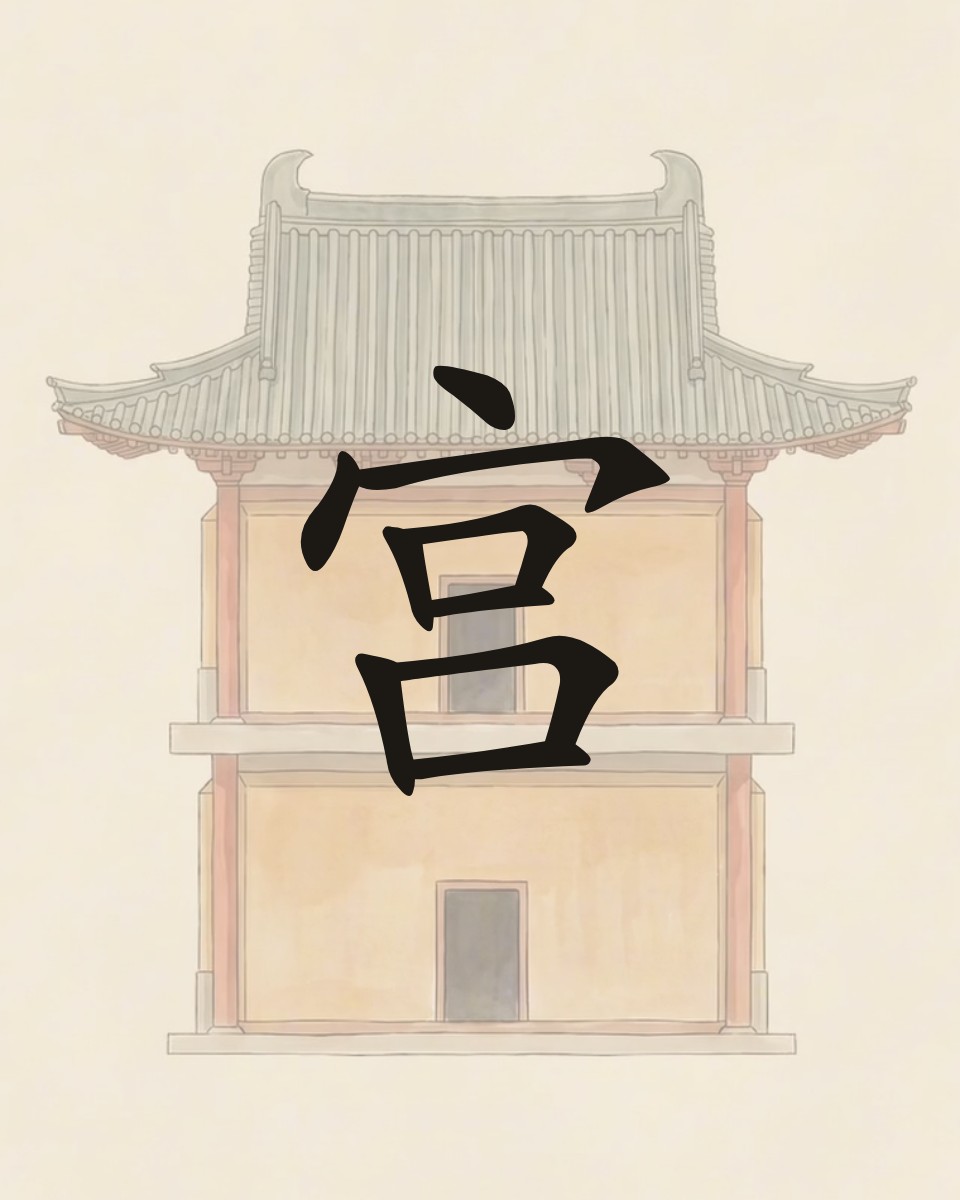
From a palace to 宫
一座宫殿,变成「宫」
A two-storey Chinese palace stands on paper: a wide roof on top, two rooms stacked below. The roof becomes the roof radical, and each room becomes a box. The shapes turn into the oracle-bone form — a pointed roof with two boxes under it — and then into today's 宫. The Shuowen says 宫 means a room.
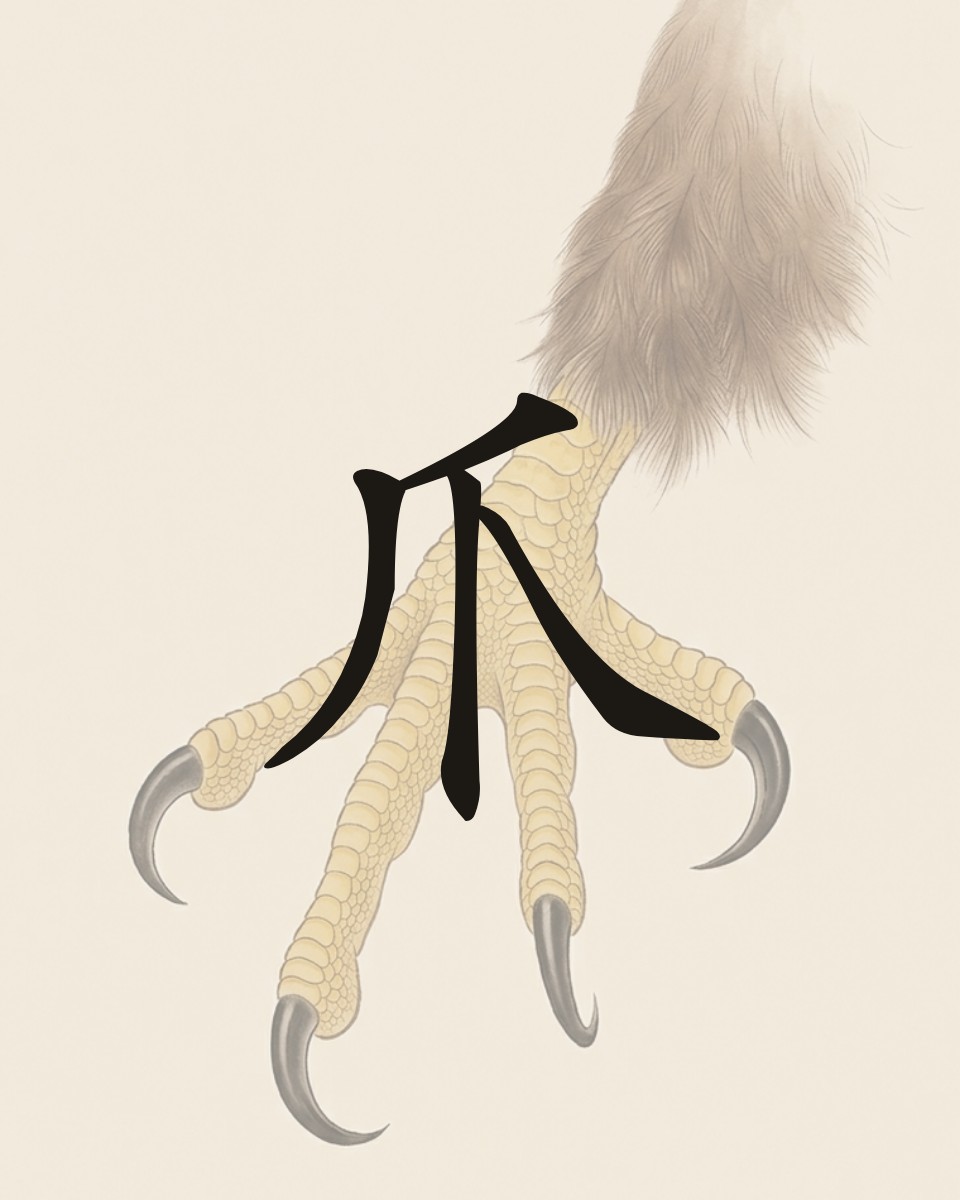
From an eagle's claw to 爪
老鹰的爪子,写成「爪」
An eagle's claw hangs on paper; the wind ruffles the feathers on its leg and the three toes clench once, then open. Four brush lines trace it: the leg down to the top of the foot, the long toe reaching down to the left, the middle toe straight down, and the toe stretching to the right. The claw fades to a shadow and the lines stretch into 爪. The film draws an eagle's claw to help you remember; the Shuowen says the old character showed a hand turned palm-down, reaching to grab.
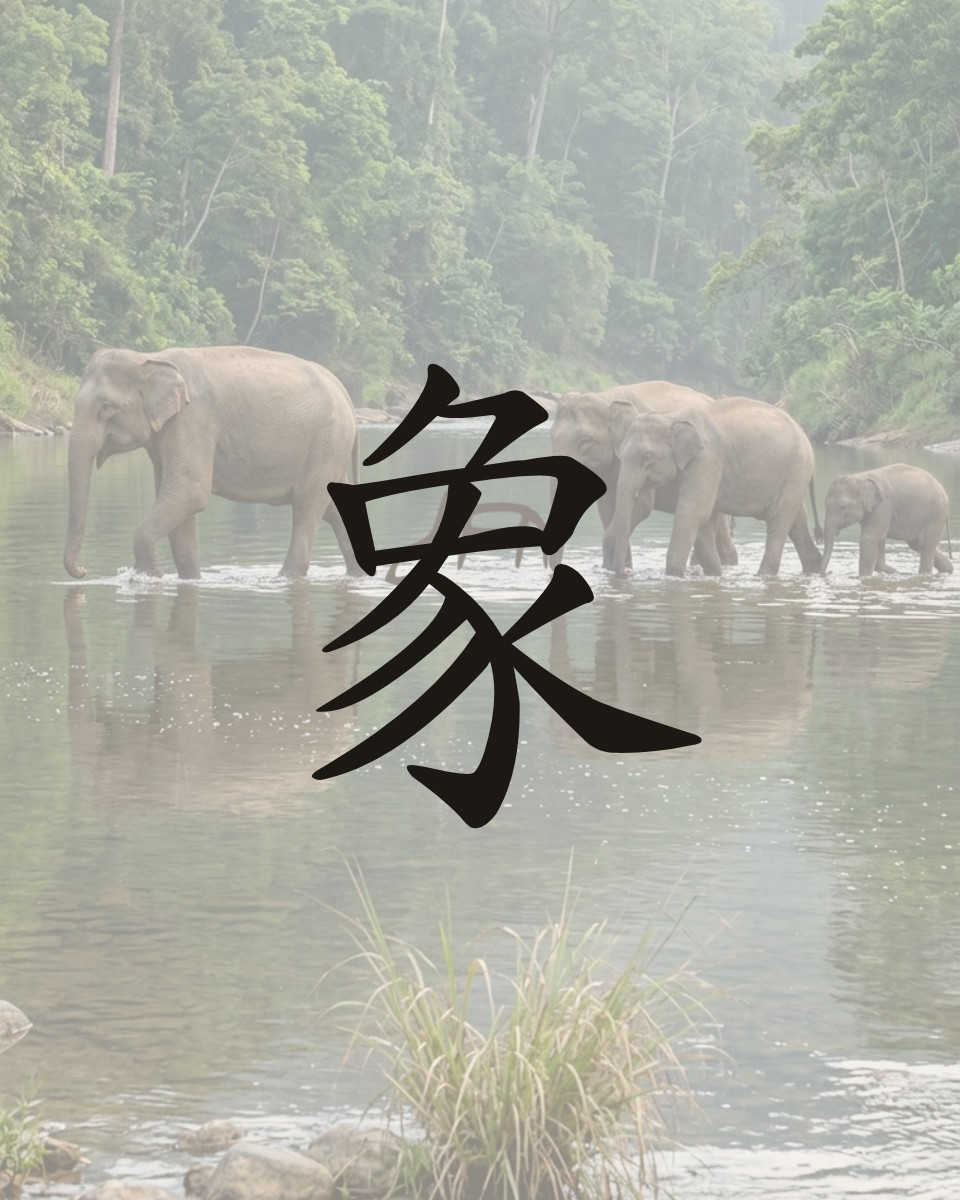
An oracle-bone elephant stands up and becomes 象
混在象群里的甲骨文,立起来成了「象」
A herd of Asian elephants walks across a river — and in the middle walks the oracle-bone character for elephant, stepping along with its ink legs. The other elephants fade away, and the old character stands up: in oracle bone script, 象 was written standing on end, trunk and head on top, legs to the left. Then its lines stretch into today's 象. In the film, the strokes going down to the left are the elephant's legs.
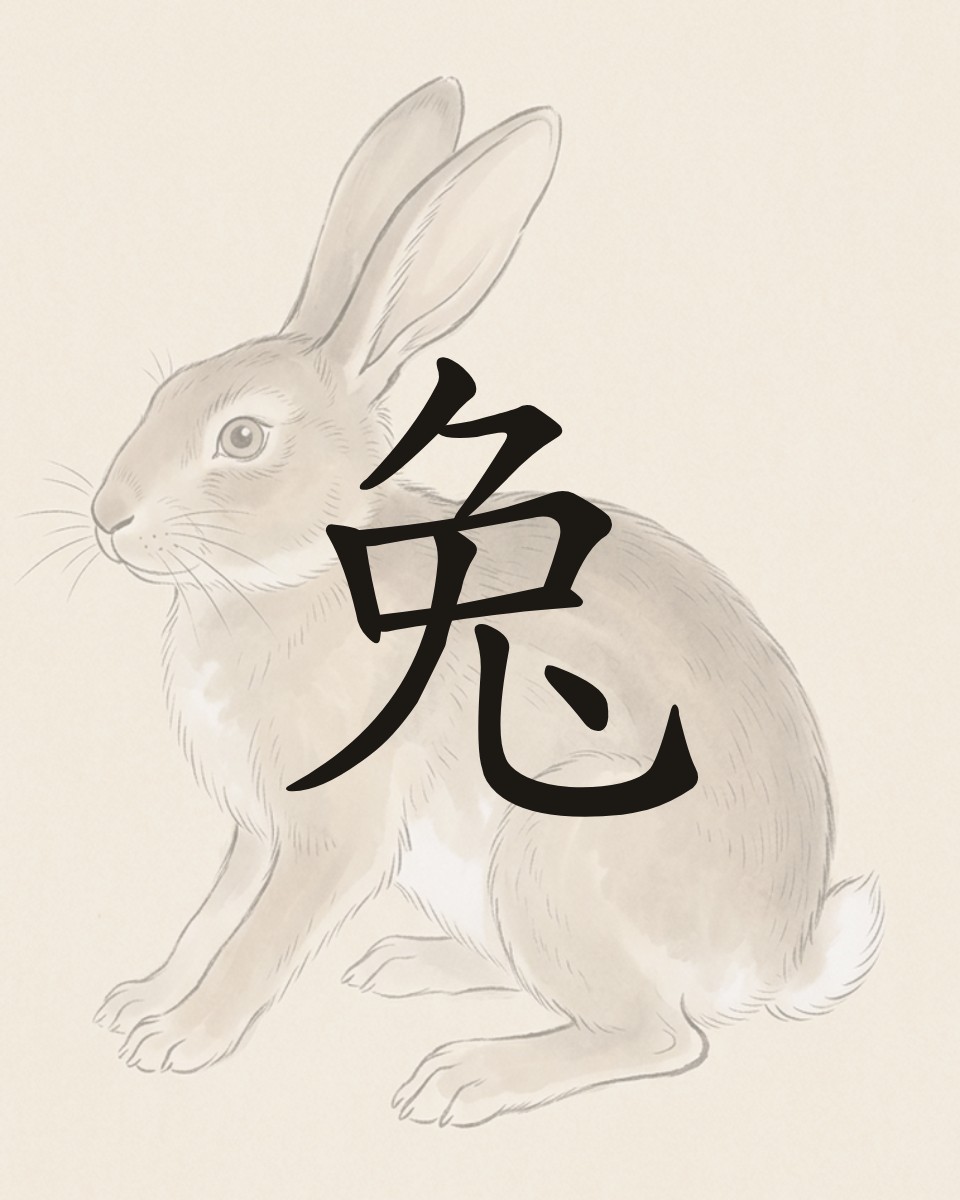
From a sitting rabbit to 兔
一只蹲着的兔子,写成「兔」
A grey-brown rabbit sits on paper, sniffing the air and turning its long ears. Eight brush lines trace it: the two ears, the front of the face, the top of the head, the chin, the chest down to the front paw, the belly round to the back leg, and the short tail. The rabbit fades to a shadow and the lines stretch into 兔 — and the last dot is the tail. The Shuowen says the character shows a crouching rabbit with its tail behind.
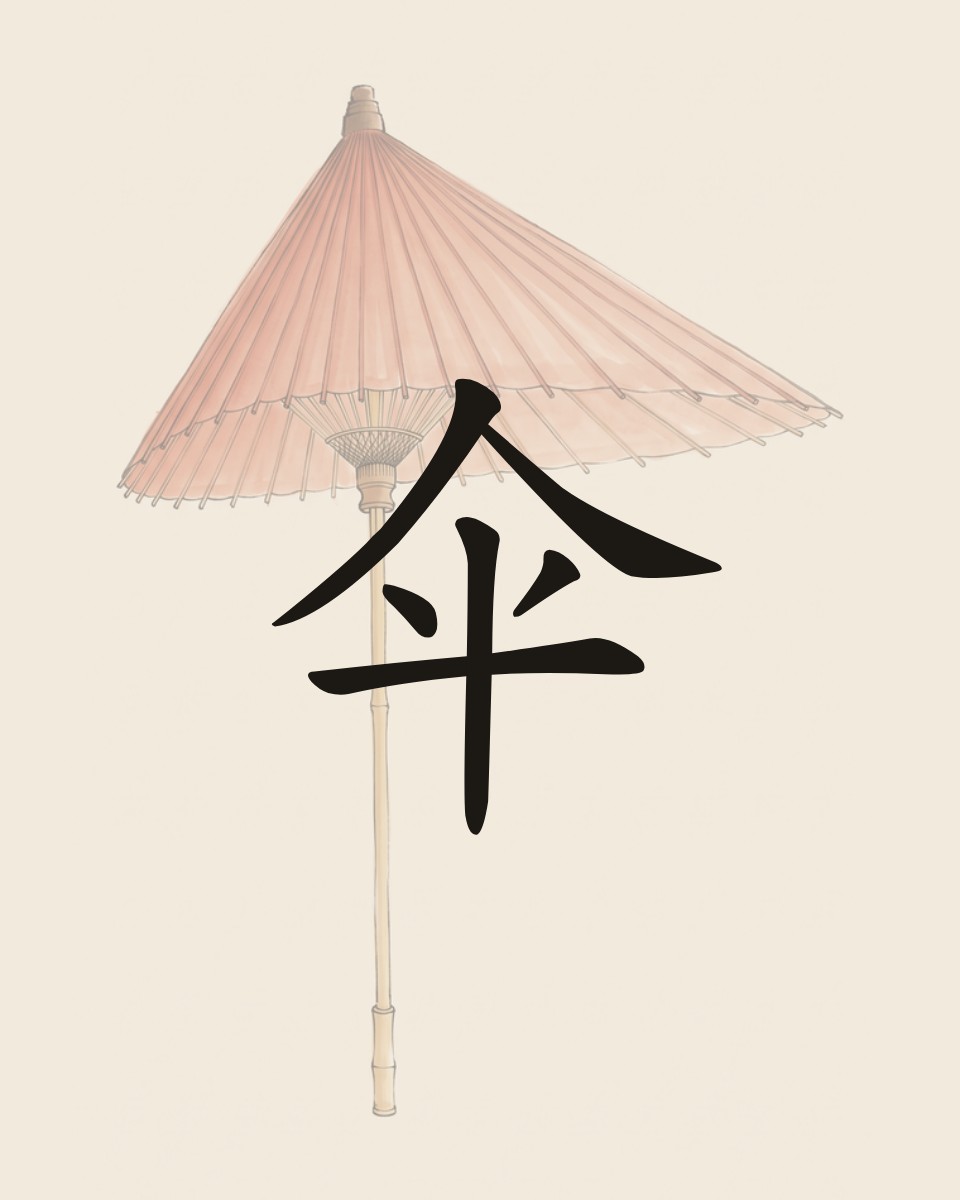
From an oil-paper umbrella to 伞
一把油纸伞,写成「伞」
A red oil-paper umbrella stands in light rain. When the rain stops, six brush lines trace it: the two slopes of the canopy, two ribs running down to the handle, the whole rim of the canopy, and the handle from the tip to the grip. The umbrella fades to a shadow and the lines stretch into 伞. It is a late character — the Shuowen dictionary does not have it — so the film starts from today's form.
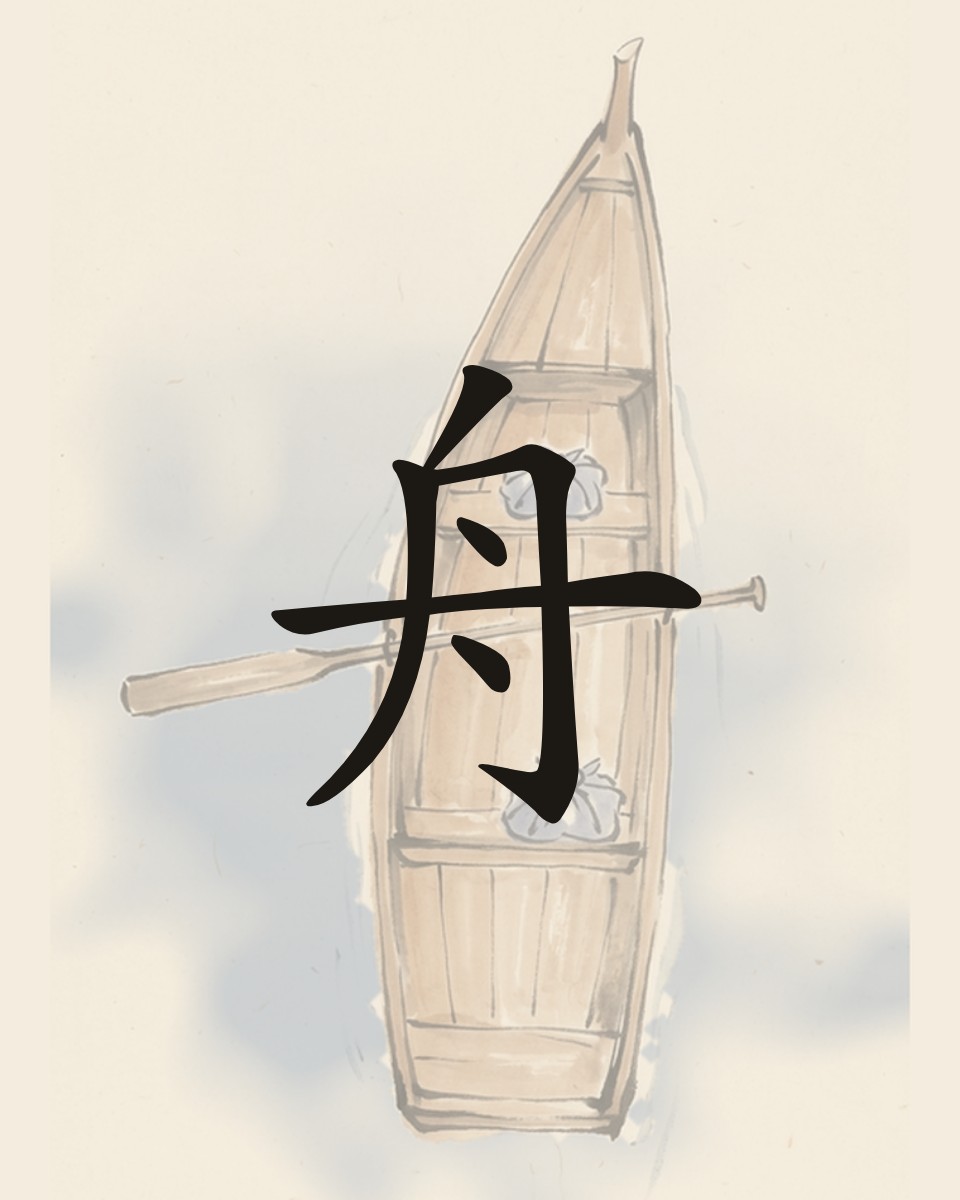
From a little boat to 舟
一条小船,写成「舟」
A little wooden boat, seen from above, rocks gently on blue ink water. Six brush lines trace it: the bow, the left side, the right side down to the stern, the oar lying across and sticking out both sides, and two cloth bundles in the hold. The drawing fades to a shadow and the lines stretch into 舟. The oracle-bone form is the same picture — a boat seen from above.
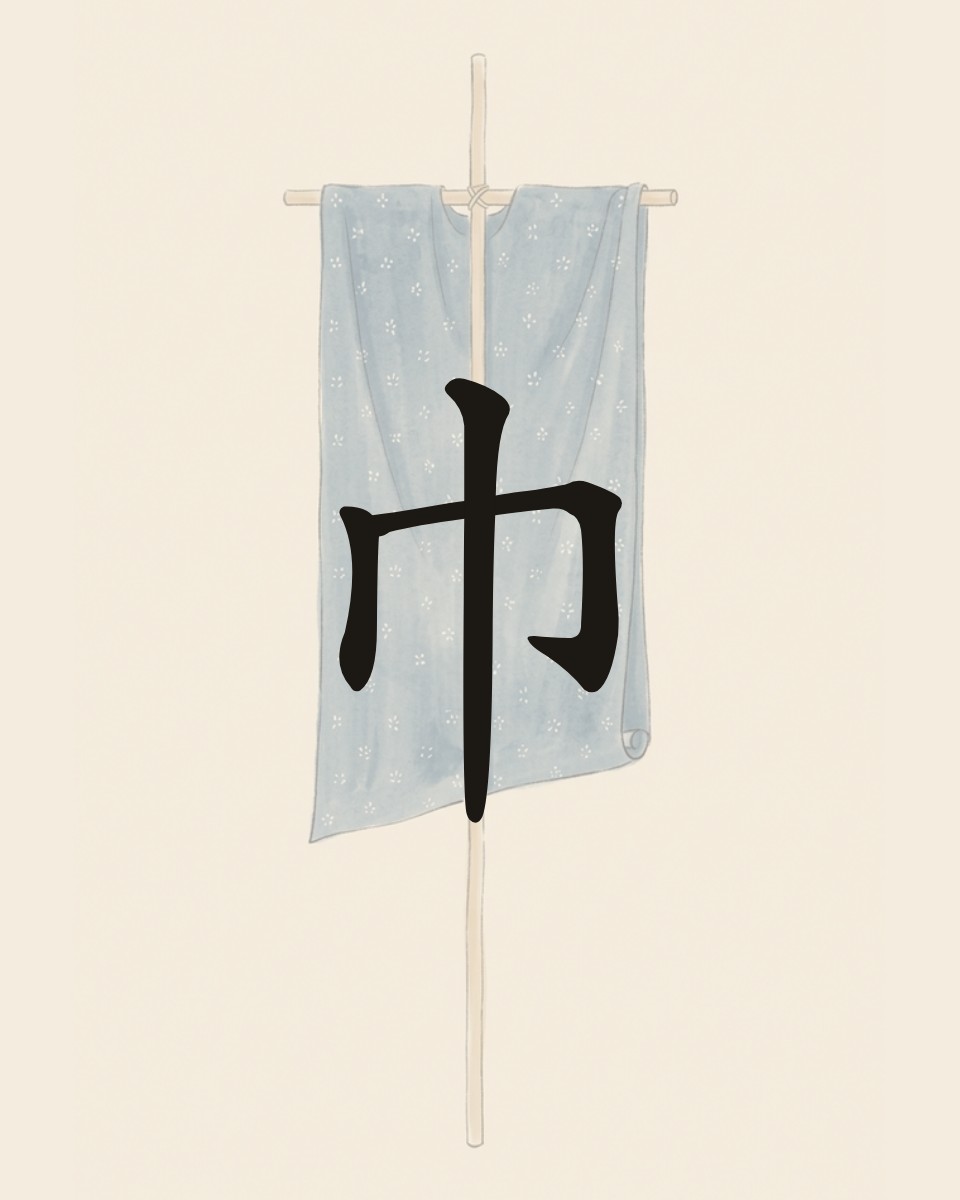
From a cloth on a pole to 巾
木杆上挂着一块布,写成「巾」
A blue cloth hangs from a short bar on a wooden pole and moves a little in the wind. Three brush lines trace it: the left edge of the cloth, the top edge running down the right side to the little roll at the corner, and the pole through the middle. The drawing fades to a shadow and the lines stretch into 巾. The oracle-bone form is the same picture — a cloth hanging, with a line through the middle.
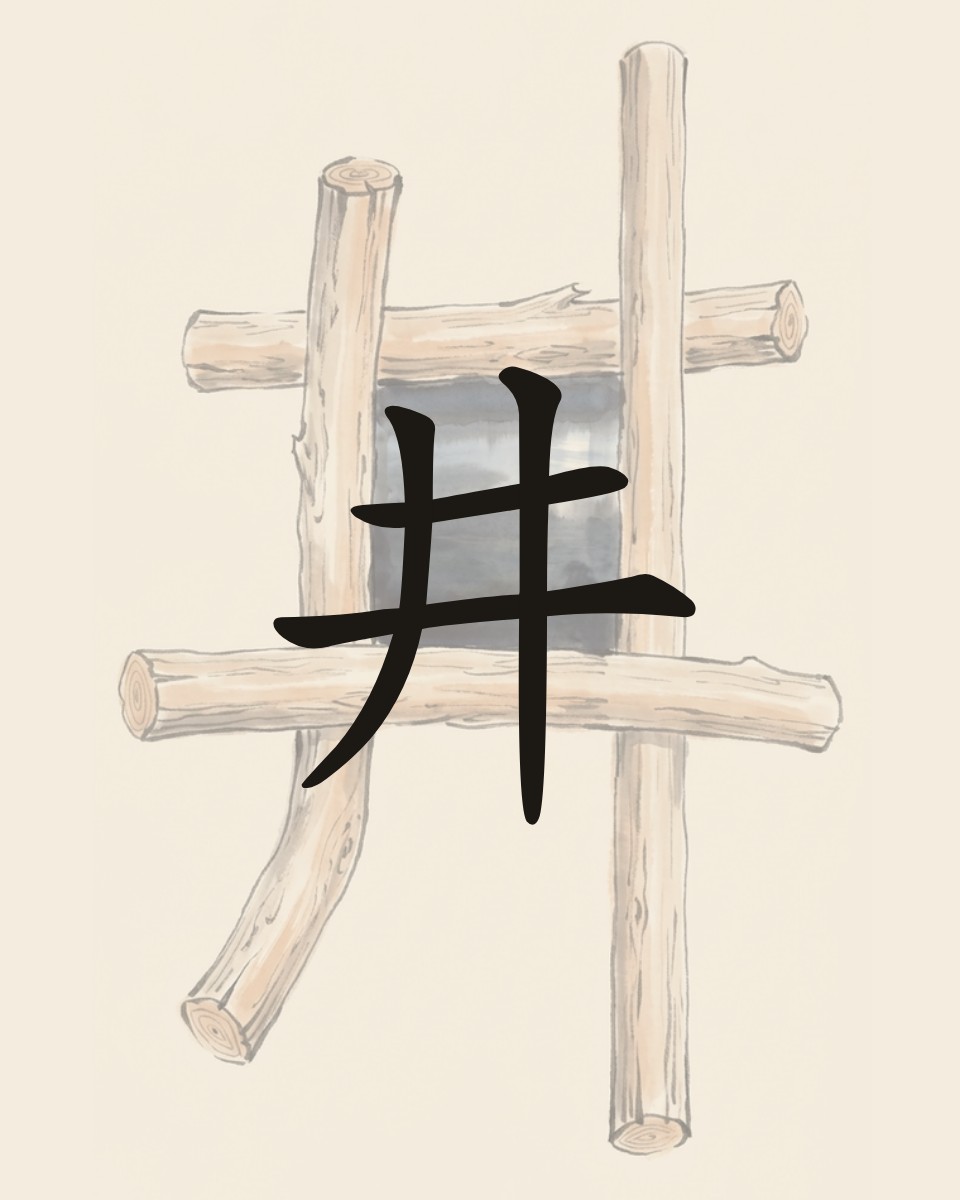
From a well seen from above to 井
从上往下看一口井,写成「井」
Looking straight down into an old well: four logs cross over the water. A drop falls and the water rings out in ripples. Four brush lines trace the logs — the two across become the two lines, the bent log on the left becomes the 撇, the straight one on the right the upright. The drawing fades to a shadow and the lines stretch into 井. The oracle-bone form is the same picture — a frame of four logs.
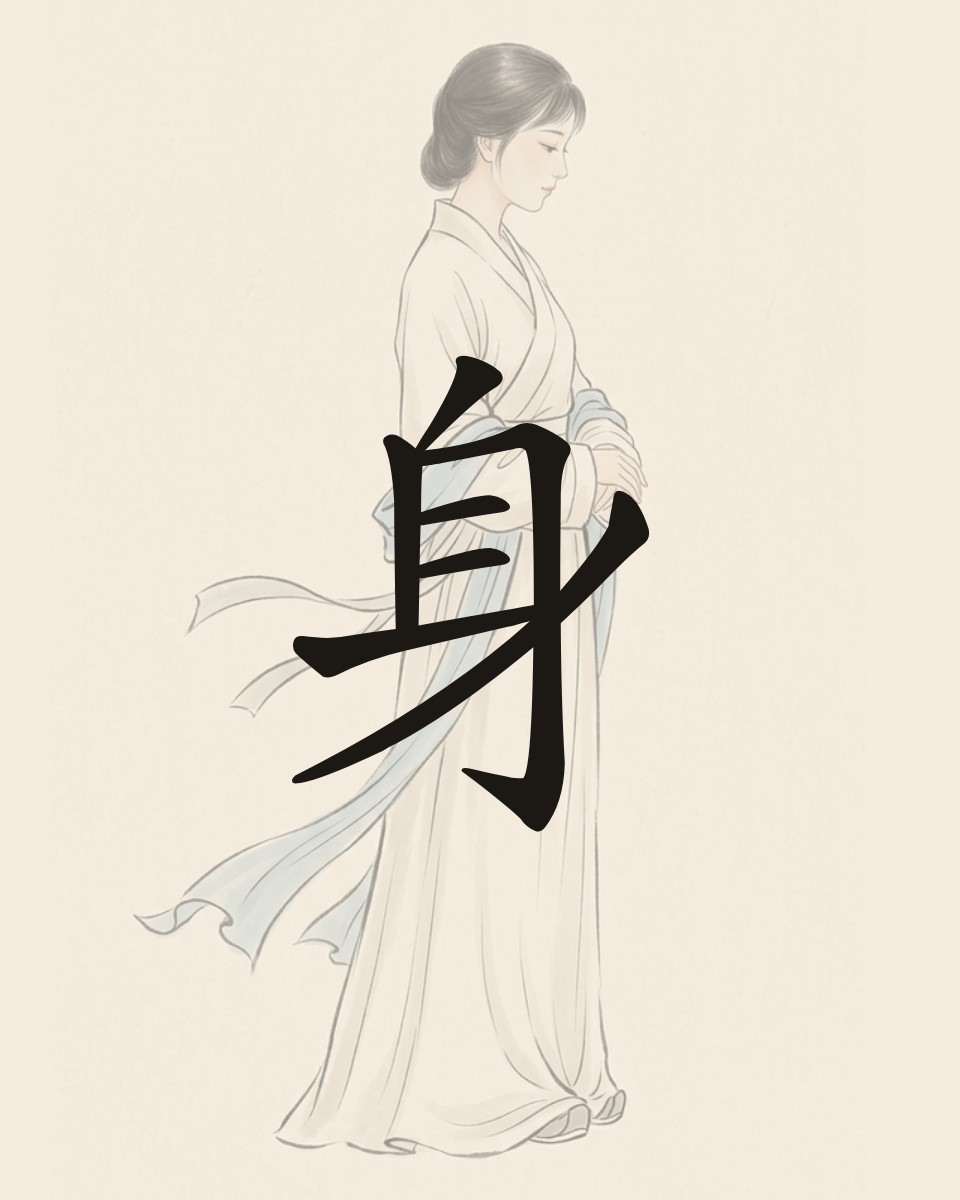
From a whole person to 身
一个人的整个身子,写成「身」
A young woman in a Hanfu robe stands sideways, her hands folded at her waist, her sash and scarf moving slowly in the wind. Seven brush lines trace her: the back of her head, her back, the line down her front to the hem of her skirt, her two arms, her sash and her long scarf. The drawing fades to a shadow and the lines stretch into 身. The oracle-bone 身 was a person with a big belly — which is why being pregnant is still 有了身孕.
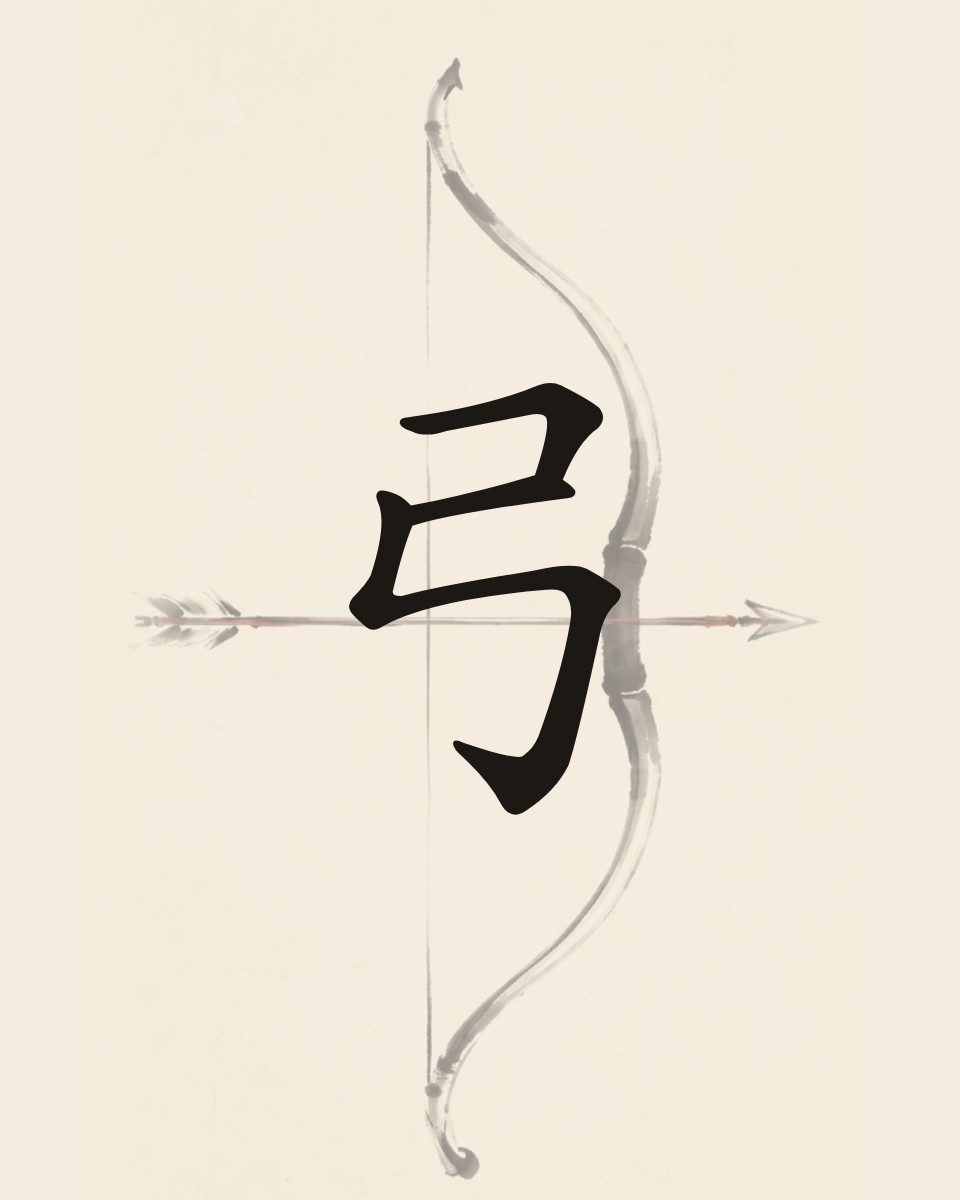
From a bow to 弓
一张弓,写成「弓」
A bow with its string and an arrow. The string is plucked and the bow trembles, slower and slower, until it is still. One brush line runs down the bow from tip to tip — and that single line bends into 弓: the top half folds into the first stroke, the grip lies down as the short line in the middle, and the bottom half curves down and hooks. The oracle-bone 弓 was a bow standing upright, string and all.
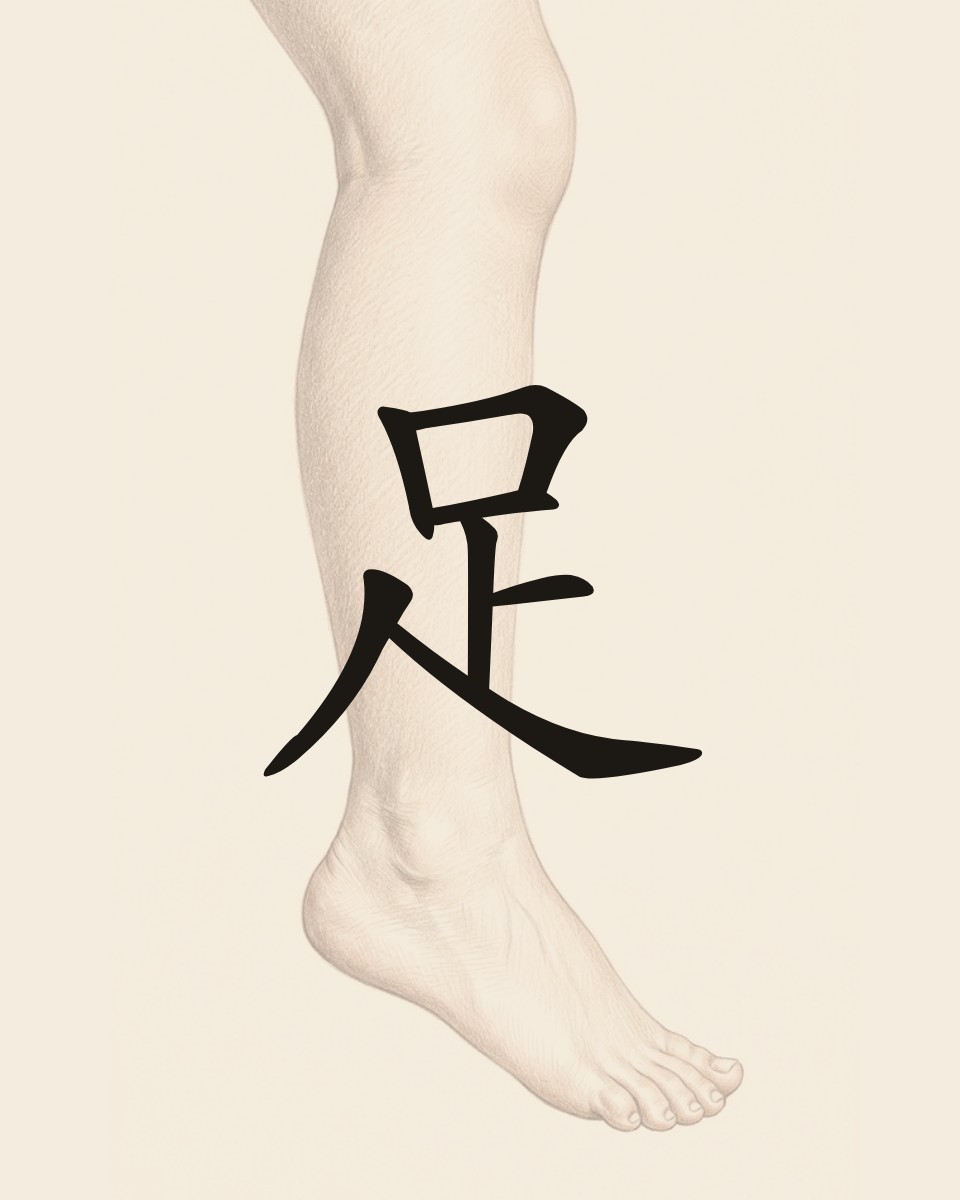
From a leg and a bare foot to 足
一条小腿和一只光脚,写成「足」
A child's leg takes one small step in place, then stands still. Seven brush lines trace it: the two sides of the leg, the knee and the ankle make the box on top; below the ankle, the heel, the top of the foot and the sole make the four strokes underneath. The drawing fades to a shadow and the lines stretch into 足. The oracle-bone form is the same picture — a leg with a foot under it.
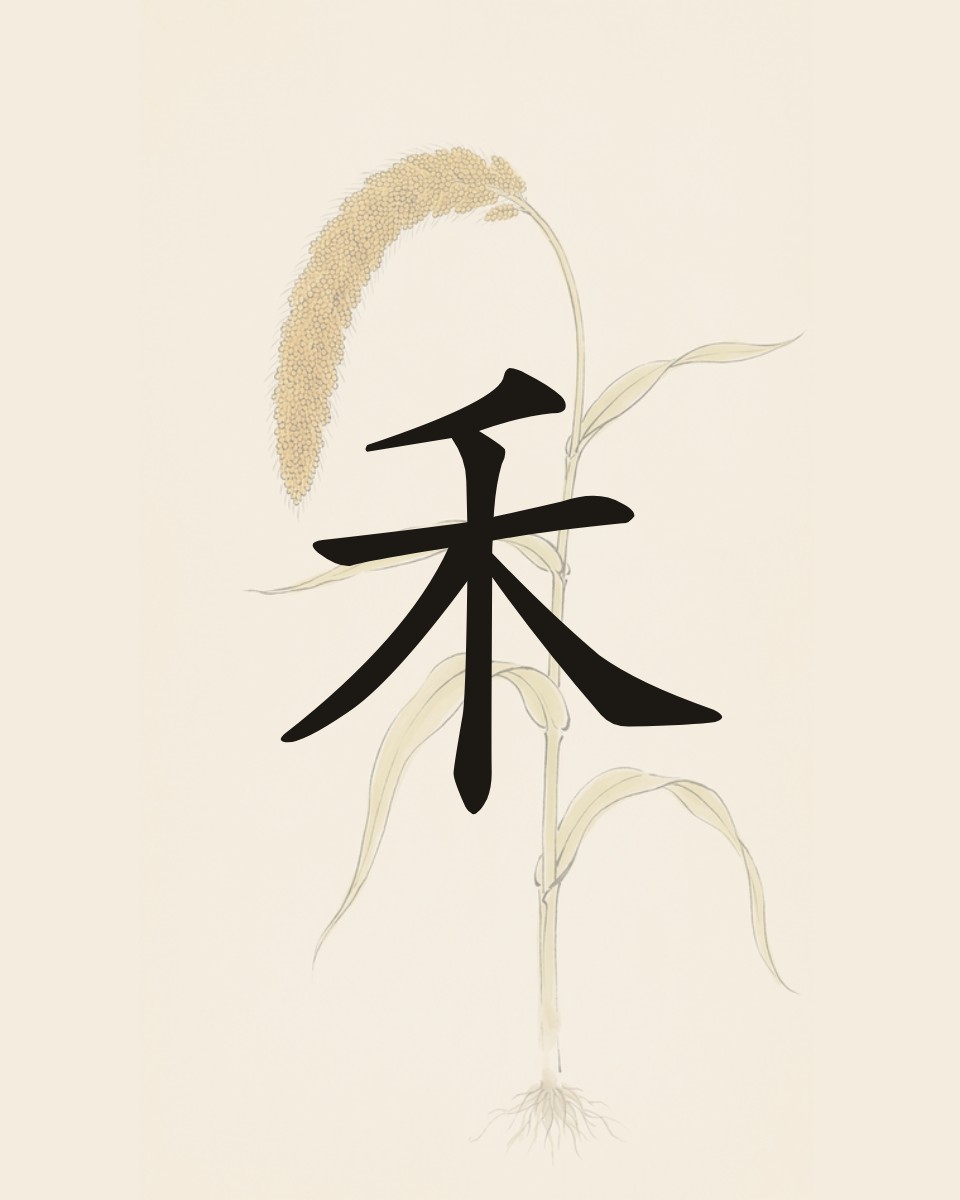
From a stalk of grain to 禾
一株谷子,写成「禾」
A stalk of millet moves in a light wind, its heavy ear hanging down to the left. Five brush lines trace it: the ear is the short stroke on top, two leaves make the long line across, the stalk is the upright, and the two leaves hanging lower become the last two strokes. The drawing fades to a shadow and the lines stretch into 禾. The oracle-bone form is the same picture — a plant with its ear bent over.
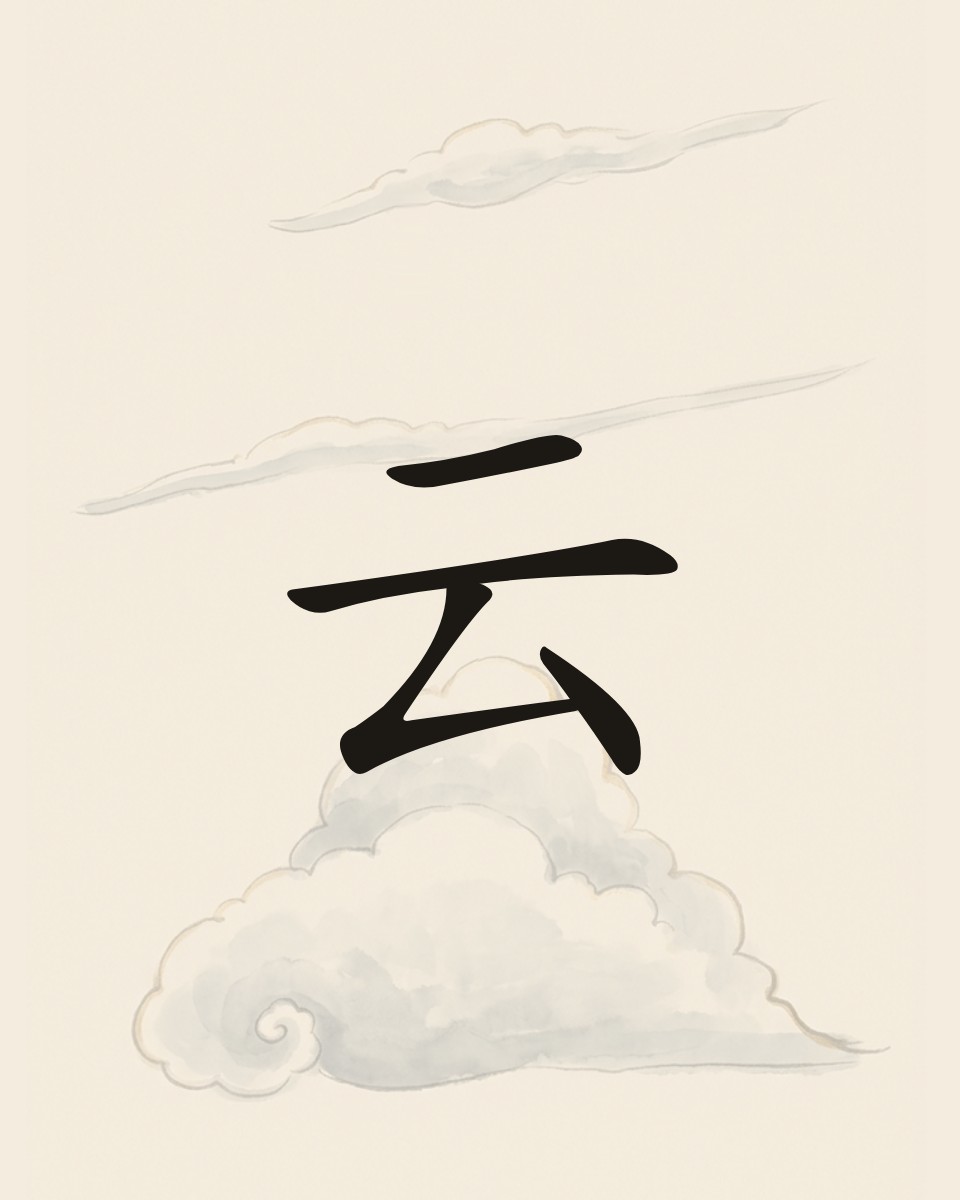
From clouds in the sky to 云
天上三朵云,写成「云」
Two long thin clouds and one big rolling cloud drift a little in the sky. Four brush lines trace them: the two thin clouds are the two lines on top; the top, left side and bottom of the big cloud make the stroke that turns, and its right side is the last stroke. The drawing fades to a shadow and the lines stretch into 云. The oracle-bone form is the same picture — two lines and a curl of cloud.
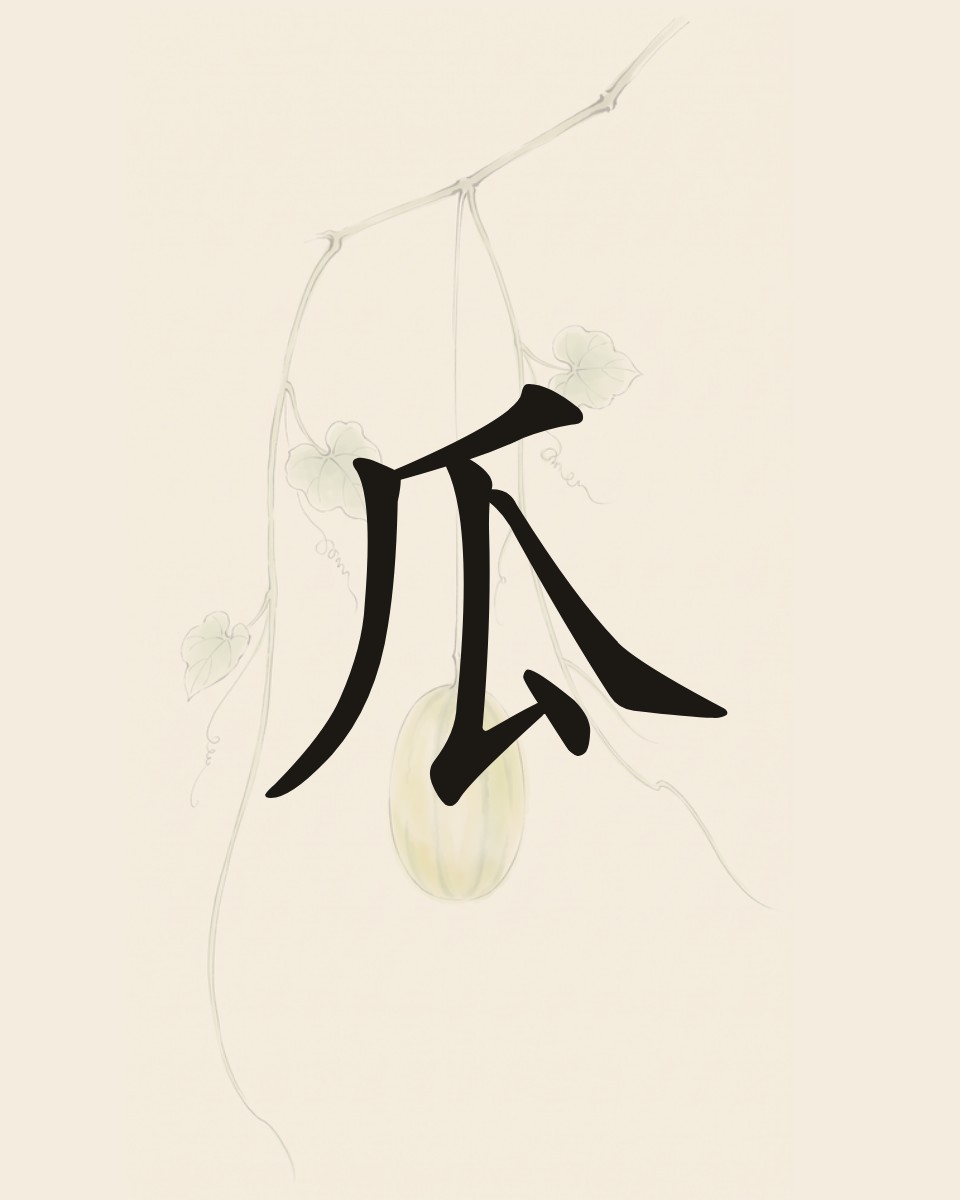
From a melon on the vine to 瓜
藤上挂着一个瓜,写成「瓜」
A small melon hangs from its stalk and swings a little on the vine. Five brush lines trace it: the vine across the top, the two vines hanging down on the left and the right, and the stalk with the melon in the middle. The drawing fades to a shadow and the lines stretch into 瓜. The seal-script form is the same picture — two vines with a melon hanging between them.
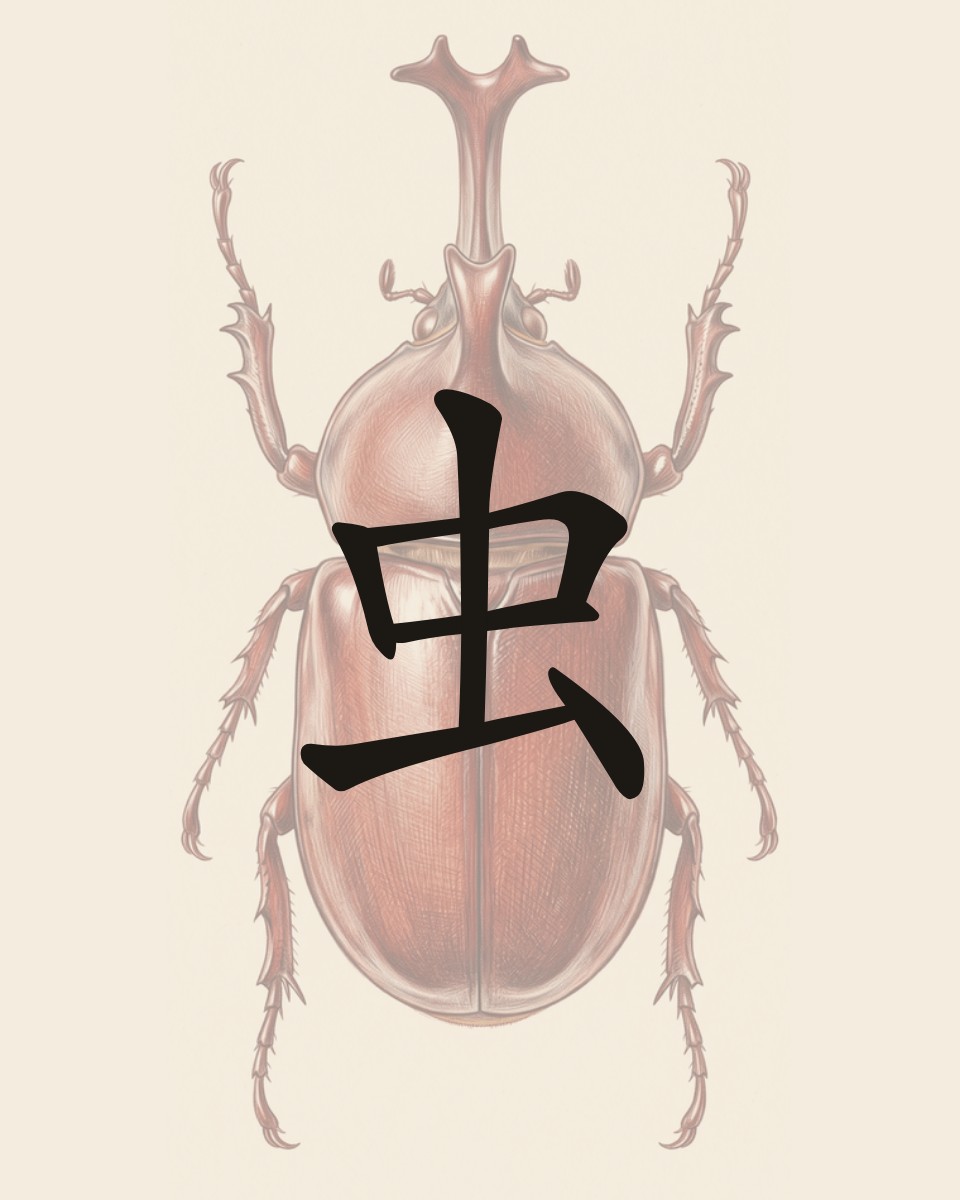
From a beetle to 虫
一只独角仙,写成「虫」
A rhinoceros beetle sits on the paper, seen from straight above: one horn on its head, a square shield behind it, the wing cases below with a seam down the middle. Six brush lines trace it — the three sides of the square shield, the line running from the horn down the middle to the tail, the curve along the bottom of the wing cases, and one hind leg. The drawing fades to a shadow and the lines stretch into 虫. 虫 first meant a snake, which is why the seal form is a coiled viper; today it means any bug.
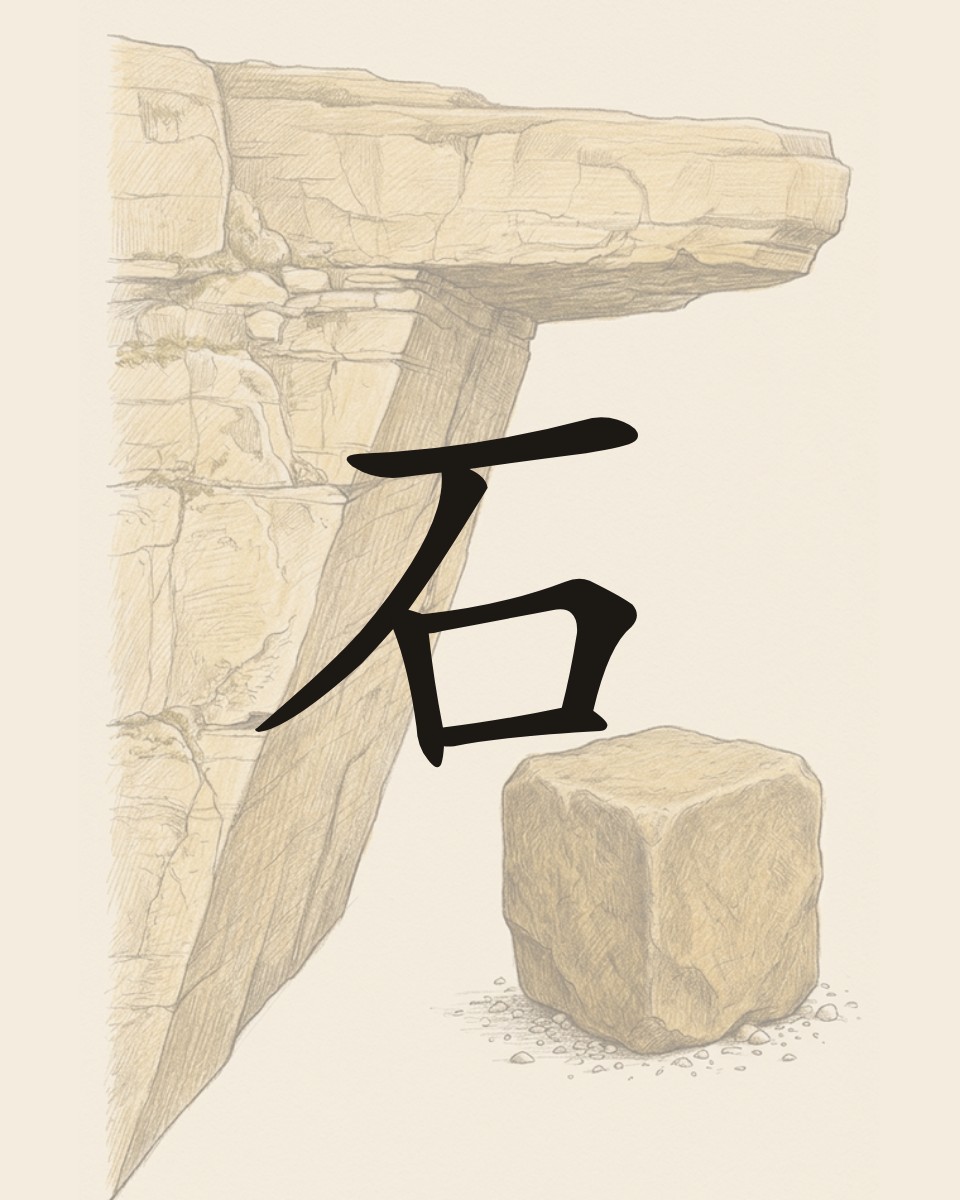
From a stone under a cliff to 石
崖壁底下一块石头,写成「石」
A sandstone cliff leans out across the top of the paper and a square boulder sits in its shadow. Five brush lines trace them: the line along the top of the cliff, the rock face sweeping down to the left, and the three sides of the boulder. The drawing fades to a shadow and the lines stretch into 石. The oracle-bone form is the same picture — a cliff with a lump of rock beneath it — which is why 石 has barely changed.
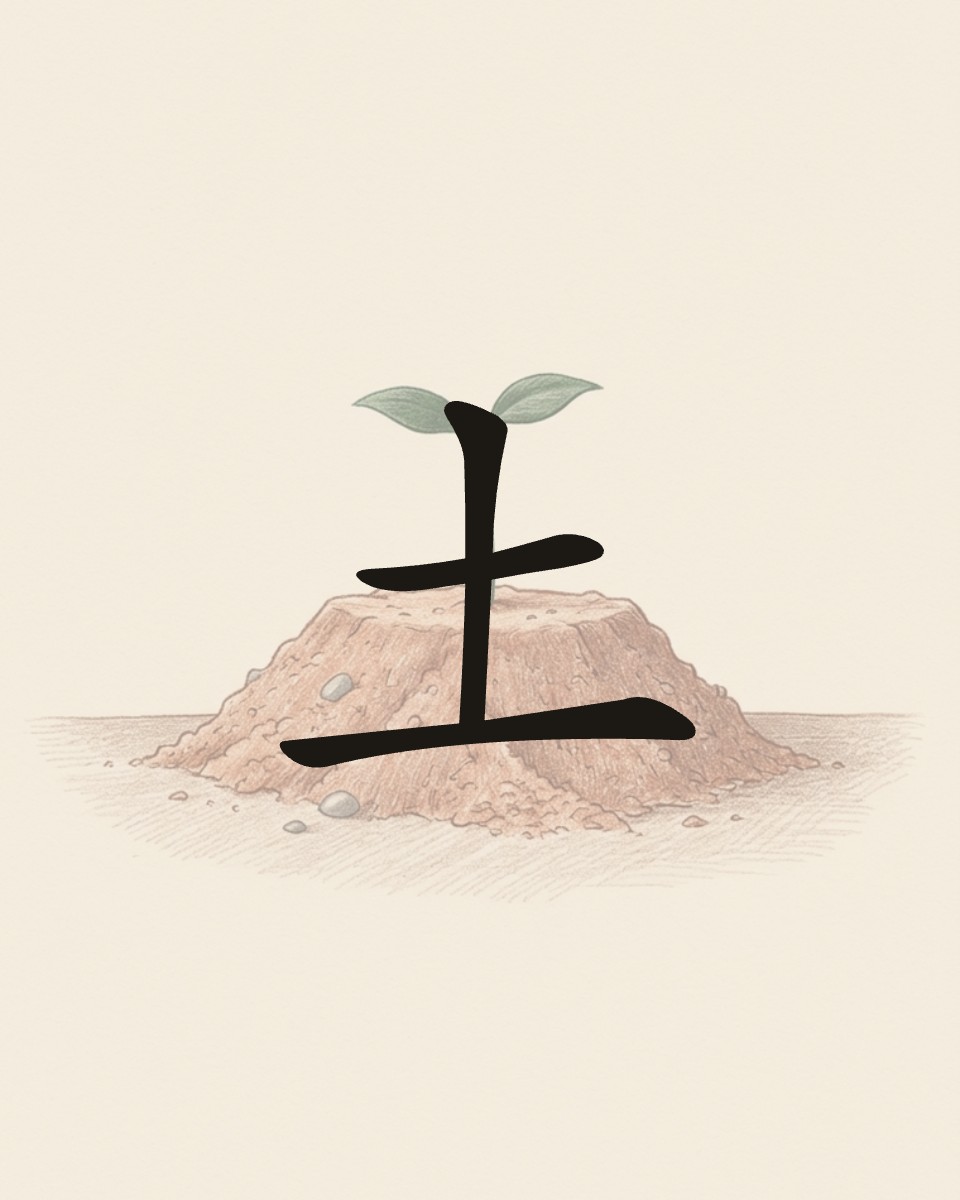
From a heap of earth to 土
地上一堆土,写成「土」
A small heap of freshly turned earth sits on flat ground, and one young sprout pushes up through the middle of it. Three brush lines trace the picture: the flat top of the heap, the sprout going down through the soil to the ground, and the ground itself. The drawing fades to a shadow and the lines stretch into 土. The oracle-bone form is a lump of earth resting on the ground; 《说文》 reads the vertical as something coming up out of the earth.
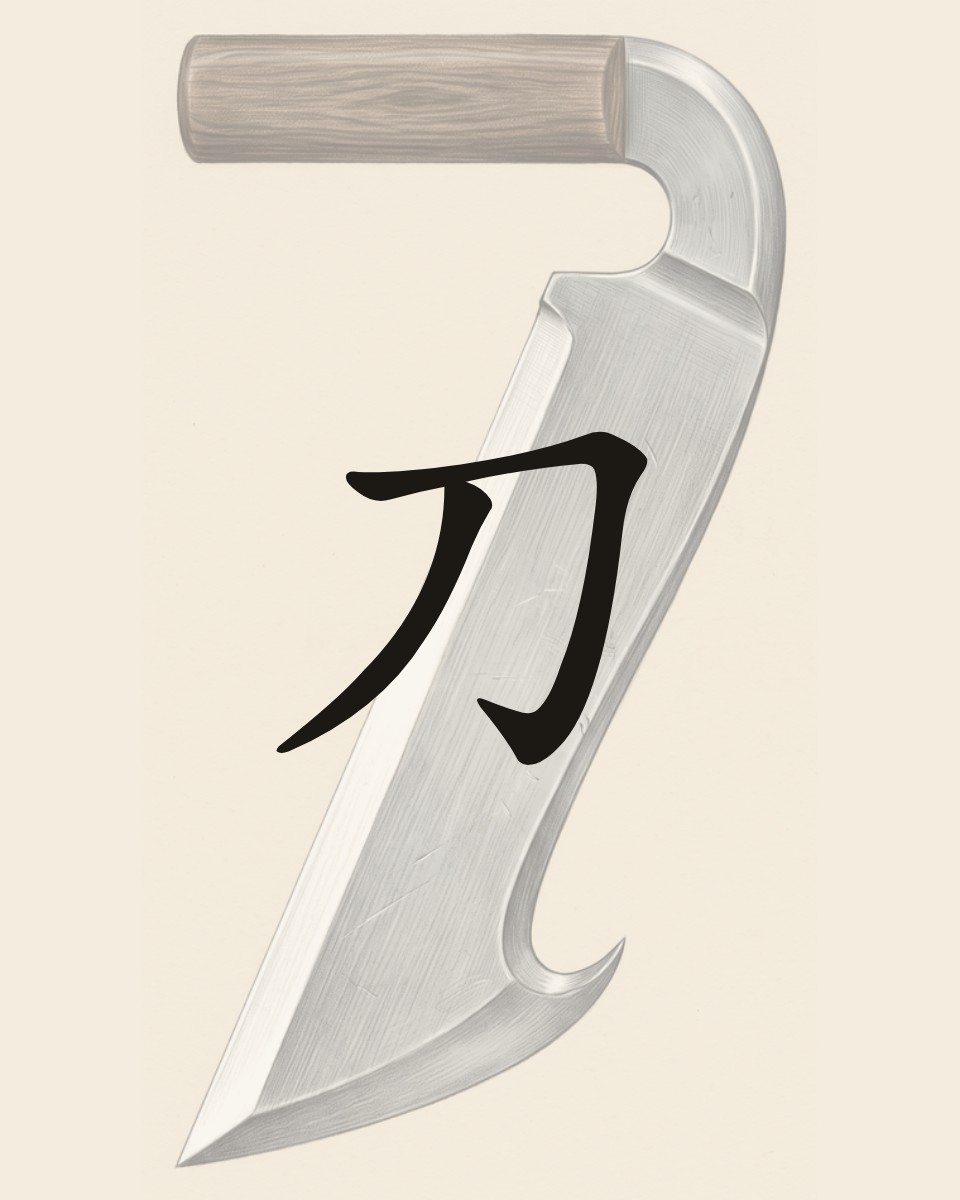
From a knife to 刀
一把刀,写成「刀」
A curved chopping knife lies on the paper: a short wooden handle across the top, a broad steel blade hanging below it, the point at the lower left. Two brush lines trace it — the top of the handle running on into the back of the blade, and the cutting edge sweeping down to the point. The drawing fades to a shadow and the two lines stretch into 刀. The oracle-bone and bronze forms are the same knife, which is why 刀 has changed so little in three thousand years.
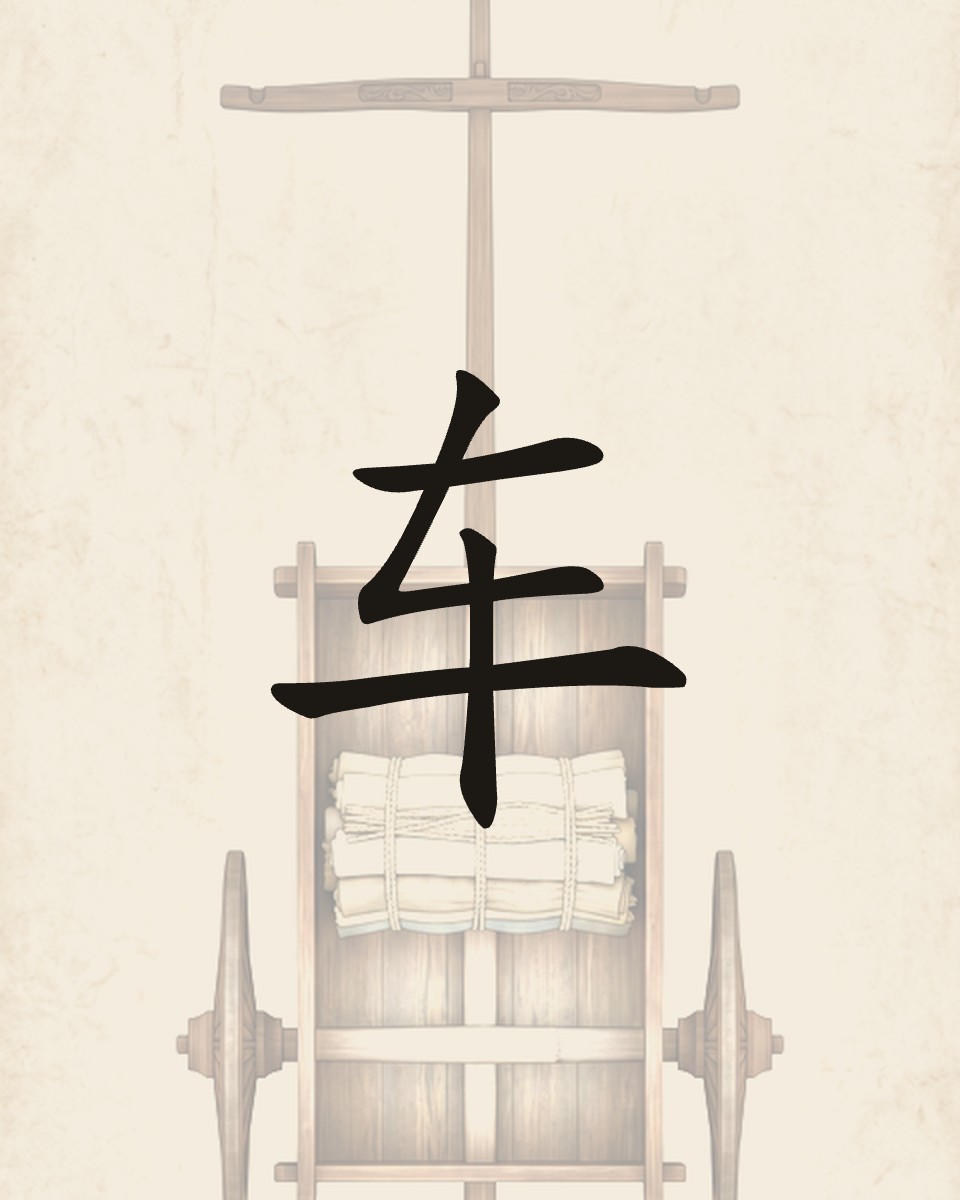
From a cart seen from above to 车
从上往下看的一辆马车,写成「车」
An ancient two-wheeled cart, seen from directly above. Five brush lines trace it: the crossbar at the front, the box as a full loop, the bundle of goods lying across it, the axle with a wheel at each end, and the long shaft. The cart fades to a shadow, the lines settle into the traditional 車 — box and load still visible — and then the box flattens, the load's line shrinks away, and 车 is left. The wheels have no stroke of their own; the simplified form dropped them.
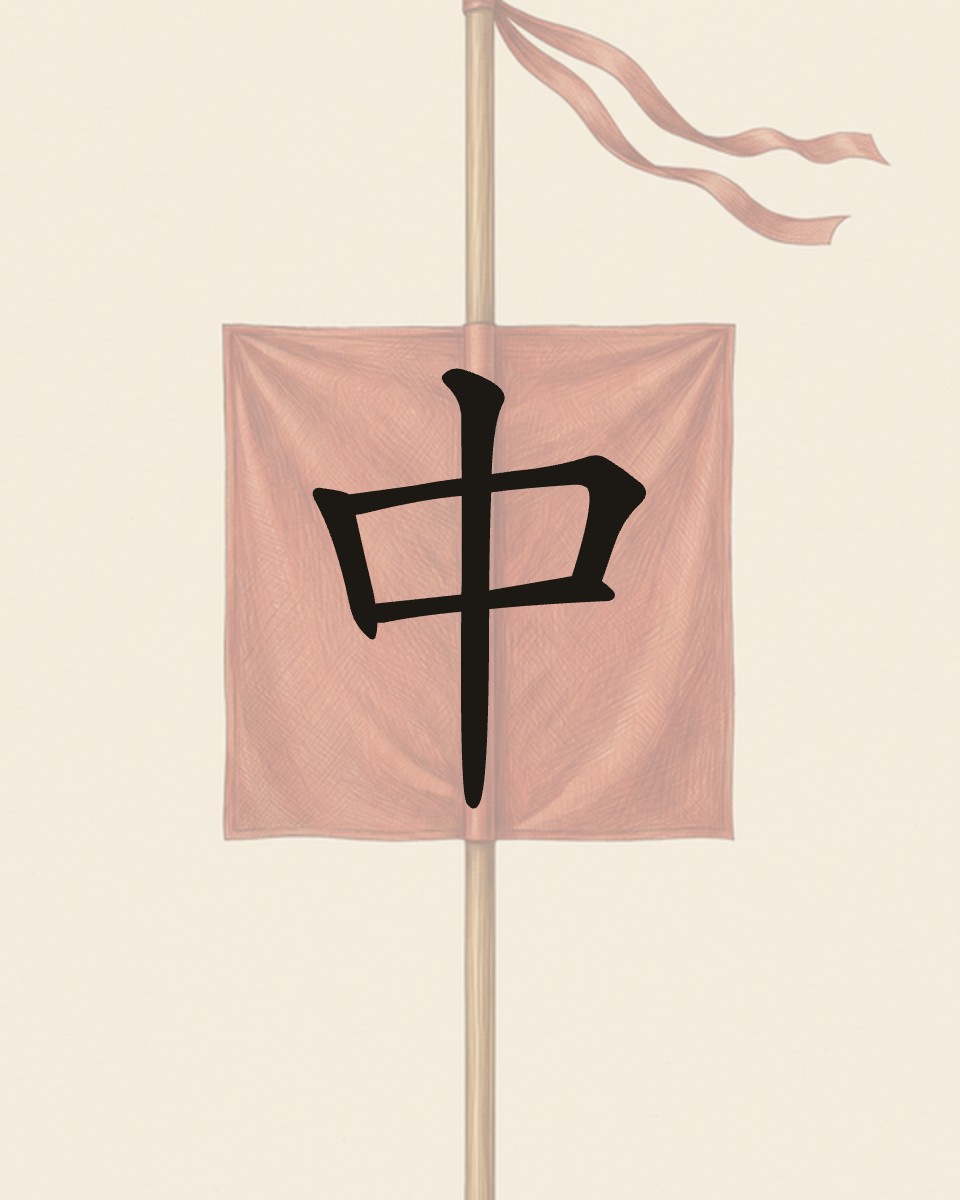
From a banner in the middle to 中
一面旗插在正中间,写成「中」
A square red banner hangs on a pole planted in the ground, the pole running straight through the middle of the cloth. Four brush lines trace it: the banner's left side, its top and right side, its bottom, and the pole. The banner fades to a shadow and the lines stretch into 中. The oracle-bone form is the same thing: a pole with a banner and streamers, planted in the centre.
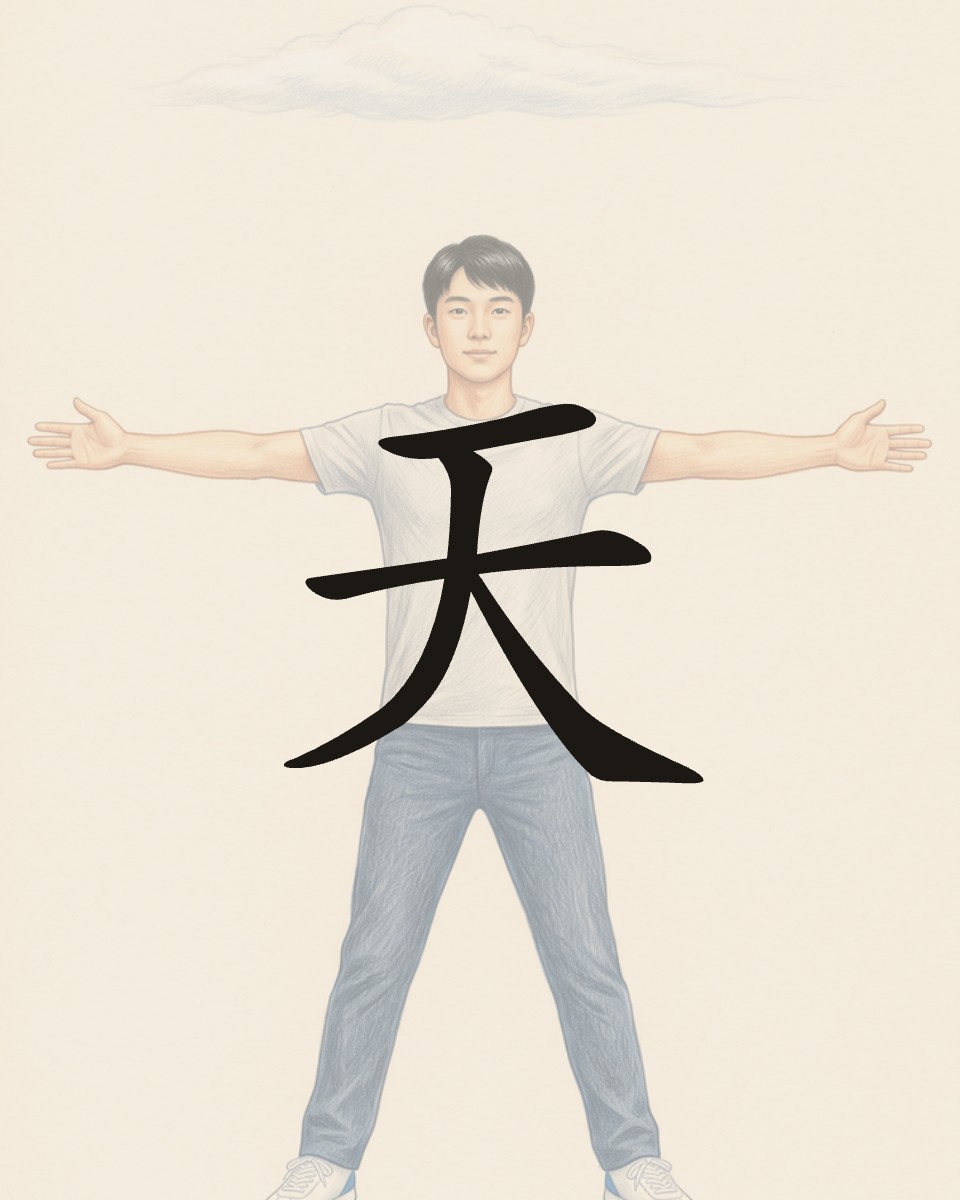
From the space above a person's head to 天
人头顶上面那一片,写成「天」
A young man stands with his arms open, a single cloud above his head. Four brush lines trace him: the cloud, his two outstretched arms, his head down through his body to his left leg, and his right leg. The drawing fades to a shadow and the lines stretch into 天. The oracle-bone form is the same idea — the character 大, a standing person, with one line drawn above the head to mark what is up there.
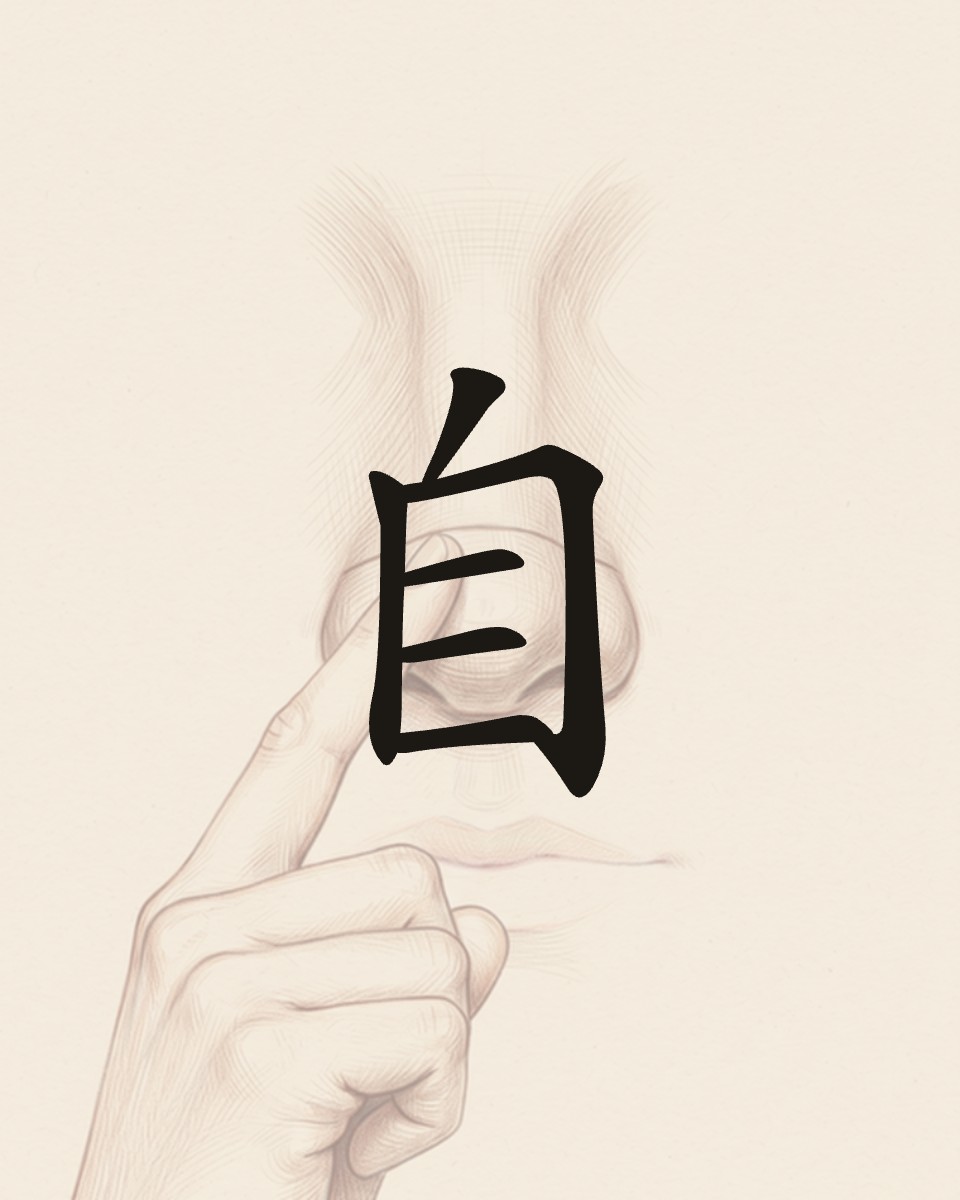
From pointing at your own nose to 自
用食指点着自己的鼻子,写成「自」
A hand comes up and one finger touches its owner's nose — the gesture Chinese speakers use for me. Six brush lines trace it: the finger, the left side of the nose, the top and right side, and the three lines across it. The picture fades to a shadow and the lines stretch into 自. The oracle-bone 自 is a nose seen from the front; it was borrowed to mean self, so a new character, 鼻, was made for the nose.
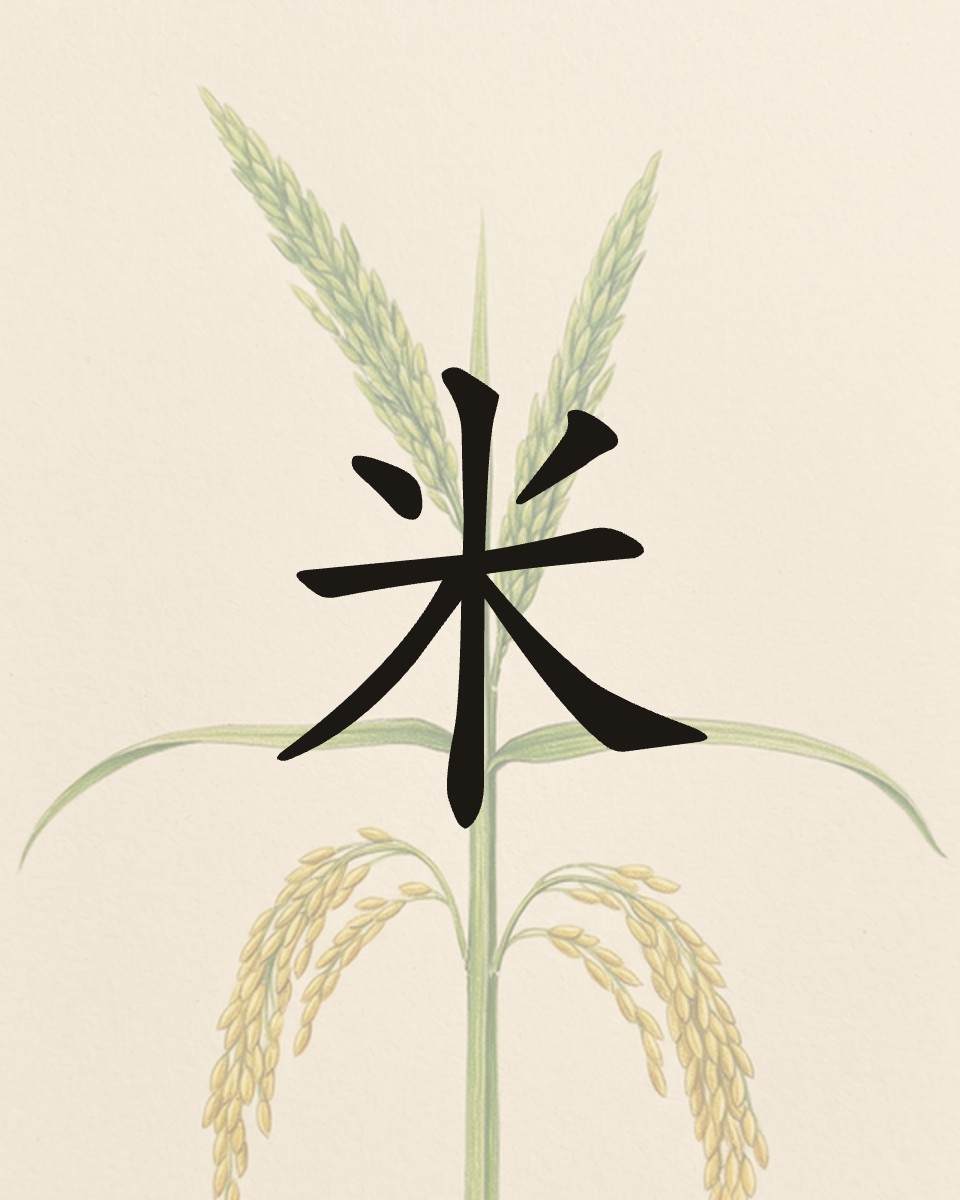
From a rice plant to 米
一株稻子,写成「米」
A rice plant stands on the paper. Six brush lines trace it: the two ears pointing up, the two leaves lying across, the straight stalk, and the two heavy ears drooping below. The plant fades to a shadow and the lines stretch into 米. The oracle-bone 米 is a line with six grains around it. As the character lands you hear real rice grains pouring into a bowl. Note: 米 is also the metre — that use comes from the French mètre, not from rice.
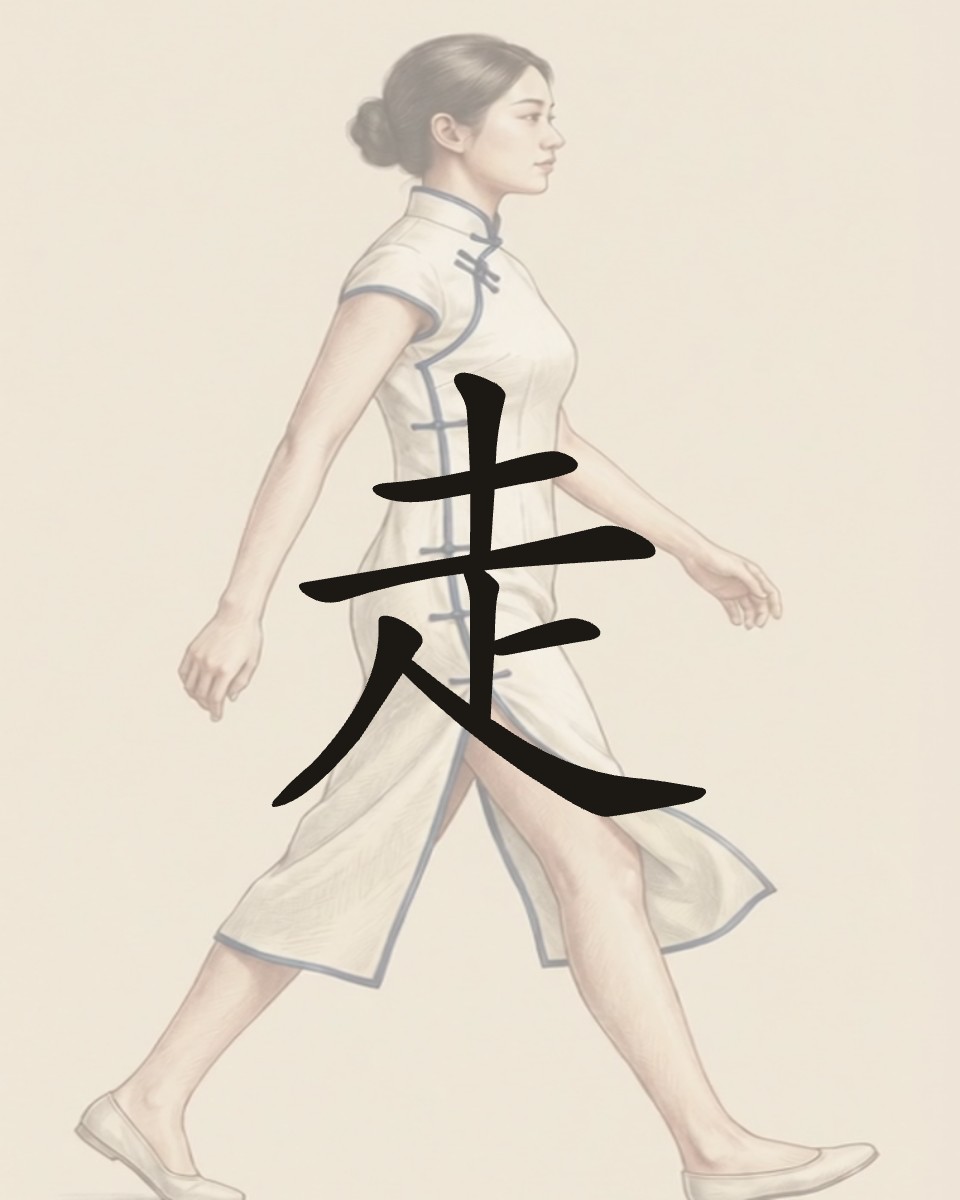
From someone walking to 走
一个迈步走路的人,写成「走」
A woman in a qipao walks past, seen from the side. The first four seconds are real motion; then seven brush lines trace her — shoulders, head and neck, the swinging arms, her body, the hem lifted by her leg, the back leg and the front leg — she fades to a shadow, and the lines stretch into 走. The oracle-bone form is a person running with their arms swinging, with a foot added below; today's character no longer looks like a person, so the picture follows the modern shape. Note: in old Chinese 走 meant to run, and 行 meant to walk.
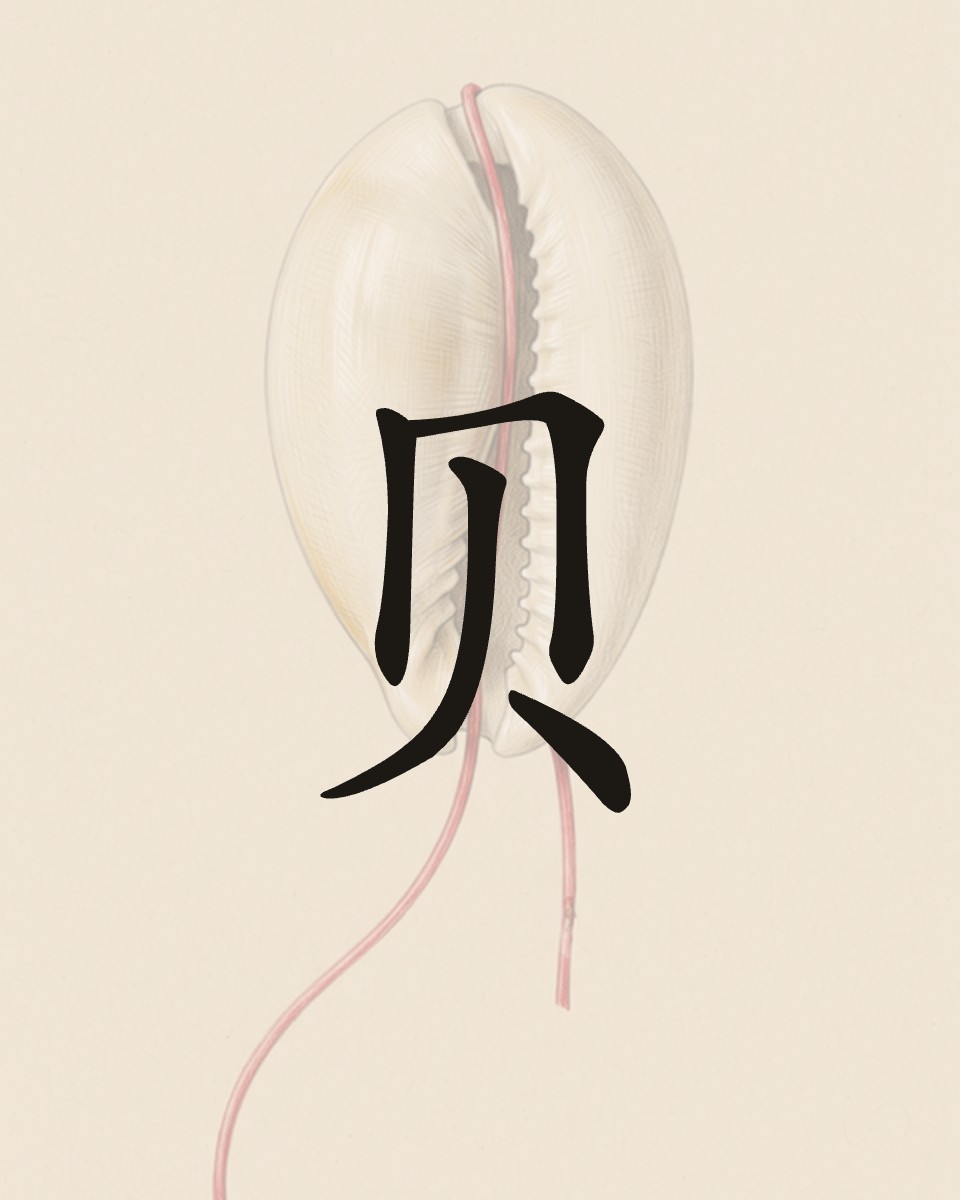
From a shell on a cord to 贝
一枚穿着红绳的贝壳,写成「贝」
A cowrie shell hangs on a red cord. Four brush lines trace it: the left side of the shell, the top and right side, the cord running down the slit and out to the left, and the cord's short end. The shell fades to a shadow and the lines stretch into 贝. Then a trade: a string of shells and a basket of fish swap places — shells were money in ancient China — and 货 (goods), 贵 (expensive) and 财 (wealth) appear, each with 贝 in red.
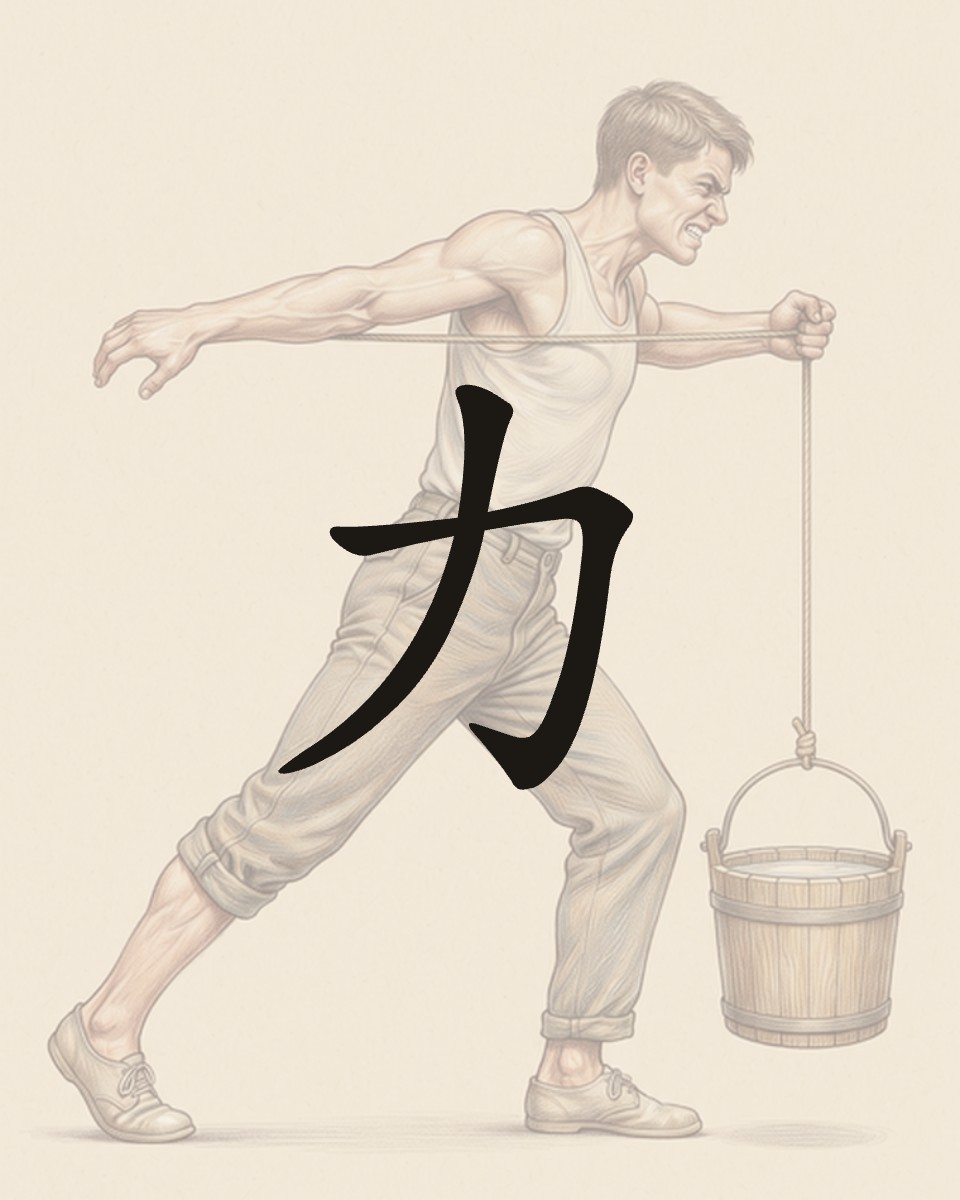
From a man pulling hard to 力
一个使劲提水的人,写成「力」
A man leans forward and hauls a heavy bucket of water up on a rope. Two brush lines trace him: his arms and the rope down to the bucket; his head, body and back leg. He fades to a shadow that stays behind, and the two lines stretch into 力. This picture is a memory aid. The oldest dictionary, the Shuowen, says 力 pictures a person's muscles; many scholars today read the oracle-bone form as a digging tool — you can see it in the evolution row.
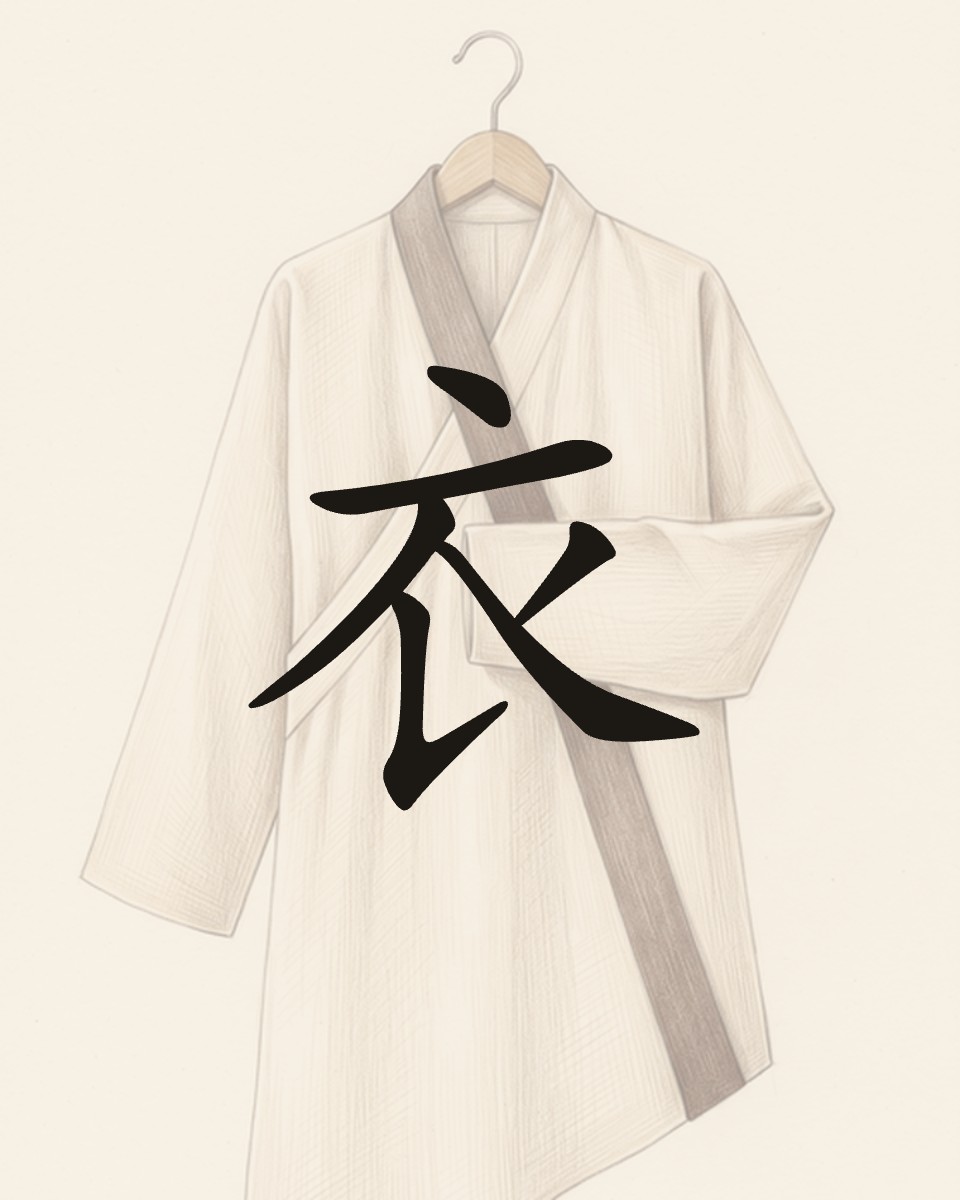
From a robe on a hanger to 衣
衣架上的一件衣服,写成「衣」
A robe with a crossed collar hangs on a hanger. Six brush lines trace it: the hook, the shoulders, the left sleeve, the robe's left edge and slanted hem, the folded right sleeve, and the long dark collar. The robe fades to a shadow, and the lines stretch into 衣. The bronze and seal forms of 衣 really are a robe with a crossed collar. Culture note: traditional Chinese robes close to the right, with the collar running from the right shoulder down to the left — the robe in the film is like one seen in a mirror.
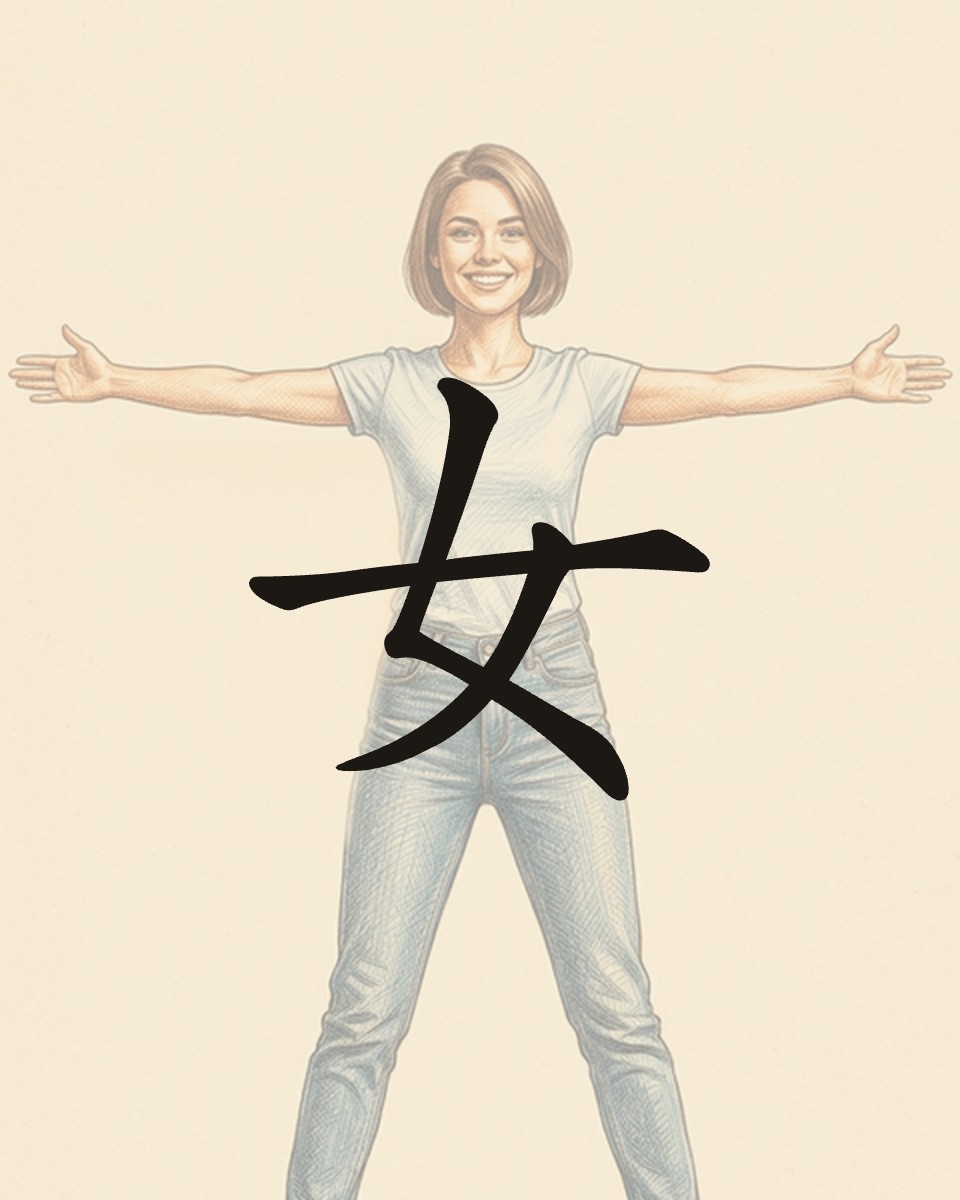
From a woman standing to 女
一个站着的女生,写成「女」
A woman stands facing you, arms out, legs apart. Three brush lines trace her: head, body and one leg; the other leg from the waist; both arms. She fades to a shadow that stays behind, and the lines stretch into 女. This picture is a memory aid, not the old form — the oracle-bone 女 is a woman kneeling with her arms crossed, and you can see it in the evolution row.
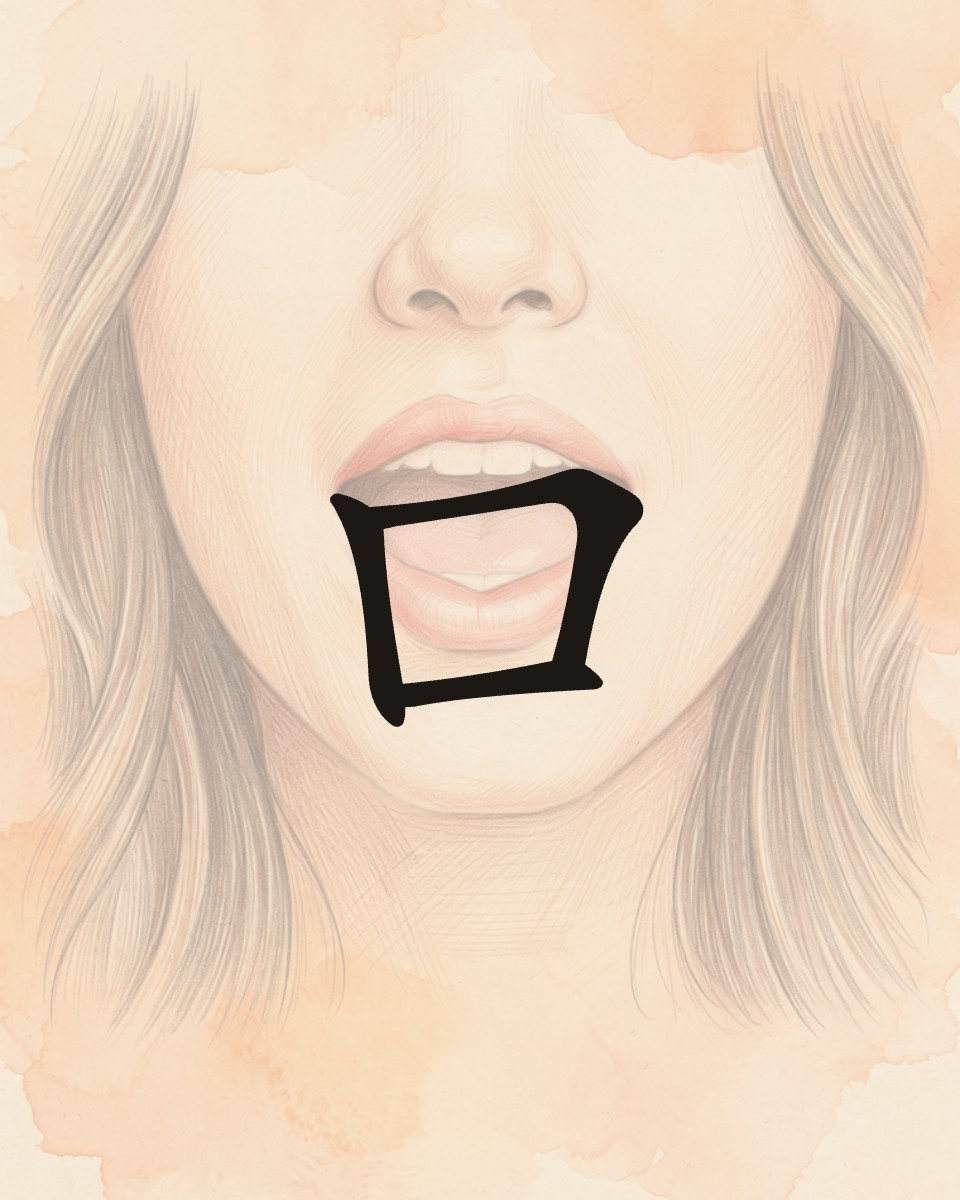
From an open mouth to 口
一张嘴,写成「口」
A mouth opens to say 'ah'. Three brush lines trace the lips — the left corner, the upper lip running round the right corner, the lower lip — and the face fades to a shadow. The three lines slowly straighten into 口: the corner becomes the left side, the upper lip the top-and-right turn, the lower lip the bottom line. The sound is an apple being eaten, bite by bite.
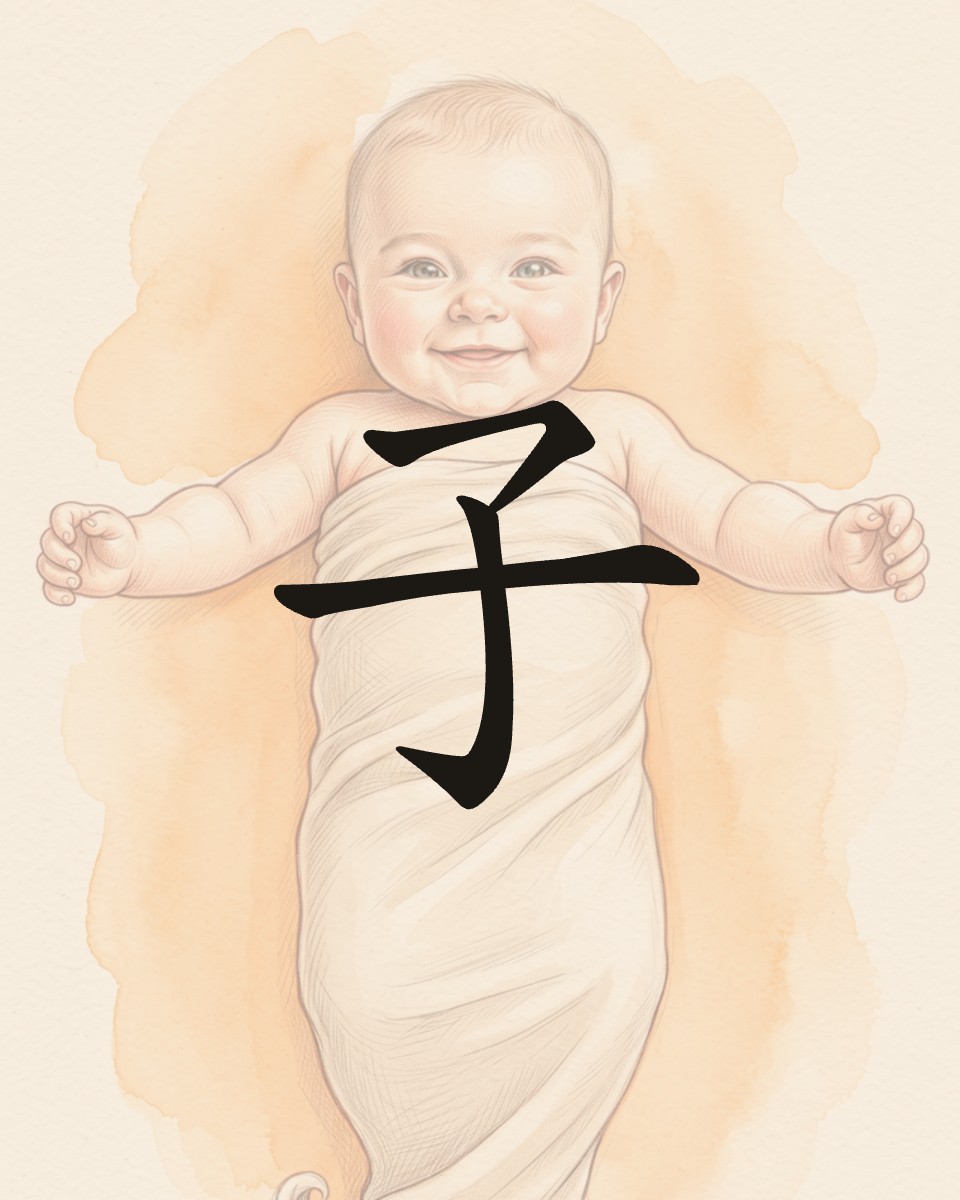
From a baby in a wrap to 子
襁褓里的婴儿,写成「子」
A baby wrapped in a cloth, arms out, giggling. Three brush lines trace the baby — a circle round the head, the body, the two arms — and the baby fades to a shadow. The lines draw in to the oracle-bone 子: a square head, arms like a U, one line down. Then they stretch into 子: the head becomes the top stroke, the body the hooked stroke, the arms the line across.
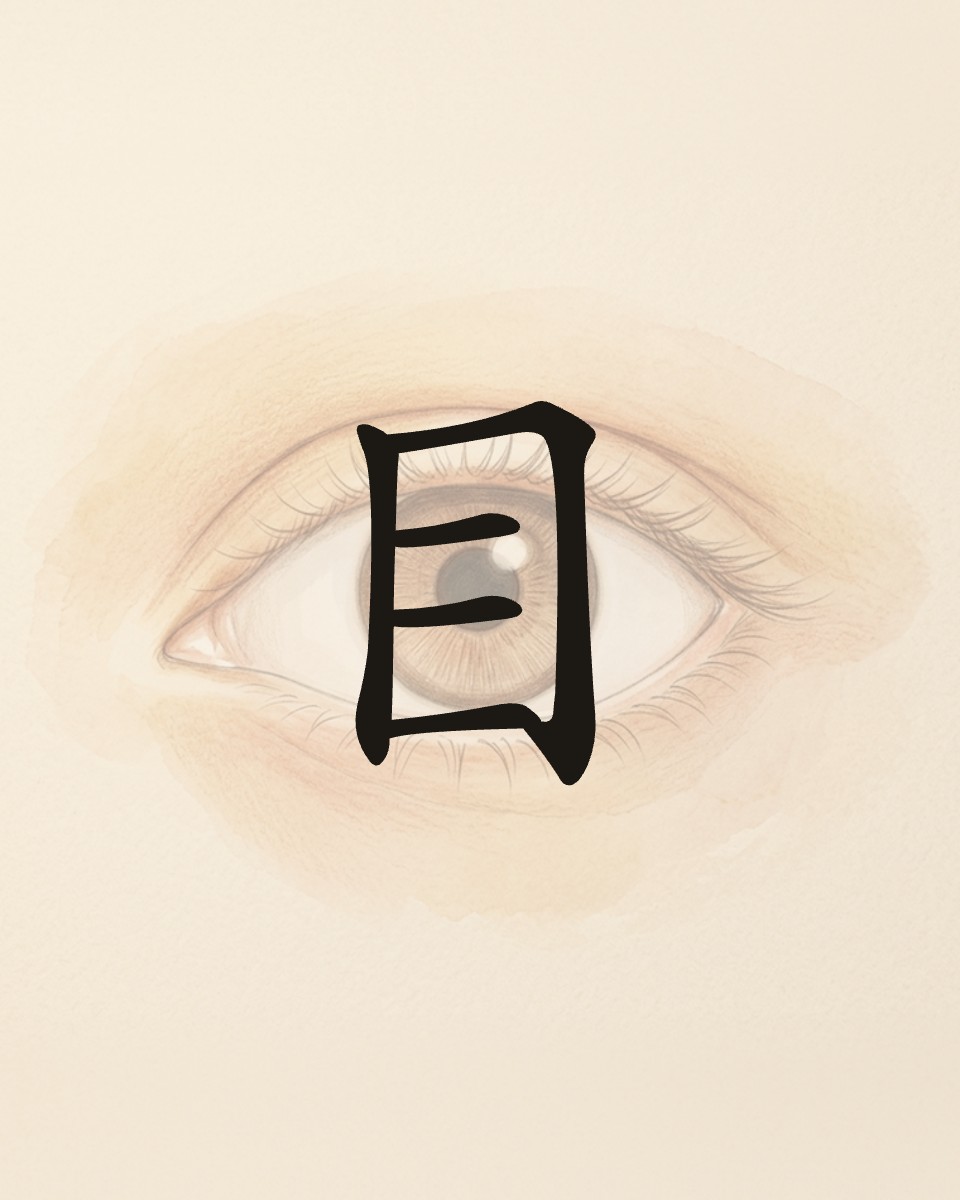
From an eye to 目
一只眼睛,竖起来就是「目」
One open eye, lying on its side, the way the oldest 目 was drawn. A line traces the eyelids and the iris; the eye fades away and the line drawing stands up — turned a quarter-turn, just as the character turned upright in later scripts. The outline pulls into the tall rounded box of the seal script, the two halves of the iris stretch into the lines inside, and then it all squares off into 目. The same five lines from start to finish — nothing is erased and drawn again.
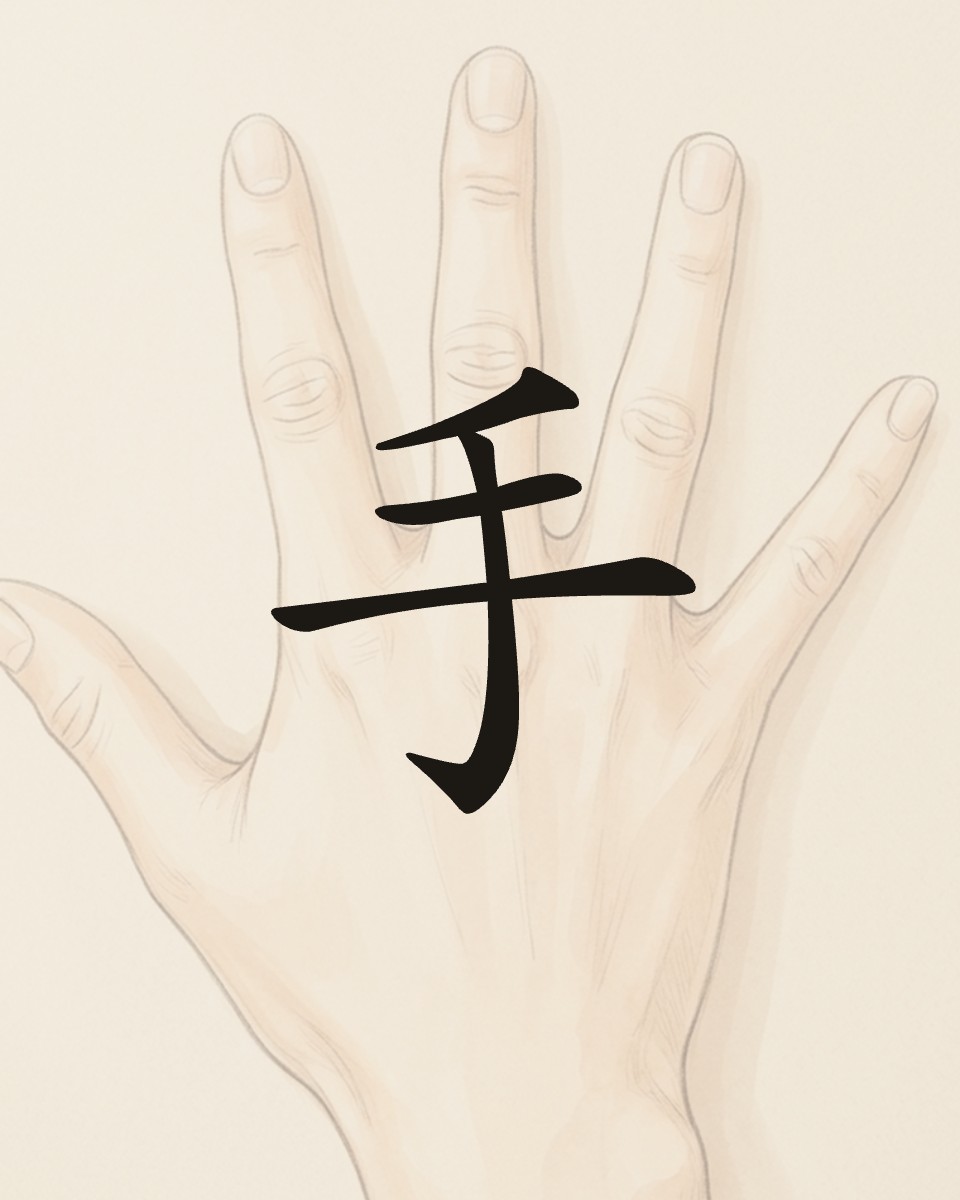
From an open hand to 手
一只张开的手,写成「手」
An open hand on paper. Six brush lines trace it — the five fingers and the arm — and the hand fades away, leaving the bronze-script 手: a trunk with two forks and a top branch. Then each line stretches straight into its stroke: the two upper branches become the upper line, the two lower branches the long line, the top branch the short falling stroke, and the trunk the hooked stroke down the middle. Same six lines from start to finish — nothing dissolves.
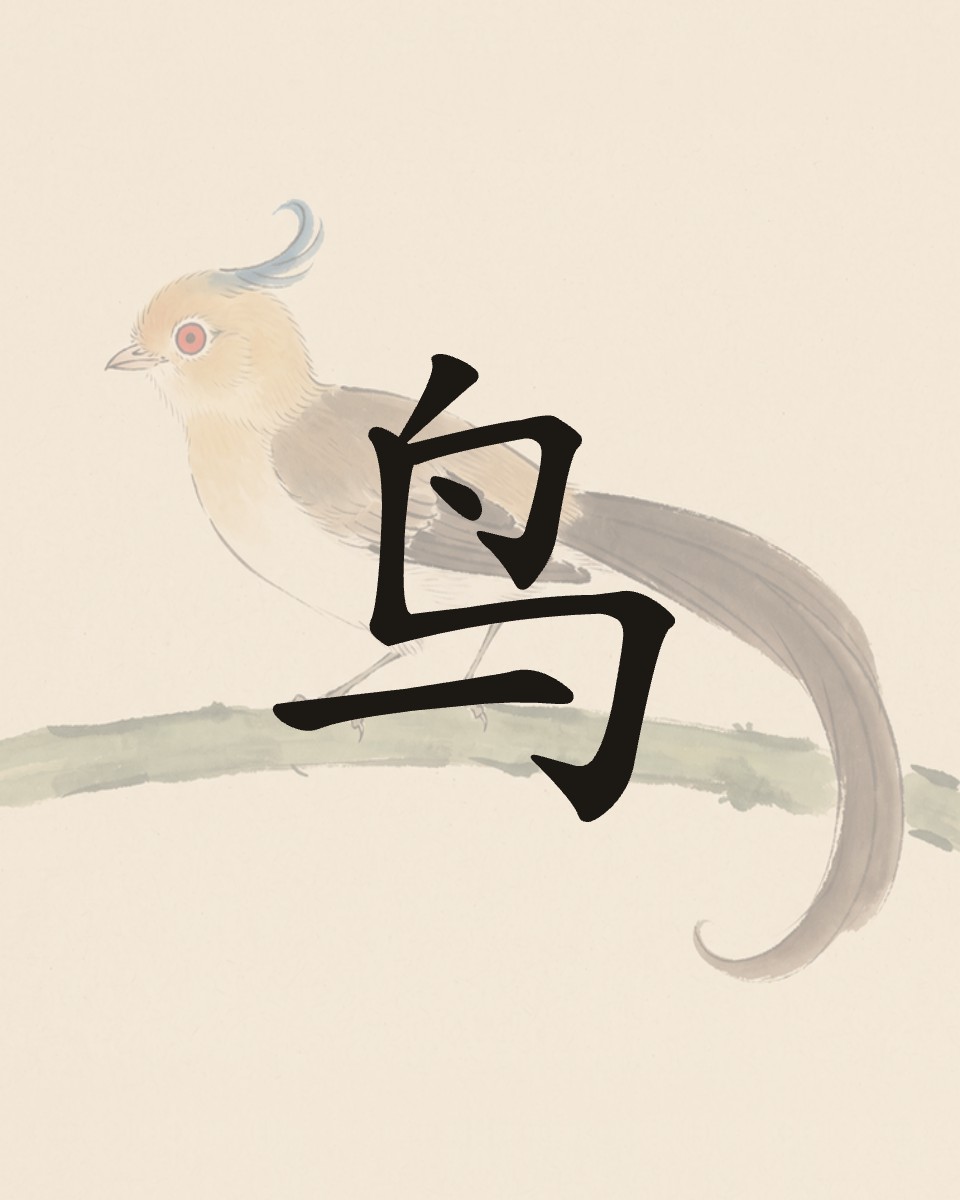
From a bird on a branch to 鸟
一只小鸟,写成「鸟」
A small bird with a blue crest and a long tail stands on a branch. Five coloured brush lines trace it — crest, head, eye, body-and-tail, branch — and the bird fades away. Each line then stretches into its stroke and keeps its colour: the crest becomes the falling stroke on top, the head the turn, the eye the dot, the body and tail the long stroke that ends in a hook (the tail's curl is the hook), the branch the line across the bottom. Then the colours turn to ink. A memory picture, not the oldest form — the oracle-bone bird, big-headed and long-billed, is in the evolution row.
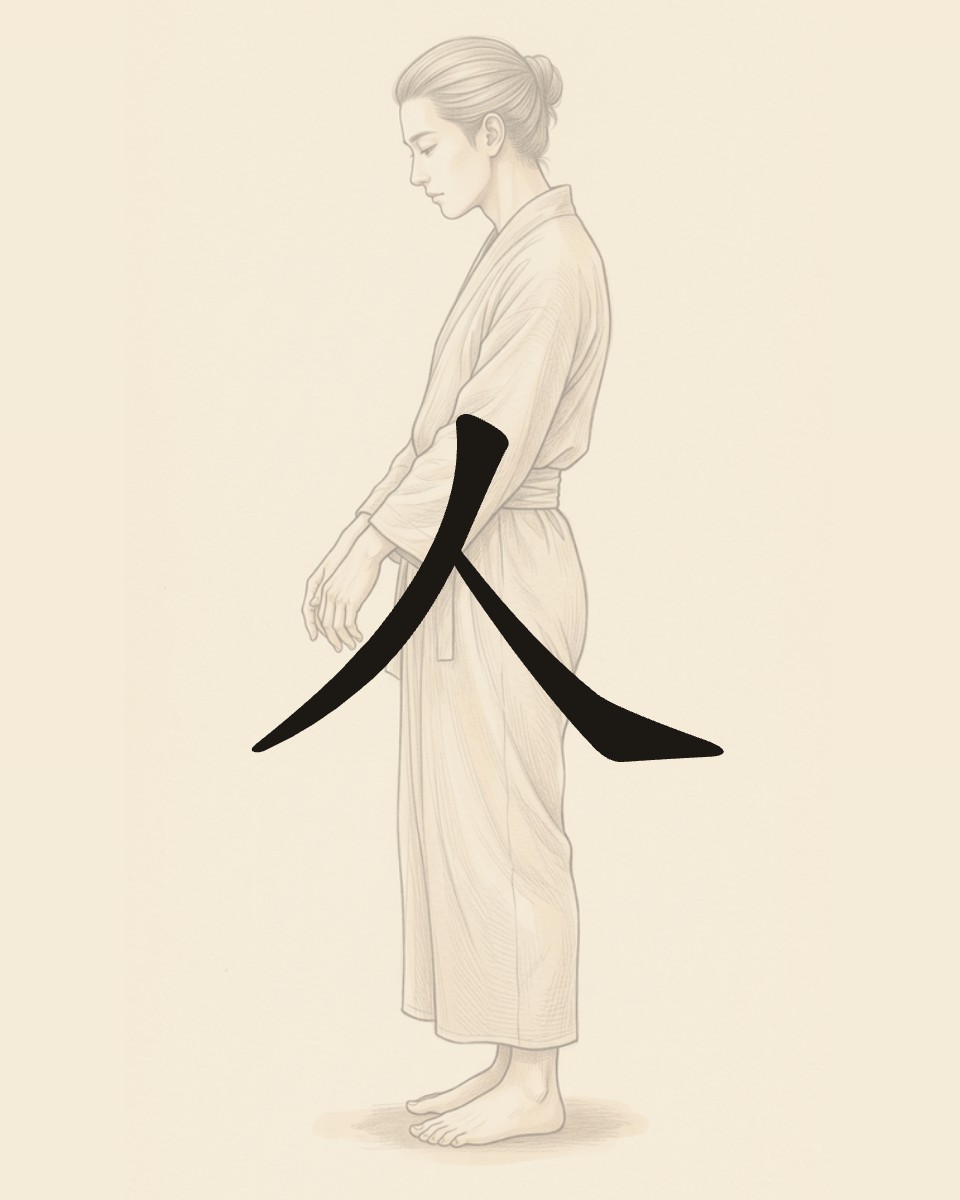
From a person standing to 人
一个站着的人,写成「人」
A person stands sideways, head slightly bowed, arms hanging in front. Two brush lines trace them: one along the arm, one from the top of the head down the back to the heel. The person fades, and the two lines draw in to the oracle-bone 人 — a figure seen from the side. Then they stretch into the character: the arm becomes the stroke to the left, the body the stroke to the right. Two lines, two strokes, nothing dissolves.
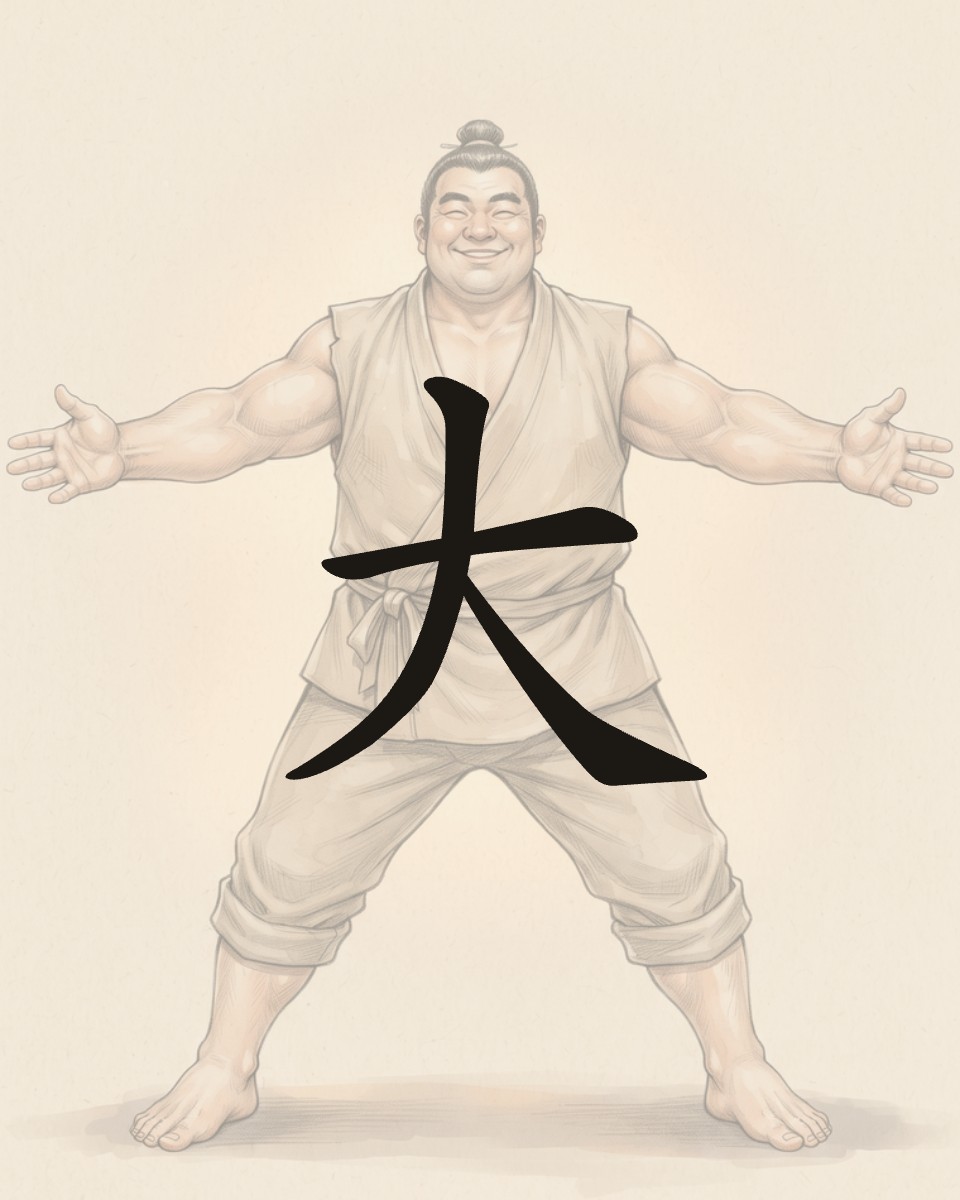
From a strongman with arms spread wide to 大
一个张开手脚的人,写成「大」
A cheerful strongman stands with his arms flung wide and his feet planted apart — 'this big!'. Four brush lines trace him: each arm, the line from the top of his head down his body to his left foot, and his right leg. He fades to a shadow that stays behind, the lines draw in to the oracle-bone 大, and then stretch into the character: the two arms become the line across, head-body-left-leg the falling stroke, the right leg the stroke to the right.
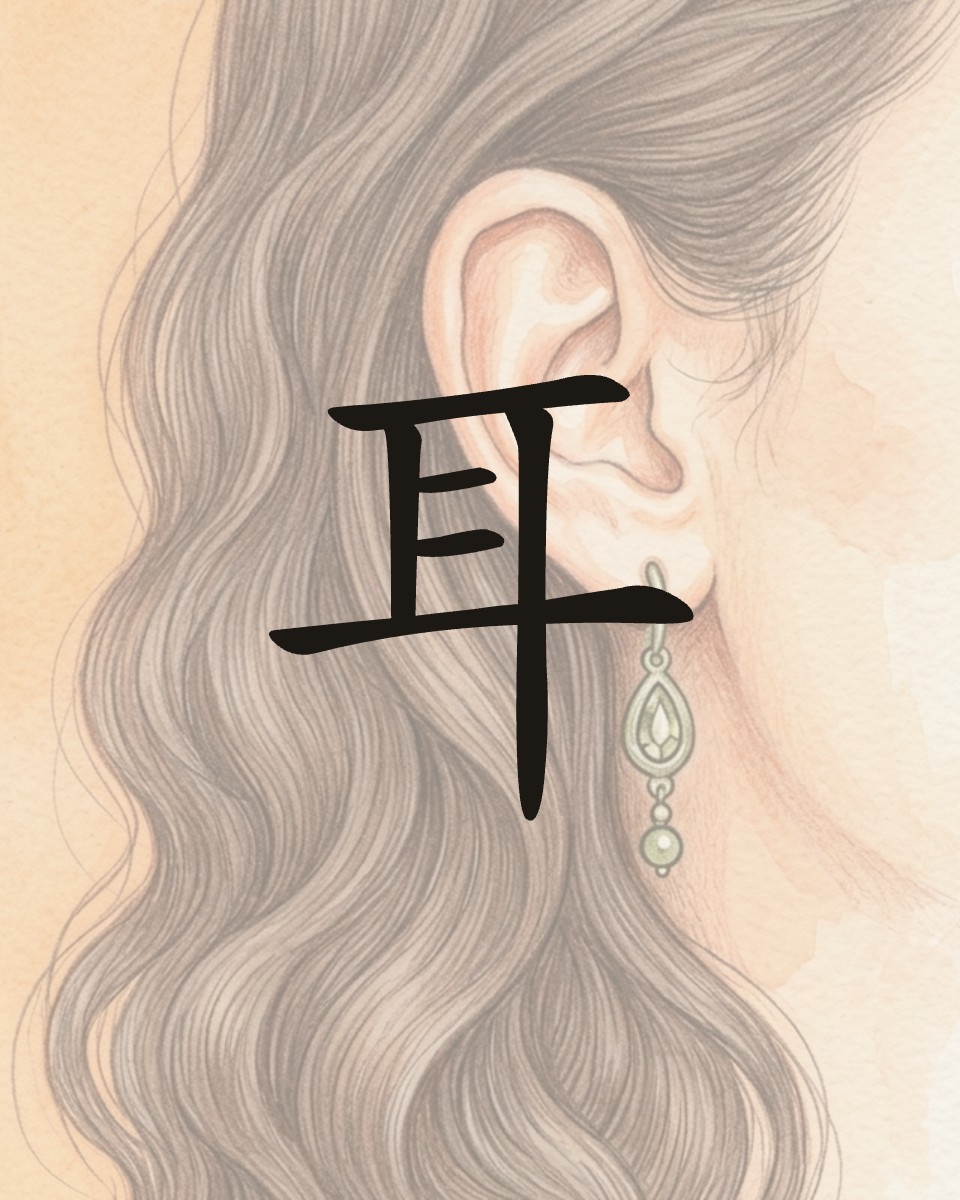
From an ear to 耳
一只耳朵,写成「耳」
An ear seen from the side, long wavy hair falling behind it. Six brush lines trace the ear along its own outline — the rim at the top, the rim at the back, the edge by the cheek, the two folds inside, the lobe. The ear fades to a shadow, and the six lines slowly straighten and grow into 耳: the top of the rim becomes the first line, the two edges the two uprights, the folds the two short lines inside, the lobe the last rising stroke. The sound is close-up brushing, like something next to your ear.
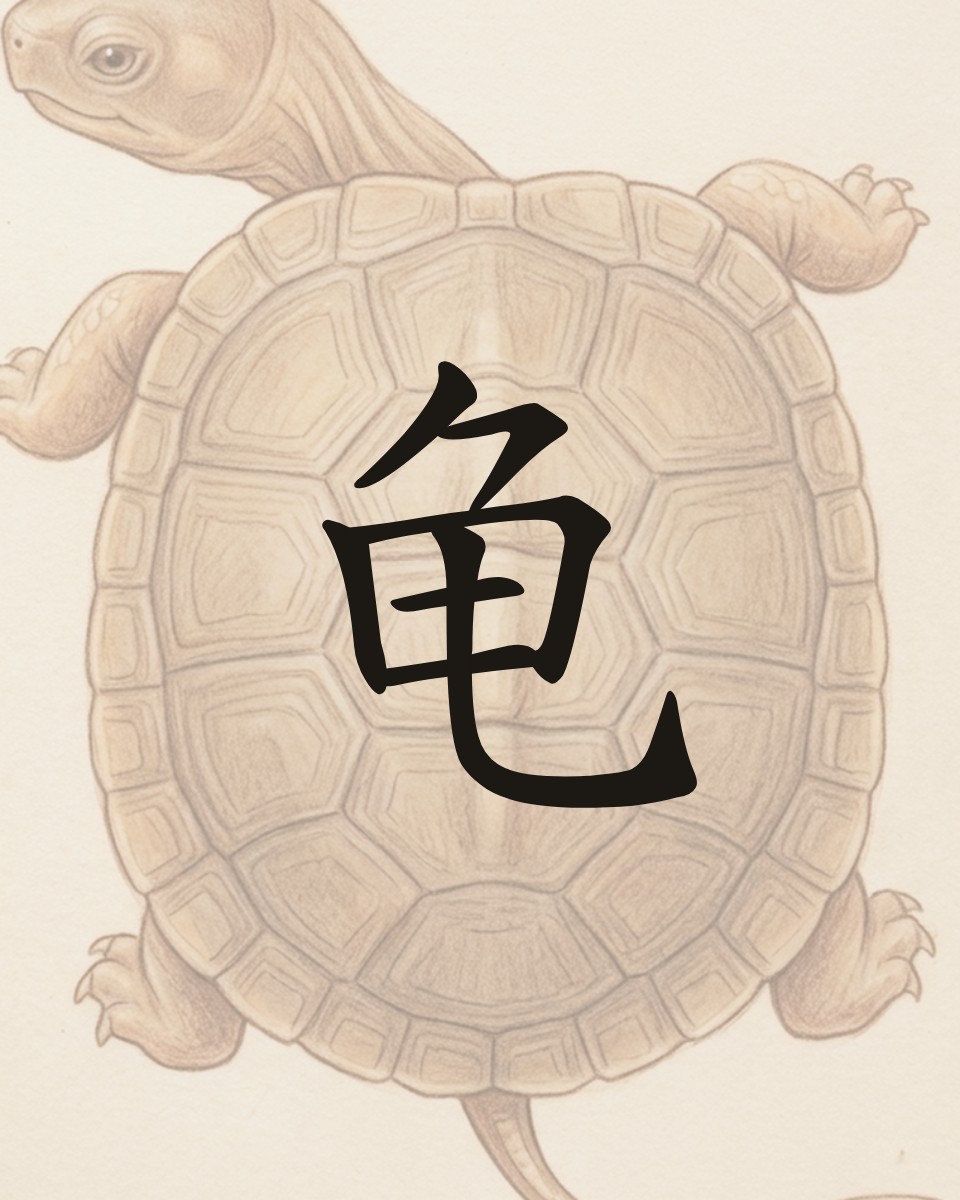
From a turtle to 龟
一只乌龟,写成「龟」
A turtle seen from above: alive and breathing on the paper. A line traces head, shell and tail and becomes the old bronze form — a turtle with a faint cross on its shell. The real turtle fades into a shadow, and the drawing is squared off step by step: the shell becomes a box with a cross in it, the head becomes two short strokes on top, and the tail stretches into the last stroke that hooks up. Every line you see is pulled straight into 龟 — nothing is erased and drawn again.
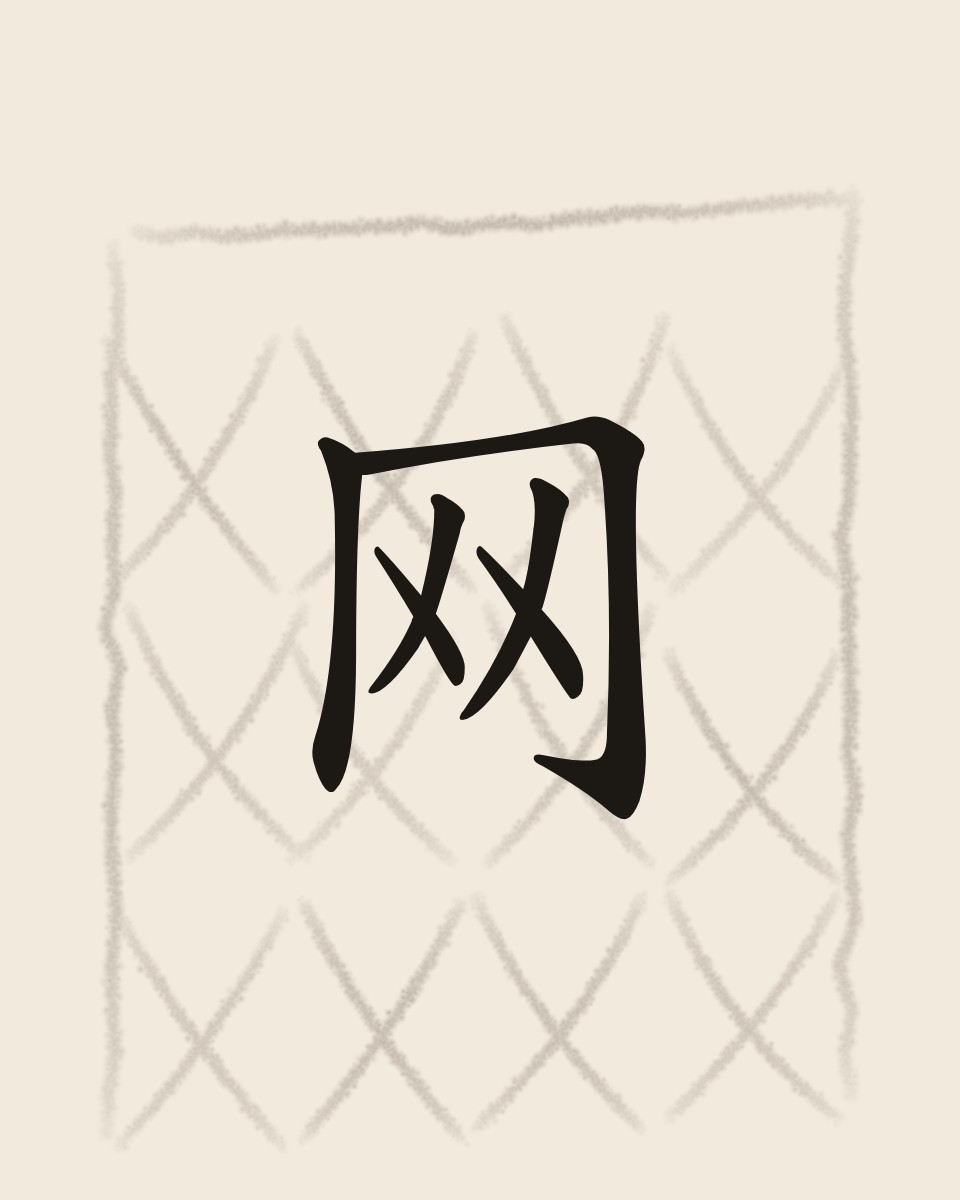
From a fishing net to 网
一张网,写成「网」
A net hangs between two poles, its mesh drawn as rows of crosses, breathing in the wind. A line traces it from the top down; then the outer crosses fade away, row by row, the farthest first, until only two are left — and those two stretch out to fill the frame. From there the poles round their shoulders into the seal script of the Qin, and the whole thing is pulled straight into 网: the frame is the two poles, and the two ㄨ inside are all that is left of the mesh.
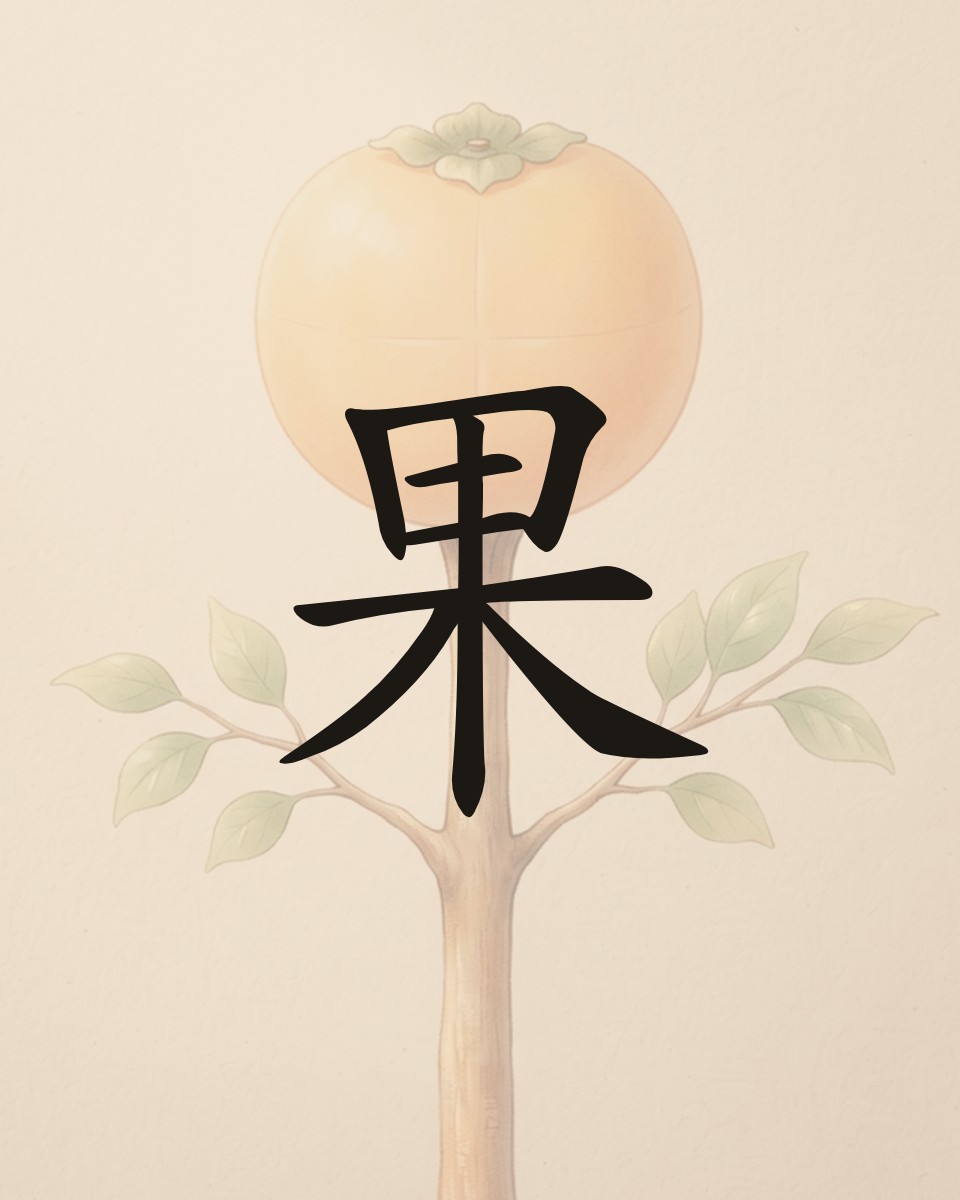
From a fruit on a tree to 果
树上一个果,写成「果」
A young tree stands in the light with one big round fruit resting on its crown. The wall and the sand fade away; a line runs round the fruit, along the seam across it, down the trunk, out to each branch and down each root. Then the fruit tightens into the box on top — 田 — and the tree straightens into 木: the trunk the upright, the branches the long line across, the roots the two legs. 果 is a picture of a fruit tree with its fruit still on it.
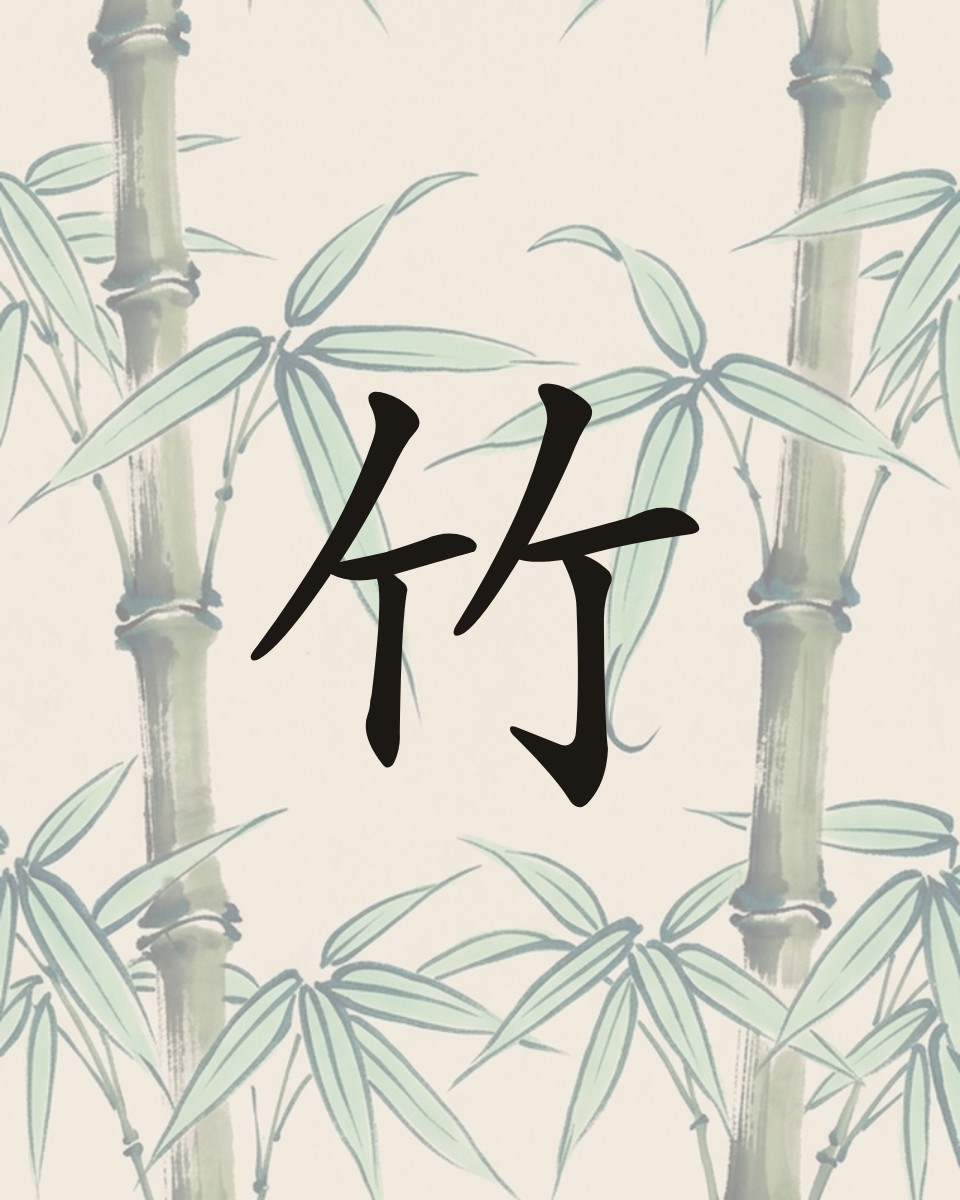
From two sprigs of leaves to 竹
两簇竹叶,写成「竹」
Two bamboo stalks stand in the wind. Then everything fades but two sprigs of leaves, one on each stalk; they turn a little to face you, a line runs along each leaf, and the four lines of each sprig are pulled up into the oracle-bone character — two drooping sprigs of bamboo leaves. Those straighten into 竹: the long leaf into the falling stroke, the side leaf into the short bar, the hanging leaf into the upright. The character was never the stalk; it was always the leaves.
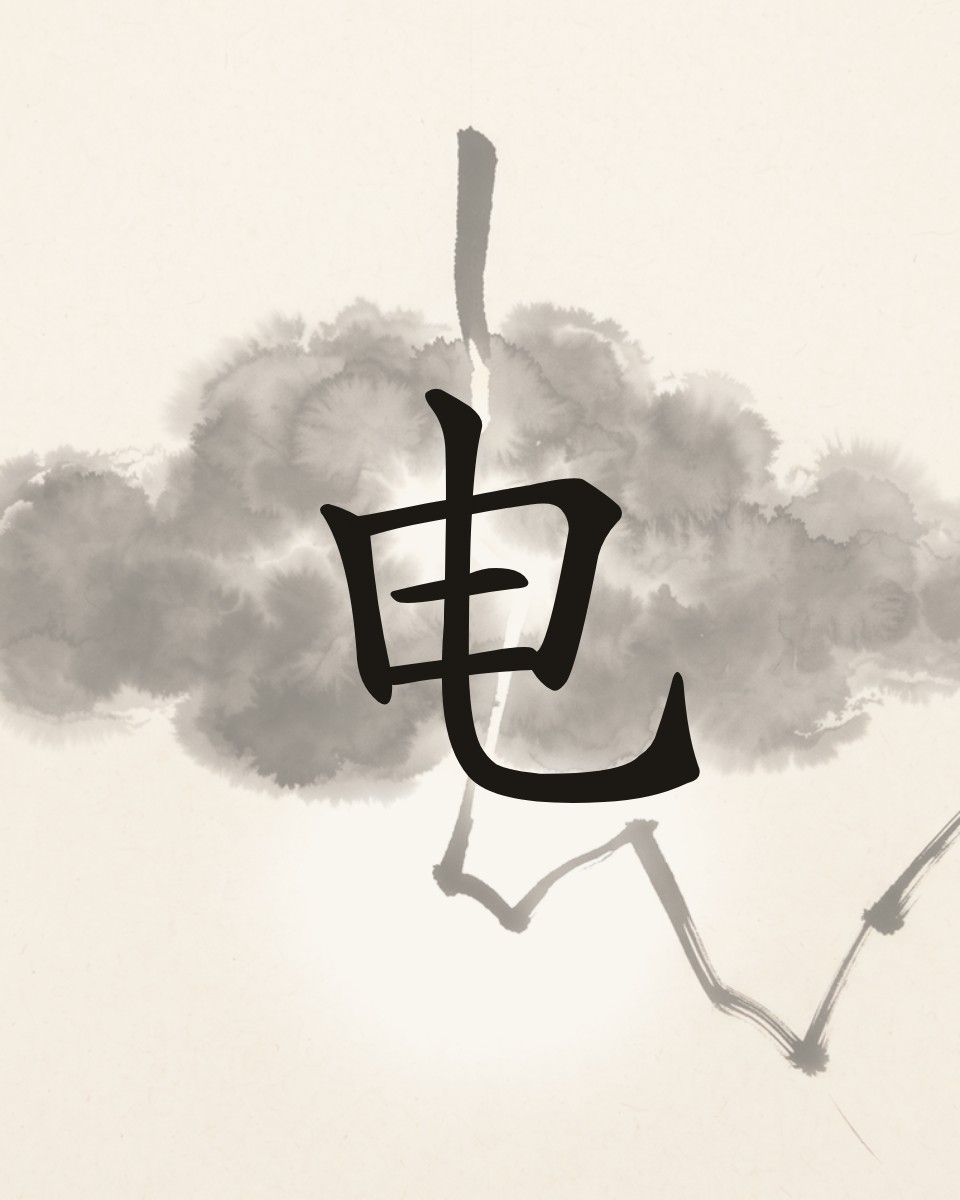
From a cloud and a bolt to 电
一团云,一道闪电,写成「电」
An ink cloud gathers in the middle of the paper; a single bolt strikes down through it and flashes. Then the cloud is traced along its own edge, and that line tightens into the box on top; the bolt below straightens into the stroke that pokes out and hooks to the right. A cloud and a bolt — that is the whole character, and the box on top is the cloud only so that you remember it: historically the character is 申, a picture of the bolt, with 雨 rain added above in 電.
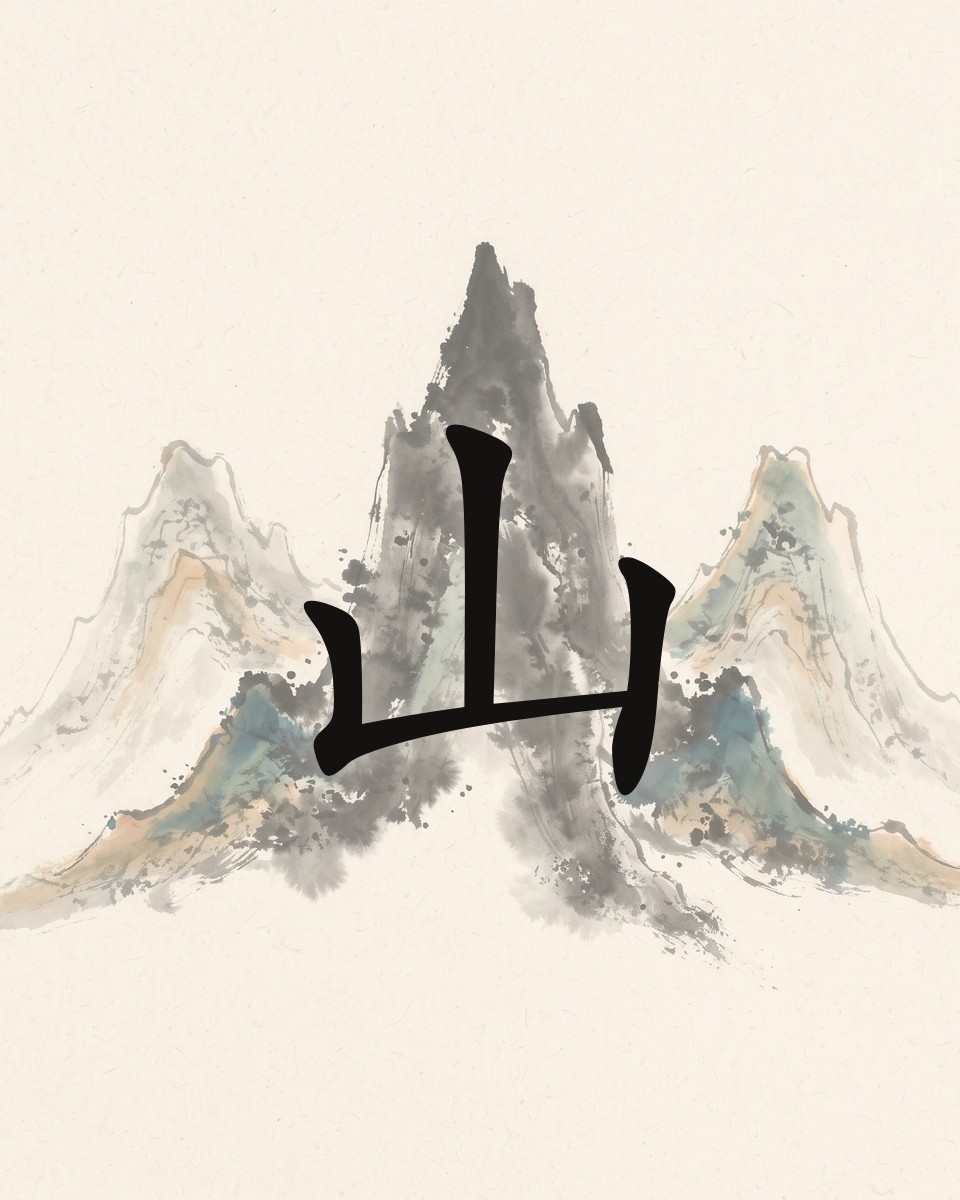
From three peaks to 山
三座山峰,写成「山」
Ink mountains rise out of the paper — one tall peak in the middle, a lower one either side. A brush follows the ridgelines, the tracing tightens into the oracle-bone glyph, and then the slopes straighten: the middle peak becomes the tall stroke, the left peak folds down into the base line, the right peak stands up beside them. Three peaks, three strokes, three thousand years apart.
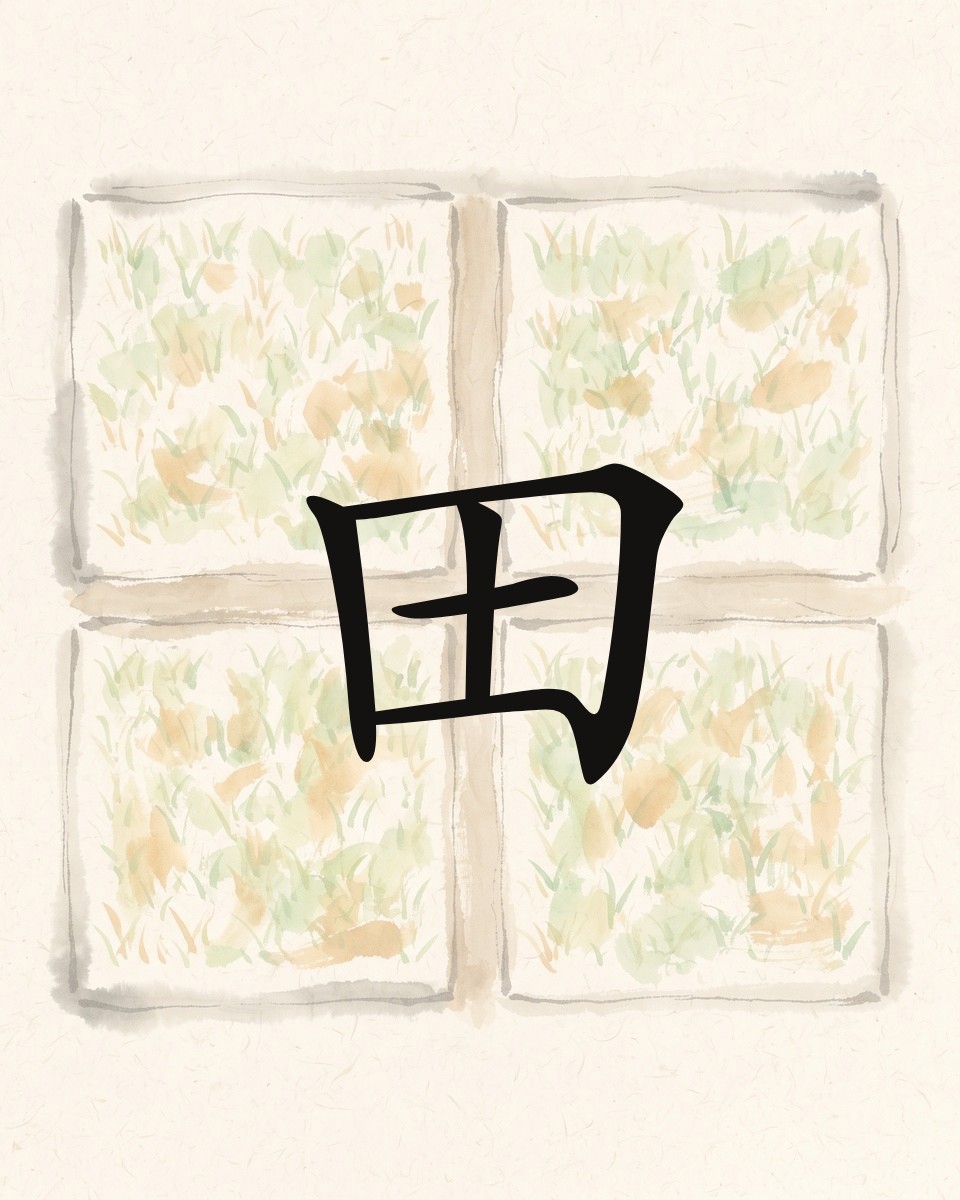
From a ploughed field to 田
一块方田,写成「田」
A square field seen from above: two paths cross it, cutting it into four plots with green shoots in each. A brush runs the boundary and then the two paths, the tracing tightens into the oracle-bone glyph, and the whole thing squares up — the outer edge into a frame, the paths into one upright and one crossbar. The character is still a map of a field.
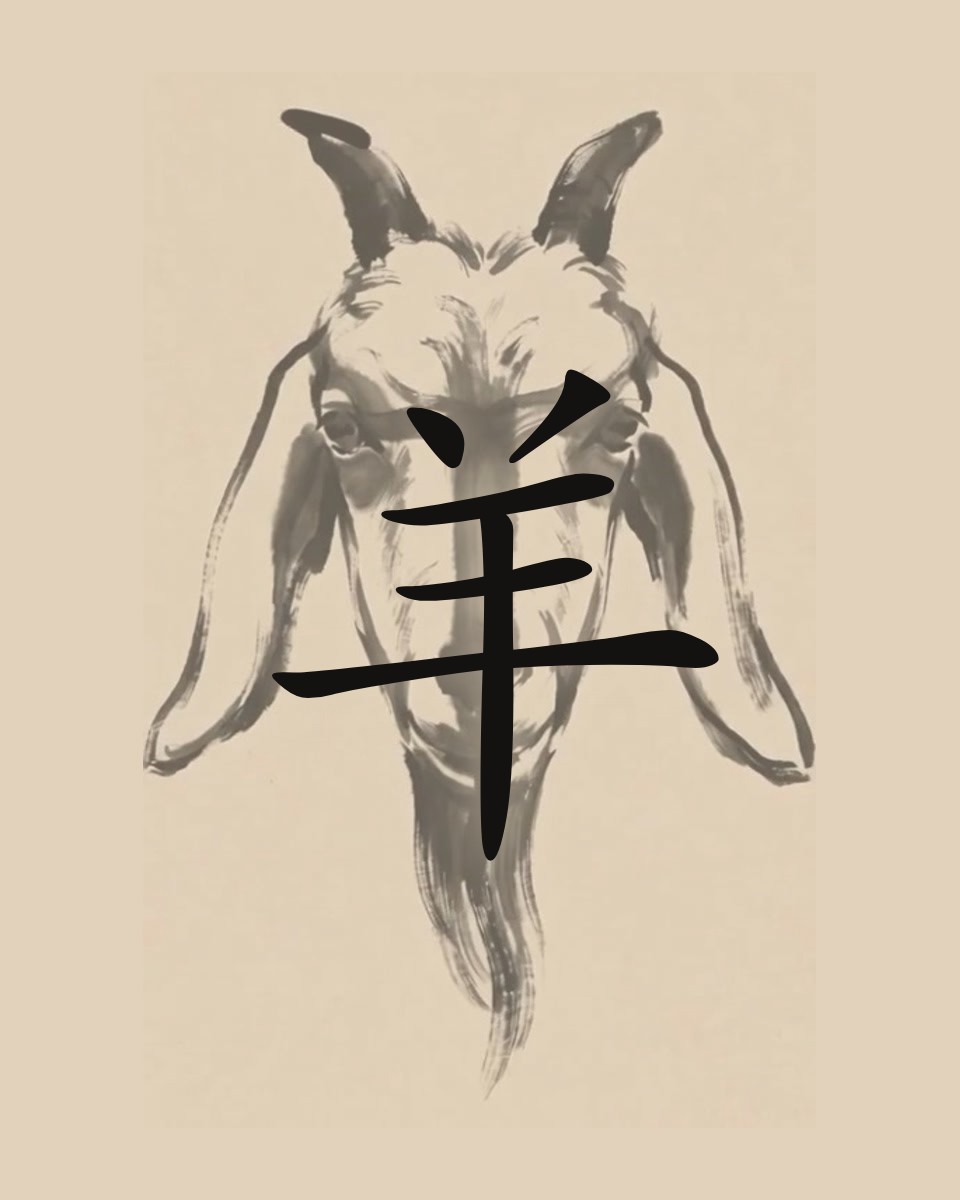
From a goat's head to 羊
一只山羊,写成「羊」
An ink goat looks straight at you — two short horns, a dark line running from its forehead down through its beard, long ears spread wide at the sides. A brush follows those edges, the tracing tightens into the oracle-bone glyph, and then the horns lean in, the ear line drops to become the longest stroke, and 羊 is standing there. Put 大 on top of it and you get 美: a big sheep was what beautiful meant.
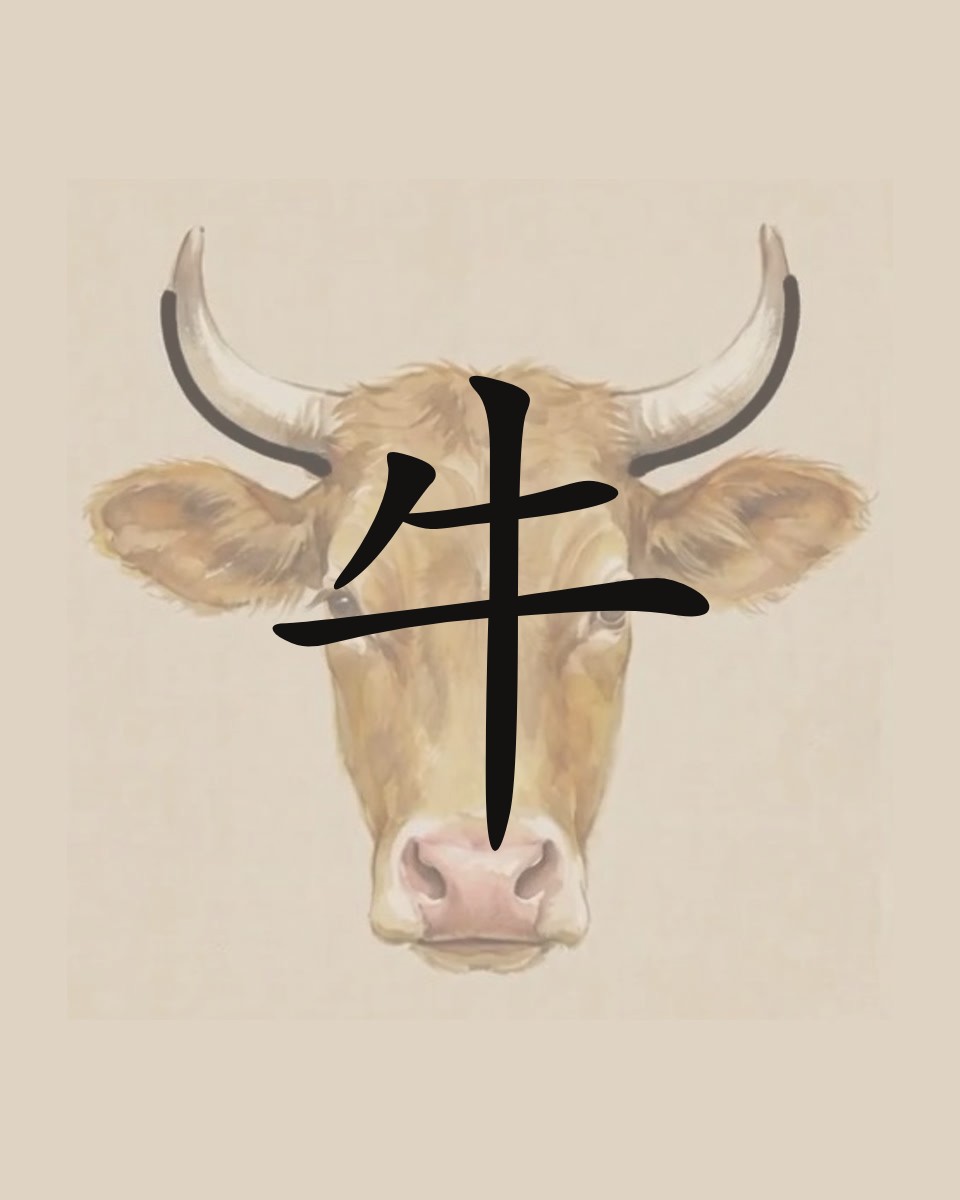
From an ox's head to 牛
一头黄牛,写成「牛」
A warm ochre ox, painted in colour for once, looking straight out at you: two horns swept up, the ears spread wider than anything else on its head, a line running from between the horns down to the muzzle. The line traces its own edges, tightens into the oracle-bone glyph, and settles as 牛. Put it beside 羊 and the pair separates at a glance — the ox's horns point up, the goat's curl down. Confucius already said so.
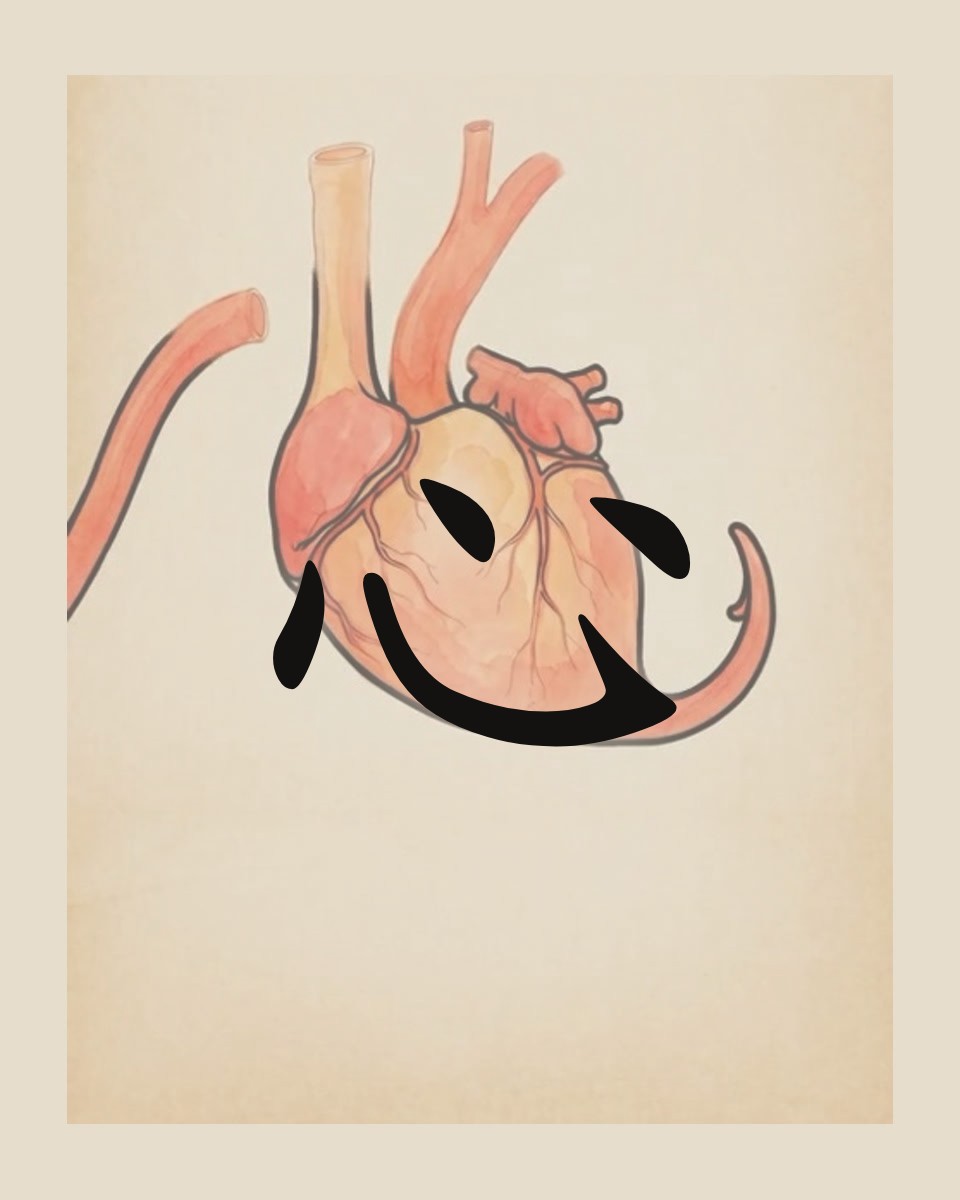
From a beating heart to 心
一颗心脏,写成「心」
A real heart, in red — not the valentine shape. Its lower edge sweeps left to right and lifts at the end; one vessel reaches out to the left and hangs down; two more rise from the top. Those four things are the four strokes of 心, in that order. Learn it once and you have the piece inside 想, 感, 爱, 忙, 快 — every character about what a person feels.
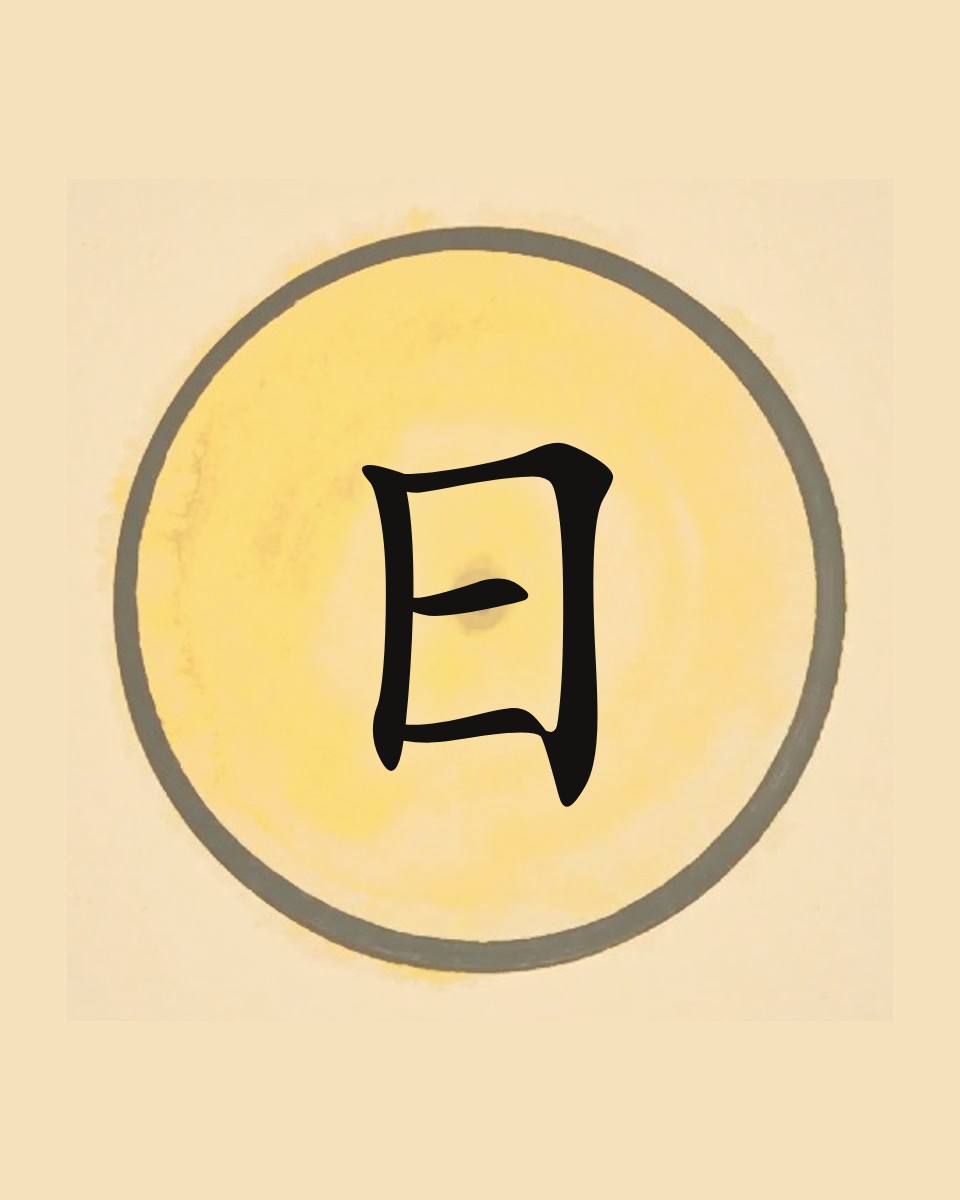
From the sun to 日
一轮太阳,写成「日」
A golden ink sun, and a brush line that follows its own rim and the dot at its centre. The tracing tightens into the bronze glyph — a circle with a dot — and then the circle squares up: the rim becomes the frame, the dot becomes the line inside. 日, the sun, drawn full.
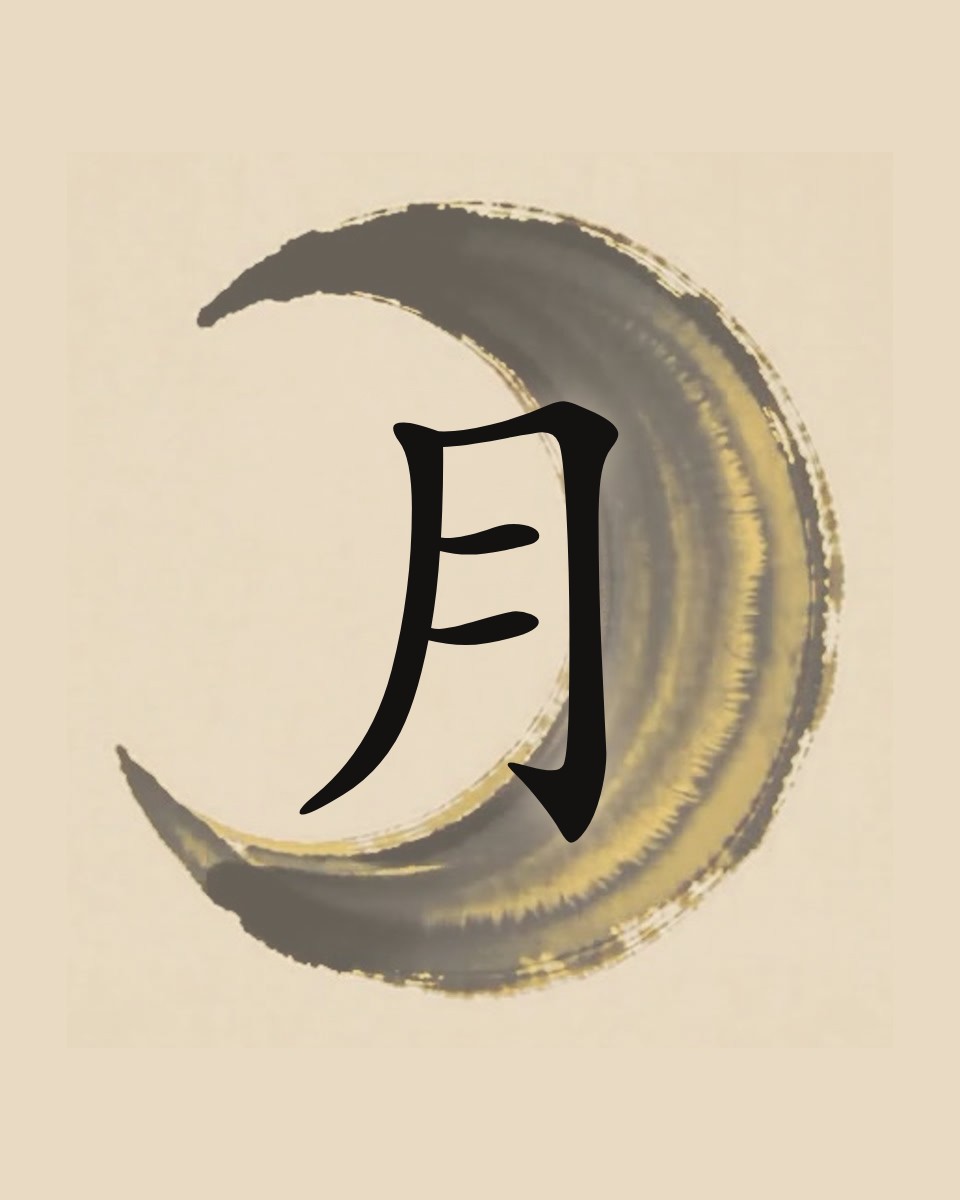
From a crescent moon to 月
一弯月牙,写成「月」
A crescent moon in ink, and a brush line that follows its own edges — the bright outer rim, the dark inner curve, the two faint marks across its face. The tracing tightens, then the curve straightens: a round moon turns into a square word. 月, the moon, drawn lacking.
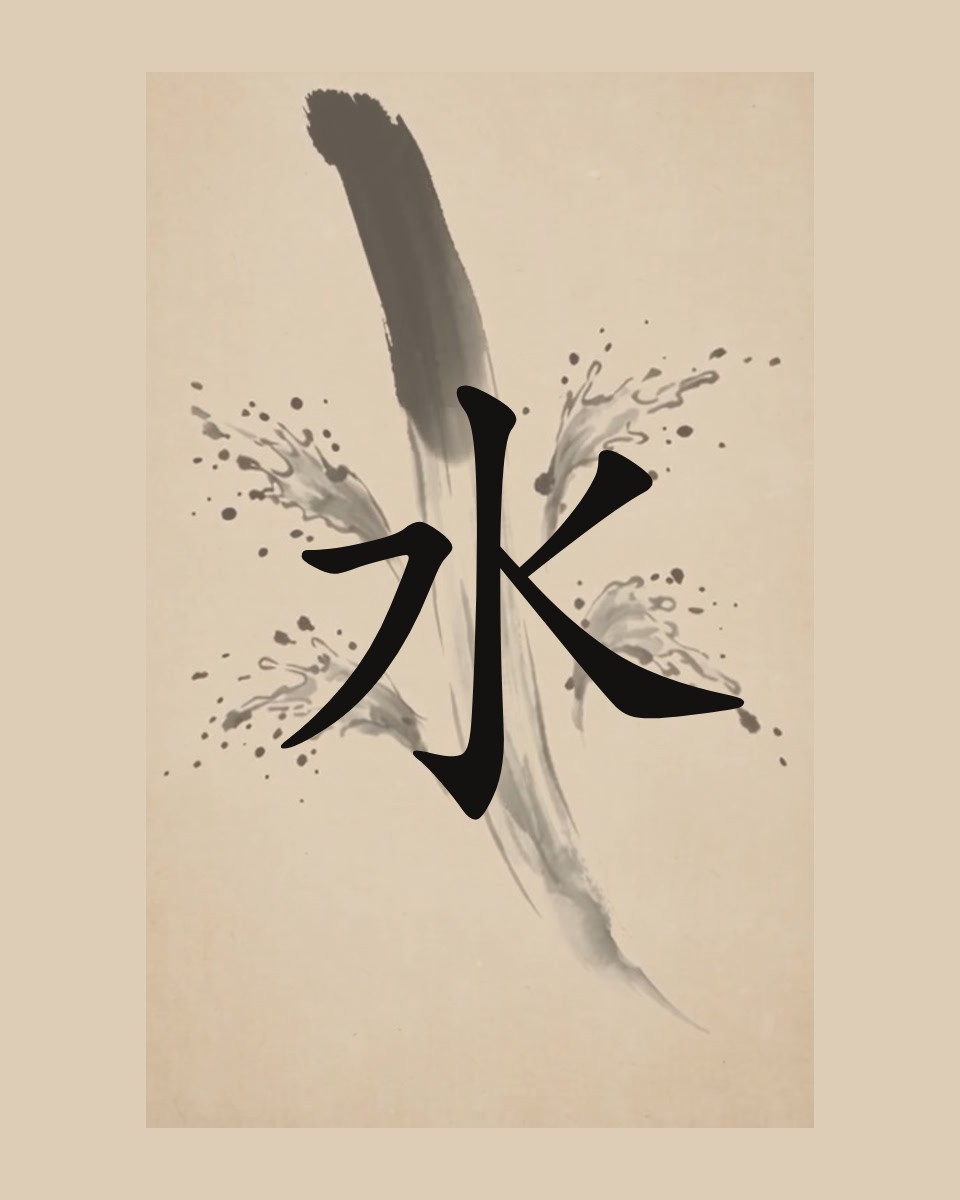
From running water to 水
一股流水,写成「水」
Ink water pours down the frame — one current in the middle, spray thrown out either side. A brush follows what the water is already doing, the tracing tightens into the bronze glyph, and then the spray straightens into strokes while the current stands up and hooks. Squeeze the whole thing thin and you get 氵, the three drops in 河, 海, 酒, 洗.
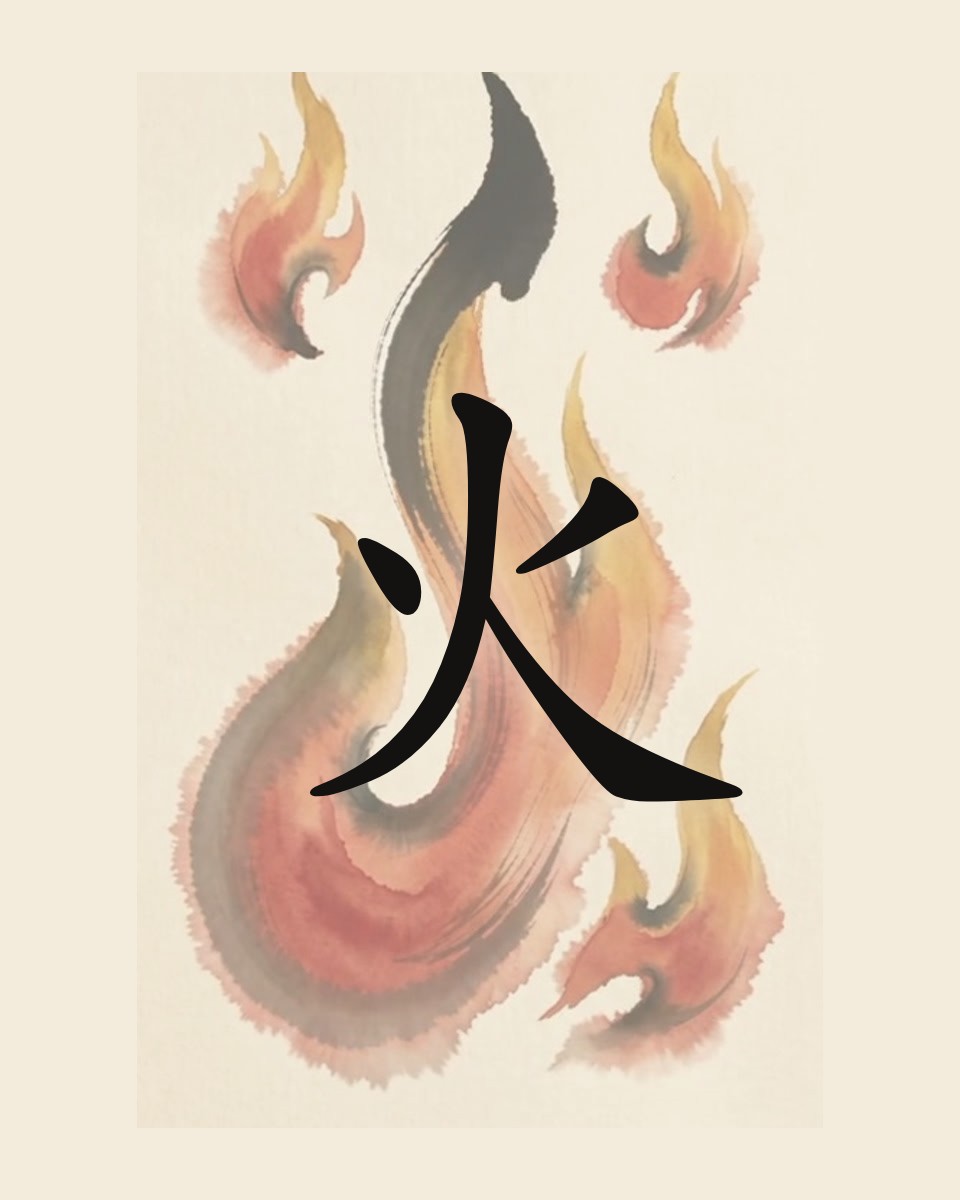
From a flame to 火
一团火,烧成「火」
An ink flame burns, a brush line traces its own shape, the colour drains away and the ink hardens into the character 火 — two side flames become two dots, the main flame becomes the two long strokes.
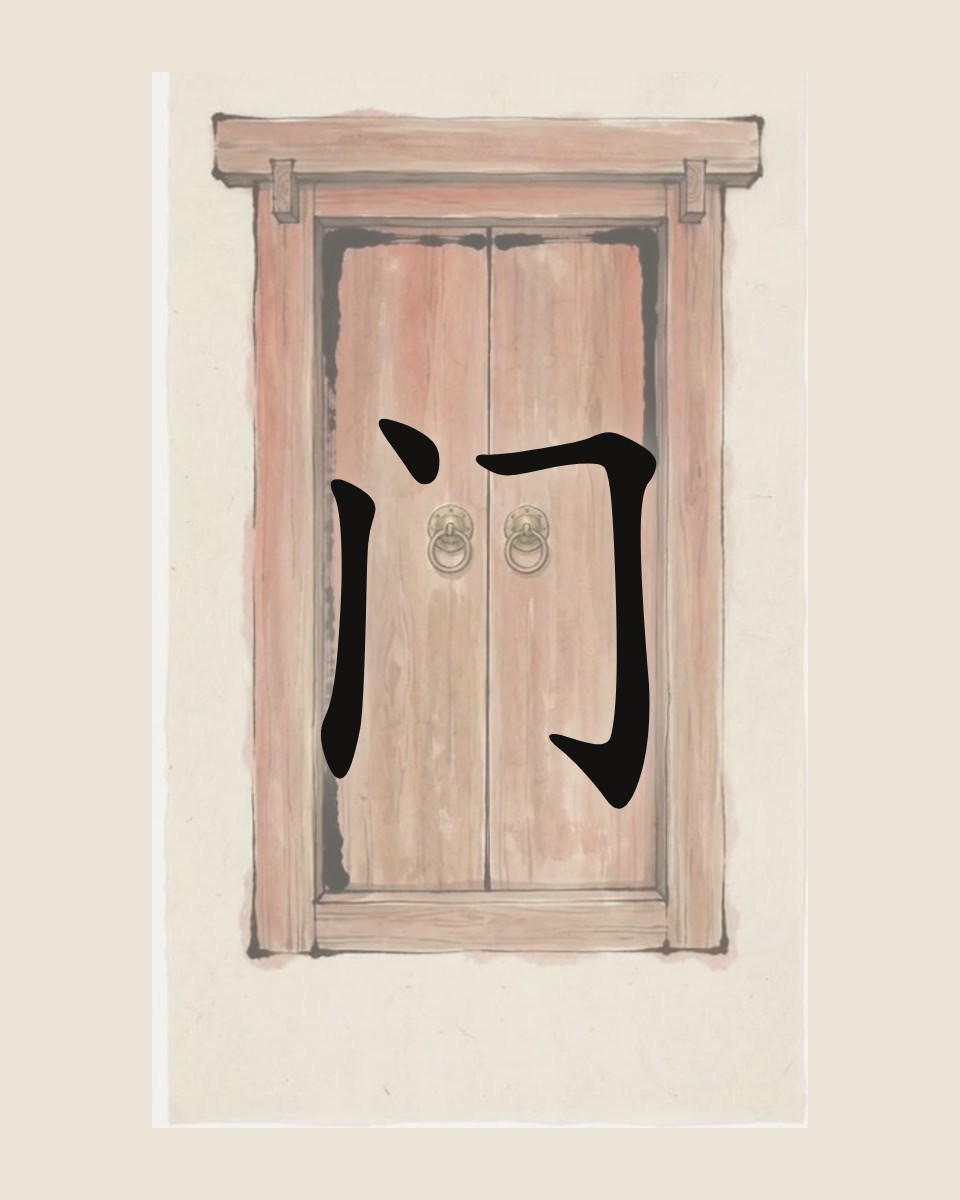
From a wooden gate to 门
一扇木门,写成「门」
A brush line traces a Chinese courtyard gate — two leaves, a lintel, a threshold — and the tracing hardens into the oracle-bone glyph, then straightens into 門, then folds into the three strokes of the simplified 门.
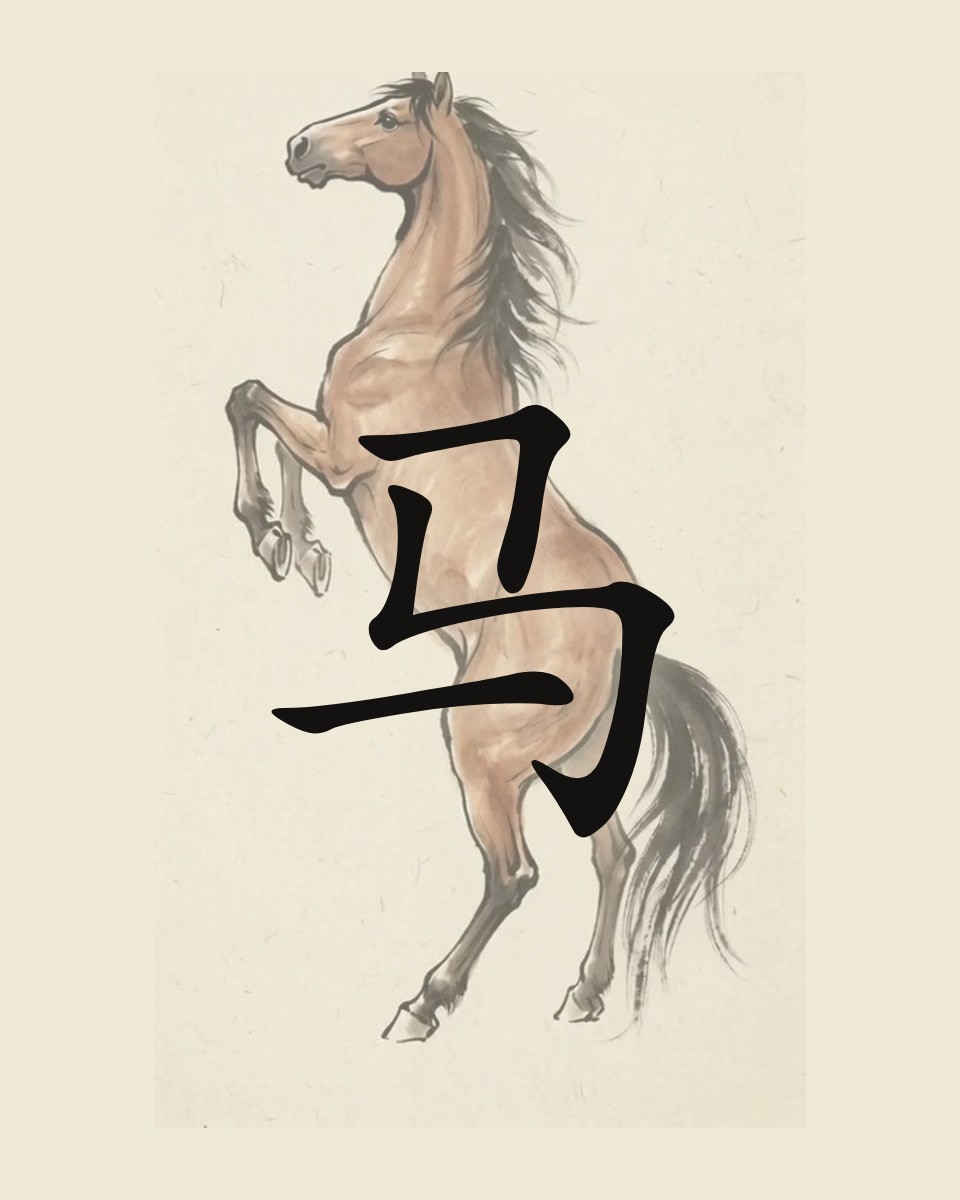
From a rearing horse to 马
一匹马,写成「马」
A brush line traces a rearing ink horse — head, flying mane, back, legs, tail — and the tracing hardens into the oracle-bone glyph, straightens into 馬, then folds from ten strokes into the three of 马.
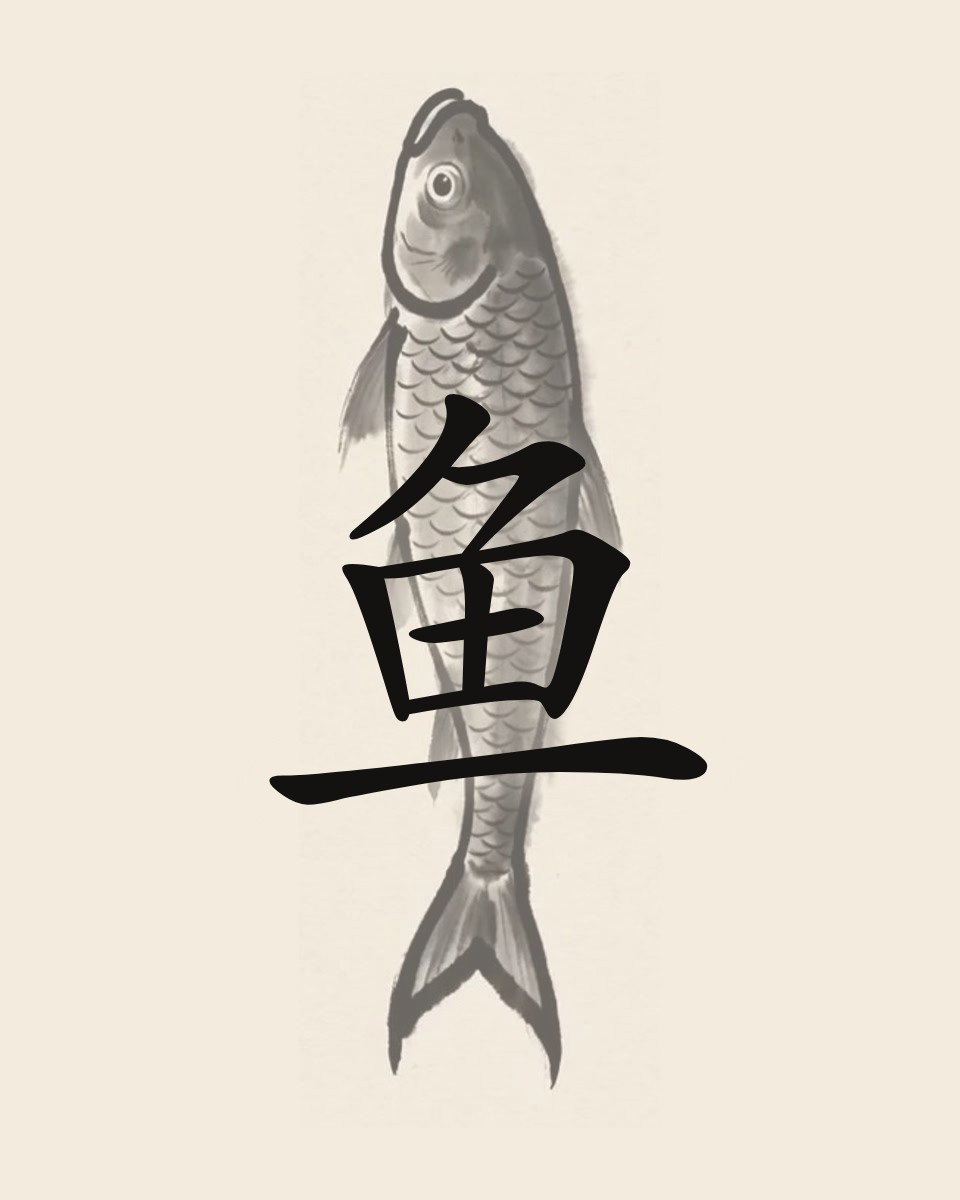
From a swimming fish to 鱼
一条鱼,游成「鱼」
A brush line traces an ink fish — the round eye, the rows of scales, the forked tail — into the bronze-script glyph, which squares up into 魚 with its tail spread as four dots, and then those four dots close into the single line under 鱼.
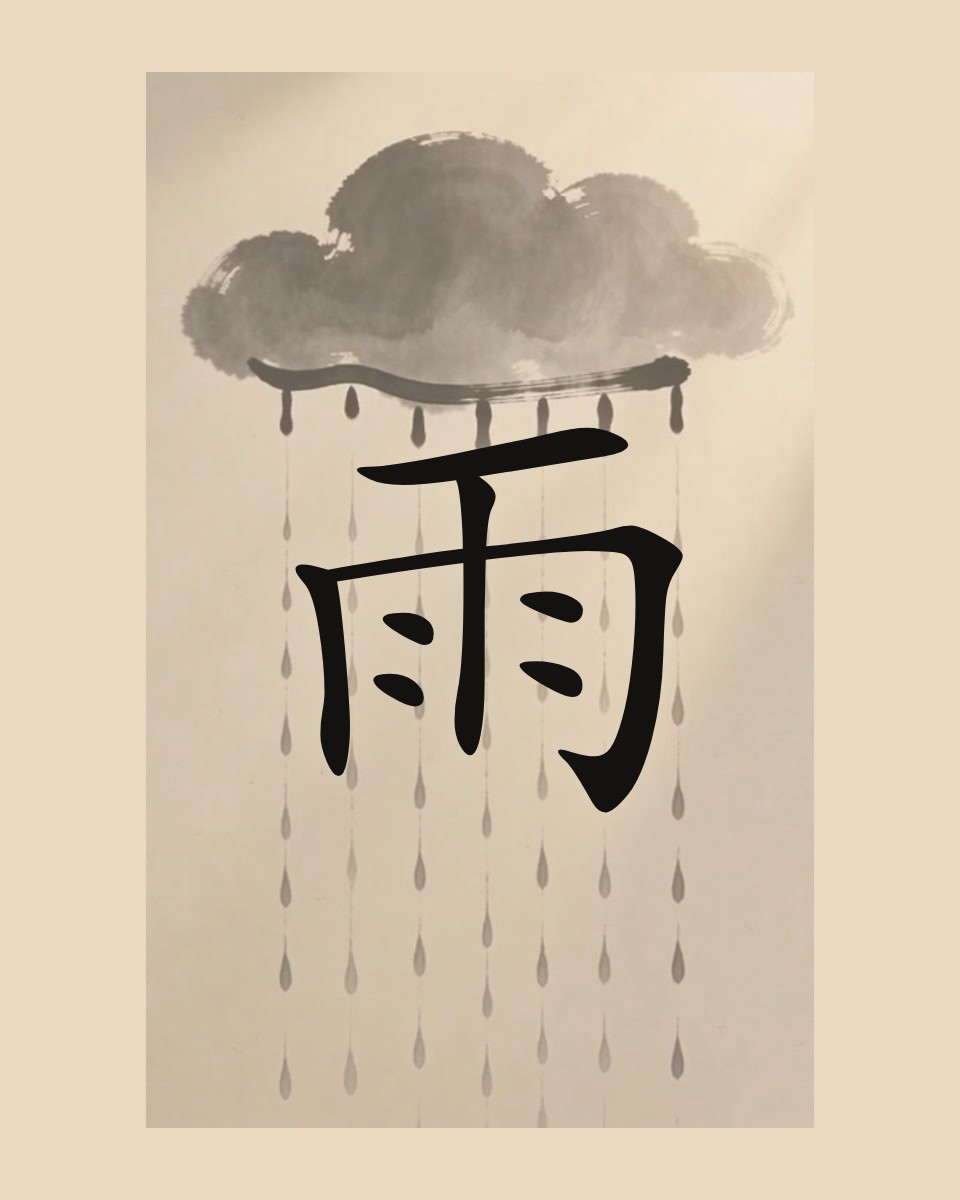
From falling rain to 雨
一场雨,落成「雨」
An ink cloud lets its rain fall, the drops line up into the oracle-bone glyph, and the glyph condenses into the character 雨 — the rain never stops falling inside it.
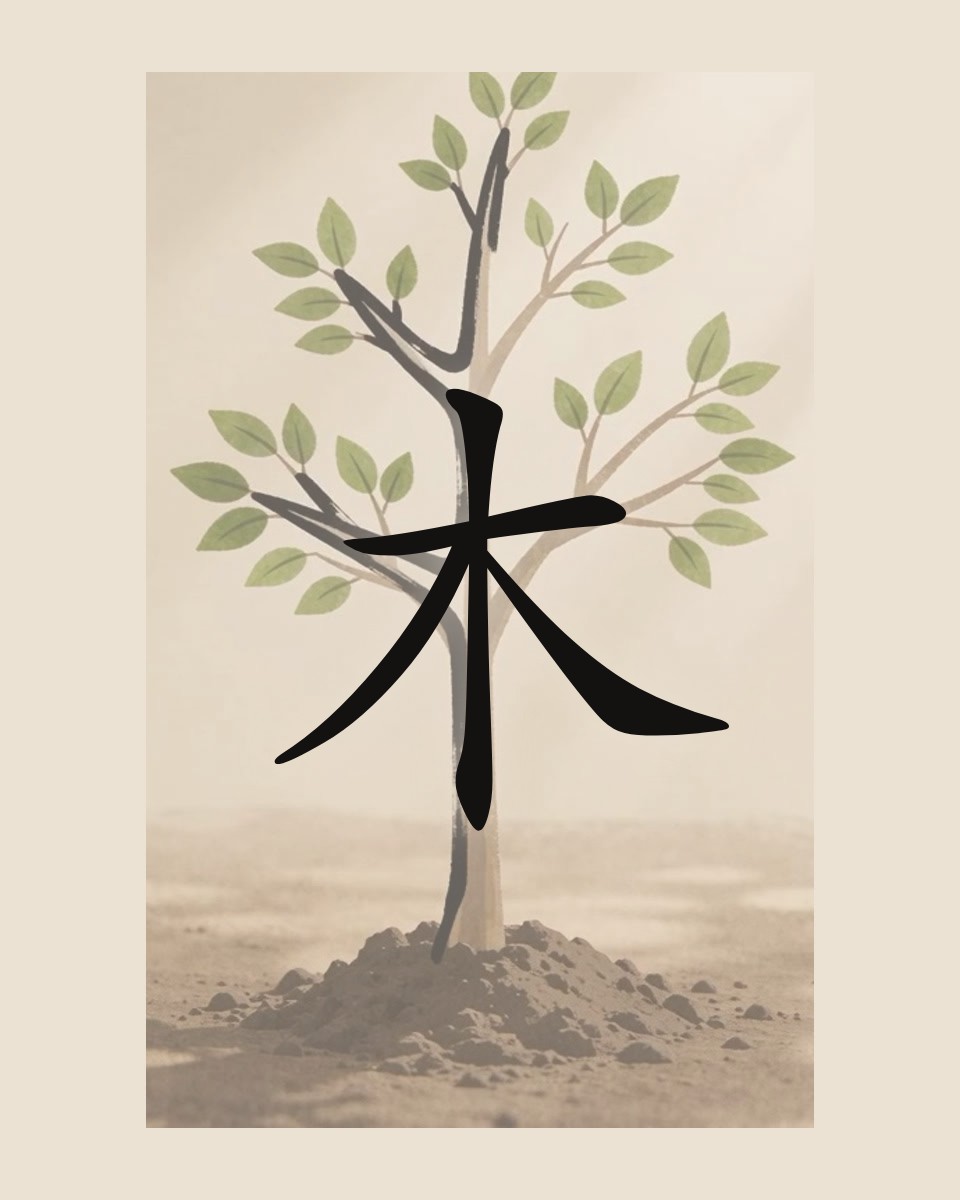
From a tree to 木
一棵树,变成「木」
A little tree is traced into an ancient pictograph, then settles stroke by stroke into the modern character 木 — every stroke pointing back at the branch, trunk or root it came from.
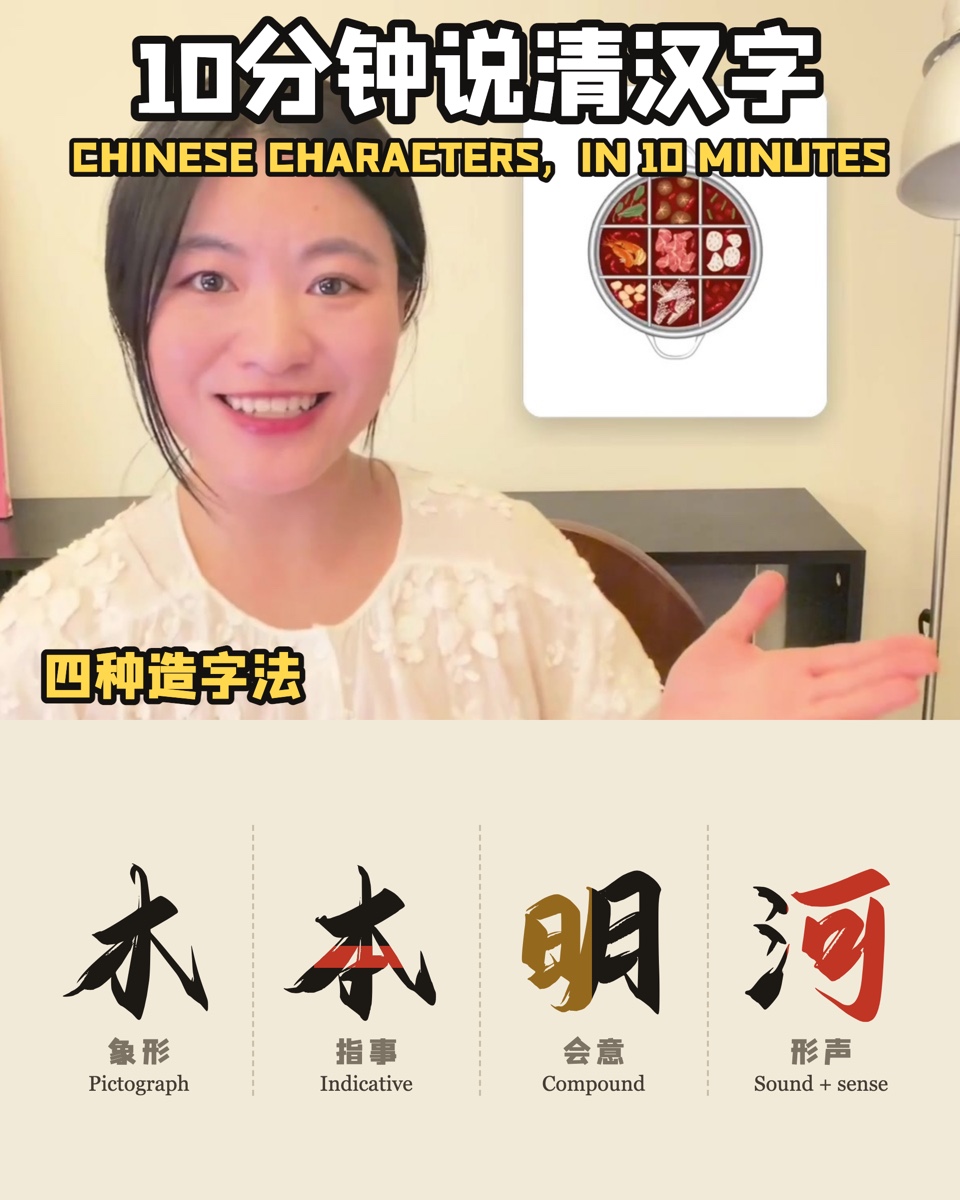
The four ways Chinese characters are built
汉字的四种造字法
The full eight-minute lesson on the four ways every Chinese character was built — pictures (象形), pointers (指事), meaning-sums (会意) and sound-halves (形声) — ending back on the street signs you can suddenly read.
汉字
New characters, week by week
The first stories are free to watch. Subscribe to keep watching every new character — and to download the videos for offline review.