The four tones, one body movement each
四声 · 一个声调一个动作
The whole tone system in one lesson, taught the way Teacher Jane teaches it in class: tone one is the dentist's 「啊」, tone two is an English "What?", tone three is that scrape at the back of your throat, and tone four is a punch. Four body movements, twelve words to repeat after her, and a listening test at the end.
September 16, 2026
Downloads are part of the student subscription.
The four tones, in four body movements — and how to find the one pair that trips you up
Two true stories from real classrooms.
A student wants fourteen coffees. 十四 shí sì. He says 四十 sì shí — forty. Same two syllables, wrong order, forty cups of coffee.
Another student wants dumplings. 水饺 shuǐ jiǎo. She says 睡觉 shuì jiào — "to sleep". She has just asked the waitress how much it costs to sleep.
Neither student had an accent problem. In Chinese, the tone is part of the word. Change the tone and you have changed the word, the way changing a letter changes an English word. That is the whole difficulty, and it is smaller than it looks.
Your voice has five floors
Forget "first tone, second tone" for a minute. Look at one picture instead.
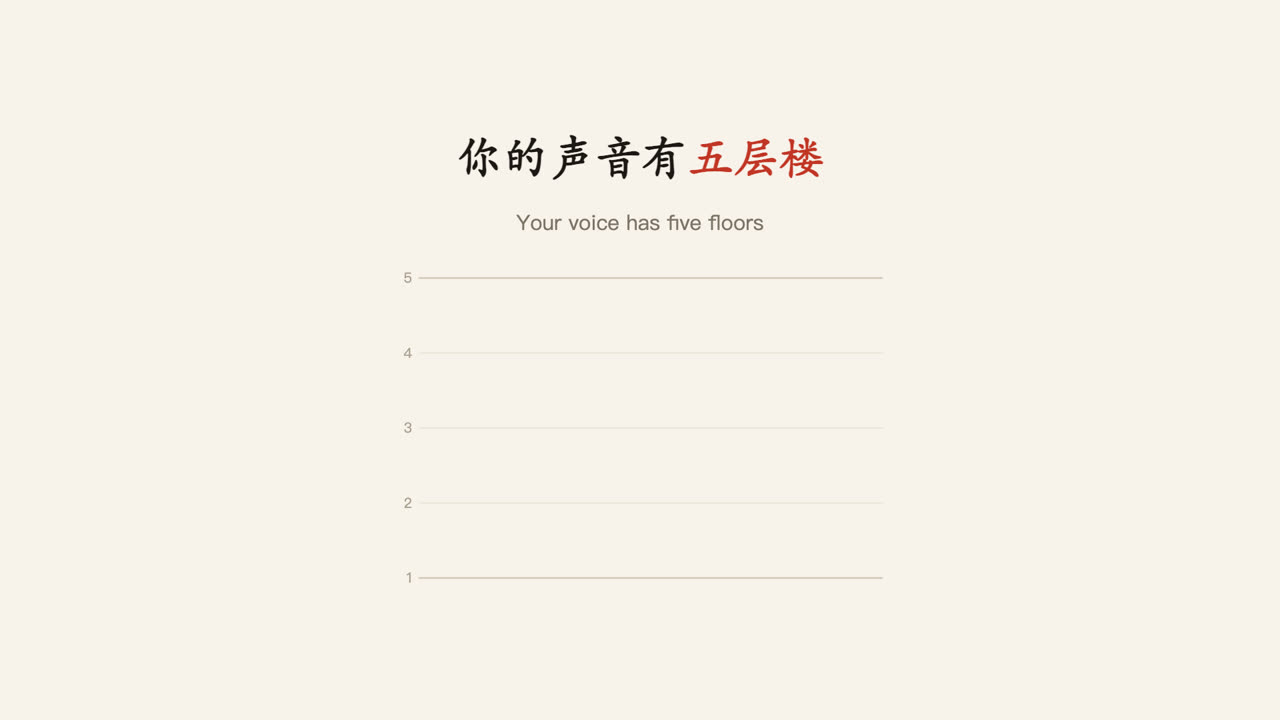
A tone is not a mysterious sound. It is a path: where your voice starts, where it goes, where it ends. Four tones, four paths.
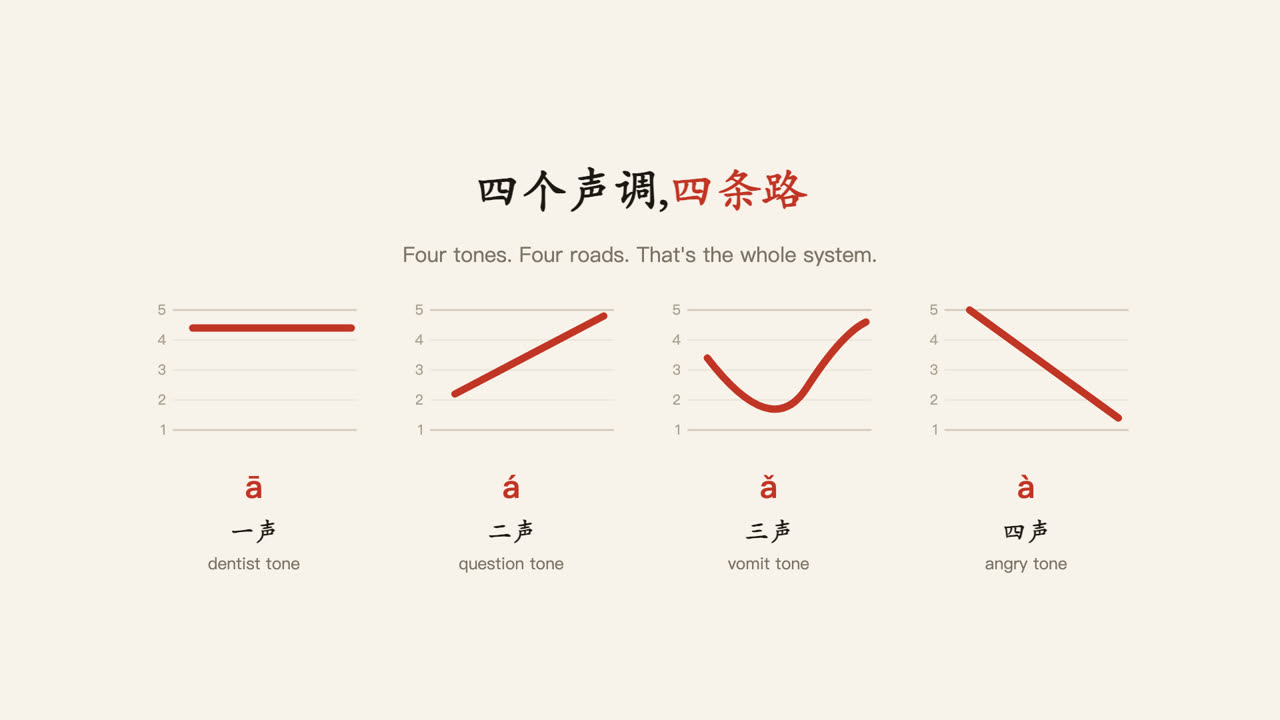
Here is how I teach each one in class — not as a description, but as something your body does. Do them out loud. They feel silly for a week and then they are automatic.
——the dentist tone
Open your mouth the way you do when a dentist looks inside: 「啊——」
Flat. High. Boring. If you sing, it is one note held down — press the key and don't let go.
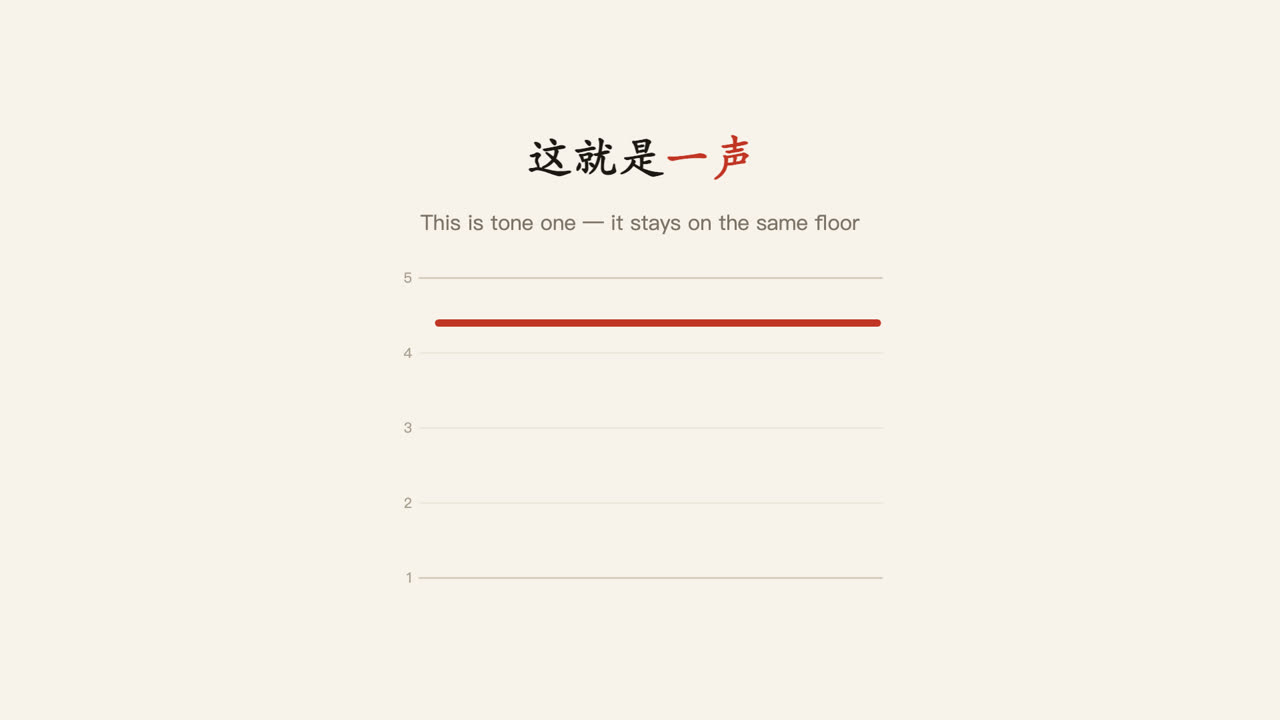
The mistake almost everyone makes is letting it fall at the end. A first tone that falls has become a fourth tone. 妈 mā (mother) turns into 骂 mà (to scold at someone) — which is a different conversation.
Say these with your hand flat, smoothing an imaginary table: 妈 mā · 八 bā · 书 shū.
——the question tone
You already own this one. Someone says something, you didn't catch it, and you say: What?
That rise is the second tone. Your voice climbs.
The trap: most learners start the climb from the basement. A tone that starts at floor 1 and climbs is not a second tone — it is a third. Start in the middle, floor three, then go up.
Hand flicks up, like asking a question: 麻 má · 十 shí · 谁 shéi.
——the one nobody forgets
I apologise in advance for this one, but no student has ever forgotten it.
You know the feeling just before you throw up — that scrape at the back of your throat, right down there? Go there. That is the bottom of the third tone. Floor one. Then come back up.
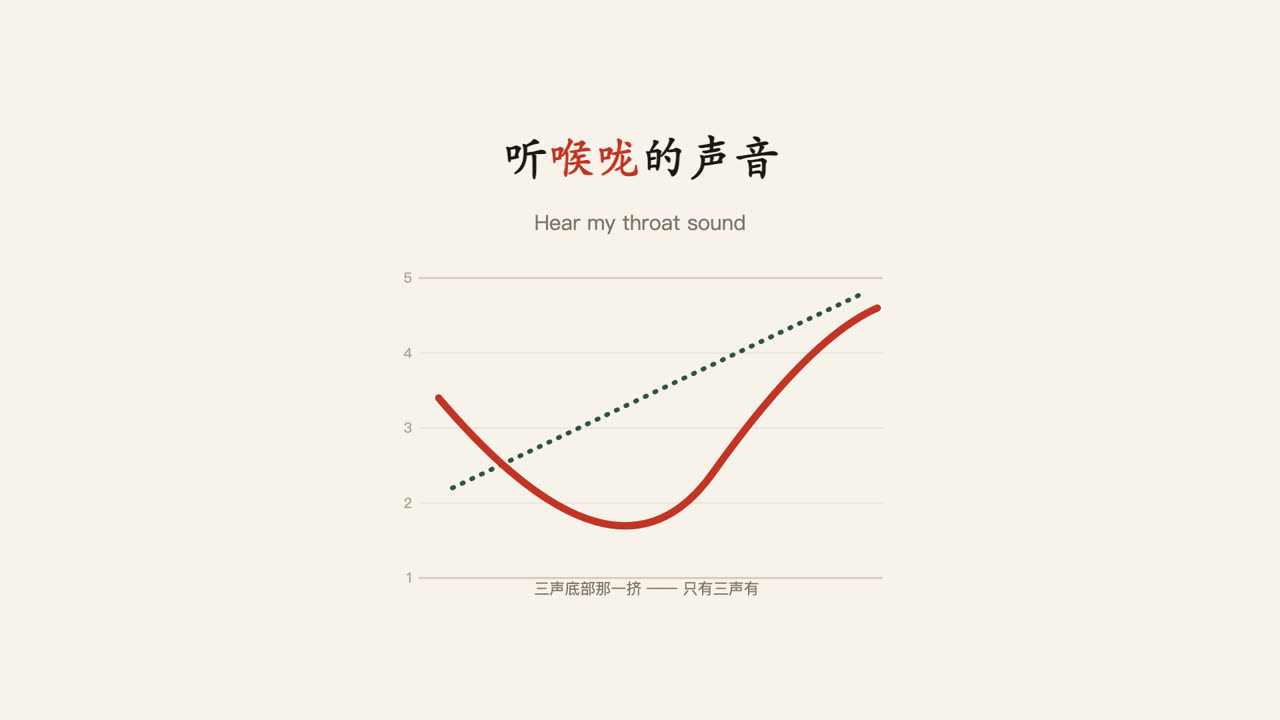
There is something real behind the feeling. When we measured my own recording of the four tones frame by frame, about a quarter of my third tone was creak — the pressed, gravelly sound your vocal folds make at the very bottom of your range. The other three tones had none of it. So that squeeze in your throat is not you doing it wrong; on this tone, it is part of the sound.
Hand like a ladle — down, scoop, up: 马 mǎ · 五 wǔ · 好 hǎo.
One warning for later: when two third tones meet, the first one changes. 你好 is written nǐ hǎo and said ní hǎo. Don't worry about it yet — just know it is coming.
——the angry tone
This one is not a sound, it is a hit. Falling off a cliff. Getting punched in the stomach.
Floor five straight to floor one. Fast, strong, finished. The mistake is falling half way and stopping — half a fall reads as a question. Commit.
Hand chops down: 骂 mà · 四 sì · 是 shì.
Now find your pair
Here is the part most tone guides get wrong. They tell you which tones are hardest. But after a few hundred students I can tell you: tone trouble is personal. Two learners with the same textbook swap different pairs, and it often depends on the languages they already speak.
So the useful question is not "which tone is hardest?" It is "which two do I keep swapping?"
Find out in ten minutes:
- Pick ten words you use — 妈, 马, 十, 四, 水, 谁, 好, 是, 茶, 看.
- Record yourself saying them.
- Play a native recording of the same ten, back to back with yours.
- The pair you keep missing is your pair. Drill that one, not everything.
Then drill it as minimal pairs — two words that differ only in tone: 买 mǎi (buy) vs 卖 mài (sell), 问 wèn (ask) vs 闻 wén (smell). Ten minutes a day, hand moving, until your hand gets bored before your ears do.
Where to practise
And when you want to be tested rather than told: the practice set under this video plays a word and asks which tone you heard. It does not move on until your ear does.
Want more? The first three exercises of every course are free; a subscription opens the rest.
See the free threeSubscribe汉字
New characters, week by week
The first stories are free to watch. Subscribe to keep watching every new character — and to download the videos for offline review.