“Basic Grammar” has 87 exercises — the first 3 are free
Guest mode saves no progress and keeps no wrong-answer book. Jane’s students come in through her invitation link and every exercise follows their lessons; a teacher who buys the courseware opens the whole course for a class with one code.
吗 — One Word Turns Anything Into a Question
吗 — 一个字,把任何句子变成问句
Say a sentence. Add 吗. You have asked a question — nothing else moves. It is the best deal in Chinese grammar.
Memory hook
Nothing moves — 吗 just arrives
Memory hook
But only for yes-no questions
The words this lesson needs
Some of these you already have. The new ones are the ones you will be asked about.
🔊 Tap any line to hear it
Pronunciation clinic
In a question, 很 goes away
This one is small and nobody warns you about it. A Chinese adjective sentence normally carries a degree word: 中国很好玩 — China is fun. But when you turn it into a question, that 很 drops out: 中国好玩吗? — not 中国很好玩吗. Put 很 back only if you mean to press on the degree: 中国很好玩吗? = is it REALLY that fun? Statements take 很; questions usually do not.
这条很小,而且没人提醒你。中文的形容词句平时要带程度词:中国很好玩。但变成问句的时候,那个「很」要掉:中国好玩吗?——不是「中国很好玩吗」。只有当你想强调程度的时候才把很放回去:「中国很好玩吗?」=真有那么好玩吗?陈述句带很,问句一般不带。
Statement, then question
Listen to each pair back to back. The only difference is the last syllable.
🔊 Tap any line to hear it
Ask, and answer the native way
Notice 不 changing tone: bú before a falling tone, bù everywhere else — lesson 4 again.
🔊 Tap any line to hear it
Would 吗 work here?随堂小练
No pressure — just making it stick.
"Do you like coffee?" — is this a 吗 question?
"What food do you like to eat?" — is this a 吗 question?
他是中国人____?
Tā shì Zhōngguórén ____?
Is he Chinese?
中国____吗?
Zhōngguó ____ ma?
Is China fun?
Answer it the way a Chinese person would, if the answer is no.
This lesson's characters
Four characters, and one of them is the grammar point itself. You met its sound half last lesson.
mouth
象drawn from life
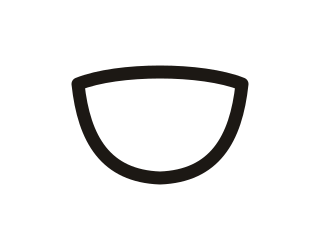
An open mouth, drawn as a square. On its own it means mouth; stuck to the side of another character it usually means the character has to do with the mouth — speaking, eating, asking.
the yes-no question word
形meaning + sound
Today's grammar point is itself a phono-semantic character, and you already know both halves: 口 because a question comes out of a mouth, and 马 mǎ from last lesson, telling you how to say it. Note the tone: 马 is mǎ, but 吗 is said light, with no tone at all.
person
象drawn from life
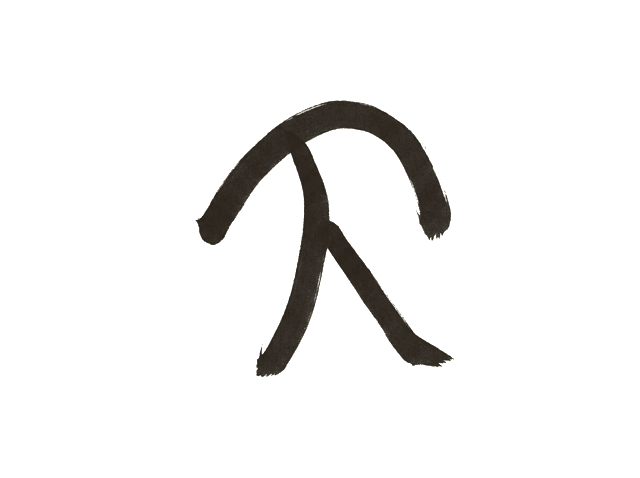
A person seen from the side, two legs walking. Add it to a country and you get the people: 中国人 a Chinese person, 美国人 an American.
middle, centre
指a pointer
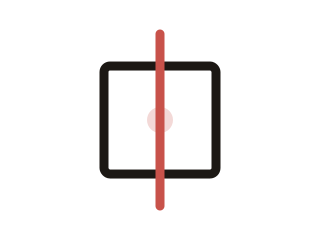
A line straight through the centre of a box. Not a picture of anything — a pointer at the idea of 'middle'. This is why China is 中国: the middle country.
Ask it out loud随堂小练
No pressure — just making it stick.
Your turn — say it
你是中国人吗?
Are you Chinese?
Your turn — say it
可以微信买单吗?
Can I pay with WeChat?
Character practice随堂小练
No pressure — just making it stick.
「口」的意思是 ____。
「 kǒu 」 de yì si shì ____。
「口」means ____.
「人」的意思是 ____。
「 rén 」 de yì si shì ____。
「人」means ____.
意思是「middle」的字是 ____。
yì si shì 「middle」 de zì shì ____。
The character meaning 'middle' is ____.
「吗」用「口」表意,是因为 ____。
「 ma 」 yòng 「 kǒu 」 biǎo yì,shì yīn wèi ____。
吗 uses 口 for its meaning because ____.
A Chinese person is 中国___. Which character finishes it?
A Chinese person is zhōng guó ___. Which character finishes it?
A Chinese person is 中国___. Which character finishes it?
Which character makes this a question?
The five sentences to drill
These are the ones that come back. Say each one twice before moving on.
🔊 Tap any line to hear it
Drill them out loud随堂小练
No pressure — just making it stick.
Your turn — say it
你喜欢喝咖啡吗?
Do you like drinking coffee?
Your turn — say it
你是学生吗?
Are you a student?
Take these with you
Everything worth taking away. Tap any line to hear it.
Words 生词
Characters 汉字
Before you go课后回顾
- Take five sentences you can already say and put 吗 on the end of each. That is five questions you now own, for the price of one word.
- Answer these out loud the native way, with the verb: 你喜欢中国吗? 你吃猪肉吗? 你会英语吗?
- Bring me three 吗 questions about me in our next class. I will answer honestly, and you will find out how much you understood.